Beautiful Front Yard Landscaping Ideas On a Budget
- Akhilesh Joshi
- 2 days ago
- 13 min read

That stunning front yard you’ve been dreaming of doesn’t have to come with a nightmare price tag. The real secret isn't a massive budget; it's about making smart, strategic choices that give you the biggest visual bang for your buck.
Let's get one thing straight: you can absolutely achieve a high-end look that completely transforms your home's first impression without hiring an expensive crew. It just takes a bit of creative thinking and solid planning.
A huge part of that planning is visualization. Guesswork is the enemy of any budget-conscious project. Instead of spending money on plants or materials you think will look good, you need to see them in your actual yard first. This is easily done with AI Landscape Design, which allows you to use a photo of your own yard to see different ideas come to life.
Visualize Before You Spend
This is where AI landscape design tools like DreamzAR come in handy. I’ve found that being able to upload a photo of my home and instantly generate design ideas—from lush garden beds to minimalist rock gardens—is a total game-changer.
It lets you experiment with different concepts completely risk-free, using a picture of your own yard as the canvas. You can lock in your choices and create a clear visual plan before you ever pick up a shovel, ensuring every dollar is spent wisely from the start.
To help you get a handle on where your money will likely go, this chart breaks down a typical landscaping budget. It's a great starting point for prioritizing your spending.
As you can see, hardscaping—the foundational stuff like paths and patios—often takes the biggest slice of the pie.
Smart Budgeting for Maximum Impact
Thankfully, getting professional-quality results is more accessible than ever. On average, you can expect a front yard landscaping project to run anywhere from $1,500 to $5,000. If you're breaking it down by square footage, basic services typically fall between $4.50 and $12 per square foot.
A smart budget allocation I often recommend is 40% for hardscaping, 30% for plants, and 20% for labor. That leaves a crucial 10% as a cushion for those inevitable surprises.
To help you plan, here’s a table that breaks down how you might allocate your funds.
Strategic Budget Allocation for Front Yard Landscaping
This table breaks down a typical budget for a landscaping project, helping you prioritize spending for maximum visual impact.
Expense Category | Suggested Budget Percentage | What It Typically Covers |
|---|---|---|
Hardscaping | 40% | Walkways, patios, retaining walls, edging, gravel paths, large decorative rocks. |
Plants | 30% | Trees, shrubs, perennials, annuals, ground covers, and soil amendments. |
Labor/Installation | 20% | Professional installation, site preparation, grading, and delivery fees. |
Contingency Fund | 10% | Unexpected issues, material price changes, or last-minute design additions. |
Having a clear breakdown like this prevents overspending in one area and ensures you have enough funds to complete the entire vision.
A well-planned landscape does more than just make your property look good; it can seriously increase your home's value. Focusing on curb appeal is one of the smartest investments a homeowner can make.
And remember, while the landscaping is the star of the show, other parts of your home's exterior play a supporting role. Simple updates like painting your trim or cleaning your windows can complement your new greenery, creating a polished, cohesive look. In fact, simple maintenance is a huge part of enhancing overall curb appeal without adding much to your costs.
Visualize Your New Yard with AI Before You Dig
Let’s be honest, the biggest budget-killer in any DIY landscaping project is guesswork. We’ve all been there—buying plants that looked great at the nursery but are totally wrong for the space, or choosing pavers that clash with the house. Even worse is realizing a design just doesn't work after you’ve already done all the heavy lifting. These are expensive, frustrating mistakes.
Instead of just crossing your fingers and hoping the ideas in your head translate to your yard, you can now see them come to life with stunning accuracy using photos of your own yard.
This is where a little bit of tech becomes your most valuable money-saving tool. Using an AI landscape design app like DreamzAR completely changes the game for homeowners on a budget. The whole process is surprisingly simple but incredibly powerful. You just snap a picture of your front yard as it is right now.
With that single photo, the AI gets to work. It analyzes your home’s architecture, the existing layout, and even the lighting to generate dozens of professional-looking concepts tailored specifically to your property.
See Your Ideas Instantly
Ever wonder if a rock garden would look better than that struggling patch of grass by the driveway? Or maybe you're torn between a classic paver walkway and a more rustic gravel path. In just seconds, you can see both options—and a whole lot more—virtually placed right onto a photo of your own yard.
Test Different Styles: See how a desert-themed xeriscape with succulents contrasts with a lush, flower-filled cottage garden, all visualized on your property.
Experiment with Plants: Visualize how different tree species or colorful perennial combinations will frame your walkway or windows using your home as the backdrop.
Compare Hardscape Materials: Instantly swap out pavers, gravel, and mulch to find what best complements your home's color and texture, all by editing a photo of your house.
This immediate visual feedback gets rid of expensive trial-and-error. You’re no longer guessing; you’re making informed decisions based on a realistic preview. This is key to choosing the right materials and plants the first time around, saving you from wasted money and effort. You can learn more about how this technology works in this ultimate guide on AI for landscape design.
By creating a clear visual blueprint from a photo of your own yard before you start, you can confidently purchase materials and stick to your plan. This approach is fundamental to keeping your front yard landscaping ideas on a budget and avoiding costly detours.
Beyond just static images, you can take it a step further with Augmented Reality (AR). This lets you use your phone’s camera to virtually ‘place’ a new Japanese maple or a section of a stone path right in your yard. You can literally walk around it, checking its scale and position from different angles to make sure it’s a perfect fit before you commit to buying it.
Building Structure with Low-Cost Hardscaping
Hardscaping is the skeleton of your landscape. It's the pathways, patios, and borders that give your yard its fundamental shape and flow. While gorgeous custom stonework or intricate brick patterns are stunning, they can also eat up your entire budget in a heartbeat.
The good news? There are plenty of affordable alternatives that deliver that same high-end structure without the high-end price tag. You can apply AI Landscape Design to visualize any of these ideas by simply using a photo of your own yard.
What's great is that many of these lower-cost options are perfect for a weekend DIY project, which means you save a ton on labor costs, too. Smart material choices are the key to creating a front yard that looks polished and intentional. This is a foundational strategy for bringing great front yard landscaping ideas to life on a budget.
Creating Pathways with Affordable Materials
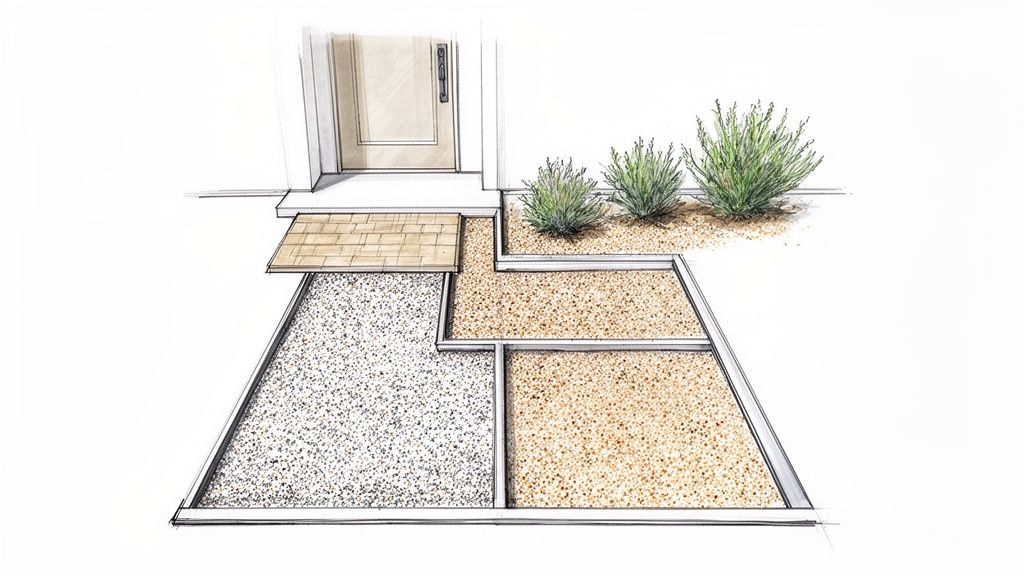
A well-defined walkway does wonders for curb appeal, guiding visitors right to your door. Forget about expensive flagstone or poured concrete for now. You can get a beautiful, professional look with materials that are easy to install yourself.
Pea Gravel: This is a classic for a reason. It gives you that soft, satisfying crunch underfoot and is fantastic for creating gentle, curving paths or filling in oddly shaped areas.
Decomposed Granite: If you want a more solid, packed-down surface, decomposed granite is your answer. It creates a firm, natural-looking path that feels incredibly stable. For a similar aesthetic, some homeowners even look into materials like crushed granite driveways for their durability and natural elegance.
The secret to making these materials look pro-level is all in the edging. Simple metal or plastic edging is inexpensive and practically disappears once you install it, but it does the crucial job of keeping your gravel or granite contained for a crisp, clean line.
Defining Garden Beds for a Polished Look
Here’s a little designer secret: clean lines make any space look more deliberate and well-maintained. Creating sharp, defined edges for your garden beds is one of the cheapest and most impactful upgrades you can possibly make.
You really don't need expensive stone borders to achieve this. A simple "Victorian" trench edge, dug with a flat spade, costs nothing more than a bit of your time. For a more permanent and modern look, thin metal edging provides a minimalist border that just melts into the landscape. You can even use rocks found right on your property to build a rustic, character-rich border for free.
Before you start buying materials, it’s a smart move to see how they'll actually look next to your house. This is where AI Landscape Design comes in handy. You can upload a photo of your own yard and virtually test out different path materials and edging styles. Seeing it first helps you avoid costly do-overs.
Even one small, strategic hardscape project can make a huge impact. Think about creating a simple landing at your doorstep with a few affordable pavers—it can instantly elevate your entire entryway. If a small patio is on your mind, it helps to know what goes into the cost. You can get a solid idea of material and labor expenses by checking out a detailed guide on the cost to install a paver patio.
Planting for Maximum Impact and Minimal Cost
Plants are the living, breathing heart of your landscape, but they don't have to be the biggest line item on your budget. In my experience, smart plant selection is one of the most powerful ways to get a stunning front yard that keeps costs low, both on day one and for years to come.
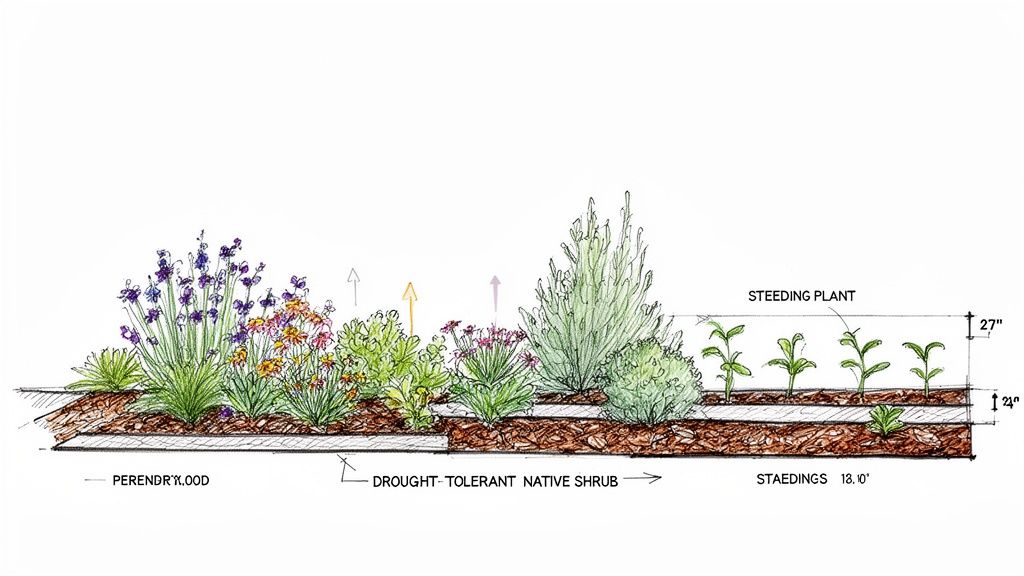
The first thing to think about is longevity. It’s tempting to grab those flats of colorful annuals for an instant pop, but that’s an expense you'll have to repeat every single year. Perennials, however, are a fantastic one-time investment. They come back year after year, often getting bigger and better, which means your garden beds actually look fuller with each passing season.
Choose Plants That Work for You
Another secret to savvy planting is picking species that are already happy in your neck of the woods. Native plants are perfectly adapted to your local climate, soil, and rainfall. What does that mean for you? Less watering, less fertilizer, and way less fuss, which saves you both time and money.
On a similar note, focusing on water-wise plants can dramatically cut down on your utility bills—a huge ongoing expense. For some fantastic ideas, check out this curated list of the 10 best drought-tolerant plants for front yard landscapes in 2025. These tough beauties bring gorgeous texture and color without being constantly thirsty.
Before you start digging, use an AI landscape design tool to see how your plant choices will actually look. It's a game-changer. Upload a photo of your own yard to an app like DreamzAR to visualize how different perennials and shrubs will look next to your house. This helps you lock in your design and avoid buying plants that just don't work.
Smart Sourcing for Budget-Friendly Greenery
Where you get your plants—and what size they are—makes a massive difference to your wallet. Big, mature plants offer that "instant garden" look, but they come with a hefty price tag. Here are a few proven tricks for building a beautiful garden without breaking the bank:
Buy Small: Go for the younger, smaller plants. A one-gallon perennial is a fraction of the cost of its five-gallon big brother but will often catch up in size within a season or two. This little bit of patience can save you 50-75% on your plant budget.
Start from Seed: If you really want to stretch your dollars, starting plants from seed is the ultimate money-saver. Sure, it takes more time and effort, but a single packet of seeds can grow dozens of plants for just a few bucks.
Divide and Conquer: Many common perennials, like hostas, daylilies, and ornamental grasses, can be divided every few years. Don't be shy! Ask friends, family, or neighbors with established gardens if you can take a few divisions from their overgrown clumps. Most gardeners are more than happy to share the wealth.
By mixing these strategies—choosing tough perennials, buying small, and getting creative with sourcing—you can fill your front yard with lush, beautiful plants without emptying your bank account. It’s all about a thoughtful approach that makes your landscape both stunning and sustainable.
Exploring Smart Alternatives to a Traditional Lawn
That classic, sprawling green lawn looks great, but let's be honest—the endless cycle of watering, mowing, and feeding is a major drain on both your wallet and your weekends. The good news is, you don't have to sacrifice a lush, beautiful yard to escape the tyranny of turf. There are some fantastic, low-cost alternatives that offer way more character with a fraction of the upkeep.
When we talk about front yard landscaping ideas on a budget, these alternatives are a game-changer. Why? Because they replace one of the most resource-hungry parts of a typical yard, which translates to real long-term savings on water, fertilizer, and your precious time.
Embrace Living Ground Covers
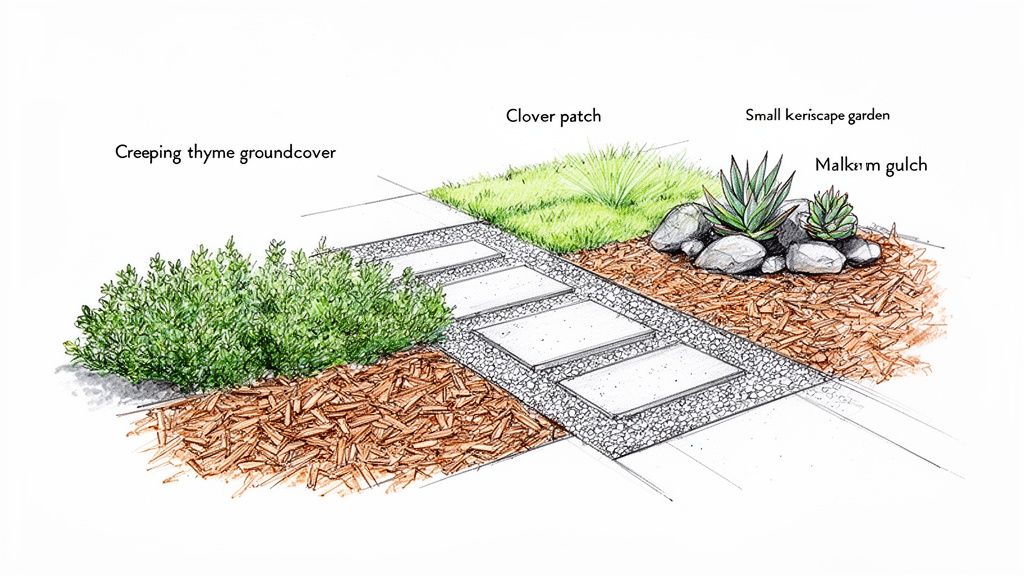
One of my favorite strategies is to swap out needy grass for hardy, living ground covers. Plants like creeping thyme, clover, or mondo grass can create a stunning green carpet that often requires little to no mowing.
Creeping Thyme: This is a perfect choice for sunny spots. It’s drought-tolerant, smells amazing when you walk on it, and pops with tiny purple or white flowers.
Clover: Micro-clover is making a huge comeback for a reason. It stays green even in dry spells, naturally fertilizes the soil, and brings in all the good guys like bees and butterflies.
These living carpets don't just save you work; they actively contribute to a healthier little ecosystem right in your front yard. If you're looking for more inspiration, you can explore a whole world of smart alternatives to lawn ground covers that can completely change how your yard looks and feels.
Use Mulch and Rock Gardens Strategically
Another incredibly effective approach is to shrink your lawn by introducing mulched beds or stylish rock gardens. Using affordable mulch like wood chips or pine straw is an instant win—it creates clean, defined beds that make your other plants pop while suppressing weeds. You get a professional look while reducing the square footage you have to actively maintain.
For a truly low-effort, high-impact solution, consider xeriscaping with gravel, decorative stones, and a few dramatic succulents or ornamental grasses. A well-designed rock garden brings incredible texture and modern appeal while slashing your water usage.
Before you start tearing up your entire lawn, why not test the waters? An AI landscape design tool lets you visualize the change without any commitment. Just upload a photo of your own yard to see exactly how a clover lawn or a modern rock garden would look in your space. It’s a risk-free way to experiment with different layouts and find a look you’ll absolutely love.
By thinking beyond grass, you open up a world of possibilities for a unique, water-wise, and budget-friendly front yard that truly reflects your personal style. These alternatives don’t just save money—they add a layer of design sophistication that can really make your home stand out.
Bring Your Vision to Life with a Phased Plan
Alright, you've got your budget-friendly ideas mapped out and a solid picture of the final goal. Now what? Staring at the whole project at once can feel like you're about to climb a mountain, but the real secret to getting it done is breaking it down. A phased plan respects both your timeline and your wallet.
Spreading out the work—and the costs—makes the whole process feel much more achievable. Instead of one massive, expensive overhaul, you can think of it as a series of smaller, weekend-sized victories. This approach is key to keeping your front yard landscaping ideas on a budget because it stops you from overspending all at once.
Breaking It Down
Think of your AI-generated design as the perfect roadmap for this process. It helps you see all the layers of your new landscape, which makes prioritizing the work a whole lot easier. You can use your AI design, created from a photo of your own yard, to visualize each step. You'll want to start with the foundational elements first and then build on them over time.
A practical, phased plan might look something like this:
Phase 1 (First Weekend): The Foundation. This is all about prep work. Start by clearing out old, overgrown plants, pulling every last weed, and then marking out the new garden bed shapes with spray paint or flags.
Phase 2 (Second Weekend): Hardscape First. Now it's time to install the non-living elements. This is when you'd build your gravel path, install any low-cost metal edging, and place those large decorative rocks.
Phase 3 (Next Couple of Weekends): Planting Time! With the structure in place, you can finally add the greenery. Focus on planting your perennials, shrubs, and any small trees you’ve chosen.
A phased approach is a powerful budgeting tool. By tackling one part of the project at a time, you buy materials as you need them. This avoids a huge upfront cost and makes the financial side feel much more manageable.
Your AI Design as a Guide
Throughout this entire process, your AI Landscape Design is your constant companion. Having that clear visual blueprint—created from a photo of your own yard—ensures each phase builds logically toward the final, beautiful result you're aiming for. It's your roadmap to success, keeping you on track and motivated every step of the way.
For homeowners who really want to create a detailed project map, our practical guide on how to design a landscape plan offers step-by-step advice for organizing your vision from start to finish.
Your Top Questions About Landscaping on a Budget, Answered
When you're starting a front yard project, it's natural to have a few questions. I hear these all the time from homeowners who are trying to make a big impact without breaking the bank. Let's tackle a couple of the most common ones.
What Is the Absolute Cheapest Way to Landscape a Front Yard?
Honestly, the biggest savings come from a blend of your own DIY work and making smart choices on materials. It's not about one single trick.
The most budget-friendly path is to focus on high-impact, low-cost moves. Think about using affordable ground cover like mulch or pea gravel over large areas instead of pricey stone. Go for younger, smaller perennial plants—they cost a fraction of what mature ones do and will fill in beautifully over a couple of seasons. Sometimes, the biggest bang for your buck comes from simply creating clean, defined edges for your garden beds and laying down a simple gravel walkway. A good cleanup can work wonders, too. Before spending a dime, you can apply AI Landscape Design to visualize these ideas using a photo of your own yard to see which cheap options give the best result.
Can I Really Design My Own Landscape with an App?
Absolutely. I get the skepticism, but modern apps aren't just for professional designers anymore. A huge part of pulling off front yard landscaping ideas on a budget is getting rid of the guesswork. That’s precisely where you can apply AI Landscape Design.
You start with a photo of your actual yard. From there, an app like DreamzAR can generate concepts that look professional but are already tailored to your home's specific layout and style. This completely removes the risk of spending money on a plan that just doesn't work in your space. It gives you a clear visual blueprint to follow, making the entire DIY process feel less intimidating and way more successful.
Think of it this way: this visualization step ensures every single dollar you spend is a direct contribution to that beautiful, cohesive look you've already fallen in love with on your screen.
Ready to stop guessing and start seeing what's possible? The DreamzAR app can turn your rough ideas into a stunning, actionable plan with just one photo. Download it today and finally create the yard you've always wanted.