10 Smart Alternative to Lawn Ground Covers to Transform Your Yard in 2026
- Akhilesh Joshi
- 4 days ago
- 19 min read

The perfect green lawn has long been the symbol of the ideal American home, but it comes at a cost. It demands constant watering, weekly mowing, and a cocktail of fertilizers and pesticides to maintain its pristine, monoculture state. A significant part of this intensive maintenance involves the constant battle against weeds, a concern often alleviated by choosing a different ground cover.
But what if your yard could be more? More sustainable, more beautiful, more functional, and a better reflection of your personal style? This guide explores 10 innovative and practical alternative to lawn ground covers that can transform your outdoor space from a high-maintenance chore into a thriving, dynamic oasis. From lush, no-mow moss gardens and native wildflower meadows to productive edible landscapes and modern hardscaping, these options can significantly reduce water usage, support local ecosystems, and create stunning curb appeal that stands out.
As we dive into each alternative, we'll provide a comprehensive look at the pros, cons, costs, and maintenance involved. We will also show you a powerful way to bring these ideas to life before you ever break ground. Using AI Landscape Design, you can upload a photo of your own yard and instantly visualize how these different ground covers will look in your specific space. This technology allows you to experiment with various materials, plants, and layouts completely risk-free, ensuring your final choice is one you'll love for years to come. Let’s get started on designing a smarter, more beautiful yard.
1. Artificial Turf / Synthetic Grass
For homeowners seeking a consistently green and ultra low-maintenance yard, artificial turf stands out as a leading alternative to lawn ground covers. This synthetic grass is crafted from durable, UV-stabilized fibers that mimic the look and feel of a natural lawn without the constant need for watering, mowing, or fertilizing. It's an engineered solution installed over a meticulously prepared base, ensuring longevity and proper drainage.
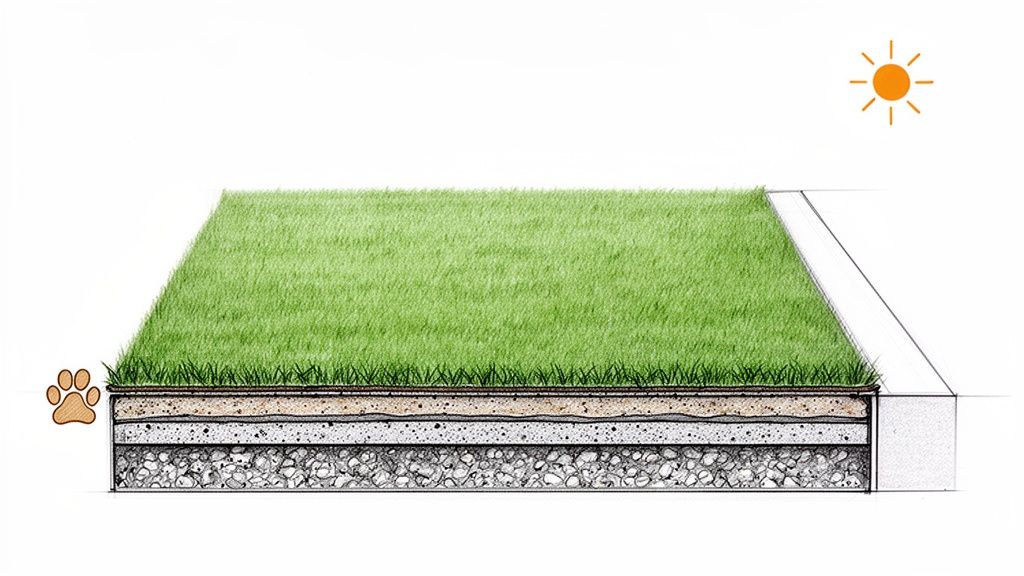
This ground cover is particularly effective in extreme climates. Residential communities in arid regions like Arizona and California use it extensively for water conservation, while pet-friendly installations in urban settings provide a clean, mud-free space for animals. Its durability also makes it a top choice for high-traffic areas where natural grass struggles to survive.
Key Considerations and Tips
Base Preparation is Crucial: Proper installation hinges on a solid foundation. A 4-inch compacted base of crushed rock or decomposed granite is essential for stability and effective drainage, preventing puddles and sinking.
Quality Matters: Invest in high-quality turf with a realistic thatch layer and varied blade colors. Cheaper options can look unnatural and degrade faster under sun exposure. Brands like SynLawn offer specialized residential products.
Choose the Right Infill: Infill, the material spread between the grass blades, provides stability and cushioning. Silica sand is a standard choice, while eco-friendly options like cork can help reduce surface heat.
Plan for Occasional Upkeep: While low-maintenance, artificial turf isn't "no-maintenance." It requires occasional rinsing to remove dust, brushing with a stiff broom to keep blades upright, and prompt removal of debris.
Visualize Before You Install
Committing to a full turf installation can be daunting. You can apply AI Landscape Design to visualize how different turf styles would look in your actual yard using a photo of your own yard. Simply upload a picture of your space and let the AI generate realistic mockups, helping you choose the perfect texture and color before making a significant investment. This prototyping step ensures the final result aligns with your home's aesthetic.
2. Native Ground Covers & Creeping Plants
For those looking to create an ecologically beneficial and resilient landscape, native ground covers are an excellent alternative to lawn ground covers. These low-growing plants are adapted to your local climate, soil, and rainfall patterns, meaning they thrive with minimal intervention once established. They create a living carpet that supports pollinators, suppresses weeds, and reduces the need for mowing, fertilizing, and excessive watering.
This approach is highly adaptable and celebrated by organizations like the Xerces Society for its environmental benefits. A California yard might feature silver carpet and coyote brush to create a drought-tolerant tapestry, while a Midwest property could use native sedums and creeping phlox for vibrant, seasonal color. In the Southeast, these plants are often used in rain gardens to manage stormwater runoff effectively.
Key Considerations and Tips
Choose Region-Specific Plants: Success depends on selecting species native to your specific area. Use resources from your local Native Plant Society or the Lady Bird Johnson Wildflower Center to identify plants suited for your USDA hardiness zone. For ideas on incorporating regional flora, discover how to incorporate native New England plants into your garden.
Prepare and Establish Carefully: Start by clearing the area of existing grass and weeds. Using a layer of cardboard mulch can help smother competition. Water new plants regularly during their first year to help their root systems establish.
Plan for Coverage: Plant ground covers at the recommended spacing to ensure they grow together into a dense mat. Closer spacing provides faster coverage but increases upfront cost, while wider spacing requires more patience and temporary mulching.
Group by Needs: When combining different species, group plants with similar water, sun, and soil requirements together. This "right plant, right place" strategy creates a self-sustaining and low-maintenance landscape.
Visualize Before You Plant
Designing with ground covers involves thinking about texture, color, and bloom times. Instead of guessing, you can apply AI Landscape Design to create a visual plan. Upload a photo of your own yard and experiment with different native plant combinations, like patches of creeping thyme next to wild ginger. This allows you to see how the patterns and heights will look throughout the seasons before you start digging, ensuring a cohesive and beautiful result.
3. Hardscaping with Permeable Pavers & Gravel
For those looking to create structured, functional outdoor living areas, hardscaping with permeable pavers and gravel is an excellent alternative to lawn ground covers. This approach uses materials like permeable concrete, interlocking pavers, or decomposed granite to build patios, walkways, and other defined spaces. Unlike traditional hardscapes, these permeable solutions allow rainwater to filter through into the ground, reducing runoff and supporting local water tables.
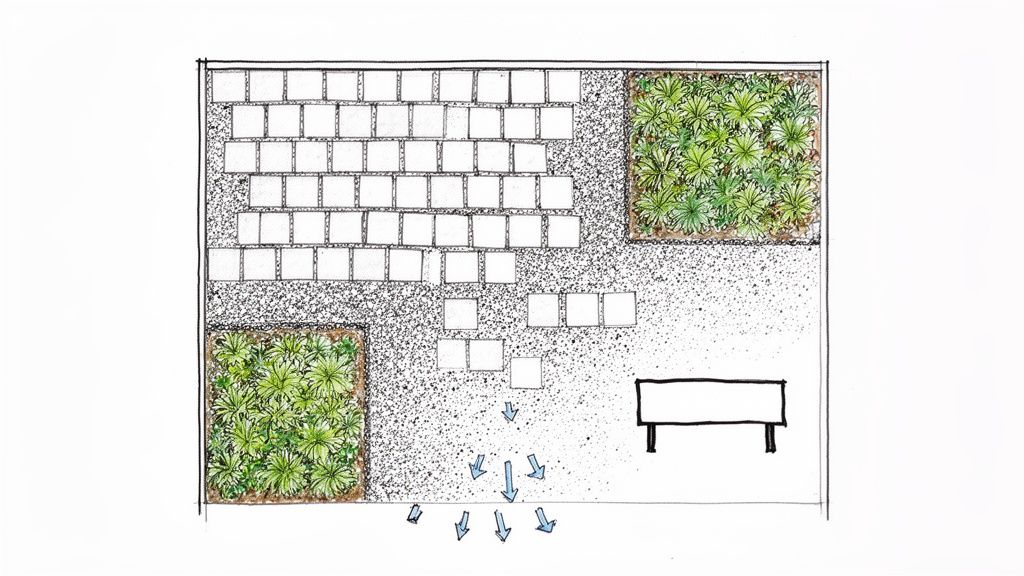
This method is perfect for designing multi-functional backyard retreats, from modern patios with integrated seating to expansive outdoor kitchens. In eco-conscious communities, permeable paver driveways are becoming standard for stormwater management. In arid regions like the Southwest, gravel gardens and xeriscapes replace thirsty lawns with elegant, low-water designs that combine hardscape elements with drought-tolerant plants. For a deeper dive into materials and concepts, you can explore this quick guide to hardscape design.
Key Considerations and Tips
Prioritize a Solid Foundation: A durable hardscape depends on its base. Install a 4 to 6-inch layer of compacted gravel to ensure stability, prevent shifting, and facilitate proper drainage for the lifetime of the installation.
Choose Complementary Materials: Select pavers and gravel that match your home's architectural style and color palette. This creates a cohesive look that enhances curb appeal and property value.
Combine Hard and Soft Elements: Balance the hard surfaces with pockets of plantings. Integrating ornamental grasses or low-growing perennials around a patio softens the design and creates a more natural, inviting atmosphere.
Control Weeds Proactively: Use polymeric jointing sand between pavers. This specialized sand hardens to lock pavers in place and effectively inhibits weed growth, significantly reducing maintenance.
Visualize Before You Install
Designing a hardscape layout can be challenging. You can apply AI Landscape Design using photos of your own yard to visualize different paver styles, gravel textures, and even features like fire pits or outdoor kitchens directly in your space. This augmented reality preview helps you test traffic flow, check sight lines from your home, and finalize your design before committing to the labor and expense of installation.
4. Moss Gardens & Living Moss Lawns
For homeowners with shady, damp areas where traditional grass falters, moss gardens present an enchanting and sustainable alternative to lawn ground covers. These living carpets are composed of various moss species that create a velvety, emerald-green tapestry requiring no mowing, fertilizing, or pesticides. Moss is a non-vascular plant that thrives in acidic soil and moist, shaded conditions, making it a perfect low-maintenance solution for difficult parts of a landscape.
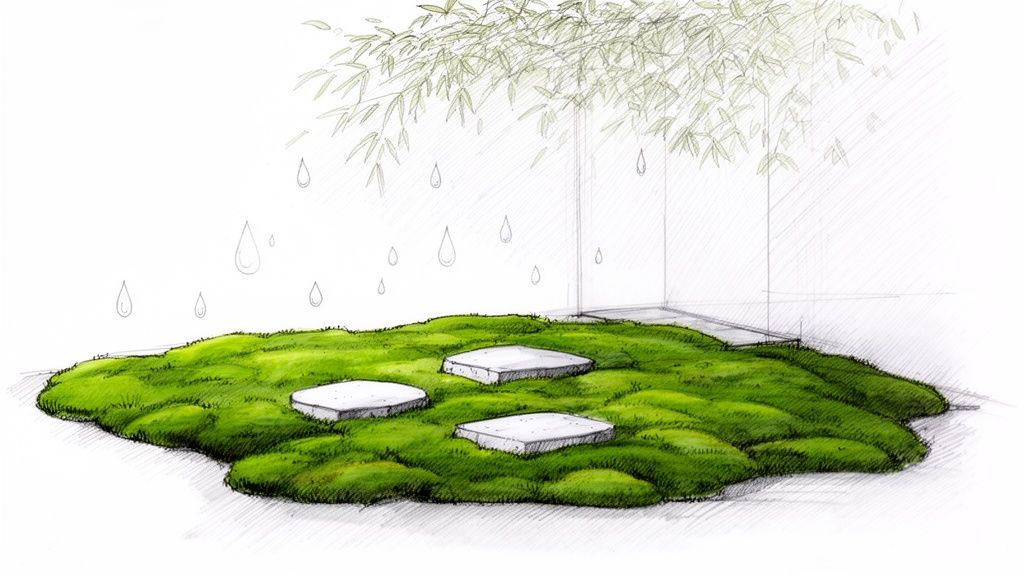
This ground cover is a hallmark of tranquil Japanese zen gardens and is increasingly popular in woodland-style landscapes in regions like the Pacific Northwest. It excels at transforming failed lawn patches under tree canopies into lush, serene features. Homeowners use moss to create a unique, soft-textured ground plane that adds a timeless, naturalistic feel to their property while embracing ecological principles.
Key Considerations and Tips
Test and Amend Your Soil: Moss requires acidic soil with a pH between 5.0 and 6.0. Test your soil and amend it with sulfur or aluminum sulfate if necessary. You must remove all existing grass and weeds to prepare a bare, compacted soil surface.
Choose Appropriate Moss Species: Select moss varieties that are native to your region for the best results. Sheet moss (Hypnum imponens) and cushion moss (Leucobryum glaucum) are popular choices for their growth habits.
Establishment Requires Moisture: During the first year, the moss needs consistent moisture to establish itself. Light, frequent watering is crucial, especially in the first few months. Once established, it is remarkably drought-tolerant.
Avoid Chemicals: Fertilizers and pesticides will harm or kill moss. Its beauty lies in its simplicity and ability to thrive without chemical inputs. Keep the area free of falling leaves and debris, as they can smother the moss.
Visualize Before You Plant
The unique texture and deep green color of a moss garden can dramatically change the look of your yard. Before you begin soil preparation, apply AI Landscape Design to visualize how a moss lawn would integrate with your existing landscape features. By uploading a photo of your own shady yard, you can generate realistic mockups that show how the moss will look around trees, pathways, and patios. This helps you perfect the layout and confirm that this serene alternative is the right choice for your home.
5. Ornamental Grasses & Perennial Plantings
For those who desire a dynamic, living landscape, replacing a monoculture lawn with ornamental grasses and perennial plantings is a beautiful alternative to lawn ground covers. This approach, championed by designers like Piet Oudolf, creates a four-season garden filled with texture, movement, and evolving color. It trades the static green carpet for a thriving ecosystem that supports pollinators and wildlife.
This method is incredibly versatile. It can be adapted to create lush, prairie-style gardens in the Midwest, sleek, modern borders around a patio using architectural grasses like feather reed grass, or drought-tolerant xeriscapes in the Southwest with blue fescue and salvias. The key is combining the structure of grasses with the vibrant blooms of perennials for continuous visual interest.
Key Considerations and Tips
Plan for Succession: A successful perennial garden has something interesting happening in every season. Choose a mix of early, mid-season, and late-blooming perennials, along with grasses that provide winter structure.
Group by Needs: To simplify care, group plants with similar sun and water requirements together. This creates "hydrozones" that make your irrigation more efficient and your plants healthier.
Give Plants Room to Grow: Pay close attention to the mature size of each plant. Proper spacing is essential to avoid overcrowding, which can lead to poor air circulation and disease.
Maintenance is Seasonal: While you won't be mowing, there is seasonal upkeep. Deadhead spent flowers to encourage new blooms, and cut back dormant grasses in late winter or early spring before new growth appears. Mulching is critical during establishment to suppress weeds.
Visualize Before You Install
Designing a complex planting scheme with varied heights, textures, and colors can be challenging. AI Landscape Design is an invaluable tool for this process. You can upload a photo of your own yard and experiment with different combinations of grasses like fountain grass and perennials like coneflowers. The AI can generate realistic visualizations, allowing you to perfect your plant palette and layout before you ever break ground, ensuring your vision translates into a stunning reality.
6. Shade Cloth & Living Walls with Climbing Vines
For homeowners looking to transform vertical spaces into lush, green features, living walls and climbing vines offer a dynamic alternative to lawn ground covers. This approach uses trellises, pergolas, or wall-mounted systems to support fast-growing vines, creating vertical gardens that shade the ground below. Plants like wisteria, climbing hydrangea, and clematis quickly cover these structures, providing architectural interest and turning bare walls into vibrant ecosystems.
This method is highly effective for maximizing green space in compact urban settings or for creating natural shade canopies over patios and walkways. It’s a popular choice for sustainable urban gardening, as living walls can help cool building exteriors and reduce stormwater runoff. Examples range from elegant pergolas draped in climbing roses to entire building facades covered in ivy, providing both beauty and functional shade.
Key Considerations and Tips
Install a Sturdy Support System: A robust trellis or pergola is non-negotiable. Ensure the structure is professionally installed and rated to handle the weight of a mature, rain-soaked vine.
Choose Climate-Appropriate Vines: Select species suited for your region's sunlight and temperature. For instance, trumpet vine thrives in the heat, while climbing hydrangea prefers shadier, cooler spots. Avoid invasive species like English Ivy in certain areas.
Train Vines Early: Guide new growth by gently tying shoots to the support structure. This early training establishes a strong framework and ensures even coverage as the plant matures.
Plan for Annual Pruning: Regular pruning is essential to manage size, encourage healthy flowering, and prevent vines from damaging siding, gutters, or roofing. Prune according to the specific needs of your chosen plant.
Visualize Before You Install
Visualizing how a large structure like a pergola will look or how a vine will cover a wall can be difficult. You can apply AI Landscape Design to create realistic mockups. Upload a photo of your own patio or an exterior wall, and the AI can generate images showing different pergola styles or vine coverages. This allows you to experiment with designs and plant choices, ensuring your vertical garden enhances your home's aesthetic before you build.
7. Wildflower Meadows & Pollinator Gardens
For homeowners passionate about ecological restoration, a wildflower meadow is a vibrant and beautiful alternative to lawn ground covers. This approach involves replacing turf with a diverse mix of native flowers and grasses that support pollinators, beneficial insects, and local wildlife. Once established, these meadows create a dynamic, ever-changing landscape of seasonal blooms while requiring significantly less water and maintenance than a traditional lawn.
This ground cover is highly effective for large, sunny areas where a manicured look is not the primary goal. You can see stunning examples on conservation-focused residential properties, corporate campuses promoting sustainability, and even along highway medians. Converting a front yard into a pollinator garden not only adds immense curb appeal but also turns your property into a crucial ecological habitat.
Key Considerations and Tips
Start with Native Species: Success hinges on choosing plants adapted to your local climate and soil. Research species native to your specific region through resources like the Lady Bird Johnson Wildflower Center or local native plant societies.
Thorough Site Preparation: You must completely remove existing turf and weeds to give your seeds a chance. This is the most labor-intensive step but is critical for preventing aggressive weeds from outcompeting your wildflowers.
Sow Seeds Strategically: For many regions, sowing seeds in the fall (a technique called dormant seeding) allows them to stratify over winter and germinate in the spring. Keep the area moist during the initial germination period.
Patience and First-Year Weeding: A meadow takes time, often 2-3 years, to fully establish. Be prepared to aggressively manage weeds during the first growing season to ensure your native plants can thrive. Avoid fertilizers, which tend to favor weeds. Learn more about creating a pollinator-friendly garden to support local ecosystems.
Visualize Before You Plant
Envisioning a mature meadow can be difficult when looking at a patch of bare soil. You can apply AI Landscape Design to prototype your pollinator garden. Upload a photo of your own yard, and the AI can generate realistic visualizations of what the meadow will look like in full bloom. This helps you plan the layout, select color palettes, and see the long-term potential before you even purchase a single seed packet.
8. Vegetable & Herb Gardens (Edible Landscapes)
For those who value sustainability and functionality, transforming a lawn into an edible landscape is a highly rewarding alternative to lawn ground covers. This approach replaces purely ornamental grass with productive vegetable gardens, herb spirals, and fruit-bearing perennials. Instead of a uniform green space, you cultivate a beautiful, functional garden that provides fresh, organic produce right at your doorstep.
This ground cover solution is gaining traction in various settings, from suburban front yards designed as landscape focal points to urban rooftop container gardens. It embodies the principles of self-sufficiency and the local food movement, turning a high-maintenance lawn into a source of nourishment and beauty. Permaculture-inspired homesteads and community gardens showcase how productive and visually appealing these spaces can be.
Key Considerations and Tips
Start Small: Avoid feeling overwhelmed by starting with one or two raised beds. This allows you to manage the learning curve and time commitment effectively. You can expand as your confidence and skills grow.
Invest in Quality Soil: The success of your garden hinges on its foundation. Use a high-quality soil mix specifically formulated for vegetables and herbs to ensure your plants get the nutrients they need.
Smart Planting Strategies: Group plants with similar water and sun requirements together for more efficient care. Practice crop rotation each season to prevent soil depletion and reduce pest issues. Consider companion planting to naturally deter pests and support growth.
Efficient Irrigation: Implement a drip irrigation or soaker hose system to deliver water directly to the plant roots. This method is far more efficient than sprinklers, conserving water and minimizing fungal diseases.
Visualize Before You Install
Planning the layout of an edible garden is key to its success and aesthetic appeal. Before you start digging, you can apply AI Landscape Design to visualize how raised beds, pathways, and different plant arrangements will look in your actual yard. Upload a photo of your own space and let the AI generate mockups, helping you perfect the garden's design and placement for both beauty and productivity. For more guidance on integrating food-producing plants, you can learn more about incorporating edibles into your landscape.
9. Xeriscape Design with Desert Plants & Succulents
For homeowners dedicated to creating a sustainable and visually striking landscape, xeriscaping offers a powerful alternative to lawn ground covers. This design approach strategically replaces water-intensive grass with a curated selection of drought-tolerant plants, succulents, and desert shrubs. It focuses on minimizing water consumption through thoughtful design principles, creating a resilient and beautiful yard that thrives with minimal irrigation.
This method is highly effective in arid climates, with stunning examples found in Southwest properties across Arizona and California. However, its principles are increasingly adopted worldwide as a response to climate change and water restrictions. A well-designed xeriscape combines sculptural plants like agaves with softer perennials and uses gravel and rock as mulch, creating a dynamic, low-maintenance landscape that conserves precious resources.
Key Considerations and Tips
Prioritize Drainage: Xeriscape plants, especially succulents, require excellent drainage to prevent root rot. If your soil is heavy clay, amend it with sand or fine gravel to improve porosity.
Group Plants by Water Needs: Arrange plants in "hydrozones," grouping those with similar water requirements together. This allows for highly efficient and targeted irrigation, ensuring no water is wasted.
Choose Climate-Appropriate Species: Select succulents and desert plants that are rated for your specific hardiness zone to ensure they survive winter temperatures. Local nurseries are a great resource for regional recommendations.
Mulch with Inorganic Materials: Use gravel, decomposed granite, or decorative rock as a top dressing. Unlike organic mulch, these materials do not retain excess moisture and help suppress weeds while complementing the desert aesthetic. Learn more about creating a drought-resistant landscape design.
Visualize Before You Install
Designing a cohesive xeriscape with varied plant heights, textures, and colors can be challenging. You can apply AI Landscape Design to prototype your ideas directly on a photo of your own yard. This allows you to visualize how different succulents, rock placements, and pathways will look once installed. Seeing how the plants will mature and fill the space helps you create a balanced, professional-looking design before committing to the project.
10. Living Roofs & Green Roofs (Extensive Systems)
For homeowners looking to maximize their property's green space, a living roof is an innovative alternative to lawn ground covers that moves vegetation upward. This system involves installing a layer of shallow-rooted plants directly onto a building's roof. Extensive green roofs, specifically, use a shallow growing medium (2-6 inches) to support hardy, low-maintenance plants like sedums, grasses, and alpine groundcovers. It transforms an unused surface into a functional, living landscape.
This ground cover solution is increasingly popular in urban environments where ground space is limited. Modern residential buildings use them to reduce stormwater runoff, insulate the home, and create a habitat for pollinators. You'll also see them on commercial buildings pursuing LEED certification and in cities like Chicago and Portland, where incentive programs encourage their adoption for environmental benefits.
Key Considerations and Tips
Structural Assessment is Non-Negotiable: A green roof adds significant weight. Before any planning, you must consult a structural engineer to ensure your roof can safely support the load of soil, plants, and water.
Choose Hardy, Drought-Tolerant Plants: The roof environment is harsh, with high sun and wind exposure. Select native sedums, hardy grasses, and succulents that are adapted to shallow soil and dry conditions.
Work with a Specialist: Green roof installation is a specialized field. Partner with experienced contractors who understand the necessary layers, including the root barrier, drainage system, and lightweight growing medium.
Plan for Access and Safety: Consider how you will access the roof for occasional maintenance, such as weeding or checking drainage points. Safety railings may be required depending on the roof's height and local building codes.
Visualize Before You Install
The concept of a green roof can be difficult to picture on your own home or garden shed. Before committing to such a significant project, you can apply AI Landscape Design. Upload a photo of your own building's exterior, and the tool can generate a mockup of how an extensive green roof would look. This visualization helps you evaluate different plant textures and color schemes, ensuring the final design complements your home’s architecture before you start a complex installation.
10 Lawn Alternatives Comparison
Option | 🔄 Implementation complexity | ⚡ Resources & cost | ⭐ Expected outcomes & advantages | 📊 Ideal use cases | 💡 Quick tips |
|---|---|---|---|---|---|
Artificial Turf / Synthetic Grass | Moderate–High: professional base prep and installation | High upfront ($8k–$20k+); very low ongoing water/labor | Durable, year‑round green; low maintenance; pet‑friendly | Drought-prone areas, shaded yards, sports or small yards | Ensure proper drainage, choose high-quality turf, use infill and pro install |
Native Ground Covers & Creeping Plants | Low–Moderate: planting and establishment (1–2 yrs) | Moderate ($2k–$8k); low long‑term inputs | Biodiverse, pollinator support; erosion control; low chemicals | Ecological yards, slopes, front yards seeking curb appeal | Choose local species, follow spacing, manage weeds during establishment |
Hardscaping with Permeable Pavers & Gravel | High: heavy equipment, precise base and grading | High ($5k–$25k+); zero water once installed | Functional outdoor living, durable surfaces, improved drainage | Patios, walkways, pool surrounds, multifunctional small yards | Use permeable systems, proper base (4–6"), combine with plantings and polymeric sand |
Moss Gardens & Living Moss Lawns | Moderate: soil prep, moisture and pH control (3–6 months establish) | Low–Moderate ($1.5k–$4k); minimal chemicals and mowing | Lush shade cover, soft texture, year‑round green in shade | Shaded, moist areas; Japanese/woodland garden aesthetics | Test soil pH, keep moist during establishment, use native moss sources |
Ornamental Grasses & Perennial Plantings | Moderate: design-led planting and phased establishment | Moderate ($2.5k–$8k); low water once established | Dynamic seasonal interest, pollinator habitat, low mowing | Naturalistic landscapes, borders, prairie-style and curb appeal | Design for texture/color, group by water needs, deadhead and divide as needed |
Shade Cloth & Living Walls with Climbing Vines | Moderate: structure installation and vine training | Low–Moderate ($2k–$8k incl. structure); ongoing pruning | Rapid shade/privacy, cooling benefits, vertical green | Small yards, fences, pergolas, urban vertical spaces | Select non-invasive vines, install sturdy supports, prune and train annually |
Wildflower Meadows & Pollinator Gardens | Moderate–High: intensive site prep and first‑year weed control | Low ($500–$2.5k seed‑based); high effort first year, low after | High biodiversity and seasonal blooms; low long‑term inputs | Large open areas, conservation projects, pollinator habitat | Prepare site thoroughly, sow fall dormant seed, control weeds first season |
Vegetable & Herb Gardens (Edible Landscapes) | Moderate–High: ongoing planting, pest and season management | Moderate ($2k–$6k initial); ongoing labor and inputs | Fresh produce, education, productive aesthetics | Home food production, raised beds, edible front yards | Start small (1–2 beds), use quality soil, drip irrigation, companion planting |
Xeriscape Design with Desert Plants & Succulents | Moderate: design for drainage and plant selection | Moderate ($3k–$8k); very low water after establishment | Drought-tolerant, low maintenance, dramatic contemporary look | Arid/semi‑arid regions, water‑conservation projects | Assess drainage, amend soil if needed, group by water needs, use rock mulch |
Living Roofs & Green Roofs (Extensive Systems) | Very High: structural assessment, specialized installers | Very high ($15k–$50k+); structural upgrades may be required | Stormwater reduction, insulation, urban habitat; long-term ROI | Flat/low‑slope roofs on urban buildings, sustainability projects | Consult structural engineer, use hardy extensive plants, plan drainage and access |
From Vision to Reality: Designing Your New Lawn-Free Landscape
Moving beyond the traditional turfgrass monoculture opens up a world of creative, sustainable, and personally meaningful landscaping possibilities. Throughout this guide, we've explored a diverse array of alternative to lawn ground covers, from the lush, ecological richness of wildflower meadows and native plantings to the structured, modern appeal of permeable pavers and xeriscape designs. Each option presents a unique set of benefits, transforming your yard from a high-maintenance chore into a thriving ecosystem, a functional outdoor living area, or a tranquil personal retreat.
The journey away from a conventional lawn is not just about replacing one green carpet with another. It’s a fundamental shift in how you interact with your outdoor space. It’s about creating a landscape that works for you and your local environment, not against it. By choosing alternatives like ornamental grasses, you reduce water consumption and mowing time. By planting a pollinator garden, you actively support local biodiversity. By installing a moss garden or creeping ground covers in a shady spot, you embrace your yard's natural conditions instead of fighting them.
Synthesizing Your Ideas into a Cohesive Plan
The sheer number of choices can feel overwhelming, but the key is to synthesize the best elements for your specific needs. The most successful and beautiful landscapes often combine several of these ideas into a cohesive design. A yard doesn't have to be just one thing; it can be a mosaic of textures, functions, and forms.
Consider these key takeaways as you plan your transformation:
Function First: Before focusing on aesthetics, define what you need your yard to do. Do you need a durable play area for kids (perhaps artificial turf or a soft mulch zone)? An entertainment space for guests (permeable pavers)? A quiet corner for reflection (a moss garden)?
Embrace Your Climate: The most sustainable and low-maintenance solutions are those that align with your region's climate. Xeriscaping isn't just for deserts; its principles of water-wise planting can be adapted anywhere. Likewise, choosing native plants ensures they will thrive with minimal intervention.
Layer and Zone: Create distinct "rooms" in your landscape. You might have a central hardscaped patio that transitions into a bed of ornamental grasses, which then fades into a border of native ground covers along the fence line. This creates visual interest and practical, dedicated zones for different activities.
Ultimately, mastering this transition is about making informed, confident decisions. It's about designing a space that reflects your values, whether that's sustainability, low maintenance, aesthetic beauty, or all of the above. Looking at real-world applications can spark immense inspiration; browsing through examples of completed outdoor projects can reveal how different materials and planting schemes come together in a finished landscape.
Prototype Your Future Yard with AI
The most significant barrier for many homeowners is visualization. It's difficult to imagine how a xeriscape design will look against your home's exterior or how a patch of Corsican Mint will fill in that awkward space by the walkway. This is where modern technology becomes your most powerful planning tool.
Key Insight: Don't let uncertainty paralyze your project. Digital prototyping eliminates the guesswork and financial risk associated with major landscape changes, allowing you to "try before you buy" on a grand scale.
An AI-powered tool like AI Landscape Design is designed to bridge this gap between imagination and reality. Instead of relying on sketches or abstract mood boards, you can upload a photo of your actual yard and instantly apply different designs. See precisely how a gravel path would wind through your backyard. Compare the look of a sedum mat versus a creeping thyme lawn. Visualize a new paver patio complete with outdoor furniture, and share the design with your family or a landscape professional for feedback. This process empowers you to experiment fearlessly, refine your vision, and create a concrete, actionable plan that ensures the final result is exactly what you envisioned.
Ready to stop dreaming and start designing? You can apply AI Landscape Design by using a photo of your own yard to instantly visualize these lawn alternatives. Bring your ideas to life and create the beautiful, sustainable outdoor space you've always wanted. Get started with DreamzAR AI Landscape Design.