Best Pavers for Patio: A Complete Guide to Choosing the Right Material
- Akhilesh Joshi
- 13 hours ago
- 18 min read

When you’re standing in your backyard, trying to picture the perfect patio, the sheer number of paver options can feel overwhelming. What’s the right choice? The honest answer is, it comes down to your priorities. Concrete pavers offer the best blend of value and versatility, while natural stone provides timeless luxury, and porcelain delivers unmatched modern durability.
Each one brings its own unique character—and its own set of trade-offs in cost, longevity, and style—to your outdoor living space.
Choosing the Right Pavers for Your Perfect Patio
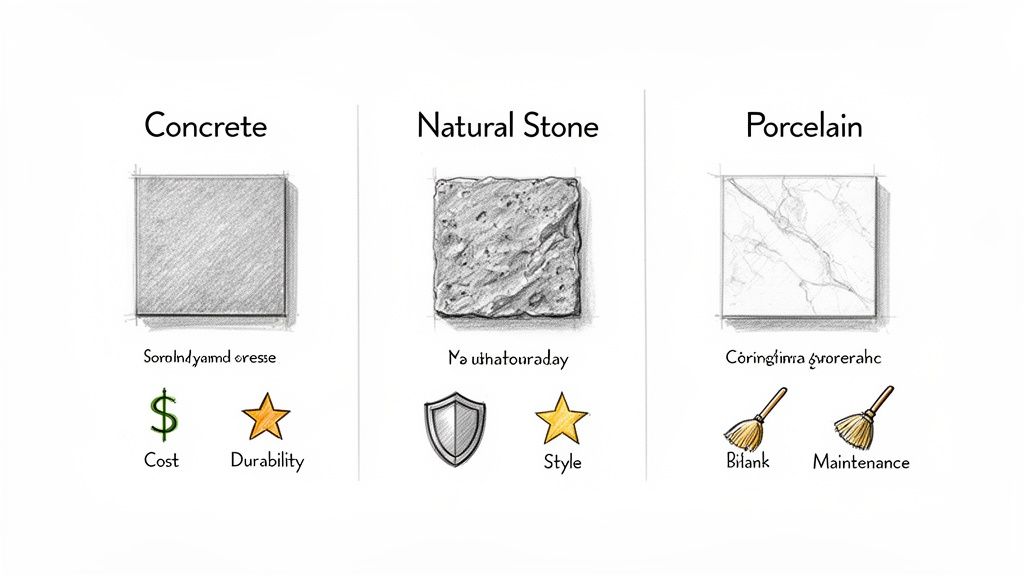
Your patio really is the cornerstone of your backyard. Getting the paver choice right is the single most critical step in creating a space you'll actually want to spend time in for years to come. This decision goes far beyond looks; it dictates the long-term performance and maintenance schedule for your entire outdoor area.
The materials you settle on are a huge piece of your property's overall hardscape design—the non-living elements that give your landscape structure and function. We're going to break down the most popular paver options to help you balance cost, durability, style, and upkeep. The best way to start this process is by using AI Landscape Design to visualize your ideas. Simply take a photo of your own yard, and you can see how different materials will look before making any commitments.
A Quick Comparison of Top Paver Choices
Before we get into the weeds on each material, a high-level overview can help frame the decision. There's no single "best" paver—it all depends on your specific needs, your budget, and the aesthetic you're chasing. One homeowner might be drawn to the rustic, organic charm of natural stone, while another needs the affordable strength of concrete to cover a large, functional patio.
To get you started, here’s a quick-glance table summarizing the most popular patio materials and where they shine.
Patio Paver Quick Comparison Guide
This table provides a snapshot of the most popular paver materials, helping you quickly compare them across the factors that matter most.
Paver Type | Average Cost (Per Sq Ft) | Longevity | Best For |
|---|---|---|---|
Concrete Pavers | $4 - $8 (Material Only) | 25-50 years | Budget-conscious projects, high-traffic areas, and versatile design needs. |
Natural Stone | $15 - $30+ (Material Only) | 50-100+ years | Luxury patios, creating a timeless and high-end aesthetic, increasing property value. |
Porcelain Pavers | $9 - $15 (Material Only) | 50+ years | Modern designs, poolside areas (non-slip), and low-maintenance outdoor spaces. |
Brick Pavers | $5 - $10 (Material Only) | 100+ years | Classic, traditional homes seeking durability and a timeless, warm appearance. |
This gives you a solid starting point, but the numbers on a chart don't tell the whole story.
The biggest challenge for homeowners isn't a lack of options, but the inability to truly picture how those options will look next to their own home. It’s one thing to see a paver in a showroom and another to see it installed across your entire backyard.
This is where modern technology completely changes the game. You can use an AI Landscape Design tool like the DreamzAR app to instantly visualize different paver materials right in your own yard. Just upload a photo, and the app can superimpose various paver styles, patterns, and colors onto your space.
It lets you see exactly how bluestone, travertine, or interlocking concrete will complement your home's exterior before you commit a dime. This makes the final decision feel confident and exciting, not stressful. And once your patio is down, you can explore the benefits of rescreening your patio for shade and privacy to add another layer of comfort to your new favorite spot.
Visualize Your Patio Instantly with AI
Choosing the right pavers often feels like a massive guessing game. You can stare at samples in a showroom or scroll through endless pictures online, but it’s tough to know how a specific stone or brick will actually look in your backyard. How will it pair with your home's siding? What about under the morning sun versus the evening shade? This uncertainty can be paralyzing, and worse, lead to some pretty expensive regrets.
Thankfully, you don't have to guess anymore. Modern tech now offers a powerful way to see the final result with incredible accuracy before you spend a dime. This is where AI landscape design tools, like the DreamzAR app, are completely changing the game for homeowners. By using a photo of your own yard, you can apply AI Landscape Design to visualize countless ideas and make confident decisions.
Instead of just imagining it, you can take a simple photo of your yard and instantly overlay different paver styles right onto the image. Suddenly, you can see exactly how rustic bluestone, elegant travertine, or modern concrete pavers will transform your space.
From Imagination to Instant Visualization
The biggest hurdle in patio design has always been bridging the gap between an idea in your head and the reality on the ground. An AI-powered app is that bridge. It gives you a risk-free digital sandbox to test drive all your design choices using a photo of your actual yard.
The process couldn't be simpler:
Snap a Photo: Just take a clear picture of the area where your new patio will go.
Pick Your Pavers: Browse through a huge library of materials, including all kinds of stone, concrete, and porcelain.
Apply and Compare: With a single tap, you can "install" your chosen pavers in the photo. From there, you can experiment with different colors, textures, and laying patterns like herringbone or running bond.
This simple workflow lets you cycle through dozens of options in just a few minutes. You can see for yourself if a warm-toned paver really does complement your brick exterior or if a cool-toned slate creates the striking, modern contrast you were hoping for.
The ability to visualize a design in the context of your own home is the single most effective way to prevent costly design mistakes. It moves the decision from an abstract choice to a confident, informed selection based on what you can actually see.
More Than Just a Pretty Picture
While seeing the preview is the main draw, the best AI tools go much deeper, helping you with the practical side of planning. They turn your design into an actionable blueprint. For a homeowner, this means having critical information right at your fingertips.
If you're curious about the tech that makes this possible, it helps to start by understanding 3D product visualizations, which relies on similar principles to create lifelike digital versions of physical items.
For example, the DreamzAR app has smart tools that help with the initial project scoping. Once you’ve landed on a design you love, the app can provide an approximate area measurement. That data is gold when you're putting together a preliminary budget, giving you a solid idea of the square footage you'll need to buy.
Aligning Your Vision with Your Budget
Having a clear visual plan is also an invaluable communication tool. When you start talking to contractors, you can show them exactly what you want. This eliminates the kind of miscommunication that leads to delays and surprise costs. This level of clarity ensures your vision and your budget stay perfectly aligned from day one. To see more about how this works, you can check out our detailed guide on AI's role in visualizing your yard.
Ultimately, using AI to see your patio design ahead of time empowers you to move forward with total confidence. You'll know you’ve picked the best pavers for your patio because you've already seen them there.
A Deep Dive Into Patio Paver Materials
Let's be honest, choosing the best pavers for your patio goes way beyond just picking a color you like. Every material brings its own unique blend of looks, toughness, and price to the table, and that choice will define your outdoor space for years to come. It’s time to move past a quick glance and really dig into what makes each of the top contenders tick.
This breakdown will get into the practical, real-world differences between concrete, brick, natural stone, and porcelain. We’ll look at the actual trade-offs you'll face with durability, upkeep, and design freedom, giving you the confidence to make the right call.
But before you write a check, remember how crucial it is to see these materials in your own yard. This is where you can apply AI Landscape Design to visualize your ideas using photos of your own yard. This step can make all the difference, helping you visualize the final product before a single paver is laid.
This infographic breaks down just how simple it is to use an AI tool like DreamzAR to preview your options in three easy steps.
The whole process is designed to be straightforward. Any homeowner can snap a photo and instantly see how different pavers will look. That immediate visual feedback takes the guesswork out of the equation, making sure the material you choose is a perfect match for your home’s style.
The Workhorse: Concrete Pavers
By a long shot, concrete pavers are the most popular choice for patios across North America. Why? It's a powerful combination of affordability, serious strength, and an almost dizzying array of design options.
And don't confuse these with a plain, poured concrete slab. Interlocking concrete pavers are factory-made under intense pressure, which makes them far denser and stronger than standard concrete. This controlled process also ensures they come out with consistent sizing, color, and texture every time.
The global demand really tells the story of their reliability. The paver market was valued at about USD 4.6 billion in 2024 and is expected to hit USD 7.5 billion by 2034, with concrete pavers claiming the biggest piece of that pie. Here in the U.S., the market was worth USD 1.07 billion in 2024, a testament to how many homeowners put their trust in this material.
Aesthetic Range
Shapes & Patterns: From classic rectangles to complex, multi-piece patterns, concrete pavers can either mimic the rustic look of natural stone or create clean, modern lines.
Colors & Textures: They come in a massive spectrum of colors, from earthy neutrals to bold hues. Textures can be smooth, tumbled for a weathered look, or stamped to replicate other materials.
Cost & Durability
Cost: As one of the most budget-friendly choices, material costs usually land between $4 to $8 per square foot.
Durability: High-quality concrete pavers are built tough, easily handling heavy foot traffic and punishing freeze-thaw cycles. With a proper base, you can expect them to last 25-50 years. Their interlocking design gives them just enough flex to prevent the major cracking that plagues poured slabs.
Real-World Scenario
Use Case: This is the perfect material for a large family patio that has to endure kids, pets, and constant get-togethers without blowing the budget. Their uniform shape also makes them a great candidate for a determined DIYer. If you're considering replacing an old slab, our guide on converting a concrete driveway to pavers has some great insights into the installation process.
Key Differentiator: The biggest win for concrete pavers is their unmatched design flexibility at a price that’s hard to beat. No other material gives you this much control over color, shape, and texture in such a cost-effective package.
The Timeless Classic: Brick Pavers
There's a warmth and history to brick pavers that few other materials can replicate. They're made from fired clay, and their rich, earthy tones are baked right in, which means they won’t fade from sun exposure over time. This lasting character makes them a go-to for traditional, colonial, and rustic homes.
Unlike concrete pavers that are colored with dyes, a brick's color runs all the way through. This means that even if a brick chips or wears down after decades of use, the color you see will be the same as the day it was installed.
Aesthetic Range
Colors: You'll mostly find them in classic reds, deep browns, and warm tans, creating an instantly inviting feel.
Patterns: Their uniform rectangular shape is perfect for laying down classic patterns like herringbone, basketweave, and running bond, adding a touch of sophisticated detail to any patio.
Cost & Durability
Cost: Brick is a bit more of an investment than basic concrete, with materials typically falling between $5 and $10 per square foot.
Durability: They are incredibly tough and known to last for over 100 years. However, they are more porous than other options and can be prone to cracking or spalling in harsh freeze-thaw climates unless you get ones specifically rated for that environment (look for "severe weather" grade).
Real-World Scenario
Use Case: An ideal choice for a historic home's courtyard or a winding garden path where you want an authentic, timeless look that feels like it’s always been part of the landscape. A classic herringbone pattern not only looks fantastic but also adds great structural stability.
The Unmatched Elegance: Natural Stone
When you’re after a truly luxurious, one-of-a-kind patio, natural stone is in a class of its own. Every single stone is unique, marked with distinct veining, textures, and color variations created over millions of years. This means no two natural stone patios will ever be identical.
The most common types you’ll see for patios include flagstone (like slate, bluestone, and quartzite), travertine, and granite. Flagstone offers irregular, organic shapes that are perfect for naturalistic designs, while travertine brings a more uniform, classic Mediterranean vibe.
Aesthetic Range
Authenticity: The natural variations in color and texture are simply impossible to perfectly replicate with any manufactured product.
Shapes: You can install it as irregular flagstones for a rustic, flowing look or have it cut into uniform tiles (called gauged stone) for a more formal, contemporary patio.
Cost & Durability
Cost: This is where you’ll see the biggest price tag. Material costs can range from $15 to over $30 per square foot, depending heavily on the type of stone and where it comes from.
Durability: Natural stone is incredibly resilient and can easily last a lifetime. That said, some types, like slate, can start to delaminate or flake over time, and softer stones can stain if they aren't sealed properly.
Real-World Scenario
Use Case: This is the ultimate material for a high-end outdoor kitchen and dining space where the goal is creating a sense of permanence and luxury. Using irregular bluestone flagstones would create a stunning, organic surface that blends beautifully into a lush garden setting.
The Modern Marvel: Porcelain Pavers
Porcelain pavers are the modern answer to patio design, blending sleek aesthetics with phenomenal technical performance. They're made from fine clay fired at incredibly high temperatures, resulting in a product that's unbelievably dense, non-porous, and perfectly uniform.
Their extremely low water absorption rate (usually less than 0.5%) makes them almost immune to stains, frost damage, and moss or algae growth. This quality easily makes them one of the lowest-maintenance paving options you can find.
Aesthetic Range
Modern Look: Often produced in large-format tiles with crisp, clean lines, they are the perfect foundation for contemporary and minimalist designs.
Hyper-Realistic Finishes: Thanks to advanced printing technology, they can convincingly mimic the look of natural stone, wood, or even concrete, all while delivering far superior performance.
Cost & Durability
Cost: Porcelain sits in the mid-to-high end of the price spectrum, with material costs typically running from $9 to $15 per square foot.
Durability: Their density makes them exceptionally resistant to scratches, stains, and fading. They're a fantastic choice for any climate and will look brand new for 50+ years with very little effort.
Real-World Scenario
Use Case: The absolute best choice for a poolside patio or a modern rooftop deck. Their non-slip surface adds a layer of safety around water, and their resistance to chlorine and stains means they’ll stay looking pristine despite constant exposure to pool chemicals and summer spills.
In-Depth Paver Material Analysis
To make things even clearer, let's put these materials side-by-side. This table breaks down the key attributes so you can see exactly how they stack up against each other in the areas that matter most for your project.
Feature | Concrete Pavers | Brick Pavers | Natural Stone | Porcelain Pavers |
|---|---|---|---|---|
Average Cost (SF) | $4 - $8 | $5 - $10 | $15 - $30+ | $9 - $15 |
Lifespan | 25-50 years | 100+ years | Lifetime (100+ years) | 50+ years |
Design Versatility | Highest (endless shapes, colors, textures) | Moderate (classic shapes, limited warm colors) | High (unique natural beauty, irregular or cut) | Very High (mimics stone, wood; modern sizes) |
Maintenance | Low (needs occasional cleaning and re-sanding) | Low to Moderate (can stain, needs cleaning) | Moderate (requires regular sealing) | Lowest (non-porous, stain & frost resistant) |
DIY Friendliness | High (uniform size makes installation easier) | Moderate (requires precision for patterns) | Low (heavy, irregular shapes need professional skill) | Moderate to Low (precise base needed) |
Best For... | Budget-conscious projects, large areas, custom designs | Traditional, historic, or classic architectural styles | High-end, luxury patios with a one-of-a-kind look | Modern designs, poolside areas, low-maintenance living |
Each material clearly has its place. Your final decision will come down to balancing your budget, the style of your home, and how much maintenance you're willing to put in over the long haul.
Matching Pavers to Your Home Style and Budget
Choosing the best pavers for your patio isn't just a technical decision—it's an extension of your home's personality and your family's lifestyle. The right material should feel like a natural fit for both your house and your wallet. Instead of getting bogged down in specifications, it helps to think in terms of real-world scenarios.
To make this easier, we’ve broken it down into three common homeowner goals. Whether you're aiming for a quick and affordable upgrade, a forever-home investment, or a chic space for entertaining, there’s a perfect paver solution waiting for you.
The Budget-Conscious Makeover
If you're looking to maximize impact without emptying your bank account, interlocking concrete pavers are the undisputed champion. This choice is all about getting a high-end look on a practical budget. They're affordable, relatively easy to install, and a favorite for DIYers tackling their first major outdoor project.
The sheer scale of the concrete paver market is a huge plus for homeowners. With the global market hitting USD 16,958.5 million in 2024, you get wide availability, competitive pricing, and tons of options.
Concrete pavers also offer a wild range of styles, from shapes that mimic rustic, old-world cobblestone to clean, geometric lines perfect for a more modern vibe. You really don't have to sacrifice design for cost.
Situational Fit: Imagine a young family trying to transform a muddy backyard patch into a functional 400-square-foot patio for summer barbecues. By choosing interlocking concrete pavers, they get a beautiful, durable surface that stands up to kids and pets, all while keeping project costs firmly in check.
Before you pull the trigger, though, you have to see how these pavers will actually look in your space. This is where a tool like the DreamzAR app becomes invaluable. Just upload a photo of your yard, and you can instantly visualize how different concrete paver patterns and colors will appear. It’s a simple step that takes the guesswork out of the equation.
The Forever Home Investment
When your goal is adding lasting value and timeless beauty to a home you plan on loving for decades, natural stone is the only way to go. Materials like travertine, bluestone, or flagstone aren't just paving materials; they are long-term investments that can seriously boost your property's resale value.
Each piece of natural stone is completely unique, with its own distinct veining, color shifts, and textures. This creates a one-of-a-kind surface that manufactured products simply can't replicate. While the upfront cost is higher, its incredible longevity—often lasting over a century—makes it a smart choice over the long haul.
A natural stone patio becomes a permanent, elegant feature of your landscape. But for an investment this significant, you need to be sure it aligns with your home's aesthetic. The DreamzAR app lets you virtually "install" different types of stone, so you can see how the organic textures of travertine or the rich colors of slate will complement your home's architecture before you commit.
The Modern Entertainer’s Oasis
For the homeowner who dreams of a sleek, contemporary outdoor living area perfect for hosting parties and get-togethers, large-format porcelain pavers are the ideal fit. These pavers deliver a clean, minimalist look that acts as a stunning foundation for modern outdoor furniture and sophisticated design.
Porcelain's performance is just as impressive as its appearance. Its non-porous surface is exceptionally resistant to stains, moss, and fading, which means your chic patio stays looking pristine with very little upkeep. This is a game-changer for busy homeowners who'd rather spend their time enjoying their space than scrubbing it.
The large tile format creates fewer grout lines, contributing to a seamless, expansive feel that can make any area feel bigger and more refined. Matching this modern look to your specific home is key, and AI visualization helps here, too. You can test out different shades of gray, charcoal, or even wood-look porcelain tiles in the DreamzAR app to find the perfect one. To dive deeper into harmonizing your paver choice with your home, check out our guide on landscaping tips for traditional, modern, and rustic styles.
What Goes Into a Proper Installation
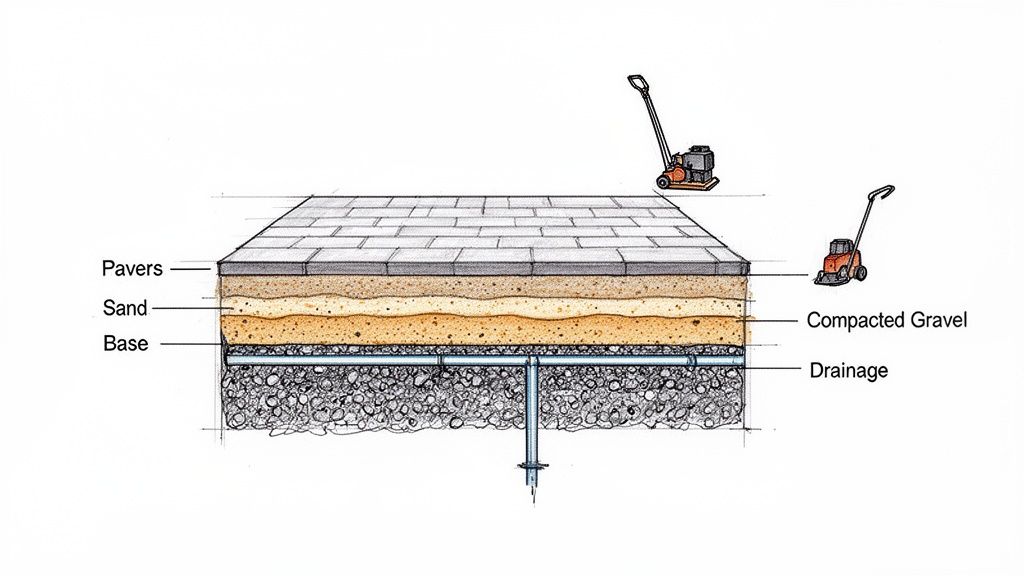
Picking the right paver is only half the job. I've seen countless stunning designs fall apart because what lies beneath just wasn't up to snuff. The long-term beauty and durability of your investment depend entirely on a rock-solid installation and a bit of consistent care.
At the heart of every paver patio that stands the test of time is a meticulously prepared base. This isn't just about leveling some dirt; it’s an engineered system of compacted aggregate built to provide unwavering stability and manage water. Skimping on the base is the number one reason patios sink, shift, and become uneven messes down the road.
This foundation is what separates a patio that looks good for five years from one that looks great for fifty.
Building from the Ground Up
A proper installation follows a proven, layered method. Think of it like building a lasagna—every single layer has a critical job to do.
Excavation: First, the area is dug out to the correct depth. This has to accommodate the full thickness of the base material, the bedding sand, and the pavers themselves.
Compacted Gravel Base: This is the workhorse of the entire system. Crushed stone is laid down in layers, with each one being compacted by a heavy plate compactor. This creates an unyielding foundation that distributes weight and allows water to drain away.
Bedding Sand: On top of the gravel goes a thin, perfectly leveled layer of coarse sand. It’s this layer that allows for the tiny adjustments needed to get each paver perfectly flat and even.
Laying the Pavers: The pavers are then set in place following your chosen pattern. At the same time, strong edge restraints are installed to keep the whole patio from spreading apart over the years.
Locking it all Together: Finally, polymeric sand is swept into the joints and activated with a light mist of water. This special sand hardens like a grout, locking every paver in place and preventing weeds from taking root.
DIY or Hire a Pro?
Deciding whether to tackle this yourself or call in a professional is a huge fork in the road. A DIY approach can definitely save you money on labor, especially if you’re planning a small, simple patio with straightforward concrete pavers. But make no mistake, this is physically demanding work that requires an almost obsessive attention to detail.
For bigger projects, yards with any kind of slope, or intricate patterns, hiring an experienced contractor is almost always the right call. Pros have the heavy equipment and the know-how to guarantee the base is flawless, which is the key to your patio's longevity. Our essential guide to patio pricing can give you a better idea of what to budget for.
Having a crystal-clear visual plan is the single best tool for a successful installation, whether you’re doing it yourself or working with a crew. A simple miscommunication about a pattern or a border color can lead to expensive and frustrating mistakes.
This is exactly where AI Landscape Design becomes your secret weapon. Using an app like DreamzAR, you can create a precise visual mockup of your finished patio. Just upload a photo of your yard, play around with different pavers and patterns until it’s perfect, and then share that exact image with your contractor. It's a simple step that ensures everyone is on the same page before the first shovel even hits the ground.
The broader paving market is booming, with the commercial paving sector projected to hit USD 12,000 million by 2026. This growth is great news for homeowners, as it means we all get access to better materials and the latest professional installation techniques. You can learn more about the growth of the commercial paving market and what it means for the industry.
Common Questions About Patio Pavers Answered
Once you've waded through all the different materials, costs, and styles, a few practical questions usually pop up. It’s totally normal. Let's tackle the most common ones head-on so you can feel completely confident in your final choice.
What Is the Most Low Maintenance Paver for a Patio
If you’re looking for a patio that practically takes care of itself, porcelain pavers are the undisputed winner. Their surface is incredibly dense and non-porous, which means they’re naturally resistant to just about everything—stains, moss, mildew, you name it. They won't fade, either.
Unlike natural stone that needs regular sealing to stay looking its best, porcelain is good to go from day one. A quick rinse with a garden hose or a gentle pressure wash is usually all it takes to make them look brand new. While sealed concrete and stone are certainly tough, porcelain’s built-in defenses make it the champion of low-effort outdoor living.
Can I Install a Paver Patio Myself to Save Money
Absolutely. For a handy homeowner, a DIY paver installation is definitely doable, especially for a smaller, simple patio using uniform interlocking concrete pavers. But here's the catch: the success of the entire project hinges on a perfectly level and compacted base. This part is no joke—it's physically demanding, takes a lot of time, and is incredibly unforgiving if you make a mistake.
If you're planning a larger patio, a complex pattern like herringbone, or your yard has any kind of slope, I strongly recommend hiring a professional. A pro has the equipment and experience to guarantee proper drainage and a stable base that will stop the pavers from sinking or shifting for decades to come.
An AI Landscape Design tool is invaluable no matter which path you take. For a DIYer, it's a precise visual blueprint you can create using a photo of your yard. For hiring a pro, it’s the perfect way to show them exactly what you envision, preventing any costly misunderstandings down the road.
How Can I Make My Paver Patio More Eco Friendly
For a greener patio, the answer is simple: permeable pavers. They are specifically designed with wider joints and installed over a special, multi-layered gravel base that lets rainwater soak right through.
This clever system does a few great things for the environment:
It drastically cuts down on surface runoff, which helps prevent soil erosion and takes the pressure off local storm drains.
It allows the water to naturally filter back into the ground, replenishing local groundwater tables.
Many permeable options are even made with recycled materials, shrinking their environmental footprint even further.
How Long Will a Paver Patio Last
The lifespan of your patio really comes down to two things: the quality of the pavers you choose and, even more critically, the quality of the installation. A well-built paver patio isn't just a seasonal upgrade; it's a long-term investment in your home.
Here’s a general idea of what to expect from different materials:
Natural Stone & Brick: These can easily last a lifetime, often 100 years or more with basic care.
High-Quality Concrete & Porcelain: You can expect a solid lifespan of 25 to 50 years.
The real secret to this kind of longevity is always the base. A deep, well-compacted gravel foundation is what keeps everything locked in place, preventing the sinking and shifting that can ruin a patio over time.
Ready to see how these different pavers could actually look in your own backyard? With DreamzAR, you can stop guessing and start seeing. Just upload a photo of your yard and use our powerful AI Landscape Design tools to instantly preview hundreds of paver styles, patterns, and colors. Design your perfect patio with confidence by downloading the app today at https://www.dreamzar.app.