10 Front Yard Curb Appeal Landscaping Ideas for 2026
- Akhilesh Joshi
- 4 days ago
- 22 min read

Your front yard is your home's first impression, a public statement that sets the tone for everything inside. It’s the welcome you receive at the end of a long day and the first thing guests admire. Improving your front yard curb appeal landscaping doesn't just increase your property's value; it boosts your personal satisfaction and pride in your home. However, translating a vision into reality can be daunting. From selecting the perfect plants to designing functional pathways and installing strategic lighting, the sheer number of options can feel overwhelming.
This guide simplifies the process by breaking it down into a curated collection of powerful, actionable strategies. We've organized ideas by theme, covering everything from low-maintenance and budget-friendly designs to modern, cottage, and desert-inspired aesthetics. Each section provides practical tips, specific plant and material suggestions, and approximate cost considerations to help you plan effectively.
Crucially, we will show you how to eliminate the guesswork. Throughout this listicle, we'll explain how you can apply AI Landscape Design to visualize your ideas using photos of your own yard. Tools like DreamzAR allow you to bring these concepts to life by simply uploading a photo of your current yard. You can visualize any of these ideas with remarkable accuracy, experimenting with different layouts and materials before committing a single dollar or digging a single hole. Let’s explore the projects that will transform your home and make it a standout on the block.
1. Colorful Foundation Plantings
Foundation plantings are the cornerstone of exceptional front yard curb appeal landscaping, serving as the soft transition between your home's rigid structure and the natural landscape. This classic technique involves strategically placing a mix of shrubs, perennials, and ornamental grasses around the base of your house. More than just decorative, this approach masterfully frames your entryway, softens harsh architectural lines, and anchors your home visually to the property, creating a welcoming and established presence.
By layering plants of varying heights, textures, and colors, you can guide the eye towards the front door and conceal less attractive elements like utility boxes or exposed concrete. This method works for any architectural style, from traditional to modern, by adapting the plant selection to match the home's aesthetic. You can apply AI Landscape Design to visualize different planting schemes directly onto a photo of your own yard, making it easy to see what works best before you buy.
Implementation and Plant Selection
Successful foundation planting relies on thoughtful plant choices that ensure year-round interest and appropriate scale.
For Traditional Homes: Create a timeless look with a structured backbone of evergreen shrubs like Boxwood or Yew. In front of this green canvas, layer vibrant perennials such as purple-flowering 'May Night' Salvia or classic 'Big Blue' Liriope for a touch of controlled color.
For Modern Contemporary Settings: Emphasize texture and form. Combine graceful ornamental grasses like 'Karl Foerster' Feather Reed Grass with bold, architectural plants like Agave or Yucca. Add pops of color with low-maintenance perennials like Coneflower or Black-Eyed Susan.
For Shaded Northeastern Homes: Embrace the shade with lush foliage and delicate blooms. Hydrangeas are a perfect choice for dramatic summer flowers, while Hostas offer incredible variety in leaf color and texture. Add fine-textured Ferns to complete the woodland garden feel.
Visualize Before You Plant with AI:Avoid costly planting mistakes. You can apply AI Landscape Design to visualize your ideas using photos of your own yard. With an app like DreamzAR, upload a photo of your home's foundation and virtually experiment with different plant combinations. See exactly how hydrangeas will look next to your porch or test various grass and perennial pairings to perfect your design before you even buy a single plant.
Actionable Tips for Success
Plan for All Seasons: Select plants with staggered bloom times and evergreen foliage to ensure your foundation looks appealing throughout the year. Plant spring-flowering bulbs like tulips and daffodils in the fall for an early burst of color.
Respect Mature Size: Always check the plant tag for its mature height and spread. Planting too close to the house or walkways can lead to overcrowding and maintenance headaches down the road.
Group by Needs: Arrange plants with similar water, sun, and soil requirements together. This practice, known as hydrozoning, makes irrigation more efficient and helps all your plants thrive.
2. Welcoming Entryway Enhancements
The front entrance is the primary focal point of your home, and enhancing it with strategic landscaping is a powerful way to boost front yard curb appeal landscaping. This approach focuses on framing your front door to create a warm, inviting welcome for guests. By using a combination of planters, lighting, and complementary hardscaping, you draw the eye directly to the main entry, making your home feel both accessible and thoughtfully designed.
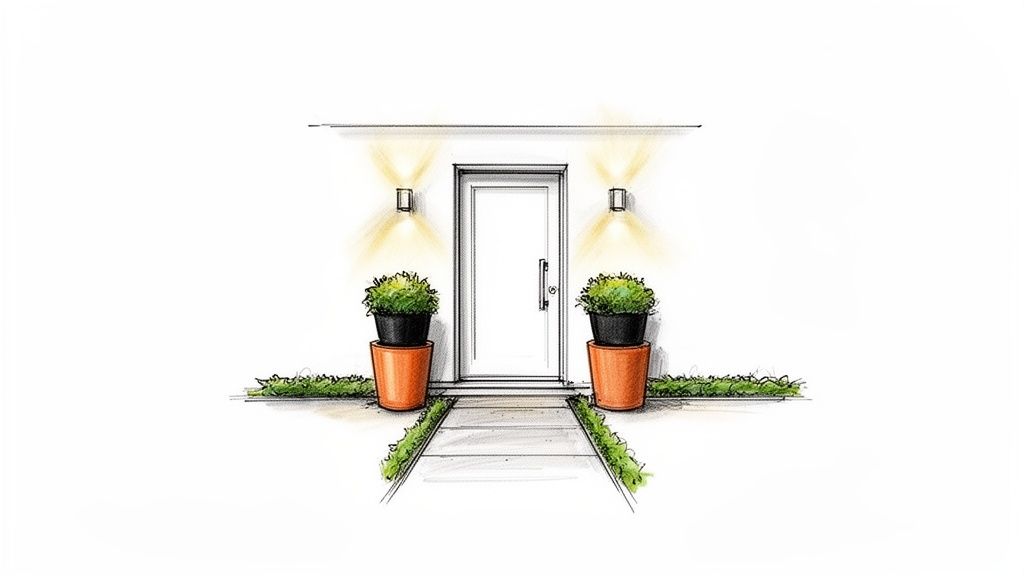
This technique elevates your home's facade by creating a layered, intentional look. It’s not just about placing a few pots; it's about curating a scene that complements your home’s architecture and guides visitors naturally towards the entrance, setting a positive first impression before they even step inside. You can even apply AI Landscape Design to try out different planter styles and arrangements on a photo of your own entryway.
Implementation and Plant Selection
A welcoming entryway is achieved by matching your home's style with carefully chosen elements.
For Traditional Colonial Homes: Achieve classic symmetry by flanking the door with a pair of matching planters containing manicured evergreen topiary like Boxwood or Spiral Alberta Spruce. This creates a formal, balanced, and elegant look.
For Mediterranean-Style Homes: Evoke a rustic, sun-drenched feel with large terracotta urns. Fill them with drought-tolerant plants like olive trees, lavender, or vibrant bougainvillea to create a dramatic and colorful statement.
For Modern Homes: Emphasize clean lines and bold forms. Use sleek, minimalist planters in materials like concrete or black metal, and fill them with architectural plants such as Snake Plant or Agave for a sophisticated, high-impact design.
Visualize Your Entryway with AI:Choosing the right planters and lighting can be tricky. You can apply AI Landscape Design to visualize your ideas using photos of your own yard. With the DreamzAR app, take a photo of your front door and virtually place different styles and sizes of pots. Experiment with lighting fixtures and plant arrangements to see what best complements your home's architecture.
Actionable Tips for Success
Layer Your Lighting: Combine different light sources for a professional look. Use ambient sconces on either side of the door, accent uplighting on planters or architectural features, and task lighting to illuminate the pathway.
Refresh Seasonally: Keep your entryway looking fresh by updating your container plantings each quarter. Use pansies in the spring, vibrant annuals in the summer, mums in the fall, and evergreen boughs with decorative accents in the winter.
Use the Rule of Odds: For a more dynamic and visually appealing arrangement, group planters in odd numbers like three or five, varying their height and size to create interest and depth.
3. Hardscape Features & Pathways
Hardscape elements are the architectural bones of an exceptional front yard curb appeal landscaping plan, providing structure, defining spaces, and guiding movement. These durable features, including stone pathways, paver patios, and retaining walls, add year-round visual interest that doesn't depend on seasonal blooms. More than just functional, well-designed hardscaping creates clean lines and geometric patterns that contrast beautifully with soft plant textures, elevating the entire design.
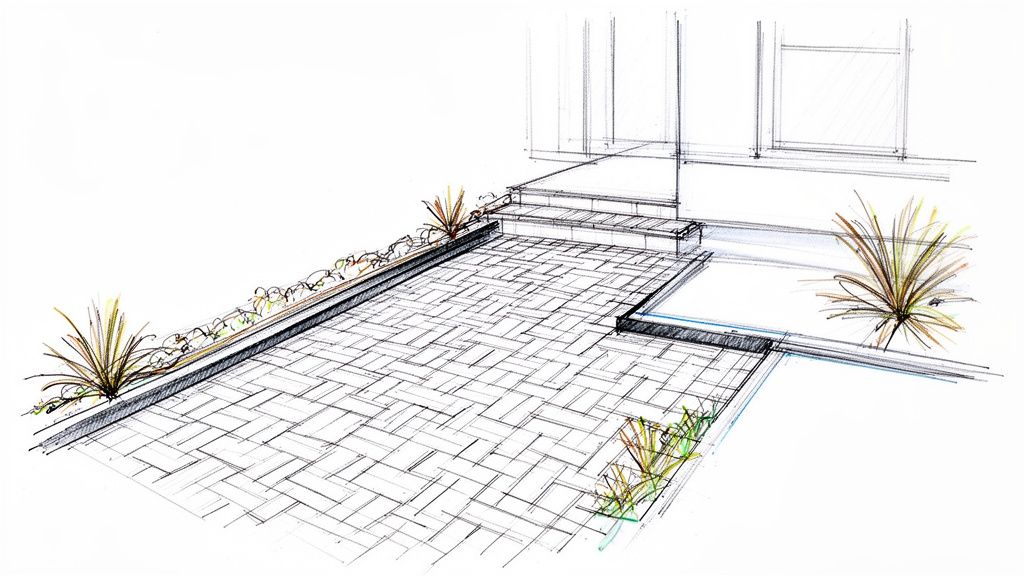
From a welcoming flagstone walkway to a sophisticated paver driveway, these features establish a sense of permanence and intention. They effectively solve practical issues like soil erosion on a slope or create a designated seating area, all while significantly boosting your home's perceived value and aesthetic appeal. Before committing to a costly project, you can apply AI Landscape Design to visualize different pathway materials or patio layouts using a photo of your own yard. Learn more about the fundamentals of hardscape design and its impact on outdoor spaces.
Implementation and Material Selection
Choosing the right materials is key to creating a cohesive look that complements your home's architecture.
For Traditional or Rustic Homes: Opt for natural materials like flagstone or classic red brick. A gracefully curving flagstone path bordered by low-growing perennials creates a charming, organic feel that perfectly suits a cottage or craftsman-style house.
For Modern Contemporary Settings: Emphasize clean lines and sleek materials. Large-format concrete pavers in a linear or stacked bond pattern create a sophisticated, minimalist walkway or patio. Consider using permeable pavers for an eco-friendly, modern solution.
For All Styles: A well-defined garden edge or a low retaining wall adds a polished finish. Use materials like steel edging for a crisp, modern look or stacked stone for a more naturalistic border that defines planting beds.
Visualize Before You Build with AI:Hardscape projects are a significant investment. You can apply AI Landscape Design to visualize your ideas using photos of your own yard. With the DreamzAR app, upload a photo and virtually overlay different paver patterns, walkway layouts, or retaining wall materials. See exactly how a herringbone brick path will look leading to your door before committing.
Actionable Tips for Success
Complement Your Home's Palette: Select hardscape materials with colors and tones that harmonize with your home's siding, trim, and roof. This creates a unified and intentional design.
Ensure Proper Drainage: All solid surfaces must be sloped correctly, typically a minimum of 1/8 inch per foot, to direct water away from your home's foundation and prevent pooling.
Install Durable Edging: Use high-quality edging material along pathways and patios to prevent pavers from shifting and to keep grass from creeping into the hardscaped areas.
4. Layered Lawn & Mulch Design
A well-defined and layered landscape creates a polished look that significantly boosts front yard curb appeal landscaping. This technique involves creating distinct, curved or straight-edged garden beds that separate your lawn from your plantings. Filling these beds with a layer of quality mulch not only provides a clean, contrasting backdrop for your plants but also offers practical benefits like moisture retention and weed suppression. This intentional separation makes a landscape look deliberate, sophisticated, and professionally maintained.
By carving out space for mulch beds, you create visual depth and structure. The clean lines of the edging guide the eye through the landscape, while the mulch provides a uniform canvas that makes plant colors and textures pop. This approach transforms a simple lawn and a few shrubs into a dynamic, multi-layered design. To get the perfect shape and color, you can apply AI Landscape Design to test out different bed lines and mulch types on a photo of your own yard.
Implementation and Material Selection
The key to a successful layered design is the interplay between the lawn, edging, and mulch. The materials you choose should complement your home's exterior and plant palette.
For Contemporary Homes: Create sharp, modern lines using black mulch in beds defined by sleek metal or dark composite edging. This high-contrast look provides a dramatic backdrop for minimalist plantings like ornamental grasses or sculptural evergreens.
For Traditional or Rustic Settings: Opt for natural materials that exude warmth. A reddish-brown cedar or cypress mulch paired with a subtle brick or natural stone paver edge creates a classic, welcoming feel that complements traditional architecture.
For Low-Maintenance Landscapes: Use a long-lasting, high-quality mulch like shredded hardwood. Define the beds with durable plastic edging that is easy to install and effectively contains the mulch, reducing annual maintenance tasks.
Preview Mulch and Edging with AI:Unsure which mulch color will look best? Apply AI Landscape Design to visualize your ideas using photos of your own yard. With an app like DreamzAR, you can instantly see how a dark black mulch bed with steel edging will look versus a natural cedar mulch with stone borders, helping you perfect the design before committing to materials.
Actionable Tips for Success
Define Your Edges: Use a spade or dedicated edger to create a crisp, 4-6 inch deep trench between the lawn and the garden bed. This "natural edge" is effective on its own or can be reinforced with landscape edging materials.
Apply Mulch Correctly: Spread a 2-3 inch layer of mulch evenly across the bed. Crucially, avoid "volcano mulching" by pulling the mulch a few inches away from the base of trees and plant stems to prevent rot and disease.
Choose Complementary Colors: Select a mulch color that enhances your home's exterior. Black and dark brown mulches create a bold contrast, while red or natural wood tones offer a warmer, more subtle look.
Refresh Annually: To keep the landscape looking fresh, fluff the existing mulch with a rake in the spring to break it up and then top it off with a new 1-inch layer to restore its color and effectiveness.
5. Strategic Lighting Design
Exceptional front yard curb appeal landscaping doesn't disappear when the sun goes down. Strategic lighting design transforms your property after dark, enhancing safety, creating a warm ambiance, and artfully highlighting your home's best architectural and landscape features. A well-planned lighting scheme adds a layer of sophistication and drama, ensuring your home stands out 24/7.
By using a combination of techniques like uplighting, path lighting, and accent lighting, you can craft a captivating nighttime scene. This approach not only boosts security by illuminating dark areas but also draws attention to focal points like a beautiful mature tree or a textured stone wall, adding depth and intrigue to your landscape. Planning a layout is simple when you can apply AI Landscape Design to a photo of your own yard to see where fixtures will have the most impact.
Implementation and Lighting Techniques
A successful lighting plan layers different types of light to create a cohesive and functional design.
For Architectural Emphasis: Use uplighting to graze the facade of your home, highlighting interesting textures like stone or brick. Wall sconces flanking the front door create a welcoming and balanced entryway.
For Landscape Highlighting: Cast a soft glow on a specimen tree with uplights to create a dramatic silhouette. Use smaller accent lights to spotlight key shrubs or perennial beds, bringing your garden to life after dark.
For Safety and Navigation: Line your main walkway and driveway with low-profile path lights. This ensures safe passage for guests while creating an elegant, guiding line toward your entrance.
Visualize Before You Install with AI:Don't guess where to place fixtures. Apply AI Landscape Design to visualize your ideas using photos of your own yard. With a tool like the DreamzAR app, upload a nighttime photo and virtually place different types of lights. Experiment with uplighting on your trees or test various path light styles to perfect your plan before installation.
Actionable Tips for Success
Choose a Warm Tone: Opt for warm white LED lights (around 2700K-3000K) to create a welcoming, high-end glow rather than a harsh, bluish light.
Layer for Depth: Combine different lighting types. For instance, use broad wash lights for foundational illumination, focused spotlights for dramatic accents, and path lights for practical guidance. To learn more, explore these expert tips on garden lighting to create the perfect mood.
Focus on the Effect, Not the Fixture: The goal is to see the beautiful light, not the bulky hardware. Position fixtures discreetly behind plants or other landscape elements to hide the source. Learn more about the principles of a great layout in our guide on how to design landscape lighting.
6. Low-Maintenance Native Plant Landscaping
Embracing native plants is one of the most intelligent strategies for creating stunning front yard curb appeal landscaping that is both beautiful and sustainable. This approach involves selecting plants that have evolved in your specific region, making them naturally adapted to the local climate, soil conditions, and rainfall patterns. The result is a thriving, resilient garden that demands significantly less water, fertilizer, and overall maintenance while actively supporting local wildlife and pollinators.
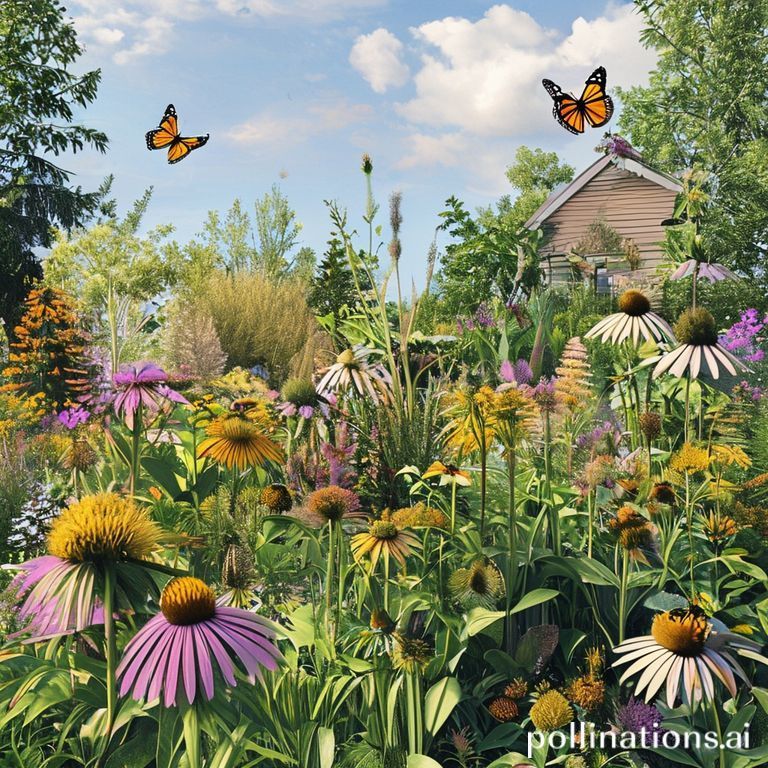
A native landscape celebrates regional character, creating a sense of place that feels authentic and harmonious. By working with nature instead of against it, you can design a front yard that is not only low-effort but also ecologically responsible, offering a vibrant habitat that connects your home to the broader environment. You can apply AI Landscape Design to visualize how a native garden would look by uploading a photo of your own yard and testing different plant combinations.
Implementation and Plant Selection
A successful native garden design focuses on creating a layered, naturalistic look that reflects the local landscape.
For Southeastern Yards: Create a vibrant meadow look with drifts of Purple Coneflower (Echinacea purpurea) and Black-Eyed Susan (Rudbeckia hirta). Add structure with native shrubs like Oakleaf Hydrangea for four-season interest.
For California Gardens: Design a drought-tolerant haven using aromatic California Sagebrush (Artemisia californica) and the brilliant orange blooms of California Poppy (Eschscholzia californica). Incorporate Manzanita for evergreen structure.
For Midwestern Prairie-Inspired Settings: Use a backbone of native grasses like Little Bluestem or Switchgrass. Weave in perennials such as Butterfly Milkweed (Asclepias tuberosa) to attract monarch butterflies and provide a pop of color.
Visualize a Native Oasis with AI:Wondering how a native prairie garden would look in your suburban front yard? Apply AI Landscape Design to visualize your ideas using photos of your own yard. With an app like DreamzAR, upload a photo and experiment with adding virtual layers of native grasses, coneflowers, and other regional plants. This allows you to perfect the placement and combinations, ensuring your native design enhances your home's curb appeal.
Actionable Tips for Success
Start with a Soil Test: Understand your native soil's pH and composition. This helps you select plants that will thrive naturally without extensive soil amendments.
Group by Water Needs: Even native plants have varying water requirements. Group thirsty plants together and drought-tolerant ones elsewhere to make watering efficient and effective.
Embrace Natural Cycles: Allow plants to go to seed at the end of the season. This provides food for birds and allows for natural self-sowing, which helps your garden mature and fill in over time.
7. Focal Point Features & Garden Structures
Focal points are the showstoppers of stellar front yard curb appeal landscaping, acting as the primary visual anchor that captures attention. These features, such as arbors, fountains, or sculptures, deliberately draw the eye to a specific spot, giving the entire landscape a sense of purpose and design intentionality. More than just an ornament, a well-placed structure introduces verticality, architectural interest, and a distinct personality that elevates your yard from a simple lawn to a curated garden space.
By creating a central point of interest, you can direct how visitors perceive your property, highlight your home's best features, and establish a clear theme. This strategy works powerfully to create a memorable first impression, whether you're aiming for old-world charm with a rose-covered arbor or a sleek, contemporary vibe with a minimalist water feature. Before making a purchase, you can apply AI Landscape Design to see how a new fountain or arbor would look in a photo of your own yard.
Implementation and Style Selection
Choosing the right focal point depends on matching the structure's style to your home's architecture and the scale of your yard.
For Cottage and Traditional Homes: Enhance romantic charm with a classic white or natural wood arbor over a walkway, inviting visitors toward the door. A tiered birdbath or a vintage-style well structure surrounded by flowering perennials can also serve as a quaint and delightful centerpiece.
For Modern or Contemporary Settings: Opt for clean lines and bold forms. A geometric steel sculpture, a corten steel planter, or a simple basalt column fountain can make a powerful statement. These features prioritize form and material over intricate detail.
For Rustic or Farmhouse Designs: A decorative wooden gate at the entrance of a walkway or a large, rustic urn planted with seasonal displays can perfectly complement the aesthetic. These elements add a touch of handcrafted, welcoming appeal.
Visualize Your Focal Point with AI:Wondering if a fountain will overwhelm your small yard? Apply AI Landscape Design to visualize your ideas using photos of your own yard. An app like DreamzAR allows you to virtually place different structures in your photo to test the placement, style, and scale of fountains, sculptures, and pergolas to find the perfect fit before committing to the installation.
Actionable Tips for Success
Choose One Star: To avoid a cluttered or chaotic look, select one primary focal point. Supporting elements should be less visually demanding and complement, not compete with, the main feature.
Strategic Placement is Key: Position your focal point along a natural sightline from the street or the primary approach to your home. It should be an intentional destination for the eye.
Combine with Plantings: Enhance your focal point by surrounding it with complementary plants. Use soft, mounding plants to soften the base of a sculpture or climbing roses to adorn an arbor, integrating the structure into the living landscape.
8. Seasonal Planting Rotations & Container Gardens
While permanent plantings form the backbone of your landscape, incorporating seasonal rotations and container gardens is the secret to maintaining dynamic front yard curb appeal landscaping. This strategy involves using pots, window boxes, and dedicated garden beds to showcase plants that thrive in a specific season. It ensures your home’s entrance is always vibrant, fresh, and bursting with timely color, from the first tulips of spring to the festive evergreens of winter.
This approach offers unparalleled flexibility, allowing you to easily update your home’s look without undertaking a major landscape overhaul. A well-placed container can add a pop of color to a dull corner, frame a doorway, or add vertical interest. Rotating annuals in your garden beds keeps the display looking pristine and prevents the tired, overgrown look that can happen at the end of a plant’s life cycle. You can apply AI Landscape Design to preview different seasonal flower combinations using a photo of your own yard.
Implementation and Plant Selection
The key to successful seasonal displays is planning ahead and choosing the right plants for both the container and the climate.
Spring Awakening: Greet the season with cheerful bulbs like Daffodils and Tulips, paired with cold-tolerant annuals such as Pansies and Violas. These provide a much-needed burst of color after a long winter.
Summer Vibrancy: As temperatures rise, switch to heat-loving annuals. Classic choices like Petunias, Impatiens, and Geraniums offer continuous blooms. For a more tropical feel, use a large container with a 'thriller, filler, spiller' design featuring a Canna Lily (thriller), Coleus (filler), and Sweet Potato Vine (spiller).
Autumn Richness: Embrace the warm tones of fall with Chrysanthemums (Mums), ornamental Kale, and vibrant Asters. Pair them with textural grasses and gourds for a classic harvest-themed display.
Preview Your Pots with AI:Wondering how a trio of terracotta pots will look by your front door? Apply AI Landscape Design to visualize your ideas using photos of your own yard. With the DreamzAR app, you can take a photo of your porch and virtually place different container garden designs. Experiment with colors, sizes, and plant combinations to perfect your seasonal look before you buy a single plant.
Actionable Tips for Success
Plan Your Calendar: Sketch out a yearly plan for your containers and annual beds. This helps you purchase bulbs and seeds at the right time and prepares you for the changeover between seasons.
Refresh the Soil: Container soil becomes depleted of nutrients over a season. At each changeover, amend the soil with fresh potting mix and compost to give your new plants the best start.
Group for Impact: A single small pot can get lost. For a more powerful visual statement, group three or more containers of varying heights and sizes together. Learn more about inspiring container garden ideas to elevate your design.
9. Front Yard Lawn Alternatives & Xeriscaping
Moving beyond the traditional turf grass lawn is a powerful way to enhance front yard curb appeal landscaping with a modern, sustainable edge. This approach involves replacing water-intensive lawns with drought-tolerant plants, sleek artificial turf, decorative gravel, or stylish hardscaping. The goal is to create a visually striking, low-maintenance front yard that conserves water, a practice known as xeriscaping, which utilizes climate-appropriate plants and efficient design to craft a beautiful, resilient landscape.
This method is perfect for homeowners in dry climates, those seeking to reduce yard work, or anyone wanting a unique, architectural look. By minimizing or eliminating the lawn, you can introduce a sophisticated palette of textures and forms, from the soft plumes of ornamental grasses to the bold shapes of succulents, all while saving on your water bill. You can apply AI Landscape Design to visualize exactly how a lawn-free design would look by testing materials on a photo of your own yard.
Implementation and Plant Selection
A successful lawn alternative relies on a balanced combination of materials and climate-appropriate plants. To truly embrace water-wise design, it's essential to understand what xeriscaping landscaping is and how its principles work together.
For Southwestern Homes: Create a stunning rock garden using decomposed granite or river rock as a base. Intersperse with sculptural Agave, vibrant Red Yucca, and feathery ornamental grasses like Mexican Feather Grass for movement and softness.
For Modern Designs: Combine geometric concrete pavers with high-quality artificial turf for a clean, evergreen look. Accent with architectural plants in minimalist planters for a controlled, high-impact aesthetic.
For Zen-Inspired Landscapes: Use fine gravel, raked into patterns, as a canvas. Strategically place large, characterful boulders and add pruned Japanese Maples or clumps of Black Mondo Grass for a serene, contemplative feel.
Visualize Before You Dig with AI:Thinking of ditching your lawn? Apply AI Landscape Design to visualize your ideas using photos of your own yard. With a tool like the DreamzAR app, you can upload a photo and virtually replace your grass with gravel, pavers, or artificial turf. Experiment with different drought-tolerant plant layouts to find the perfect balance before committing to the change.
Actionable Tips for Success
Install a Quality Weed Barrier: Before adding gravel or mulch, lay down a professional-grade landscape fabric to prevent weeds from taking over your new low-maintenance yard.
Plan for Softness: Even in a hardscape-heavy design, include patches of greenery with tough, climate-appropriate plants to soften the look and prevent the yard from feeling sterile. You can explore a variety of excellent drought-tolerant plants to find the right fit.
Consider Drainage: Ensure your design allows water to drain away from your home's foundation. Grading the area properly before installing hardscaping or gravel is a critical step.
10. Professional Color Coordination & Plant Texture Layering
Moving beyond simply planting what you like, professional color coordination elevates your front yard curb appeal landscaping from a collection of plants to a cohesive, designer-quality composition. This technique involves using color theory principles and layering diverse plant textures to create visual depth, harmony, and sophistication. A well-executed design uses color to evoke emotion and guide the eye, while texture adds a crucial layer of interest that keeps the landscape engaging year-round.
By combining colors intentionally, such as complementary purples and yellows, or creating a serene monochromatic green space, you establish a powerful visual theme. Pairing these color choices with a mix of coarse, medium, and fine-textured foliage, like broad hosta leaves next to delicate fern fronds, prevents the design from feeling flat and one-dimensional. You can apply AI Landscape Design to test color schemes and texture combinations on a photo of your own yard.
Implementation and Plant Selection
A professional look is achieved by balancing bold statements with subtle details, ensuring the overall effect is curated, not chaotic.
For a Vibrant, High-Contrast Look: Use a complementary color scheme. Pair deep purple 'May Night' Salvia with the bright yellow blooms of 'Goldsturm' Black-Eyed Susan. The strong contrast creates an energetic and eye-catching display that draws immediate attention.
For a Harmonious, Serene Aesthetic: Employ an analogous color scheme (colors next to each other on the color wheel). Combine blue 'Blue Star' Juniper, purple Catmint, and pink 'Autumn Joy' Sedum for a gentle, flowing transition of color that feels calm and connected.
For a Modern, Textured Design: Create a monochromatic scheme focusing on shades of green and silver. Mix the bold, spiky leaves of 'Blue Glow' Agave with the soft, fine texture of 'Elijah Blue' Fescue grass and the silvery foliage of Lamb's Ear for a sophisticated, minimalist palette.
Visualize Before You Plant with AI:Color combinations can be difficult to imagine. Apply AI Landscape Design to visualize your ideas using photos of your own yard. With a tool like the DreamzAR app, upload a photo of your garden bed and virtually place different plant pairings. See exactly how the bold texture of a yucca contrasts with soft ornamental grass, or test a complementary color scheme to ensure it achieves the dynamic look you want.
Actionable Tips for Success
Follow the 60-30-10 Rule: Use a dominant color for 60% of the planting, a secondary color for 30%, and an accent color for the final 10%. This creates balance and prevents the design from feeling overwhelming.
Layer Textures: Place fine-textured plants like ferns or grasses in front of medium or coarse-textured plants like hostas or hydrangeas. This creates visual depth and makes each plant stand out. Learn more about adding interest with texture and form to master this technique.
Repeat for Cohesion: Repeat key colors and plant forms in different areas of your front yard. This repetition creates a sense of rhythm and unity, tying the entire landscape together.
Front Yard Curb Appeal: 10-Item Comparison
Item | 🔄 Implementation Complexity | ⚡ Resources & Cost | ⭐📊 Expected Outcomes | Ideal Use Cases | 💡 Key Advantages |
|---|---|---|---|---|---|
Colorful Foundation Plantings | Medium — planning, layering, phased install | ⚡ $500–$2,500; mostly DIY but plant establishment needs care | ⭐⭐⭐⭐ — noticeable curb appeal in 1–2 seasons; +5–10% value | Frame entryways; classic or contemporary homes | 💡 Instant visual impact; affordable; phased upgrades |
Welcoming Entryway Enhancements | Low — simple installs, some lighting wiring possible | ⚡ $300–$1,500; pots, planters, possible electrician | ⭐⭐⭐⭐ — immediate first-impression boost | Quick curb-appeal refresh; photo-ready entrances | 💡 Fast, customizable, seasonally updatable |
Hardscape Features & Pathways | High — construction, grading, drainage work | ⚡ $2,000–$8,000+; often professional installation | ⭐⭐⭐⭐⭐ — strong structure, long-term value increase | Define circulation; create durable focal areas | 💡 Long-lasting structure; low plant upkeep; high impact |
Layered Lawn & Mulch Design | Low–Medium — edging, mulching, simple planting | ⚡ $300–$1,500; annual mulch refresh and edging | ⭐⭐⭐⭐ — cleaner, more organized appearance; reduced weeds | Small yards; tidy, cost-effective updates | 💡 Affordable, neat look; improves moisture retention |
Strategic Lighting Design | Medium–High — layout, wiring, fixtures, controls | ⚡ $1,500–$4,000; possible electrician; LED savings | ⭐⭐⭐⭐ — dramatic night transformation; improved safety | Nighttime curb appeal; highlight architecture/landscape | 💡 Enhances safety, energy-efficient, extends usability |
Low‑Maintenance Native Plant Landscaping | Medium — research and proper grouping required | ⚡ $400–$2,000; lower long-term water/fertilizer costs | ⭐⭐⭐⭐ — sustainable, 30–80% less water use; wildlife support | Drought regions; eco-conscious homeowners | 💡 Low upkeep; supports pollinators; cost-saving long term |
Focal Point Features & Garden Structures | Medium–High — selection, siting, possible build work | ⚡ $500–$3,000+; may need pro installation | ⭐⭐⭐⭐ — creates strong visual anchor and vertical interest | Make a style statement; create sight-line focal points | 💡 Adds vertical dimension; anchors design; stylistic impact |
Seasonal Planting Rotations & Container Gardens | Low — frequent updates and planning | ⚡ $200–$800 per rotation; ongoing seasonal spend | ⭐⭐⭐ — keeps appearance fresh; flexible aesthetics | Homeowners who enjoy frequent style/color changes | 💡 Flexible, low-commitment, easy to experiment |
Front Yard Lawn Alternatives & Xeriscaping | Medium–High — material changes, irrigation setup | ⚡ $2,000–$6,000; may require drip/irrigation install | ⭐⭐⭐⭐ — big water savings (50–75%); reduced mowing | Drought-prone areas; modern low-maintenance designs | 💡 Water-wise, modern aesthetic, lower ongoing mowing |
Professional Color Coordination & Texture Layering | Medium — design knowledge or pro consultation | ⚡ $500–$2,500; possible designer fees | ⭐⭐⭐⭐ — polished, cohesive, designer-quality look | Owners seeking refined, cohesive landscapes | 💡 Sophisticated cohesion; prevents chaotic plantings |
Your Dream Yard is Just One Photo Away
Embarking on a front yard transformation is a journey from imagination to reality, a process that dramatically redefines your home's first impression. Throughout this guide, we've explored a comprehensive toolkit of ideas designed to elevate your front yard curb appeal landscaping, moving far beyond generic advice to provide actionable, style-specific strategies. We have covered the foundational elements, from creating lush, colorful foundation plantings to designing welcoming entryways with container gardens and upgraded hardware.
The journey continued into the structural and functional aspects, highlighting the immense impact of well-designed hardscape features, elegant pathways, and the transformative power of strategic lighting. We addressed practical concerns with solutions like low-maintenance native plant selections and water-wise xeriscaping, proving that stunning design does not have to mean endless upkeep. By layering these concepts-integrating focal points like garden structures, rotating seasonal color, and mastering the professional techniques of color coordination-you unlock a cohesive and dynamic landscape.
Synthesizing Your Vision: From Ideas to Implementation
The most significant takeaway is that a high-impact front yard is not the result of a single grand gesture but the thoughtful integration of multiple elements. The true art of front yard curb appeal landscaping lies in how these components work together to create a unified, inviting, and personalized aesthetic that reflects both your home's architecture and your personal style.
Consider these core principles as you plan your next steps:
Structure First, Beauty Follows: Establish your "bones" before anything else. This means defining pathways, installing hardscapes, and planning the layout of garden beds. These structural elements provide the framework upon which you can layer plants, lighting, and decorative features.
Layering is Key: Think in three dimensions. Combine different plant heights, textures, and colors to create visual depth. Layering applies to lighting as well, using a mix of path lights, spotlights, and ambient fixtures to create a safe and dramatic nighttime scene.
Functionality Drives Design: A beautiful yard that is difficult to navigate or maintain is a failed design. Your landscaping choices should support your lifestyle, whether that means prioritizing low-maintenance plants, creating a clear and safe walkway to your door, or choosing lawn alternatives that conserve water and reduce mowing time.
The Power of Visualization in Modern Landscaping
Historically, the biggest hurdle between a homeowner and their dream yard has been uncertainty. It was difficult to know if that river rock bed would complement the siding, or if those ornamental grasses would look right next to the walkway. This is where modern technology fundamentally changes the game. The guesswork is eliminated.
Instead of trying to piece together ideas from inspiration photos, you can now apply AI Landscape Design to visualize your ideas using photos of your own yard. With a tool like DreamzAR, every concept we've discussed becomes an immediate, testable reality. You can upload a photo of your current yard and instantly generate dozens of professional designs, from modern minimalist to a lush cottage garden. This allows you to experiment risk-free, swapping out pavers, testing plant combinations, and visualizing lighting schemes before committing a single dollar or digging a single hole. This ability to see the final product first ensures your investment of time and money results in a landscape you will love for years to come.
Ready to stop guessing and start designing? DreamzAR AI Landscape Design lets you use a photo of your own yard to instantly visualize the landscaping ideas from this article. Download the app to generate and customize stunning, professional-grade designs and bring your vision for perfect curb appeal to life. Visit DreamzAR AI Landscape Design to get started today.