Backyard Simple Landscaping Ideas for Budget-Friendly Outdoor Spaces
- Akhilesh Joshi
- 2 days ago
- 14 min read

The secret to a stunning (yet simple!) backyard isn't found in a catalog of elaborate designs. It's about starting with a realistic plan—one that perfectly balances what you want with what you can afford and what you're willing to maintain.
The best ideas always begin with a deep dive into your own space. It's about understanding its quirks, defining your goals, and choosing elements you can actually live with long-term.
Start Your Backyard Makeover with a Realistic Plan
Before you even think about picking out a single plant or paving stone, you have to ground your vision in reality. Seriously. A successful, low-stress backyard transformation always starts with a smart assessment, not just a beautiful dream.
Think of this initial planning phase as your best defense against the usual DIY headaches. It will save you a ton of time, money, and frustration later on. Getting this right ensures your project is actually enjoyable, from the first sketch to the final result.
More and more people are looking to create their own personal outdoor retreats. In fact, the household landscaping market is set to grow at a compound annual rate of 7.0% from 2025 to 2030. This boom shows a major shift, especially in places like North America, where homeowners are ditching high-maintenance lawns for easier alternatives. You can actually check out more about this trend and other interesting gardening stats at petruslandscape.com.
Assess Your Yard and Define Your Goals
First things first: walk through your yard with a critical eye. Get to know it.
Map out the sun and shade patterns throughout the day, because this will dictate everything you plant and where it goes. Take a look at your soil—is it sandy, clay, or a nice loamy mix? Figure out what existing features are staying (like that big, beautiful tree) and what needs to go.
Next, it's all about function. What do you actually want to do back there?
Relaxation Zone: Are you dreaming of a quiet little corner for morning coffee or a cozy spot to get lost in a book?
Entertainment Hub: Maybe you need a durable patio space for hosting barbecues with friends and family.
Play Area: Is a safe, resilient surface for kids or pets your top priority?
Answering these questions brings so much clarity to your purpose. Defining this vision is a huge step, and if you want to dive deeper, you might get a lot out of our podcast episode on purpose and vision in landscape design. As you brainstorm, you can use AI Landscape Design to visualize these ideas by uploading photos of your own yard, making it easier to see how a relaxation zone or entertainment hub would actually fit into your space.
This quick-reference table can help you organize your thoughts as you walk your yard and set some clear, achievable goals.
Your Backyard Assessment Checklist
Assessment Area | Key Questions to Ask | Simple Goal Example |
|---|---|---|
Sunlight & Shade | Where does the sun hit in the morning vs. the afternoon? Are there any deep shade spots? | "Create a shade garden under the oak tree." |
Soil Quality | Is the soil hard-packed clay, loose and sandy, or rich and dark? Does water pool up anywhere? | "Amend the soil in the flower bed area with compost." |
Existing Features | What stays? (e.g., mature tree, shed, existing patio). What goes? (e.g., old swing set, overgrown shrubs). | "Design the new layout around the existing maple tree." |
Privacy Needs | Where do you need to block views from neighbors or the street? | "Plant a privacy hedge along the back fence line." |
Main Activities | How will you use the space most? (e.g., dining, lounging, playing, gardening). | "Build a 10x12 paver patio for a small dining set." |
Traffic Flow | Where will people naturally walk? How will you get from the back door to the shed or gate? | "Install a simple gravel path connecting the deck to the garden." |
Walking through this checklist gives you a solid foundation, turning vague ideas into a concrete starting point.
The visual guide below breaks down this entire foundational planning process into three simple, actionable stages.
This simple flow—Assess, Define, and Budget—is the strategic backbone of any simple landscaping project that you'll actually love in the end.
Visualize Your Ideas with AI Landscape Design
Once you have a general sense of your yard's potential, moving forward can feel a little intimidating. It’s one thing to have a list of simple landscaping ideas, but it’s a whole different ballgame trying to picture how they’ll actually look in your space. This is where you can stop guessing and start seeing.
AI landscape design tools are completely changing the game for homeowners. Apps like DreamzAR let you mock up a total transformation using nothing more than a photo of your yard. It takes away that uncertainty that so often paralyzes a good DIY project before it even starts.
How AI Brings Your Vision to Life
The whole process is refreshingly simple. You just snap a picture of your current yard—weeds, patchy grass, and all—and upload it. That's when the magic happens. You can start asking the AI to generate different concepts based on the goals you’ve already set. The key is that you can apply AI Landscape Design to visualize your ideas using photos of your own yard, getting a truly personalized preview.
Test drive hardscapes. Wondering how a gravel patio with a cozy fire pit would look over by the fence? The AI can render it for you in seconds using your photo as the backdrop.
Compare plant palettes. Want to see the difference between a lush, no-mow wildflower meadow and a traditional lawn with clean garden beds in your actual yard? You can generate both versions and compare them side-by-side.
Experiment with different layouts. Not sure where to put that new pathway or if a seating area would feel cramped in that corner? Generate a few different layouts on your own photo to see which one flows best.
You can see exactly how it works. You can take a single photo of a backyard and instantly apply different design styles to it, from a simple fire pit area to a full-blown meadow.

This visual preview is incredibly powerful. It can instantly confirm whether an idea is a winner or if you need to head back to the drawing board, saving you from some seriously expensive mistakes down the road.
Making Confident Design Choices
Being able to prototype your designs like this is invaluable. Instead of buying a pallet of pavers and just hoping for the best, you can use AI to visualize your ideas on a photo of your own yard. Test different types of stone for a walkway, preview various mulch colors, or see just how big a particular shrub will look once it's mature.
This technology basically becomes your personal design consultant, offering up endless variations without any commitment. You get to explore a whole universe of concepts before you ever lift a shovel.
By visually confirming your choices beforehand, you can move forward with a clear, validated plan. This step alone can be the difference between a project you absolutely love and one you regret. AI removes the guesswork, ensuring you invest your time and money wisely.
This approach is so empowering for anyone tackling their own landscape project. If you want to dive in and explore the possibilities, you can learn more about how to use an AI landscape design idea generator to kickstart your own creative process. It lets you make bold, informed decisions because you're confident the final result will match the vision you created.
With a clear visual blueprint in hand, you're ready to start building the foundation of your new backyard.
Build a Foundation with Low-Cost Hardscaping
Think of hardscaping as the bones of your landscape design. It's the patios, paths, and borders that give your yard structure, create distinct "rooms," and honestly, save you a ton of work in the long run. The best part? You don't need a huge budget to lay a solid foundation. Some of the most stunning and simple backyard ideas are built on affordable materials that make a massive visual statement.
There's a reason so many people are ditching huge lawns. The US landscaping services industry has swelled to $188.8 billion over the last five years, and a big driver is the shift toward hardscaping. Swapping turf for stone and gravel can slash mowing time by up to 90%, which is a game-changer for anyone with a busy schedule.
Embrace the Versatility of Gravel and Mulch
I'm a huge fan of gravel and pea stone for creating relaxed, modern patios and walkways. They're way cheaper than pouring concrete or laying pavers, they drain beautifully, and they have that satisfying crunch when you walk on them. A simple gravel patio can easily become the heart of your backyard—just add a fire pit and a couple of chairs.
And let's not forget the unsung hero: mulch. A fresh layer in your garden beds is like a new coat of paint—it instantly makes everything look tidy and professional. But it's not just about looks. Mulch is a workhorse, suppressing weeds, holding moisture in the soil, and keeping soil temperatures stable. That means healthier plants and way less weeding for you.
Visualize Your Hardscape Before You Build
Okay, before you get excited and order a truckload of pea stone, it's super important to see how it's actually going to look in your yard. This is where AI-powered design tools really shine.
I tell everyone to use an app like DreamzAR for this. You just snap a photo of your yard and start playing.
Compare Materials: Instantly see if you prefer the look of dark river rock borders or classic reclaimed red bricks.
Test Layouts: Mock up a winding, organic gravel path versus a straight, formal one. Which one feels more you?
Finalize Patio Placement: Experiment with different spots for that pea stone patio to find the one that gets the perfect amount of sun.
This whole process just takes the guesswork out of it. When you're looking at materials for a seating area, something durable with a strong aesthetic like charred decking can create a fantastic anchor point. By applying AI Landscape Design, you can visualize ideas like this using photos of your own yard to see how specific materials will look before spending a dime. If you want to go deeper on this, check out our piece on using generative AI for patio design—it's full of tips for refining your ideas.
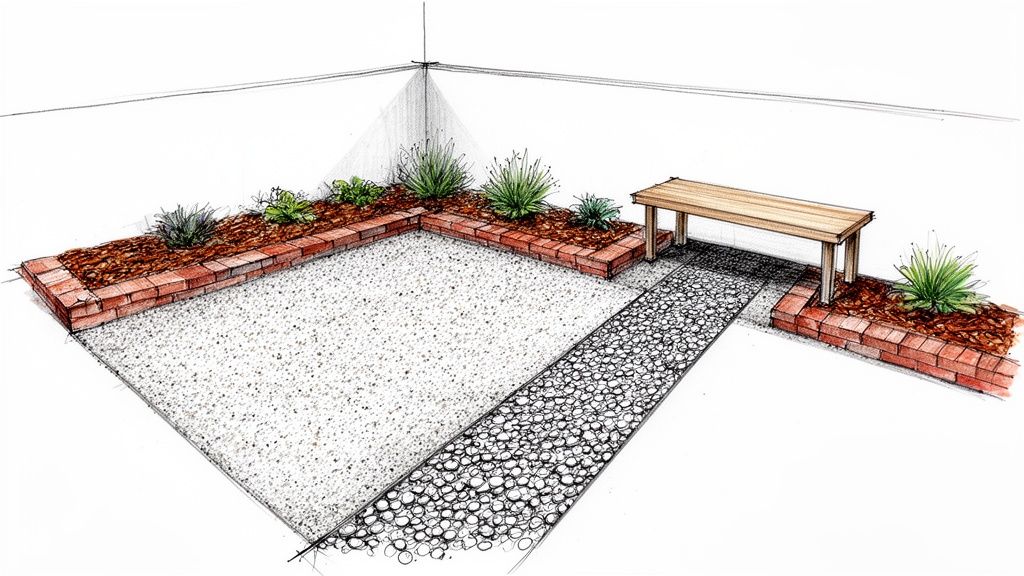
By prototyping your hardscape ideas with an AI visualizer, you can make confident, budget-friendly decisions. You'll know exactly how much material to order and be certain you're creating a look you'll love for years.
Select Resilient Plants for Effortless Beauty
The plants you choose are what will truly bring your backyard to life, turning a static space into a living, breathing retreat. But here’s the secret to a landscape that doesn't become a second job: picking plants that mostly take care of themselves.
Let’s focus on building a low-maintenance plant palette that looks incredible all year without demanding all your free time. Forget the delicate, fussy flowers that need constant coddling. We're going for a resilient, beautiful garden that actually works for you, not the other way around.
Prioritize Native and Perennial Plants
The single smartest move you can make is to embrace native plants. These are the species that have been thriving in your specific region for centuries, which means they're already adapted to your local climate, soil, and rainfall. They need less water, are tougher against local pests and diseases, and provide essential food and habitat for pollinators like bees and butterflies. For some expert guidance on this, check out our insights on using https://www.dreamzar.app/podcast/ai-for-selecting-native-plant-species.
Perennials are your other best friend for low-effort gardening. Unlike annuals that you have to buy and replant every single year, perennials come back on their own. They just get stronger and more established with each season, saving you a ton of time and money in the long run.
Pro Tip: Aim to make 80% of your plant selections hardy natives and perennials. This creates a self-sustaining foundation for your garden. You can then use the remaining 20% for a few fun annuals if you want a pop of seasonal color without a major commitment.
Visualize Your Plant Palette with AI
Before you even think about heading to the nursery, you need to see how your plant combinations will look together. This is another spot where AI landscape design is a total game-changer. With an app like DreamzAR, you can upload a photo of your garden bed and start digitally "planting" different options. This is the perfect way to apply AI Landscape Design to visualize your ideas using photos of your own yard, ensuring the final look is exactly what you envisioned.
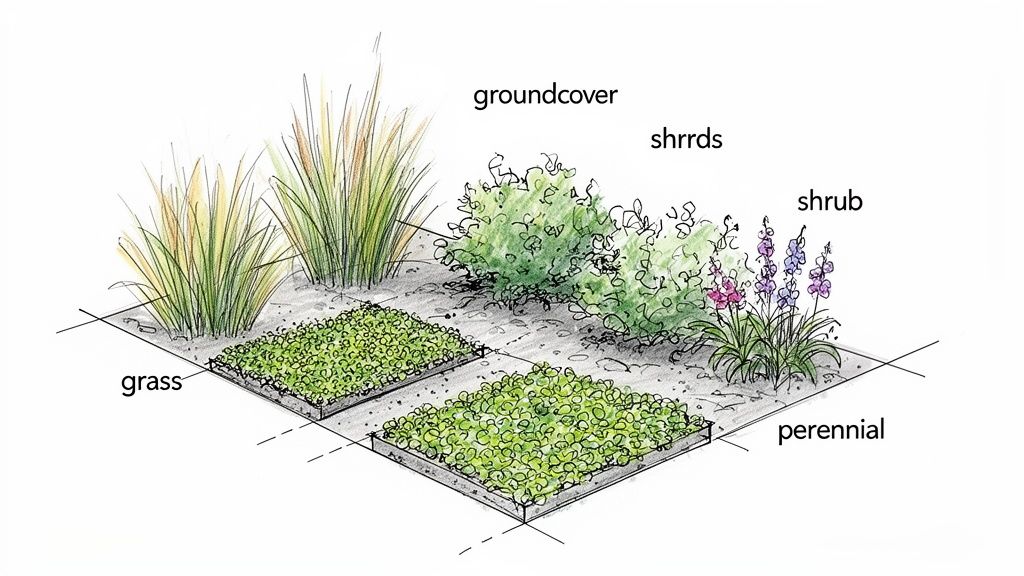
You can see how the feathery texture of an ornamental grass looks next to the bold leaves of a hosta, or test out different groundcovers to see which one best complements your patio stones. This process lets you play with heights, colors, and textures until you have a cohesive design you love.
Eco-conscious choices are also a huge part of modern simple landscaping. We're seeing trends like tapestry lawns and no-mow meadows grow by 16% and 12% respectively. These create vibrant, bee-friendly carpets that don't need weekly cutting, which can save homeowners $300-500 a year on fuel and maintenance.
If you're really looking to deepen your knowledge of plant care and garden composition, building a strong foundational understanding is key. You might even consider a Certificate in Horticulture to truly build up your expertise.
Low-Maintenance Plant Options for Your Yard
Choosing the right plants can feel overwhelming, but focusing on a few key types makes it simple. Here's a quick breakdown of some reliable, easy-care options to get you started.
Plant Type | Key Benefits | Example Species |
|---|---|---|
Native Perennials | Adapted to local climate, low water needs, support pollinators. | Coneflower (Echinacea), Black-Eyed Susan (Rudbeckia), Salvia |
Ornamental Grasses | Add texture and movement, drought-tolerant, four-season interest. | Little Bluestem, Switchgrass, Fountain Grass |
Groundcovers | Suppress weeds, reduce mulch needs, fill in empty spaces. | Creeping Thyme, Sedum, Ajuga (Bugleweed) |
Hardy Shrubs | Provide structure and backbone, minimal pruning needed. | Hydrangea, Boxwood, Spirea, Dogwood |
Each of these categories offers plants that will give you a ton of visual impact for very little effort, forming the perfect foundation for your simple backyard design.
Bring Your Simple Landscape Design to Life
You’ve got a solid plan, you've picked out your hardscape materials, and you’ve chosen a tough-as-nails plant palette. Now for the best part: getting your hands dirty and making it all real. This is that magic moment where your simple backyard landscaping ideas jump off the page (or screen) and into your actual yard.
The key here is to move with the same deliberate, step-by-step approach you used for planning. Don't rush it. A little patience now pays off with a landscape that not only looks incredible on day one but actually flourishes for years to come. Think of this as setting the stage for long-term success.
Prepare Your Site for a Fresh Start
Before anything new can go in, the old stuff has to come out. Kick things off by clearing the designated areas of any grass, weeds, or plants you don't want. If you're just dealing with a small patch, a good shovel and some elbow grease will get the job done. But for larger areas, you might want to rent a sod cutter from your local home improvement store—it’ll make quick work of lawn removal.
With the ground cleared, it's time to improve the soil, especially where your new garden beds will go. Let's be honest, most backyard soil is pretty compacted and lacking in nutrients. A simple fix is to spread a 2-3 inch layer of quality compost over the top and till it into the first 6-8 inches of soil. This one step works wonders for drainage and gives your new plants the food they need to establish strong, healthy roots.
Finally, grab some marking paint or stakes and string to map out the exact shapes of your patios, paths, and garden beds, just like in your design. This small action is a huge help in making sure your layout is precise and prevents any "oops" moments later.
Installing Hardscape and Planting Your Garden
With your site marked and prepped, it's time to build. Start with your hardscape elements. If you're putting in a gravel path or patio, that means laying down a weed barrier fabric first. Follow that with a solid base of crushed stone, and finish it off with your decorative gravel. For any garden borders or edging, make sure they're set firmly into the ground so they don't shift around.
Once the hardscaping is locked in, you can shift gears to planting. A pro tip: arrange your plants in their pots according to your plan before you start digging. This lets you eyeball the final spacing and composition, giving you a chance to make adjustments on the fly. When you're ready to plant, dig holes that are about twice as wide as the root ball and just as deep. Gently loosen the roots before placing the plant in the hole and backfilling it with your amended soil.
Make sure to water your new plants thoroughly right after you plant them. This first big drink is absolutely critical. It helps the soil settle in around the roots, gets rid of any air pockets, and seriously reduces transplant shock. You're giving them the best possible start in their new home.
Visualize the Final Result with AI Landscape Design
Even as you're in the middle of the installation, it's never a bad idea to double-check your work against your original vision. As you place your plants or lay out a border, you can snap a quick photo and use an AI landscape design app like DreamzAR to get an instant preview. It's a fantastic way to apply AI Landscape Design to visualize your ideas using photos of your own yard, confirming that what you're building in the real world matches the beautiful concept you designed. This gives you that extra boost of confidence to see the project through to the end.
Common Questions About Simple Backyard Landscaping
Even with a great plan, jumping into a landscaping project always brings up questions. When you start exploring simple backyard landscaping ideas, you'll inevitably bump into budget limits, wonder about maintenance, and maybe even play with new design tools. Let's walk through some of the most common things people ask so you can get clear, practical answers.
Think of this as the final confidence boost you need to get out there and build a yard you absolutely love.
What Is the Cheapest Way to Landscape a Backyard?
Your most budget-friendly path always starts with high-impact, low-cost materials. The best first step is completely free: a thorough cleanup. You'd be amazed at how much better a yard looks just by clearing out clutter, weeding, and tidying up—and it costs you nothing but a bit of time.
For garden beds, cheap mulch is a game-changer. It creates a clean, uniform look and keeps weeds down. When you're thinking about patios and paths, materials like gravel or pea stone are way more affordable than pavers or flagstone.
And a big one: buy smaller, younger perennials instead of large, mature annuals. They'll grow and fill in over time, saving you a ton of money year after year.
How Can I Use AI to Plan My Simple Landscaping?
This is where things get really fun. You can apply AI Landscape Design to visualize your ideas using photos of your own yard. Apps like DreamzAR have made this incredibly simple. It all starts when you upload a photo of your actual backyard.
From there, you can use simple text prompts to see your ideas come to life. You could type something like, "a modern gravel patio with ornamental grasses" or "a cottage garden with a stone path." The AI gets to work and generates realistic images showing how those concepts would look in your space. This technology lets you play with countless backyard simple landscaping ideas before you ever pick up a shovel.
This is such a critical step. It takes all the guesswork—and financial risk—out of the process. You can test drive different materials, see how plant combinations look, and tweak layouts until you get it just right, all without spending a dime.
What Are the Best Low-Maintenance Lawn Alternatives?
Ditching a traditional lawn is one of the smartest moves you can make to simplify your yard care routine. The key is finding a great low-maintenance groundcover.
Creeping Thyme: This stuff is fantastic. It's drought-tolerant, smells amazing when you walk on it, and pops with tiny flowers.
Clover: A real workhorse. It stays green with very little water and is a huge help to essential pollinators like bees.
Hardy Sedums: These are succulents that create a dense, colorful mat. They absolutely thrive in those sunny, dry spots where grass always seems to struggle.
Got shady areas? Consider vinca minor or ajuga. These groundcovers form a thick carpet that chokes out weeds and completely gets rid of the need to mow. You're left with a beautiful, hassle-free patch of green. For more answers to your design questions, you can find a wealth of information in our comprehensive list of frequently asked questions.
Ready to stop guessing and start seeing what your perfect backyard could look like? With DreamzAR AI Landscape Design, you can take one photo of your yard and generate unlimited, professional-quality designs in seconds. See exactly how your simple landscaping ideas will look before you lift a shovel. Download DreamzAR on the App Store today and turn your vision into reality.