10 Simple Backyard Ideas for Landscaping to Transform Your Yard in 2025
- Akhilesh Joshi
- 1 day ago
- 18 min read

Dreaming of a beautiful backyard often brings to mind images of complex designs, massive budgets, and teams of professionals. However, creating a functional and inviting outdoor oasis doesn't have to be overwhelming. The truth is, a stunning landscape is more accessible than you think. This guide is designed to cut through the complexity, offering a curated roundup of simple backyard ideas for landscaping that are both beautiful and achievable for homeowners and professionals alike. We will provide actionable steps, material lists, and practical tips for everything from low-maintenance native plant gardens to cozy fire pit zones and minimalist hardscaping.
Before you begin transforming your garden beds and patios, it’s a good idea to start with a clean slate. Ensuring your home's foundation looks its best can amplify the impact of any new landscaping work. Before diving into specific landscaping projects, you might want to ensure a spotless home exterior to complement your yard's new look.
To eliminate the guesswork entirely, we'll also explore how you can apply AI Landscape Design to your projects. Using a photo of your own yard, you can instantly visualize how these ideas will look in your space. This modern approach helps you test concepts, from plant placements to patio layouts, ensuring you make the right choices before breaking ground. Let’s explore how you can turn your vision into a stunning reality, one simple, well-planned idea at a time.
1. Low-Maintenance Native Plant Gardens
One of the most effective yet simple backyard ideas for landscaping is creating a garden with native plants. This approach involves selecting trees, shrubs, and flowers that have naturally adapted to your region's specific climate, soil, and rainfall patterns. Unlike exotic ornamentals, native plants thrive with minimal intervention, significantly reducing your need for watering, fertilizing, and pest control.
This sustainable method creates a resilient, self-sufficient landscape that also provides vital food and shelter for local pollinators like bees and butterflies. By working with your local ecosystem instead of against it, you build a beautiful garden that supports biodiversity and conserves precious resources. An easy way to see how a native garden would look is to use AI Landscape Design; simply upload a photo of your yard to visualize different plant combinations before you buy them.
Why Choose Native Plants?
A native plant garden is perfect for homeowners seeking a beautiful, low-effort backyard that’s also eco-friendly. It’s an ideal starting point if you’re new to gardening or simply want a landscape that requires less upkeep year after year. For example, a Midwest prairie garden might feature drought-tolerant coneflowers and black-eyed Susans, while a Southeastern yard could host shade-loving native ferns and foamflower.
Quick Implementation Steps
Identify Your Region: Contact your local cooperative extension or native plant society for a list of plants suited to your area. For instance, those in New England can explore regional species to bring natural beauty to their backyard. Learn more about incorporating native plants in your New England garden.
Plan Your Layout: Before buying, use an AI landscape design app like DreamzAR to visualize how different native plant combinations will look in your actual yard. This helps you arrange them by height, color, and texture.
Prepare the Soil: Remove existing grass or weeds and amend the soil if necessary to give your new plants a strong start.
Plant and Mulch: Group plants with similar water needs together and apply a layer of natural mulch to retain moisture and suppress weeds.
2. Simple Paver Patios and Hardscaping
One of the most impactful simple backyard ideas for landscaping is adding a paver patio. This project creates a durable, functional outdoor living area by transforming an unused patch of lawn into a defined space for entertainment, dining, or relaxation. Using materials like concrete pavers, natural stone, or permeable options, you can design a beautiful hardscape that boosts both your home's usability and its value.
A well-designed patio serves as the foundation for your entire outdoor living environment. It establishes a clean, stable surface that can anchor furniture, a fire pit, or an outdoor kitchen, making your backyard an extension of your home. The versatility of pavers allows for endless creativity in patterns, colors, and layouts, from classic herringbone to modern circular designs. You can even apply AI Landscape Design by uploading a photo of your yard to visualize different paver patterns and see how they'll look before committing to a style.
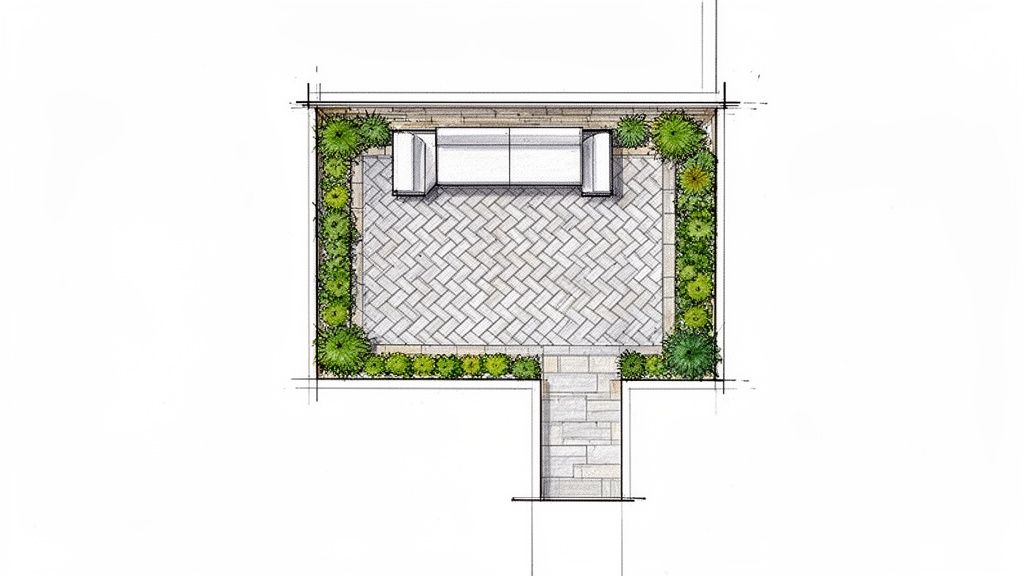
Why Choose a Paver Patio?
A paver patio is an excellent choice for homeowners looking to add a polished, low-maintenance living space to their yard. It's perfect for creating a designated zone for socializing and is far more approachable for DIYers than a poured concrete slab. Whether you want a simple square for a bistro set or a sprawling tiered patio on a sloped yard, pavers offer a scalable solution for any budget or skill level.
Quick Implementation Steps
Plan Your Design: Use an AI landscape design app like DreamzAR to visualize different paver patterns, colors, and layouts in your actual yard. This AR preview helps you see exactly how the finished patio will look before you commit to materials.
Prepare the Foundation: A successful patio requires a solid base. Excavate the area, clear any debris, and remember that removing old tree stumps cleanly is essential for a smooth and level foundation; professional stump grinding services can ensure this is done right.
Lay the Base Material: Add and compact a layer of gravel or paver base, ensuring a slight slope (about 1/8 inch per foot) for proper water drainage away from your home.
Set Pavers and Finish: Lay the pavers in your chosen pattern, then sweep polymeric sand into the joints to lock them in place and prevent weed growth.
For more inspiration, you can explore these dream backyard patio design ideas to find a style that fits your vision.
3. Cozy Fire Pit Zones
Creating a dedicated fire pit zone is one of the most impactful simple backyard ideas for landscaping, instantly adding a warm and inviting focal point. This feature transforms any yard into a social hub, perfect for entertaining guests or enjoying quiet evenings outdoors. Fire pits range from rustic, wood-burning stone rings to modern, clean-burning propane tables, making them adaptable to any style.
By defining a specific area for a fire pit, you create an outdoor "room" that extends the usability of your backyard into cooler seasons. This simple addition elevates your landscape's functionality and ambiance, providing a natural gathering spot for family and friends that requires relatively little upkeep. To ensure you get the placement and style just right, you can apply AI Landscape Design using a photo of your yard to visualize how different fire pits will look in your space before you build.
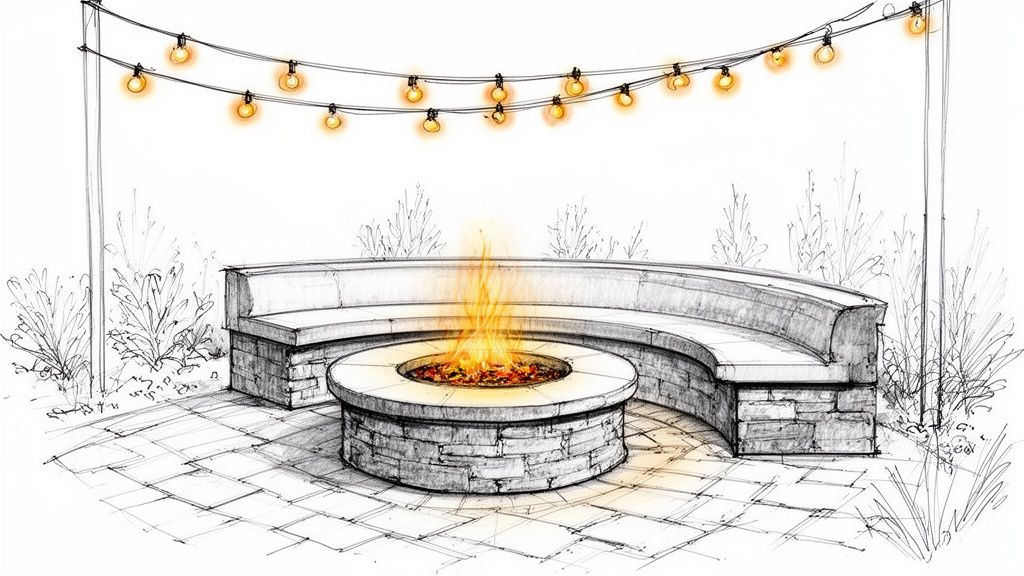
Why Choose a Fire Pit Zone?
A fire pit zone is ideal for homeowners who want to maximize their outdoor living space and create a cozy, multi-season entertainment area. It's a fantastic solution for anchoring a seating arrangement, whether on a patio or a simple gravel clearing. For example, a circular stone pit on a paver patio creates a classic campfire feel, while a sleek, rectangular propane table like those from Breeo or Tiki Brand offers a contemporary, smoke-free alternative.
Quick Implementation Steps
Check Local Regulations: Before starting, verify your local fire codes and any HOA restrictions regarding open flames, placement, and fuel types.
Select a Safe Location: Choose a spot at least 10 to 15 feet away from your house, sheds, and any overhanging tree branches.
Visualize the Space: Use an AI landscape design app like DreamzAR to upload a photo of your yard. You can then virtually place different fire pit styles and seating arrangements to see how they fit before committing.
Prepare the Base: Install the fire pit on a non-combustible surface like a paver patio, concrete slab, or a bed of gravel to ensure safety and stability.
4. Minimalist Lawn with Mulched Planting Beds
A minimalist lawn with mulched planting beds is an excellent simple backyard idea for landscaping that combines modern aesthetics with reduced maintenance. This approach strategically shrinks the high-upkeep grass area and replaces it with cleanly defined, mulched beds filled with thoughtfully chosen plants. The result is a structured, contemporary look that is both visually striking and easier to manage.
By swapping large sections of lawn for mulch, you significantly cut down on mowing, watering, and fertilizing. This design creates a sharp contrast between the green turf and the rich texture of the mulch, making specimen plants like architectural grasses or sculptural shrubs stand out. You can apply AI Landscape Design by uploading a photo of your yard to visualize how different bed shapes and mulch colors will look, taking the guesswork out of the design process.
Why Choose a Minimalist Lawn?
This design is ideal for homeowners who want a polished, uncluttered yard without the constant work a full lawn demands. It works exceptionally well in contemporary, Japanese-inspired, or Mediterranean-style gardens where clean lines and focal points are key. For instance, a small backyard can feel larger and more intentional by dedicating 60% of the space to a large, curved bed with a few statement plants.
Quick Implementation Steps
Define Bed Shapes: Use a garden hose or marking paint to outline the new planting beds on your existing lawn. Test different shapes and sizes to see what best complements your home's architecture.
Visualize with AI: Before you start digging, use an AI landscape design app like DreamzAR to upload a photo of your yard. This allows you to experiment with various bed layouts, mulch colors, and plant arrangements to perfect the design.
Prepare the Area: Remove the turf within the marked boundaries. Lay down high-quality landscape fabric to create a strong barrier against weeds.
Edge and Mulch: Install metal, composite, or stone edging for a crisp, permanent border. Fill the beds with 2-3 inches of your chosen mulch, such as dark bark or decorative gravel, and add your plants.
5. Shade Structures and Pergolas
Adding a structure like a pergola, gazebo, or shade sail is one of the most transformative simple backyard ideas for landscaping. These elements provide essential relief from sun exposure while adding strong architectural interest and defining distinct "outdoor rooms" within your yard. They create comfortable, inviting spaces for dining, lounging, and entertaining.
Beyond just providing shade, these structures can support climbing plants like wisteria or grapevines, integrating natural greenery with built form. This layering creates a sophisticated, multi-dimensional landscape that feels both elegant and functional, extending your home's living area into the outdoors. You can apply AI Landscape Design using a photo of your own yard to visualize how different pergolas or gazebos will look, ensuring the style and scale perfectly match your home.
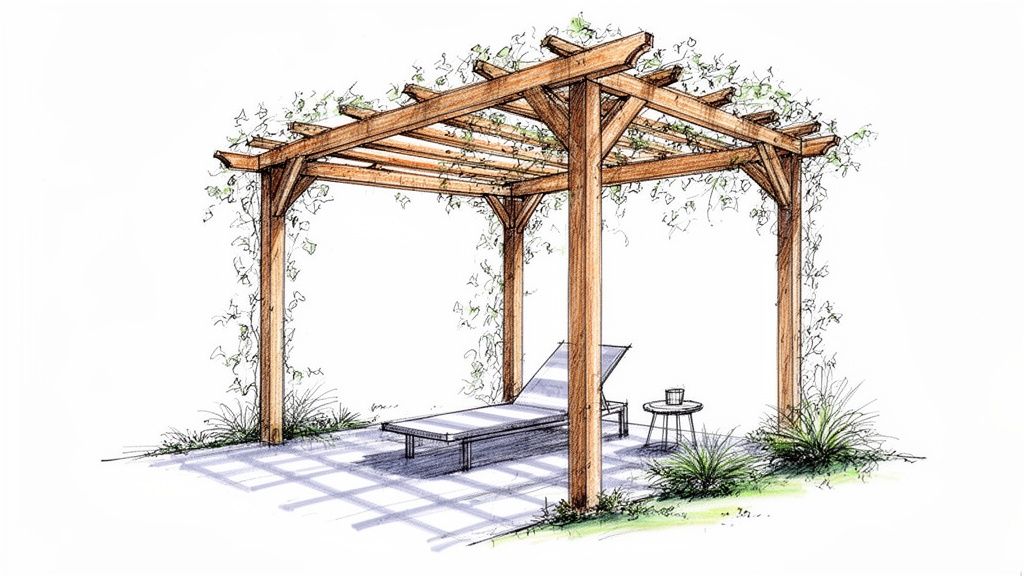
Why Choose a Shade Structure?
A shade structure is perfect for homeowners who want to improve the usability and comfort of their patio or deck, especially in sunny climates. It’s an ideal solution for creating a focal point in the landscape and establishing a designated zone for relaxation. Whether you envision a modern aluminum pergola with integrated lighting or a classic wooden gazebo, the right structure elevates your backyard's style and function.
Quick Implementation Steps
Define the Purpose: Determine the primary use of the space, whether for dining, lounging, or poolside shade, to choose the right structure size and style.
Visualize Placement: Before committing, use an AI landscape design tool like DreamzAR to virtually place different pergola or shade sail designs in your yard. This helps you visualize how shade patterns will change throughout the day and ensure the scale is appropriate.
Select Materials: Choose materials that complement your home's exterior, such as wood for a rustic look or metal for a modern aesthetic. Consider low-maintenance options like vinyl or aluminum.
Plan for Plants and Lighting: If you plan to grow vines, select fast-growing, non-invasive species suited for your area. Integrate any electrical for lighting or fans during the initial installation for a clean, professional finish. Explore more ideas for automated pergola design using AI.
6. Rock Gardens and Xeriscaping
One of the most visually striking and simple backyard ideas for landscaping is creating a rock garden or embracing xeriscaping. This design approach uses a combination of drought-resistant plants, decorative rocks, gravel, and stone to create a stunning, water-efficient landscape. Unlike traditional lawns, xeriscaped yards thrive in dry climates or areas with water restrictions, dramatically reducing water consumption and maintenance needs.
This method minimizes turf grass in favor of hardscapes and hardy plants like succulents and ornamental grasses. By focusing on texture and form, you can create a modern, minimalist, or rustic-looking garden that conserves water while adding incredible curb appeal and character to your property. To perfect your design, apply AI Landscape Design with a photo of your yard to visualize different rock placements and plant combinations before you start the heavy lifting.
Why Choose Rock Gardens and Xeriscaping?
This approach is ideal for homeowners in arid regions or anyone seeking a beautiful, low-maintenance backyard with minimal ongoing costs. It’s perfect if you want to eliminate the chore of mowing and watering a lawn. For instance, a Southwest-style yard could feature agave and cacti among decomposed granite, while a Japanese-inspired design might use carefully placed boulders and raked gravel for a serene, meditative space.
Quick Implementation Steps
Select Your Palette: Choose rocks, boulders, and gravel that complement your home’s exterior colors and style. Varying the size and texture of stones adds visual interest.
Visualize Before You Build: Before hauling heavy rocks, use an AI landscape design app like DreamzAR to experiment with different placements. Upload a photo of your yard to see how various rock and plant combinations will look.
Prepare the Area: Clear existing grass and weeds and lay down a high-quality landscape fabric to prevent future weed growth through your gravel or mulch.
Plant and Irrigate: Group plants with similar low-water needs together. Installing a temporary drip irrigation system can help them get established during their first year. Learn more about how to create a drought-resistant landscape design.
7. Raised Garden Beds and Vegetable Gardens
One of the most practical and simple backyard ideas for landscaping is adding raised garden beds. This approach elevates your gardening space, creating defined planting areas for vegetables, herbs, or flowers. Raised beds offer superior control over soil quality, improve drainage, and reduce back strain, making gardening more accessible and productive for everyone.
By containing the growing medium, these structures prevent soil compaction and keep weeds at bay. They also warm up faster in the spring, allowing for an earlier start to the growing season. A well-placed raised bed can serve as an attractive focal point, transforming an underused corner of your yard into a thriving, edible landscape. You can easily apply AI Landscape Design by uploading a photo of your yard to visualize how different sizes and materials for raised beds will look in your space.
Why Choose Raised Garden Beds?
Raised garden beds are perfect for homeowners who want to grow their own food but have poor native soil, limited space, or mobility challenges. They are incredibly versatile, fitting into designs from rustic cottage gardens to modern, minimalist yards. For instance, a series of 4x8-foot beds can create a dedicated vegetable patch in a sunny backyard, while a smaller raised bed near the kitchen door can provide a constant supply of fresh herbs.
Quick Implementation Steps
Plan Placement: Identify a location that receives at least 6-8 hours of direct sunlight, which is crucial for most vegetables. Visualize the layout and ensure your beds won't obstruct pathways or views.
Visualize with AI: Before building, use an AI landscape design app like DreamzAR to see how different bed materials and placements will look in your actual yard. This helps you optimize spacing and aesthetics. Explore various layouts with these creative raised garden bed ideas.
Build or Assemble: Construct your beds from wood, stone, or metal kits. Line the bottom with cardboard or landscape fabric to suppress weeds.
Fill and Plant: Fill the beds with a high-quality mix of topsoil, compost, and peat moss or coco coir to create a nutrient-rich growing environment for your plants.
8. Artificial Turf and No-Grass Solutions
For homeowners seeking a consistently green lawn without the constant upkeep, artificial turf and no-grass solutions offer a modern and practical alternative. These simple backyard ideas for landscaping replace traditional grass with high-quality synthetic turf, expansive hardscaping, or dense ground cover, eliminating the need for mowing, watering, and chemical treatments. The result is a pristine, vibrant outdoor space that looks perfect year-round.
This approach is especially beneficial for challenging areas where grass struggles to grow, such as heavily shaded spots or high-traffic zones. Modern synthetic grass is incredibly realistic, providing a lush, durable surface ideal for everything from children's play areas to elegant poolside lounges. Apply AI Landscape Design with a photo of your yard to visualize how artificial turf will look next to your patio or garden beds, ensuring it blends seamlessly with your overall design.
Why Choose Artificial Turf and No-Grass Solutions?
This option is perfect for those who want a flawlessly manicured aesthetic with virtually zero maintenance. It’s an excellent investment for busy families, pet owners needing durable and easy-to-clean surfaces, or anyone looking to conserve water. A yard featuring premium artificial turf combined with minimalist hardscaping can create a sophisticated, contemporary oasis that remains beautiful in any season.
Quick Implementation Steps
Select Quality Turf: Choose a premium turf with varied blade lengths, colors, and textures for the most realistic look. Brands like SynLawn and FieldTurf offer a wide range of options.
Visualize Before Installing: It can be hard to picture a full lawn replacement. Use an AI landscape design app like DreamzAR to upload a photo of your yard and instantly see how different artificial turf styles will look.
Prepare the Base: Proper installation is key. This involves excavating the area, laying a compacted sub-base of gravel, and ensuring adequate drainage to prevent water pooling.
Install and Add Infill: Roll out the turf, secure the seams, and spread an infill material like silica sand to help the blades stand upright and add stability.
9. Outdoor Kitchen and Dining Areas
One of the most transformative simple backyard ideas for landscaping is to create a dedicated outdoor kitchen and dining area. These functional zones extend your living space, turning your backyard into a sophisticated hub for entertainment and alfresco meals. From a simple built-in grill station to a full cooking setup with countertops, sinks, and storage, these features add immense value and utility.
By establishing a designated cooking and dining spot, you create a natural gathering point for family and guests. This setup not only elevates your hosting capabilities but also encourages more time spent outdoors, seamlessly blending the convenience of an indoor kitchen with the pleasure of being in nature. Before you build, apply AI Landscape Design by using a photo of your patio to visualize different kitchen layouts and material finishes right in your own yard.
Why Choose an Outdoor Kitchen?
An outdoor kitchen is perfect for homeowners who love to entertain and want to maximize the use of their backyard. It eliminates the hassle of running back and forth to the house while cooking, creating a more integrated and social experience. Whether it's a simple grill island with a prep table or a more elaborate setup with a pizza oven, this feature suits anyone looking to enhance their outdoor lifestyle.
Quick Implementation Steps
Determine Location: Use an AI landscape design app like DreamzAR to virtually place different outdoor kitchen layouts in your yard. This helps you visualize the optimal location relative to your home and existing patio.
Plan for Utilities: Decide if you need connections for gas, electricity, or water. A direct gas line is a safer, lower-maintenance option for grills compared to propane tanks.
Select Materials: Choose durable, weather-resistant materials like stainless steel, stone veneer, and concrete or granite countertops that can withstand the elements.
Ensure Proper Flow: Plan the layout to ensure good traffic flow between the cooking station, dining table, and other entertainment areas. Position the grill so that smoke and heat are directed away from seating.
10. Strategic Landscape Lighting and Ambiance
Thoughtfully placed outdoor lighting transforms a backyard from a daytime-only space into an inviting evening retreat. This simple backyard idea involves using different types of lights to improve safety, highlight key features, and create a warm, welcoming ambiance. From subtle pathway lights to dramatic uplighting on a specimen tree, strategic lighting extends the usability of your outdoor areas well after sunset.
This approach adds a layer of sophistication and magic to your landscape. By layering different light sources, such as solar stakes along a walkway and string lights over a patio, you create depth and interest. This functional and aesthetic enhancement makes your yard safer for nighttime navigation while beautifully showcasing your garden's best assets. To get it right, apply AI Landscape Design with a photo of your yard to visualize how different lighting schemes will create ambiance and highlight features after dark.
Why Choose Landscape Lighting?
Strategic lighting is perfect for any homeowner who wants to maximize the use and enjoyment of their backyard. It's especially effective for those who entertain in the evenings or simply wish to enjoy a peaceful, well-lit view from indoors. For example, uplighting a Japanese maple can turn it into a living sculpture at night, while integrated paver lights clearly and elegantly define the edge of a patio.
Quick Implementation Steps
Plan Your Lighting Zones: Identify key areas to illuminate, such as pathways for safety, seating areas for ambiance, and architectural or plant features for accent.
Visualize the Effect: Before installation, use an AI landscape design app like DreamzAR to virtually place different lighting fixtures in your yard. The app's night mode can help you preview the evening ambiance and adjust placements for the perfect effect.
Select Your Fixtures: Choose a mix of lighting types, such as low-voltage LED pathway lights, solar-powered spotlights, and decorative string lights.
Layer and Focus: Position accent lights to highlight focal points. Use soft, warm-toned lighting for walkways and social areas to create an inviting atmosphere, avoiding harsh, bright glares.
10 Simple Backyard Landscaping Ideas Comparison
Option | Implementation Complexity 🔄 | Resource Requirements ⚡ | Expected Outcomes 📊 | Ideal Use Cases | Key Advantages ⭐ | Quick Tips 💡 |
|---|---|---|---|---|---|---|
Low-Maintenance Native Plant Gardens | Moderate 🔄 — research + establishment period | Low ongoing; moderate initial (plants, soil prep) ⚡ | Sustainable habitat, reduced water & maintenance 📊 | Budget-conscious, water-restricted, eco-minded homeowners | Low long-term cost; supports pollinators; drought-tolerant ⭐ | Start small; group by water needs; consult extension 💡 |
Simple Paver Patios and Hardscaping | Medium–High 🔄 — site prep, possible pro install | Moderate–high initial (materials & labor); low upkeep ⚡ | Defined outdoor living, increased property value 📊 | Small yards, hosting areas, defined entertainment zones | Durable, customizable, immediate functionality ⭐ | Ensure proper drainage slope; use polymeric sand; preview with AR 💡 |
Cozy Fire Pit Zones | Low–Medium 🔄 — placement and safety compliance | Low–medium cost; fuel management for gas/wood ⚡ | Extended outdoor season; strong focal gathering point 📊 | Entertaining homeowners, family gathering spaces | Affordable focal feature; ambiance; social hub ⭐ | Check codes; maintain clearance; use non-combustible base 💡 |
Minimalist Lawn with Mulched Planting Beds | Low 🔄 — simple reconfiguration | Low–moderate materials (mulch, edging); annual refresh ⚡ | Less mowing, cleaner aesthetic, better moisture retention 📊 | Busy homeowners, small yards, low-maintenance goals | Dramatically reduces maintenance; neat appearance ⭐ | Install landscape fabric; refresh mulch yearly; group plants by need 💡 |
Shade Structures and Pergolas | Medium–High 🔄 — construction, possible electrical | Moderate–high materials & labor; upkeep for plants/motors ⚡ | Defined outdoor rooms, sun control, architectural interest 📊 | Sunny climates, entertainment areas, vine-supported roofs | Extends usable space; strong visual impact; supports climbing plants ⭐ | Test placement for shade; consider motorized louvers; add integrated lighting 💡 |
Rock Gardens and Xeriscaping | Low–Medium 🔄 — site prep & plant selection | Low ongoing water; moderate initial rock/soil prep ⚡ | Very low water use, minimalist aesthetic, low maintenance 📊 | Arid climates, water-conscious homeowners, budget yards | Extremely water-efficient; low upkeep; affordable long-term ⭐ | Use landscape fabric; select complementary rocks; group similar-water plants 💡 |
Raised Garden Beds and Vegetable Gardens | Medium 🔄 — build beds, soil management | Moderate initial (materials, soil); regular watering & amendments ⚡ | Productive edible space, better soil control, ergonomic gardening 📊 | Home gardeners, food-producing landscapes, small yards | Improved drainage/yields; easier maintenance and access ⭐ | Place in full sun; use quality soil mix; install drip irrigation 💡 |
Artificial Turf and No-Grass Solutions | Medium 🔄 — thorough base prep; pro recommended | High initial cost; minimal ongoing water or mowing ⚡ | Year-round green look, low routine upkeep, pet-friendly 📊 | Busy households, water-restricted areas, pet owners | Eliminates mowing/watering; durable, consistent appearance ⭐ | Ensure proper drainage; choose premium turf; consider eco-friendly infill 💡 |
Outdoor Kitchen and Dining Areas | High 🔄 — utilities, permits, durable construction | High initial cost; utility hookups (gas/water/electric) ⚡ | Enhanced entertaining capacity; increased property value 📊 | Entertainers, outdoor-centric households, backyard oasis designs | Full outdoor cooking functionality; high curb appeal ⭐ | Plan workflow; use weatherproof materials; account for ventilation & permits 💡 |
Strategic Landscape Lighting and Ambiance | Low–Medium 🔄 — design may need pro; solar options | Low–moderate install cost; energy-efficient LEDs ⚡ | Extended evening use, improved safety, highlighted features 📊 | Evening entertaining, safety-focused homeowners, aesthetic enhancement | High impact for moderate cost; energy-efficient and flexible ⭐ | Layer lighting types; use warm tones; consider smart controls and AR previews 💡 |
Bring Your Backyard Vision to Life Today
You've explored a diverse collection of simple backyard ideas for landscaping, each offering a unique path to transform your outdoor environment. From the low-effort elegance of native plant gardens and minimalist mulch beds to the inviting warmth of a fire pit zone, the possibilities are as varied as they are achievable. We've broken down each concept into practical steps, highlighting everything from material choices and budget considerations to maintenance levels, ensuring you have a clear roadmap for your project.
The journey from a plain, underutilized yard to a vibrant, functional outdoor living area doesn't require a complete overhaul or an astronomical budget. The key takeaway is that strategic, well-chosen enhancements can deliver a significant impact. Whether it's adding a simple paver patio for dining, installing strategic landscape lighting for evening ambiance, or creating a productive raised vegetable garden, each idea serves as a building block for your ideal space.
From Inspiration to Implementation
The most critical step is moving from inspiration to action. While reading about these concepts is a great start, the real challenge often lies in visualizing how they will look in your specific yard. How will a pergola frame your view? Where is the optimal placement for a rock garden to catch the afternoon sun? Answering these questions with confidence is the difference between a successful project and a costly mistake.
This is where modern technology provides an incredible advantage. Instead of relying on guesswork or rough sketches, you can use powerful tools to see a photorealistic preview of your design.
Key Insight: The ability to visualize simple backyard ideas for landscaping before committing to them eliminates uncertainty and empowers you to make design choices that perfectly suit your home’s architecture and your personal style.
See Your New Backyard Before You Break Ground
AI-powered landscape design tools have revolutionized the planning process. By simply uploading a photo of your current backyard, you can experiment with countless possibilities in minutes. You can test different layouts for a paver patio, see how various native plants will look next to your fence, or compare the visual impact of artificial turf versus a traditional lawn.
This technology allows you to:
Test Multiple Ideas: Instantly generate designs that incorporate fire pits, shade structures, or outdoor kitchens.
Experiment with Materials: Compare the look of different pavers, mulch colors, and rock types without any physical effort.
Optimize Placement: Virtually arrange planting beds, walkways, and lighting fixtures to find the most functional and aesthetically pleasing layout.
By leveraging AI, you bridge the gap between the concepts in this article and their real-world application. It’s no longer about imagining your dream backyard; it’s about seeing it, refining it, and building a concrete plan to bring that vision to life with precision and confidence.
Ready to stop guessing and start designing? Download the DreamzAR AI Landscape Design app to upload a photo of your yard and instantly generate stunning, photorealistic designs for any of the simple backyard ideas for landscaping mentioned here. See your perfect outdoor oasis come to life by visiting DreamzAR AI Landscape Design today