Raised Garden Bed Ideas: 10 Creative Designs
- Akhilesh Joshi
- 2 days ago
- 16 min read

Raised garden beds are more than just wooden boxes for vegetables; they are the foundation of a productive, accessible, and beautiful garden. Whether you're working with a sprawling backyard or a compact urban patio, the right design can transform your space, improve your soil, and make gardening a more rewarding experience. To understand the fundamental benefits and setup of raised beds, explore this a simple guide to raised garden beds before diving into more advanced concepts.
But how do you choose from the countless options available? And more importantly, how can you be sure a design will look right in your yard before you start building? This guide moves beyond the standard rectangle to explore innovative and practical raised garden bed ideas, each with a unique approach to cultivation, sustainability, and style. We'll delve into the specifics of each design, from the permaculture principles of Hugelkultur to the hyper-efficiency of Square Foot Gardening.
Crucially, for each idea, we'll discuss how you can use AI Landscape Design to visualize the concept using a photo of your own yard. This technology allows you to experiment with different placements and styles, ensuring your chosen design fits perfectly into your space before you commit to building.
1. Elevated Rectangle Bed (Standard Design)
The elevated rectangle bed is the quintessential design for a reason: it's simple, efficient, and endlessly adaptable. This foundational style consists of a rectangular frame, typically made from wood or composite materials, that sits directly on the ground. Its height can range from a modest 6 inches for shallow-rooted plants like lettuce to a more accessible 24 inches, which is ideal for gardeners who prefer not to bend or for growing deep-rooted vegetables like carrots and potatoes. This classic design is one of the most popular raised garden bed ideas because it provides excellent drainage, prevents soil compaction, and warms up faster in the spring.
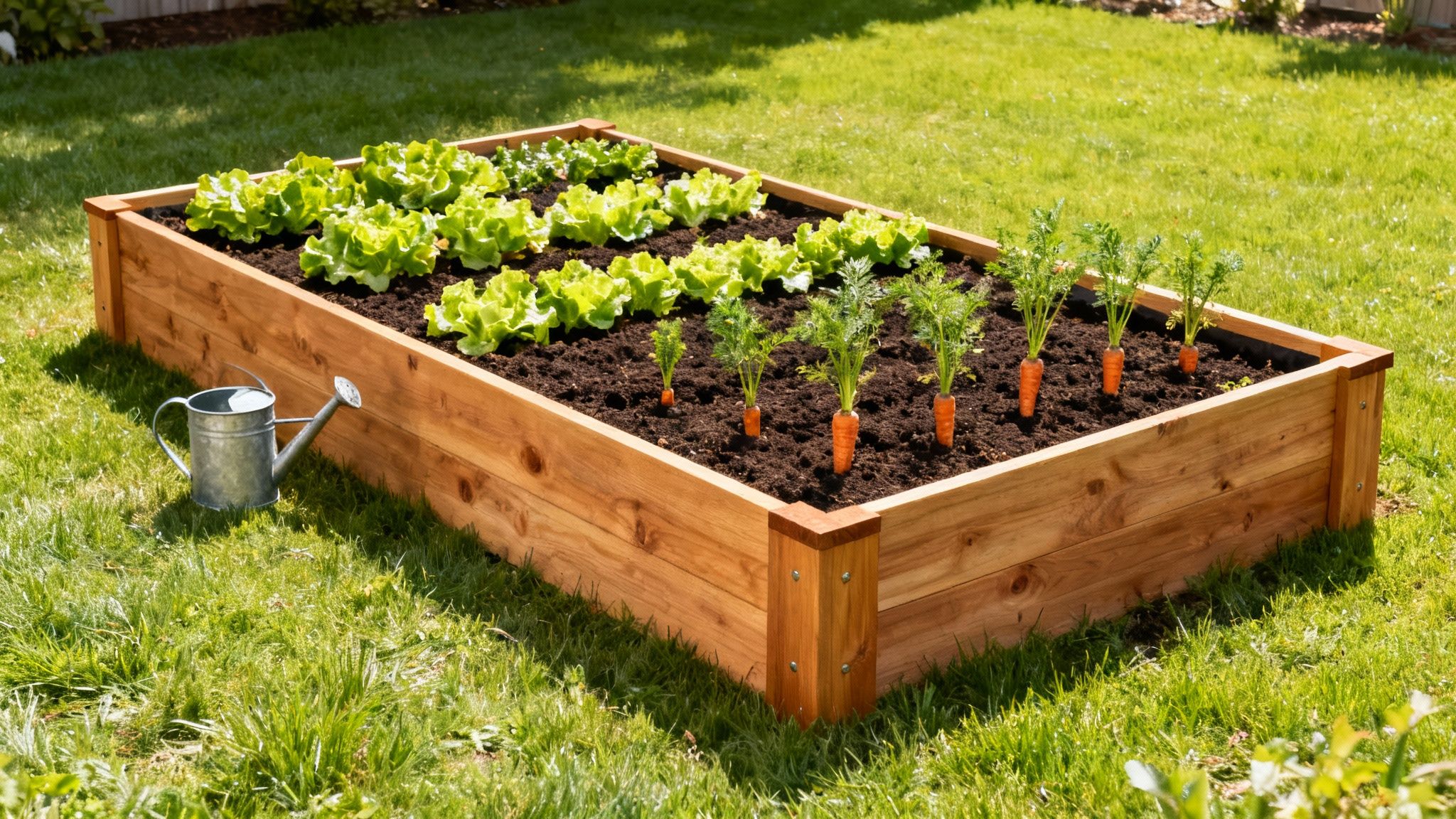
Why Choose This Design?
This design is perfect for beginner gardeners and those seeking a practical, cost-effective solution for a dedicated growing space. Its straightforward construction makes it a popular DIY project, and its linear form simplifies garden planning and plant spacing. You'll often see this style used in community gardens and residential kitchen gardens, where maximizing planting area in a neat, organized fashion is a top priority.
Implementation Tips
Materials: Opt for naturally rot-resistant woods like cedar or redwood for longevity. Alternatively, use composite decking materials that won't warp or decay over time.
Weed Barrier: Before filling with soil, line the bottom of the bed with landscape fabric or a layer of cardboard to suppress weeds and grass.
Depth: For deep-rooted vegetables, consider stacking two standard frames to create a bed that is 12-18 inches deep. This gives roots ample room to grow.
Visualize with AI: Unsure how many beds will fit or where to place them? You can apply AI Landscape Design to visualize your ideas. Simply upload a photo of your yard to see how different sizes and arrangements of rectangular beds will look, helping you perfect the layout before you start building.
2. Keyhole Garden Design
The keyhole garden is an ingenious, circular raised bed design inspired by African permaculture principles. It features a distinctive keyhole-shaped cutout on one side, allowing easy access to the center. At its heart lies a vertical compost basket where kitchen scraps and other organic waste are added. As this material decomposes, water carries rich nutrients directly into the surrounding soil, creating a self-fertilizing, water-efficient system that combines cultivation and composting in one compact unit. This innovative approach is one of the most sustainable raised garden bed ideas for drought-prone areas.
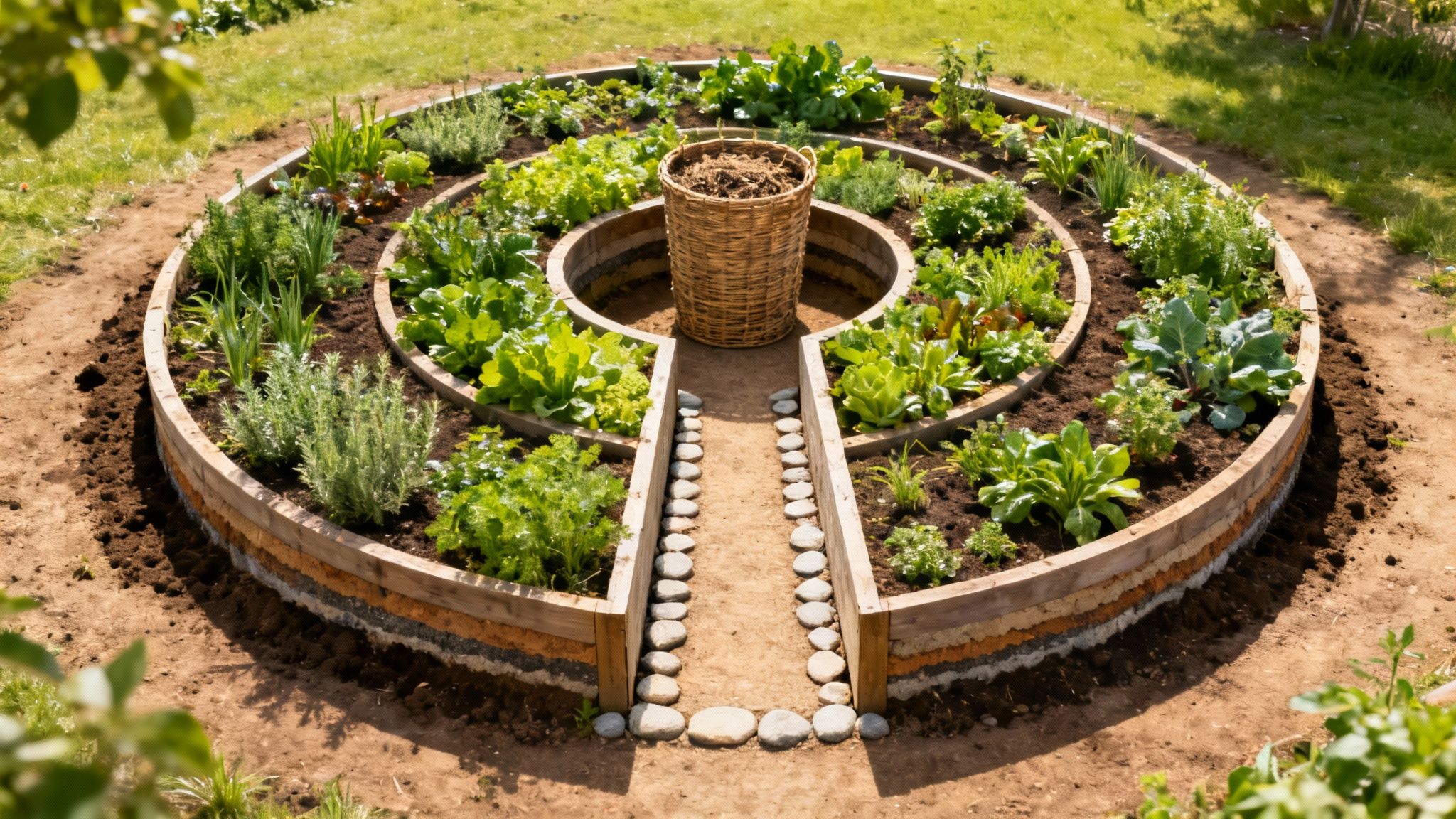
Why Choose This Design?
This design is ideal for eco-conscious gardeners in water-scarce regions or anyone looking to create a highly productive, low-waste garden. Its built-in composting system reduces the need for external fertilizers and minimizes kitchen waste. Popularized by organizations like Save the Children for its effectiveness in arid climates, the keyhole garden’s circular shape maximizes growing space while its central nutrient core supports a dense, thriving mini-ecosystem.
Implementation Tips
Layering is Key: Build your garden bed with layers, starting with mulch, then compost, sand, and finally a rich topsoil layer to promote healthy root growth.
Material Choice: Use natural, local materials like stones, bricks, or wood to build the circular retaining wall, enhancing its rustic, permaculture aesthetic.
Compost Basket: Construct the central basket from chicken wire or a similar mesh to allow nutrients and moisture to seep out effectively into the garden soil.
Visualize with AI: A keyhole garden has a unique footprint. You can apply AI Landscape Design to visualize this idea using a photo of your own yard. This helps you understand its scale and ensure the keyhole entry is positioned for optimal access before you start building.
3. Square Foot Gardening (SFG)
Square Foot Gardening (SFG) is a highly organized and intensive planting method that transforms a standard raised bed into a powerhouse of productivity. Popularized by Mel Bartholomew, this system typically uses a 4x4 foot frame divided into a grid of 16 individual one-foot squares. Each square is managed as its own mini-garden, planted with a specific number of plants depending on their size. This approach maximizes yield, reduces waste, and makes garden management incredibly straightforward, making it one of the most efficient raised garden bed ideas for small spaces.
Why Choose This Design?
This method is ideal for gardeners who want to get the most out of a limited area, such as a patio, balcony, or small urban yard. Its grid-based system eliminates guesswork regarding plant spacing and is perfect for beginners, children, and anyone seeking a low-maintenance, high-yield edible garden. The organized layout also simplifies tasks like succession planting and crop rotation, ensuring a continuous harvest throughout the season.
Implementation Tips
Soil Mix: Use Mel Bartholomew's recommended "Mel's Mix" for optimal results: one-third peat moss, one-third coarse vermiculite, and one-third blended compost.
Grid System: Create a grid over your bed using thin strips of wood, string, or even old vinyl blinds to clearly define your squares.
Succession Planting: As soon as you harvest a square, add a scoop of compost and plant a new crop to keep the garden productive.
Visualize with AI: Before building, you can apply AI Landscape Design to create a virtual layout of your SFG beds. Upload a photo of your yard to visualize how a 4x4 grid will fit and function in your space, helping you plan the perfect setup for incorporating edibles into your landscape. Explore different layouts and find more inspiration with this guide on DIY garden design for edibles.
4. Vertical Trellis and Wall Gardens
Vertical trellis and wall gardens are an innovative solution that maximizes growing area by extending your raised bed upwards. This approach involves adding a trellis, arbor, or wall-mounted support system directly behind or within the bed, allowing vining plants like cucumbers, beans, tomatoes, and squash to climb. By utilizing vertical space, this technique dramatically increases yield without expanding the garden's ground footprint, making it one of the most efficient raised garden bed ideas for smaller yards. It also improves air circulation around the plants, which can help reduce the risk of fungal diseases.
Why Choose This Design?
This design is perfect for gardeners with limited space, such as those with small patios, balconies, or narrow side yards. It's also a visually striking way to create a living wall or a natural privacy screen. You'll see this method used in compact urban settings, from rooftop farms in Brooklyn to traditional European potager gardens, where every square inch is optimized for beauty and productivity.
Implementation Tips
Materials: Choose sturdy materials for your trellis, like cedar, redwood, or powder-coated metal, to ensure it can support the weight of mature, fruit-laden vines.
Placement: Install the trellis on the north side of the raised bed to prevent it from casting a shadow over smaller plants growing below.
Planting: Plant nitrogen-fixing climbers like pole beans to enrich the soil for the plants at the base of the bed. Use soft plant ties to gently guide vines up the structure.
Visualize with AI: Not sure how a tall trellis will look next to your house? Apply AI Landscape Design to visualize this idea using photos of your own yard. This allows you to generate realistic mockups showing how different trellis materials and placements will integrate with your existing raised beds. You can find more inspiration and learn how to create a garden design that maximizes space with these techniques.
5. Hugelkultur (Mound) Beds
Hugelkultur, which translates to "mound culture" in German, is a permaculture technique that transforms decaying wood and organic debris into a long-term, self-fertilizing garden bed. This design involves burying large logs and branches under layers of smaller organic matter, compost, and soil, creating a mounded shape. As the wood decomposes, it releases nutrients, improves soil aeration, and acts like a sponge, retaining moisture and significantly reducing watering needs over time. This sustainable method is one of the most resource-efficient raised garden bed ideas for creating highly fertile soil.
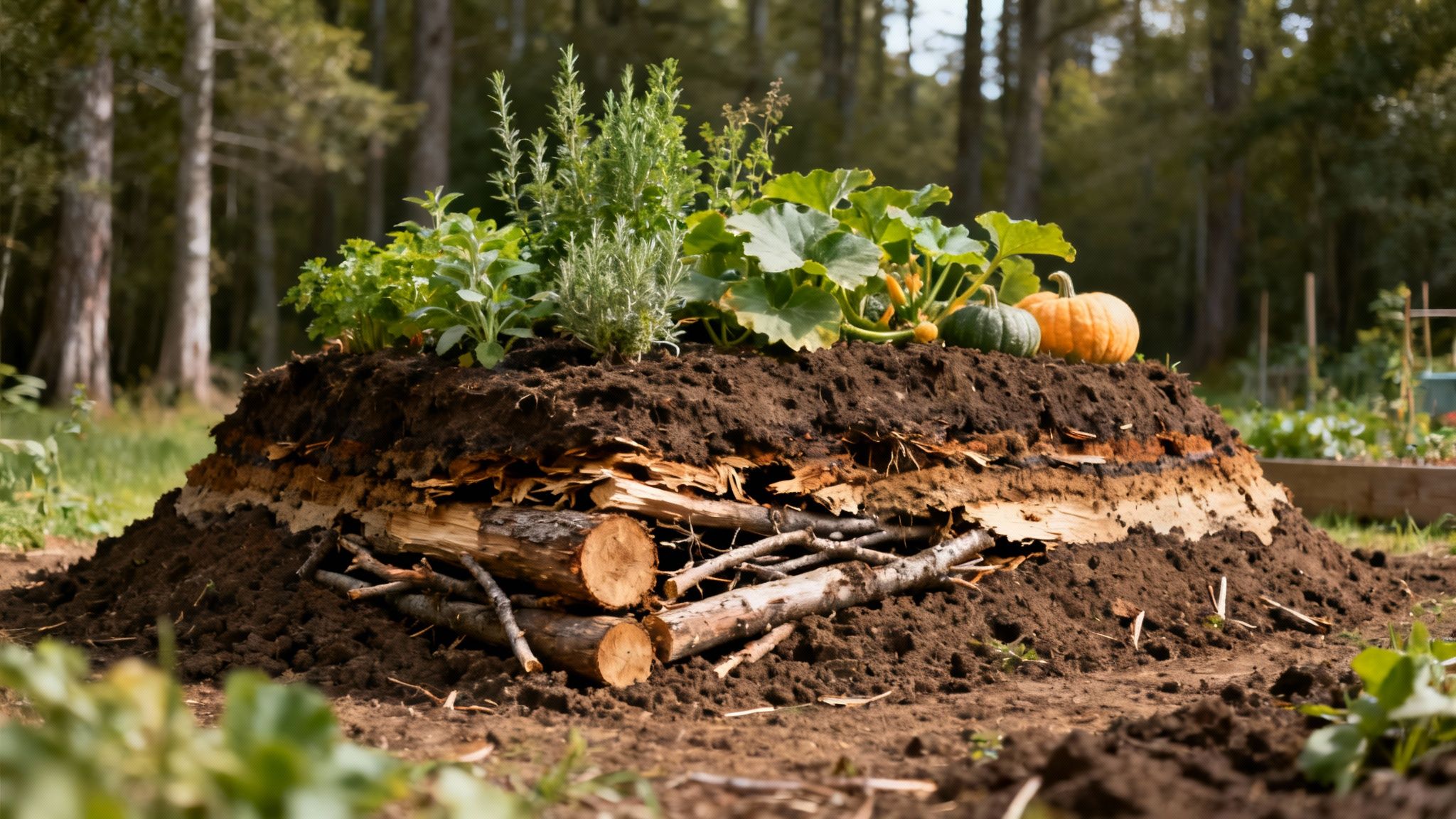
Why Choose This Design?
This design is ideal for gardeners interested in permaculture, water conservation, and building soil health with minimal long-term inputs. It’s an excellent way to upcycle fallen trees, branches, and other yard waste into a productive growing space. Hugelkultur beds excel in both arid climates, where water retention is critical, and areas with poor native soil, as you are essentially building a brand-new, nutrient-rich ecosystem from the ground up.
Implementation Tips
Layering is Key: Start with the largest logs at the base, followed by smaller branches, twigs, and leaves. Invert sod on top of the wood to add nutrients.
Add Nitrogen: Incorporate nitrogen-rich materials like grass clippings, coffee grounds, or manure between the wood layers to help balance the carbon and aid decomposition.
Top it Off: Finish the mound with at least 6-8 inches of high-quality compost and topsoil. The bed will settle significantly in its first year, so build it taller than you think you need.
Visualize with AI: A hugelkultur bed can be a prominent landscape feature. You can apply AI Landscape Design to visualize the mound in your yard. By uploading a photo, you can experiment with its placement and size to ensure it complements your garden aesthetic before you start digging.
6. Container and Stacked Planting System
For those with limited ground space, the container and stacked planting system is a revolutionary approach that takes gardening vertical. This modular design uses stacked pots, commercial tower systems, or tiered planters to create a compact, high-density growing station. It’s one of the most versatile raised garden bed ideas, perfect for balconies, patios, and small urban yards where maximizing every square inch is crucial. By growing upwards, you can cultivate an impressive variety of plants, such as strawberries, herbs, and lettuces, in a minimal footprint.
Why Choose This Design?
This design is the ultimate solution for urban gardeners and anyone looking to garden without a traditional yard. Its mobility allows you to easily move plants to follow the sun or protect them from harsh weather. The separated containers also make it simple to customize soil conditions for different plants and help control the spread of soil-borne diseases. It’s an ideal choice for creating a highly productive herb spiral or a cascading strawberry tower right outside your kitchen door.
Implementation Tips
Soil Choice: Always use a high-quality potting mix, not heavy garden soil, which will compact in containers and inhibit drainage.
Watering: Containers dry out quickly. Consider installing a drip irrigation system or soaker hoses for consistent moisture.
Fertilizing: Nutrients leach out of pots with each watering, so plan to fertilize more frequently with a liquid-soluble fertilizer.
Visualize with AI: Unsure how a vertical tower or tiered pots will look on your patio? You can apply AI Landscape Design to visualize your ideas. Using a photo of your space, you can see mockups of different container arrangements and styles before you buy. You can find more inspiration in these 20 best container garden ideas.
7. Mandala Garden Design
The Mandala Garden Design transforms a functional growing space into a work of living art. This concept arranges plants in a circular, geometric layout, often featuring concentric rings or radiating patterns that emanate from a central focal point. Inspired by the spiritual symbolism of mandalas, this design organizes plants harmoniously, grouping them by size, water needs, and companion planting relationships. This approach is more than just aesthetically pleasing; it creates a balanced ecosystem where plants can thrive, making it one of the most unique and thoughtful raised garden bed ideas.
Why Choose This Design?
This design is ideal for gardeners who want to integrate beauty, spirituality, and ecological principles into their landscape. It’s perfect for creating a meditative and intentional space that is both productive and beautiful. You'll see this style used in community gardens like those at Damanhur in Italy, educational botanical gardens, and private yards where the garden serves as a tranquil retreat. Its circular form encourages a natural flow and makes tending to plants from all angles intuitive.
Implementation Tips
Plan on Paper: Before digging, map out your design to scale. Decide on the number of rings, pathways, and the central feature, such as a small tree, sculpture, or herb spiral.
Mark Your Circles: Use a central stake and a measured string to draw perfect circles on the ground, guiding the placement of your bed borders and pathways.
Plant Strategically: Place taller plants on the outer rings to prevent them from shading smaller plants closer to the center. Group plants with similar water needs in the same ring to simplify irrigation.
Visualize with AI: A complex mandala layout can be hard to picture. You can apply AI Landscape Design to visualize this idea using photos of your own yard. This allows you to experiment with different patterns and sizes to ensure the final result fits your space perfectly before you start building.
8. Lasagna Gardening (Sheet Composting)
Lasagna Gardening, also known as sheet composting, is a brilliant no-dig method that builds incredibly fertile soil from the ground up. Instead of constructing a frame, this technique involves layering organic "green" (nitrogen-rich) materials like grass clippings and "brown" (carbon-rich) materials like dried leaves directly onto your lawn or existing garden space. These layers decompose over several months, creating a rich, loamy bed teeming with microbial life, ready for planting without ever breaking out a shovel. This is one of the most sustainable raised garden bed ideas, as it recycles yard waste and builds soil health simultaneously.
Why Choose This Design?
This method is ideal for gardeners looking to improve poor soil, suppress stubborn weeds without chemicals, or create a garden with minimal physical effort and cost. It’s a cornerstone of permaculture and organic gardening, turning waste materials into a productive asset. For an enriching foundation, understanding the Compost PLUS benefits can significantly boost your soil's health from the very first layer. You will find this technique used in community gardens, school projects teaching composting, and suburban yards transitioning to more sustainable practices.
Implementation Tips
Foundation: Start with a layer of cardboard or newspaper directly on top of the grass to smother it and prevent weeds from growing through.
Layering: Alternate 4-6 inch layers of "browns" (leaves, straw, shredded paper) and "greens" (kitchen scraps, coffee grounds, fresh grass clippings). Lightly water each layer.
Patience is Key: Begin your lasagna bed in the fall to allow it to decompose over winter for spring planting. A minimum of 2-3 months is needed for the layers to break down. This is one of many eco-friendly landscape design ideas that work with nature's timeline.
Visualize with AI: Even without a frame, planning is crucial. You can apply AI Landscape Design to outline the bed’s shape on a photo of your yard, helping you visualize how this organic garden will integrate with your existing landscape before you start layering.
9. Sunken/Bermed Garden Beds
This strategic design adapts to your specific climate by working with the landscape rather than on top of it. A sunken bed is built below grade level to trap moisture and cool air, making it ideal for arid regions. Conversely, a bermed bed is a mounded hill of soil that sheds excess water, perfect for areas with heavy rainfall. These raised garden bed ideas are less about constructing a frame and more about shaping the earth itself to create optimal microclimates for your plants. This technique offers a natural, integrated look that blends seamlessly into the surrounding environment.
Why Choose This Design?
Choose this design if you need to solve a specific environmental challenge like poor drainage or extreme heat. It’s an excellent choice for gardeners in the desert Southwest who use traditional sunken "waffle gardens" to conserve every drop of water, or for those in the rainy Pacific Northwest who create berms to prevent root rot. This method is highly effective for sustainable gardening, as it uses the site's natural topography to manage resources like water and soil temperature.
Implementation Tips
Assess Drainage: Before you dig, understand your site's drainage patterns. A sunken bed in a waterlogged area will become a pond, while a berm in a dry area will shed what little water it receives.
Moisture Management: In arid climates, line sunken beds with landscape fabric and add heavy mulch to retain moisture. In wet climates, install a French drain at the perimeter of your berm to channel excess water away.
Soil Composition: Berms require a stable soil mix that won't erode easily. Blend your native soil with compost and other amendments to create a sturdy, nutrient-rich mound.
Visualize with AI: These earthworks can be difficult to picture. You can apply AI Landscape Design to visualize how sunken or bermed areas will look in your yard. Upload a photo and let the AI show you how these unique shapes will alter your landscape's flow and appearance.
10. Aquaponics and Hydroponics Integration
For the technologically inclined gardener, integrating aquaponics or hydroponics with a raised bed structure creates a high-efficiency, soil-free growing system. This advanced method circulates nutrient-rich water directly to plant roots. In hydroponics, nutrients are added to the water, while in aquaponics, fish waste provides a natural source of fertilizer, creating a symbiotic ecosystem. This is one of the more complex raised garden bed ideas, but it rewards with rapid growth, significant water conservation, and the ability to grow produce year-round in a controlled environment.
Why Choose This Design?
This design is ideal for gardeners in urban environments with limited space or those interested in sustainable, high-yield food production. It eliminates soil-borne pests and diseases, drastically reduces water usage compared to traditional gardening, and provides a fascinating, self-sustaining ecosystem. It’s perfect for growing leafy greens, herbs, and fruiting plants like tomatoes and peppers with exceptional speed and density.
Implementation Tips
System Choice: Start with a simpler deep water culture (DWC) or nutrient film technique (NFT) hydroponic system before graduating to the more complex balancing act of aquaponics.
Monitor Vitals: Regularly test and adjust the pH, nutrient levels, and dissolved oxygen in your water to ensure optimal plant and fish health. A quality test kit is essential.
Hardy Plants: Begin with forgiving, fast-growing crops like lettuce, basil, and spinach to learn the system's nuances before attempting more demanding plants.
Visualize with AI: An aquaponics system involves tanks, pumps, and grow beds. You can apply AI Landscape Design to visualize your ideas using a photo of your patio or greenhouse. This helps you plan the layout and ensure the entire system fits aesthetically and functionally in your space before you invest. For more inspiration on water-based systems, you can learn more about creating a harmonious aquatic garden.
Top 10 Raised Garden Bed Design Comparison
Design | Implementation Complexity 🔄 | Resources & cost | Speed / Efficiency ⚡ | Expected outcomes & Effectiveness ⭐ | Ideal use cases & tips 💡 |
|---|---|---|---|---|---|
Elevated Rectangle Bed (Standard Design) | Low | Wood/composite/metal frame + soil; $50–$300 | ⚡⚡⚡ | ⭐⭐⭐⭐ — reliable yields, improved drainage and accessibility | Home & beginner gardens; use cedar/composite, landscape fabric, stack frames for depth |
Keyhole Garden Design | Moderate–High | Stone/wood edge, central compost basket; moderate material/time | ⚡⚡⚡ | ⭐⭐⭐⭐ — high nutrient recycling, excellent water retention | Drought-prone/permaculture sites; position basket north, layer materials carefully |
Square Foot Gardening (SFG) | Moderate | 4x4 frame, grid, Mel's Mix components; moderate cost | ⚡⚡⚡⚡ | ⭐⭐⭐⭐ — very productive per sqft, low weeding, organized succession | Small/urban plots, schools; follow Mel's Mix, succession plant every 2–3 weeks |
Vertical Trellis & Wall Gardens | Moderate | Trellises/arbors or wall systems; $30–$200+ | ⚡⚡⚡⚡ | ⭐⭐⭐⭐ — maximizes vertical yield, better airflow | Small yards, balconies; use sturdy supports, top drip irrigation, prune and train vines |
Hugelkultur (Mound) Beds | High | Large volume of logs/organic matter; low cash cost but high labor | ⚡⚡ | ⭐⭐⭐⭐⭐ — long-term fertility, excellent moisture retention | Permaculture/regenerative plots; expect 1–2 years to peak, layer logs then compost |
Container & Stacked Planting System | Low–Moderate | Stackable containers/towers, potting mix; $50–$500+ | ⚡⚡⚡ | ⭐⭐⭐ — portable, great for herbs/greens but limited root depth | Renters, patios; use quality mix, group containers, install drip to reduce frequent watering |
Mandala Garden Design | High | Planning, varied materials for rings and paths; moderate cost | ⚡⚡⚡ | ⭐⭐⭐ — visually striking, good zoning of plant needs | Aesthetic/educational gardens; map to scale, use radial paths and group by water needs |
Lasagna Gardening (Sheet Composting) | Low–Moderate | Bulk brown/green materials (cardboard, leaves, compost); very low $ | ⚡⚡ | ⭐⭐⭐⭐ — builds rich no-dig soil, recycles waste | No-dig turf conversion; start in fall, water between layers, avoid meat/dairy in layers |
Sunken / Bermed Garden Beds | Moderate | Earth-moving (digging/soil), mulch/lining as needed; labor-intensive | ⚡⚡⚡ | ⭐⭐⭐ — microclimate modification for water management | Arid (sunken) or wet (bermed) sites; assess drainage, mulch, consider landscape fabric |
Aquaponics & Hydroponics Integration | Very High | Tanks, pumps, media, sensors, electricity; $500–$5000+ | ⚡⚡⚡⚡⚡ | ⭐⭐⭐⭐ — very water-efficient, fast growth, high yields in controlled setups | Controlled-environment or year-round production; monitor pH/DO, start simple NFT/DWC before full aquaponics |
From Vision to Victory Garden: Bringing Your Ideas to Life
We've journeyed through a diverse landscape of raised garden bed ideas, from the structured efficiency of Square Foot Gardening to the self-sustaining ingenuity of a Hugelkultur mound. You've seen how different materials like rustic wood, sleek metal, and timeless stone can define a garden's character. More importantly, you now have a blueprint for matching a design to your unique goals, whether it's maximizing a small urban space with a vertical trellis or creating a drought-tolerant oasis with a sunken bed.
The most crucial takeaway is that a raised garden bed is more than just a container for soil; it's a personalized ecosystem designed by you, for you. Your choice will directly influence your garden's productivity, water usage, and maintenance needs. A Keyhole garden, for instance, isn't just a design but a commitment to composting in place and conserving water. Similarly, adopting a Lasagna Gardening method is about building soil fertility from the ground up, season after season.
Your Action Plan: From Inspiration to Installation
The path forward is clear. The primary hurdle for most gardeners isn't a lack of inspiration, but the uncertainty of how these concepts will translate to their own property. Visualizing the final result is the key to confident decision-making and preventing costly mistakes.
This is where planning and technology intersect. Before purchasing lumber or moving soil, take a moment to solidify your vision. You can apply AI Landscape Design to visualize your ideas using photos of your own yard, bridging the gap between the beautiful raised garden bed ideas you’ve seen here and the reality of your backyard.
Key Insight: The best garden design is one you can see, plan, and build with confidence. Visualizing the scale, placement, and aesthetic of your chosen raised bed in your actual space eliminates guesswork and ensures the final product matches your vision.
Instead of trying to imagine how a series of rectangular beds will look along your fence line, you can use an AI-powered tool to see it. Upload a photo of your yard and experiment. See how a striking Mandala garden design could become a central feature, or test whether a vertical container system is the right solution for your small patio. This step transforms abstract ideas into a tangible, personalized plan, allowing you to perfect the layout, size, and style before a single shovel hits the dirt. Once your digital vision is perfected, you can proceed with building a garden that is not only productive but also a beautiful, intentional extension of your home.
Ready to stop dreaming and start designing? Visualize any of these raised garden bed ideas in your own yard with DreamzAR AI Landscape Design. Download the app and use a photo of your space to instantly see how different garden layouts and styles will look, helping you create the perfect plan before you build. Find your perfect design today at DreamzAR AI Landscape Design.