10 Inspiring Garden Rock Ideas to Try in 2025
- Akhilesh Joshi
- 16 minutes ago
- 16 min read

Rocks are more than just static elements in a landscape; they are the architectural bones that provide structure, texture, and timeless beauty. From creating serene pathways to building dramatic focal points, incorporating stone can fundamentally transform an ordinary outdoor space into a striking, low-maintenance haven. But how do you choose the right application for your specific yard, and how can you be sure the final result will match your vision? The challenge often lies in visualizing how these heavy, permanent features will integrate with your existing environment.
This comprehensive guide explores ten versatile garden rock ideas, offering practical advice, material suggestions, and actionable inspiration for every type of landscape. We cut through the ambiguity, providing clear steps for implementation, from crafting elegant rock borders to designing functional retaining walls. Crucially, we will also reveal how you can apply AI Landscape Design to visualize your ideas using photos of your own yard. This technology allows you to upload a photo of your yard and virtually test these concepts, ensuring you commit to a design with complete confidence. Let's dig in and discover how to build a landscape that truly rocks.
1. Rock Pathways and Stepping Stones
Creating a pathway with stone is a classic garden rock idea that masterfully blends form and function. Rock pathways guide movement through your landscape, protecting delicate plants and lawns from foot traffic while adding a strong element of natural texture and design. Whether you opt for a tightly fitted flagstone path for a formal look or individual stepping stones for a more whimsical feel, this feature establishes clear routes and invites exploration.
This approach is perfect for connecting different garden zones, such as a patio to a vegetable patch or a gate to the front door. The choice of rock dictates the style: irregular flagstone creates a rustic, cottage-garden vibe, while precisely cut slate lends itself to a contemporary, sleek design.
### Implementation Tips
To ensure your pathway is both beautiful and durable, focus on the foundation and spacing. A stable path prevents wobbly stones and potential trip hazards.
Proper Spacing: For stepping stones, place the center of each stone approximately 18-24 inches apart to match a comfortable adult stride.
Solid Base: Excavate 4-6 inches of soil and lay a 2-3 inch base of compacted gravel or crushed stone. Top this with a 1-2 inch layer of sand to create a level, well-draining surface for setting the stones.
Safety First: Choose stones with a naturally textured, non-slip surface, especially for areas that receive a lot of rain or are near a water source.
Visualize Before You Build: Unsure how a bluestone path will look versus a river rock one? You can apply AI Landscape Design to visualize these ideas. Simply upload a photo of your yard and virtually overlay different stone pathways to see which material and layout best complement your existing landscape before you commit to the heavy lifting.
2. Rock Borders and Edging
Using rocks to create borders and edging is a highly effective garden rock idea that establishes clean lines and adds a sense of permanence to your landscape design. These natural barriers define planting beds, line pathways, and separate your lawn from garden areas, preventing grass from creeping in and keeping mulch contained. Rock edging provides a textured, durable alternative to plastic or metal, lending a more integrated and organic feel to the garden's structure.
This technique is incredibly versatile. A border of large, rugged boulders can create a rustic, informal boundary perfect for a cottage garden, while precisely stacked slate or cut stone offers a formal, polished look for contemporary designs. The choice of stone directly influences the garden's overall aesthetic, making it a powerful design tool.
### Implementation Tips
A stable and well-laid border will last for years, prevent soil erosion, and require minimal upkeep. The key is in the preparation and construction.
Create a Stable Foundation: For stacked borders, dig a shallow trench (3-4 inches deep) and fill it with a compacted layer of crushed gravel. This provides a level, stable base for the first course of stones.
Select the Right Rocks: Choose stones that have at least one relatively flat side, as this makes stacking much easier and more secure.
Stagger the Joints: When stacking multiple layers, avoid placing the joints directly above one another. Staggering them, like in brickwork, adds significant structural strength.
Visualize with AI: Unsure whether a rugged boulder edge or a clean stacked slate border fits your home's style? Apply AI Landscape Design to visualize your ideas. You can upload a photo of your garden bed and instantly overlay different rock border styles to find the perfect match before buying materials.
3. Rock Water Features and Fountains
Integrating water and stone creates a dynamic focal point that engages multiple senses. Rock water features, from gently bubbling boulder fountains to dramatic waterfalls, introduce the soothing sound of moving water and a cooling presence to the garden. This garden rock idea is exceptional for creating a tranquil, spa-like atmosphere that masks neighborhood noise and attracts wildlife.
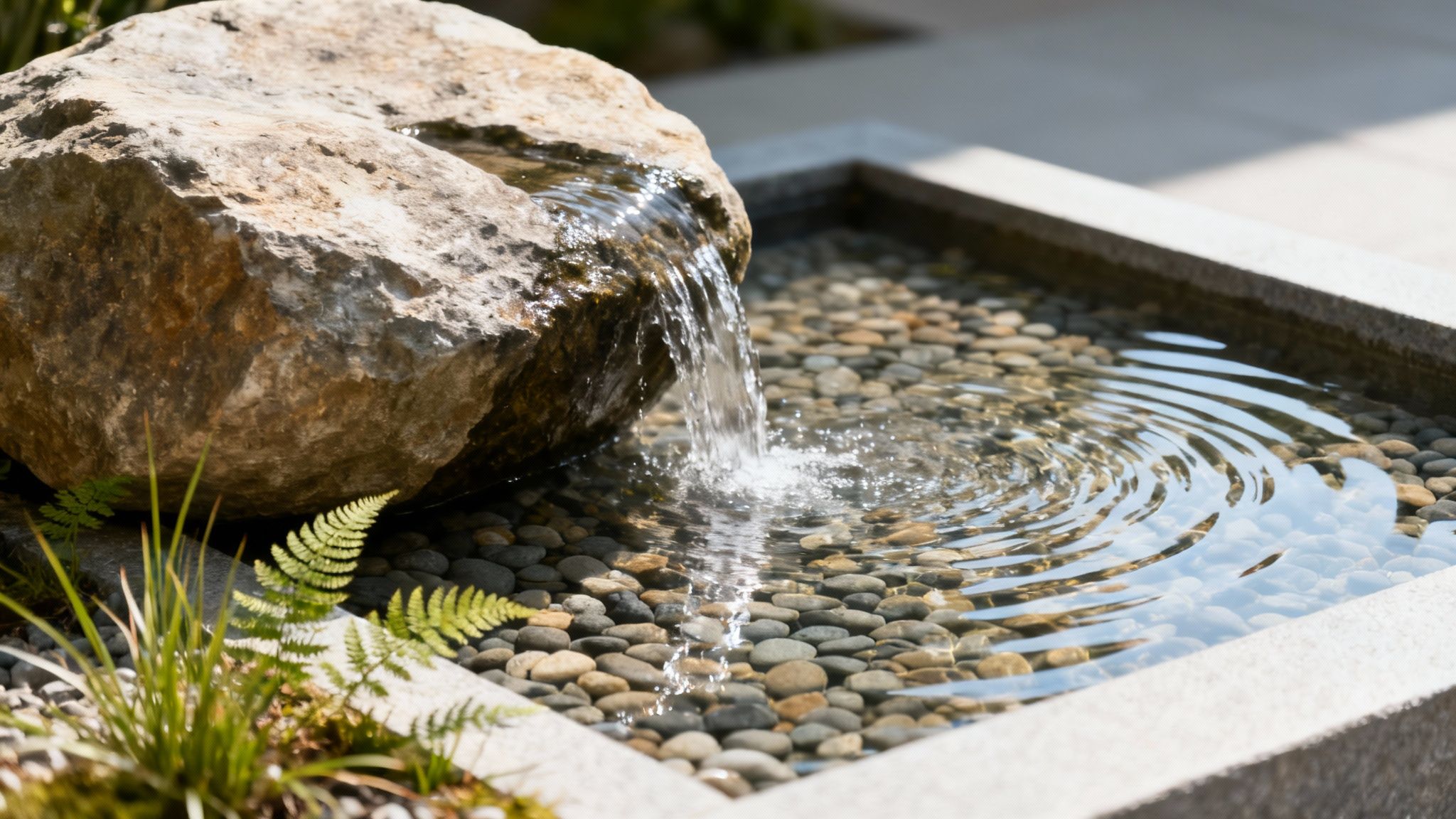
This approach is highly versatile, fitting into nearly any garden style. A simple drilled-boulder fountain complements an Asian-inspired Zen garden, while a cascading waterfall built from stacked slate can become the centerpiece of a contemporary landscape. Even small urban patios can benefit from a compact, self-contained rock fountain. For more inspiration on aquatic designs, you can explore a symphony of water in your garden.
### Implementation Tips
A successful water feature depends on matching the mechanical components to your design goals while ensuring easy maintenance. Proper planning prevents common issues like algae buildup and low water flow.
Select the Right Pump: Choose a submersible pump with a flow rate appropriate for your feature's size. A small bubbler needs less power than a multi-tiered waterfall.
Plan for Power: Position your feature near an outdoor-rated electrical outlet to minimize visible extension cords and ensure safe operation.
Location Matters: Install the feature in partial shade if possible. This reduces water evaporation and slows algae growth, keeping the water clearer for longer.
Visualize the Impact: Deciding between a slate waterfall and a granite bubbler can be tough. You can apply AI Landscape Design to visualize these ideas using a photo of your own yard. This allows you to superimpose different rock water features to see how the scale, material, and sound will impact your space before installation.
4. Decorative Rock Gardens and Xeriscaping
A decorative rock garden, often a key component of xeriscaping, is a powerful garden rock idea that prioritizes water conservation and low-maintenance beauty. This style uses a variety of rocks, stones, and gravels as the primary design element, punctuated by carefully selected drought-tolerant plants. It transforms a landscape into a tapestry of textures and colors, celebrating the stark elegance of stones alongside resilient succulents, cacti, ornamental grasses, and alpine plants.
This approach is ideal for arid climates or for homeowners seeking to reduce water usage and yard work. From the minimalist appeal of a Japanese Zen garden to the vibrant ruggedness of a desert landscape, rock gardens offer incredible stylistic versatility. They replace thirsty lawns with a dynamic, year-round visual display that is both sustainable and striking.
### Implementation Tips
Successful rock gardens balance the "hardscape" of stones with the "softscape" of plants. The key is thoughtful arrangement and a solid foundation to prevent future headaches.
Suppress Weeds: Before placing any stones, lay down a high-quality landscape fabric. This barrier will significantly reduce weed growth, which can be difficult to manage once rocks are in place.
Create Visual Interest: Combine rocks of multiple sizes, colors, and textures. Use large boulders as focal points, medium-sized rocks to create clusters, and fine gravel or pebbles as a "mulch" to fill in the gaps.
Strategic Planting: Group plants with similar water and sun requirements together. This practice, known as hydrozoning, makes watering more efficient and ensures all your plants thrive.
Visualize the Final Look: It's hard to imagine how different rock combinations and plant layouts will look. To overcome this, apply AI Landscape Design. You can upload a photo of your yard to visualize your ideas, experimenting with various rock garden designs to perfect the balance and scale before you start. For a deeper dive, you can learn more about creating a beautiful and unique rock garden.
5. Rock Mulch and Ground Covers
Using stone as mulch is a durable and stylish garden rock idea that swaps organic materials for a long-lasting, low-maintenance ground cover. Rock mulch, including pea gravel, river rocks, or crushed slate, helps regulate soil temperature, conserve moisture by reducing evaporation, and significantly suppress weed growth. This approach creates a clean, polished look that enhances the texture and color of surrounding plants and hardscapes.
This technique is especially effective for creating modern, minimalist, or xeriscape designs where clean lines and water conservation are priorities. For instance, smooth river rocks complement lush tropical foliage, while sharp, angular slate chips provide a striking contrast in contemporary succulent gardens.
### Implementation Tips
To achieve a professional and effective rock mulch application, proper preparation and material selection are key. A well-laid foundation prevents weeds and keeps your rocks looking neat for years.
Install a Barrier: Always lay a high-quality, permeable landscape fabric underneath the rocks. This prevents them from sinking into the soil and stops weeds from growing through.
Optimal Depth: Apply a 2-3 inch layer of rock mulch. This depth is sufficient to block sunlight from reaching weed seeds while still allowing water to penetrate to the soil below.
Choose Wisely: In hot climates, opt for lighter-colored stones like white marble chips or tan pea gravel, as they reflect sunlight and keep the soil cooler. Dark rocks absorb heat and can stress plant roots.
Visualize Your Options: Deciding between river rock and slate chips can be tough. Apply AI Landscape Design to visualize your ideas in your own space. Simply upload a photo of your garden bed to virtually test different rock types, colors, and textures. Learn more about laying ground covers with DreamzAR to see how your vision will translate to reality before you buy.
6. Decorative Boulder and Rock Arrangements
Using large boulders and strategically placed rocks as sculptural elements is a powerful garden rock idea that introduces drama, permanence, and natural artistry to your landscape. These arrangements can serve as commanding focal points, anchor a planting bed, or evoke a sense of ancient tranquility. The careful selection and placement of stones define the garden’s character, from a serene Zen garden to a rugged, mountainous scene.
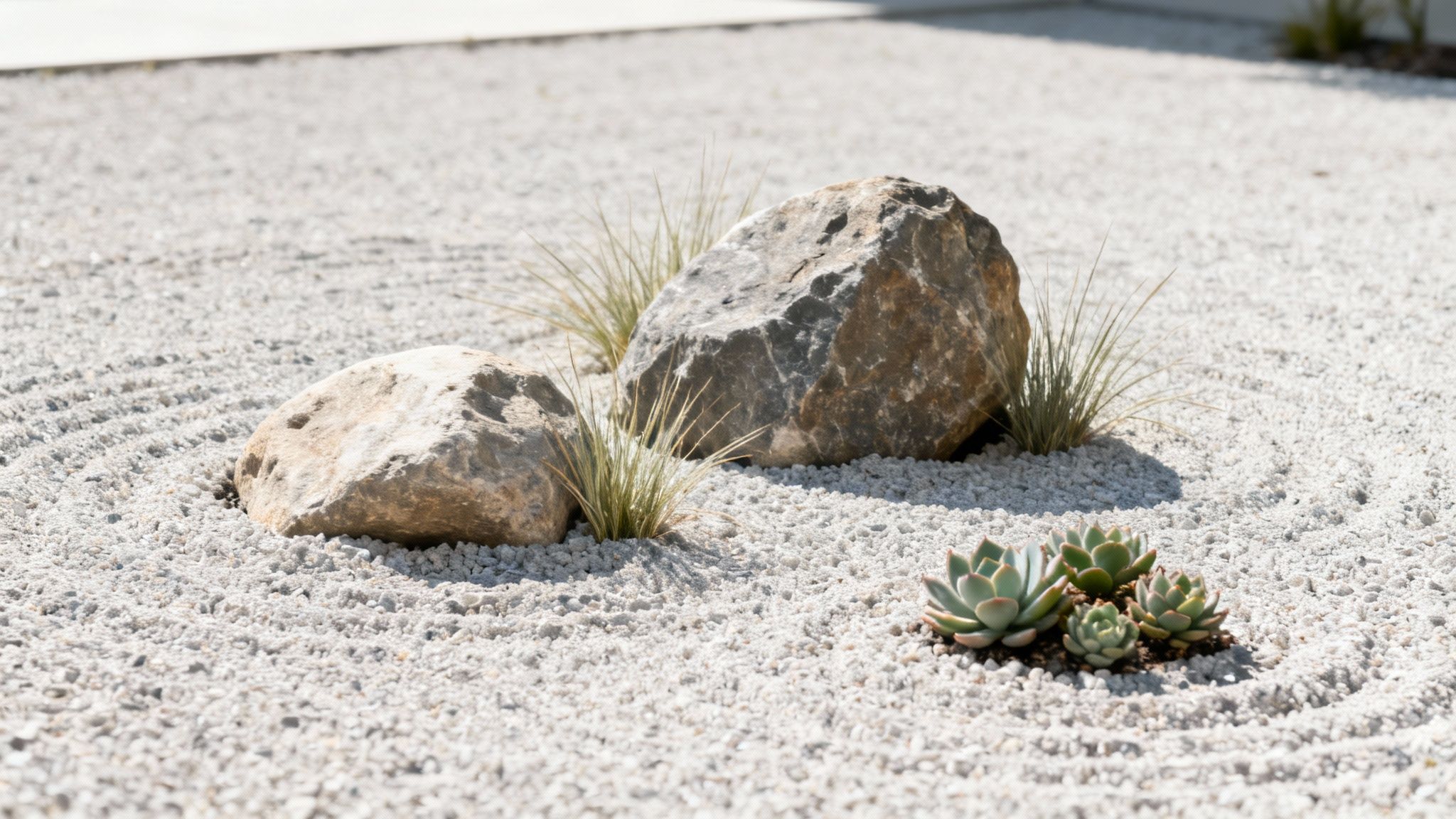
This technique is ideal for creating visual interest in flat areas or adding structure to a hillside. A single, magnificent boulder can stand alone as a natural sculpture, while a curated group of rocks can suggest a mountain range or riverbed. The key is to make the arrangement look intentional yet completely natural, as if it has been part of the landscape for centuries.
### Implementation Tips
To create a powerful and harmonious arrangement, focus on balance, scale, and grounding the stones within the landscape. The goal is to make the boulders look like they belong exactly where they are.
Bury for Stability: Bury at least one-third of each boulder's mass underground. This makes it look naturally settled and integrated rather than simply placed on top of the soil.
Use Odd Numbers: Groupings of three or five rocks tend to be more visually appealing and natural-looking than even-numbered arrangements. This is a core principle in many design philosophies, including Japanese garden design.
Vary Sizes and Shapes: Combine a large "parent" rock with smaller "child" rocks of similar type and color to create a more dynamic and cohesive family grouping.
Visualize with AI: Arranging heavy boulders is not a task you want to redo. You can apply AI Landscape Design to visualize your placement ideas. Upload a photo of your yard and digitally place different boulder arrangements to see how they interact with your home and existing plants from various angles before any heavy machinery is involved.
7. Rock Retaining Walls and Terraces
For yards with challenging slopes, rock retaining walls are an ingenious garden rock idea that transforms difficult terrain into a structured masterpiece. These walls hold back soil to prevent erosion, creating level terraces perfect for planting, seating areas, or lush lawns. Beyond their functional role, they introduce powerful architectural lines and rustic texture, turning a simple hillside into a multi-level garden sanctuary.
This approach is essential for making sloped land usable and visually appealing. Whether you envision a series of low, dry-stacked fieldstone walls for a naturalistic look or mortared cut stone for a more formal, permanent structure, terracing adds depth and dimension. For those looking to build or enhance structural elements in their garden, you might find some inspiring retaining wall design ideas.
### Implementation Tips
A successful retaining wall is all about solid engineering principles that ensure it lasts for decades. Proper drainage and construction techniques are non-negotiable for safety and longevity.
Prioritize Drainage: Prevent hydrostatic pressure buildup by placing a 12-inch layer of gravel directly behind the wall and installing a perforated drainpipe at the base to channel water away.
Lean In for Stability: Build the wall with a slight backward lean, or batter, into the hillside (about 1-2 inches for every foot of height) to improve its structural integrity.
Use Geotextile Fabric: Place landscape fabric between the soil and the gravel backfill. This barrier prevents soil from clogging the drainage system while allowing water to pass through freely.
Visualize Before You Build: The scale and material of a retaining wall significantly impact your landscape's look. To see how each design redefines your space, apply AI Landscape Design by uploading a photo of your sloped yard to visualize your ideas and overlay different wall styles, from rustic stacked stone to modern block.
8. Rock Raised Beds and Planters
Building raised beds with stacked stone or rock borders is a fantastic garden rock idea that combines aesthetic appeal with horticultural benefits. These structures create defined, elevated spaces for planting, offering superior drainage and allowing you to customize the soil mix for specific plants like vegetables, herbs, or flowers. A rock planter adds a durable, rustic, and permanent-feeling element to your landscape design.
This approach is especially useful for properties with poor native soil or slopes, as it creates a level and fertile growing area. The stone's thermal mass also helps regulate soil temperature, absorbing heat during the day and releasing it slowly overnight. From a simple, low-profile slate border for a flower bed to a substantial stacked granite vegetable garden, rock planters are both practical and visually striking.
### Implementation Tips
A well-constructed rock raised bed will last for decades, so proper planning and assembly are crucial for long-term success.
Sufficient Depth: Build the walls at least 12 inches high to provide ample room for root development for most vegetables and perennials.
Weed Prevention: Lay a layer of cardboard or landscape fabric at the bottom of the bed before filling it to suppress weeds from growing up from the ground below.
Optimal Soil Mix: Fill the bed with a high-quality blend of garden soil, compost, and other organic matter to create a nutrient-rich environment for your plants.
Visualize the Materials: Not sure if a formal cut stone or a rustic fieldstone look is right for you? Apply AI Landscape Design to upload a photo of your garden and visualize your ideas by placing virtual rock raised beds. This lets you compare materials and sizes to see the final look before you start building. For more inspiration, you can learn more about creative raised garden bed designs to refine your concept.
9. Rock and Stone Patio and Seating Areas
Using natural stone to build patios and seating areas is a premier garden rock idea that transforms your yard into a functional outdoor living space. Rock patios offer a durable, elegant surface for furniture, dining, and entertaining, seamlessly integrating the hardscape with the natural environment. From the rich, dark tones of a slate flagstone patio in a modern garden to a classic bluestone terrace, these spaces become the heart of outdoor activity.
This approach is ideal for creating a permanent, high-traffic gathering spot that anchors your landscape design. The choice of stone defines the patio's character: irregular flagstone offers a naturalistic feel, while uniformly cut granite pavers lend a formal, polished look. For more inspiration on enhancing your home's exterior, exploring diverse 10 Outdoor Living Space Design Ideas can help you create a cohesive and beautiful garden.
### Implementation Tips
A successful stone patio combines aesthetic appeal with technical precision to ensure longevity and safety. Proper installation is key to preventing cracks, uneven surfaces, and drainage problems.
Ensure Proper Drainage: Grade the patio with a slight slope, about 1/8 to 1/4 inch per foot, away from your home's foundation to direct rainwater runoff effectively.
Stabilize Joints: Use polymeric sand to fill the gaps between stones. This material hardens when wet, locking the stones in place, preventing weed growth, and deterring ants.
Protect Your Stone: For porous materials like bluestone or limestone, apply a quality sealant annually to protect against stains, water damage, and fading from UV exposure.
Visualize the Final Look: Before committing to a material, apply AI Landscape Design to visualize your ideas. Upload a photo of your backyard and experiment with virtual overlays of different stone patios to see how granite, slate, or flagstone will look in your space. This helps you make the perfect choice for your home's style. Learn more about transforming outdoor living spaces with patio design.
10. Rock Sculptures and Artistic Installations
Transforming rocks into artistic installations treats your garden as a canvas and stone as your medium. This garden rock idea moves beyond functional use, creating unique sculptures and arrangements that serve as powerful focal points. From carefully balanced stone stacks (cairns) that evoke a sense of tranquility to modern, abstract boulder placements, this approach expresses personality and creativity.
This method is ideal for creating a statement piece in a minimalist garden, a meditative corner, or any space needing a touch of the extraordinary. The beauty lies in its versatility; it can be as simple as a single, strikingly shaped boulder or as complex as a collection of hand-carved figures, turning your landscape into a personal gallery.
### Implementation Tips
For rock art to be successful, it must be both visually compelling and structurally sound. Balance, scale, and placement are key to creating an installation that enhances, rather than overwhelms, its surroundings.
Ensure Stability: For stacked sculptures like cairns, use dabs of clear construction adhesive between stones for a permanent, safe installation, especially in areas with children or pets.
Play with Contrast: Create visual interest by combining rocks of different shapes, sizes, and colors. A smooth, dark river stone placed next to a rough, light-colored piece of granite can create a beautiful dynamic.
Consider Sightlines: Position your sculpture where it can be viewed and appreciated from multiple angles, such as from a window, a patio, or along a main pathway.
Visualize with AI: Unsure how a stacked cairn or a large sculptural boulder will impact your garden's aesthetic? Apply AI Landscape Design to upload a photo of your yard and visualize these ideas. You can virtually place different rock art concepts to see how they fit with your existing plants and features before committing.
10 Garden Rock Ideas Comparison
Title | 🔄 Implementation complexity | ⚡ Resource requirements | 📊 Expected outcomes | Ideal use cases 💡 | ⭐ Key advantages |
|---|---|---|---|---|---|
Rock Pathways and Stepping Stones | Moderate — manual labor, careful leveling | Moderate — assorted flat stones, sand/base, edging | Improved access; durable, permeable paths | Garden walkways, woodland trails, informal routes | Long-lasting, low maintenance, cost-effective |
Rock Borders and Edging | Moderate to high — stacking and leveling for stability | Moderate — many stones, possible machinery or pro help | Clear bed definition; erosion/encroachment control | Bed definition, borders, formal or rustic edges | Defines structure, reduces maintenance, permanent |
Rock Water Features and Fountains | High — plumbing, pump installation, waterproofing | High — stones, pump/electrical supply, filtration | Focal point with sound; attracts wildlife; microclimate | Courtyards, meditation gardens, focal installations | High visual/sensory impact; wildlife attraction |
Decorative Rock Gardens and Xeriscaping | Low to moderate — design-focused, simple install | Low — rocks, gravel, drought-tolerant plants, minimal irrigation | Low-water, low-maintenance aesthetic; strong texture | Dry climates, sustainable landscapes, modern designs | Water-saving, low upkeep, dramatic stone interest |
Rock Mulch and Ground Covers | Low — spread and level material | Low to moderate — large volume of gravel/pebbles, fabric | Long-lasting ground cover; weed suppression; polished look | Low-maintenance beds, Mediterranean/modern planting | Minimal replacement, insect-resistant, tidy appearance |
Decorative Boulder and Rock Arrangements | Moderate to high — heavy placement and aesthetic planning | High — large boulders, transport/placement equipment | Strong sculptural focal points; dimensional interest | Large gardens, focal vistas, hillside accents | Permanent drama, no ongoing care, dimensionality |
Rock Retaining Walls and Terraces | High — engineering, drainage design, precise construction | High — stone/block materials, professional labor, permits | Erosion control; usable terraces; structural landscape | Sloped sites, terracing, soil stabilization projects | Prevents erosion, creates usable planting space |
Rock Raised Beds and Planters | Moderate — stacking plus soil filling and reinforcement | Moderate — stone, quality soil/compost, possible reinforcement | Elevated, accessible beds with controlled soil/drainage | Vegetable beds, accessible gardening, decorative planters | Easier maintenance/harvest, improved drainage, attractive |
Rock and Stone Patio and Seating Areas | High — precise grading, base prep, professional finish | High — flagstone/pavers, base materials, skilled installers | Durable outdoor living surface; formal entertaining area | Patios, terraces, durable seating zones | Long-lasting, value-adding, high-end aesthetic |
Rock Sculptures and Artistic Installations | Variable — simple stacking to complex carved work | Variable — small stones to large sculptures, artist skill | Unique focal art; expressive, memorable elements | Sculpture gardens, entry features, bespoke landscapes | Personal expression, conversation-starting, durable |
From Vision to reality: Design Your Rock Garden with Confidence
We’ve explored a diverse landscape of possibilities, from the functional elegance of rock retaining walls to the tranquil beauty of a zen garden. Throughout this journey, one core principle has emerged: rocks are far more than just inanimate objects. They are the structural foundation, the artistic accent, and the timeless element that can transform any outdoor space from ordinary to extraordinary. Whether you're creating a rustic stepping stone path or a dramatic xeriscape with decorative boulders, the key to success lies in thoughtful planning and a clear vision.
By now, you understand that effective rock garden design balances form and function. A well-placed rock border not only defines a garden bed but also prevents soil erosion, while a dry creek bed can be a stunning focal point that also helps manage water runoff. The success of these garden rock ideas hinges on choosing the right materials, understanding scale and proportion, and thoughtfully pairing rocks with complementary plants.
Key Takeaways for Your Rock Landscaping Project
To ensure your project is a resounding success, keep these essential takeaways in mind:
Plan with Purpose: Every rock should have a reason for its placement. Are you creating a focal point, defining a space, or solving a practical problem like a slope? A clear objective will guide all your design decisions.
Embrace Variety and Contrast: The most compelling rock designs incorporate a mix of sizes, shapes, and textures. Contrast large, smooth boulders with fine, angular gravel, or pair dark, rugged stones with soft, feathery grasses to create visual interest and depth.
Visualize Before You Build: The biggest challenge in landscaping is bridging the gap between imagination and the final result. Committing to tons of rock and hours of labor without a clear preview is a significant risk. This is where you can apply AI Landscape Design to visualize your ideas using photos of your own yard.
Bringing Your Garden Rock Ideas to Life with AI
The days of guesswork and costly mistakes are over. Instead of trying to mentally picture how a new stone patio will look against your home or how a series of boulders will anchor a garden bed, you can see it with perfect clarity. By applying AI Landscape Design, you can take a simple photo of your yard and instantly visualize your ideas by overlaying these concepts onto your actual space.
This visualization process is transformative. It allows you to experiment with different types of rocks, from river stones to flagstone, and see how they interact with your existing environment. You can test various layouts for a rock pathway, adjust the scale of a decorative boulder arrangement, or preview plant pairings for your xeriscape. This powerful step ensures that your investment of time, money, and effort will yield a result you absolutely love. By seeing the design in context, you gain the confidence to move forward, turning inspired garden rock ideas into a tangible, beautiful reality.
Ready to stop dreaming and start designing? Download DreamzAR AI Landscape Design to upload a photo of your yard and see these incredible garden rock ideas come to life in your own space. Visualize, refine, and create your perfect landscape with confidence today by visiting DreamzAR AI Landscape Design.