AI Landscape Design Your Dream Yard
- Akhilesh Joshi
- 1 day ago
- 17 min read

Staring at your yard, trying to imagine what it could be, is a feeling most homeowners know all too well. AI landscape design is here to finally close that gap between a blank slate and a beautiful reality. Think of it as your own digital design consultant, one that can take a simple photo of your property and spin up stunning, realistic concepts in minutes.
Your Yard, Reimagined
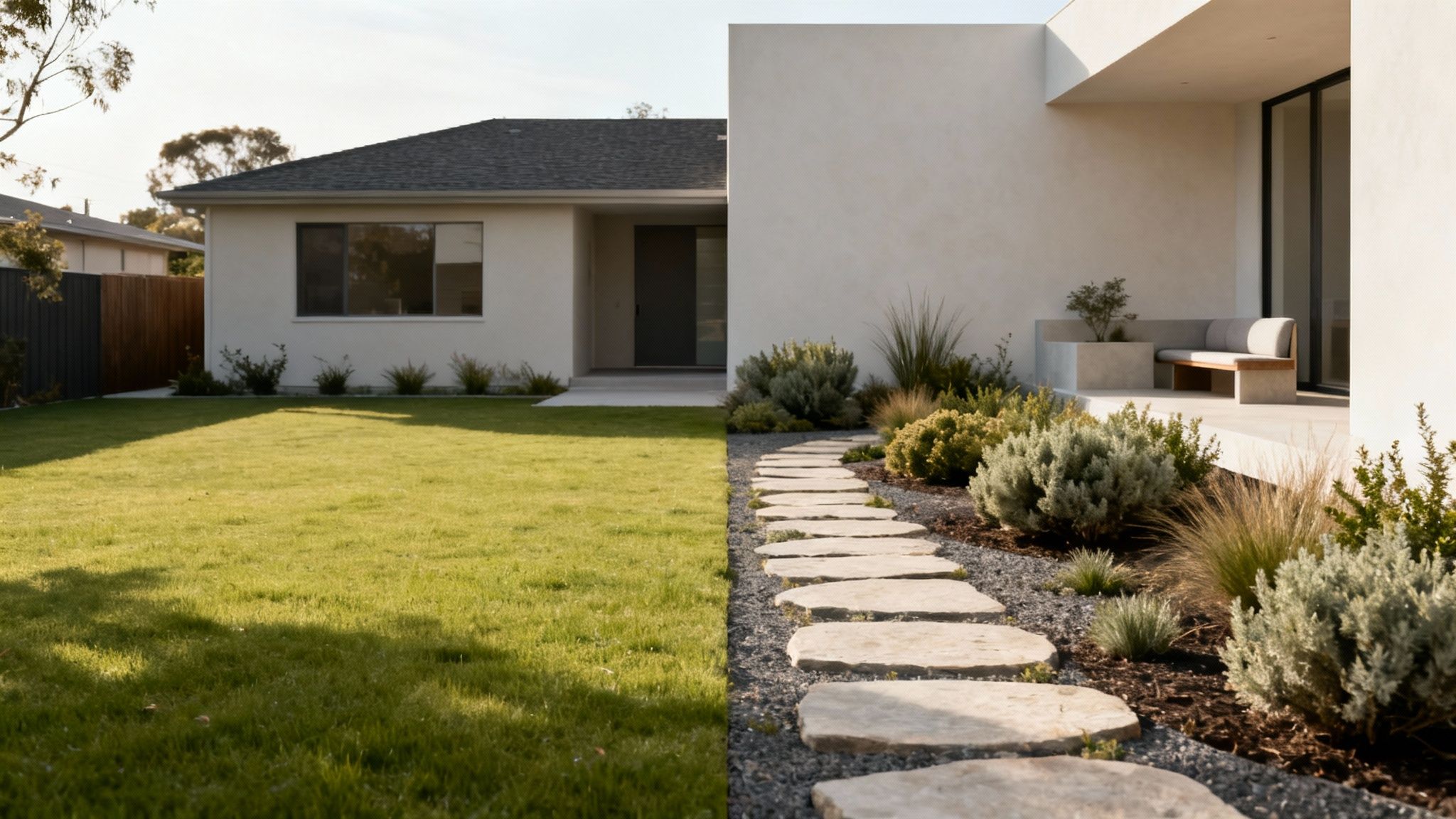
Let's be honest, the old way of planning a landscape design feels abstract and slow. It usually involves pricey consultations, hard-to-read 2D sketches, and a long, anxious wait to see if you even like the final result.
There’s not much room to play around, which makes it tough to feel confident in big decisions. What if those shrubs look terrible next to the house? What if that patio layout you approved on paper feels completely cramped in real life?
AI-powered design flips this entire process on its head. The magic is its ability to work directly with a photo of your own yard. You’re not starting with some generic template; you’re starting with the reality of your space—its true dimensions, existing trees, and unique character. This is how you can apply AI landscape design to visualize your ideas using photos of your own yard, making the entire process personal and intuitive.
See Your Ideas Instantly
This technology puts the creative power right in your hands. Just upload a picture of your yard from your phone and you can start generating multiple design concepts almost immediately. It’s all about exploring different styles, experimenting with layouts, and seeing your perfect outdoor space come to life before you ever lift a shovel.
The whole process is interactive and, frankly, a lot of fun. You can:
Test-drive different styles: Curious how your yard would look with a sleek, modern design versus a rambling English cottage garden? Now you can see both rendered onto a photo of your actual space in seconds.
Experiment with key features: Wondering about a fire pit, a stone walkway, or a vibrant flower bed? Add or remove elements and see the impact right away, directly on the image of your property.
Fine-tune your vision: Tweak plant choices and material colors until the design clicks and feels just right.
The real game-changer here is that AI removes the guesswork. You're no longer trying to mentally picture what a design might look like. You're seeing a realistic preview laid right over a photo of your home's exterior, making every decision easier and more informed.
From a Simple Photo to a Detailed Plan
The journey from a quick snapshot to a full-fledged plan is surprisingly simple. You provide the image of your yard, and the AI gets to work analyzing the visual data. It recognizes the lawn, the house, the driveway, and other key features.
From there, it can generate entirely new layouts that are perfectly scaled and contextually right for your specific property. If you're curious about the nuts and bolts, you can learn more about the emerging role of AI in modern landscape design and how it all comes together. This approach empowers you to be the creative director of your own project, ensuring the final result is exactly what you had in mind all along.
How AI Works as Your Digital Gardener
So, how does this all actually work? What’s the magic behind AI landscape design?
Think of the AI as a creative partner that has studied millions of beautiful gardens. It understands complex design principles and knows exactly which plants thrive together. It’s like having a digital landscape architect on call, ready to pour its vast knowledge directly into a design based on a photo of your yard.
When you upload a photo, the process kicks off. The AI doesn’t just see a picture; it analyzes the specific conditions of your space. It spots existing features like trees, patios, and walkways, and it even estimates dimensions and figures out where the sun hits and where it doesn't. This initial scan of your own yard photo is the foundation for every design it creates.
It’s technology that essentially digitizes the experience of countless designers. It gets color theory, spatial balance, and pure function, letting it dream up layouts that are both stunning and practical for your exact spot.
From Data to Design Concepts
Once the AI gets the lay of the land from your photo, it switches into creative mode. This is where generative AI really shines. You give it a simple text prompt—something like "cozy English cottage garden" or "low-maintenance modern xeriscape"—and it dives into its massive database of design elements and botanical info.
Then, it starts to "paint" new ideas onto your photo, intelligently placing plants, hardscaping, and other features. This isn't just a random collage. The AI is smart enough to consider things like plant compatibility and how big a tree will be when it's fully grown, ensuring the final vision is both cohesive and sustainable. It can spit out dozens of totally distinct ideas in seconds, a task that would take a human designer days, if not weeks.
The core of it is pattern recognition and generation. The AI learns from countless examples of successful landscape designs and then applies those learned patterns to the unique context of your yard's photograph.
This ability to rapidly brainstorm is one of the biggest perks of using AI. It shatters creative blocks and shows you possibilities you might never have thought of on your own. You can explore a whole spectrum of styles with zero commitment.
The Magic Window of Augmented Reality
While the AI plays the role of the creative architect, Augmented Reality (AR) serves a different, but equally vital, function. Just think of AR as a "magic window" you can hold in your hands. It takes the 2D designs whipped up by the AI and projects them into the real world, right through your phone's camera.
This is where you really feel the power of visualizing with a photo of your own yard. Instead of just staring at a flat image, you can:
Walk through your new design: Step onto your virtual patio or circle a newly placed fire pit to get a real feel for scale and placement.
See plants at their mature size: Understand what that tiny sapling will look like once it’s a full-grown tree, so you don't end up with an overcrowded mess later.
Check your sightlines: Look at the design from your kitchen window or front door to make sure it looks great from every important angle.
This AR overlay is what closes the gap between imagination and reality. It helps you catch potential snags—like a path that feels too narrow or a shrub that blocks a window—long before a single shovel hits the dirt. For homeowners looking to innovate, understanding how generative AI is making landscape design accessible is the key to unlocking its full potential. By combining intelligent design generation with immersive visualization, this technology empowers you to make confident, inspired choices for your outdoor space.
Visualize Designs with Your Own Yard Photos
This is where the magic really happens. All the abstract ideas about landscape design finally meet the reality of your own home. Using a photo of your actual yard as the canvas for an AI landscape design tool is what turns a vague concept into a vivid, personalized preview you can almost step into.
The whole thing starts with one simple action: taking a picture. Honestly, capturing the right image is probably the single most important step for getting realistic and accurate results. A good photo gives the AI all the critical data it needs—your space's dimensions, how the light hits, and what’s already there.
Taking the Perfect Photo for AI
Think of your smartphone's camera as the AI's eyes. The better it can "see" your yard, the more believable and tailored its design suggestions will be. You don't need any fancy professional gear, either.
Here are a few tips to nail the perfect shot:
Choose the Right Time of Day: Aim for early morning or late afternoon. The light is soft and even then, unlike the harsh midday sun which creates dark shadows that can hide details and throw off the AI's analysis.
Find the Best Angle: Stand back and try to get as much of your yard in the frame as you can. A slightly elevated spot, like from a deck or even a second-story window, often gives the perfect overview.
Clear the Clutter: Tidy up any temporary items like kids' toys, garden hoses, or scattered patio furniture. This gives the AI a clean slate to work with so it doesn't mistake a coiled hose for a permanent garden path.
Capture Multiple Views: While one great photo is a solid start, snapping a few pictures from different corners gives the AI a more complete understanding of the space, especially for larger or oddly shaped yards.
Once you have your photo, the real fun begins. For a deeper dive, our guide on how to create a landscape design using a photo of your front or backyard walks through more detailed examples. Getting this first step right sets the stage for everything that follows.
From a Prompt to Your First Design Concepts
With your photo uploaded, you can start steering the AI with simple text prompts. This is your chance to translate that vision in your head into instructions the technology can actually understand. No professional jargon needed—just describe what you want in plain English.
For instance, you could try prompts like:
"Cozy patio with a stone fire pit and comfortable seating."
"Low-maintenance modern front yard with native grasses and rocks."
"A vibrant flower bed with year-round color along the fence."
The AI takes your words, blends them with its analysis of your photo, and in just a few moments, it spits out initial design concepts. It overlays new plants, hardscaping, and other features directly onto the image of your yard. This is so much more powerful than just scrolling through generic inspiration photos because you're seeing the ideas in the context of your home.
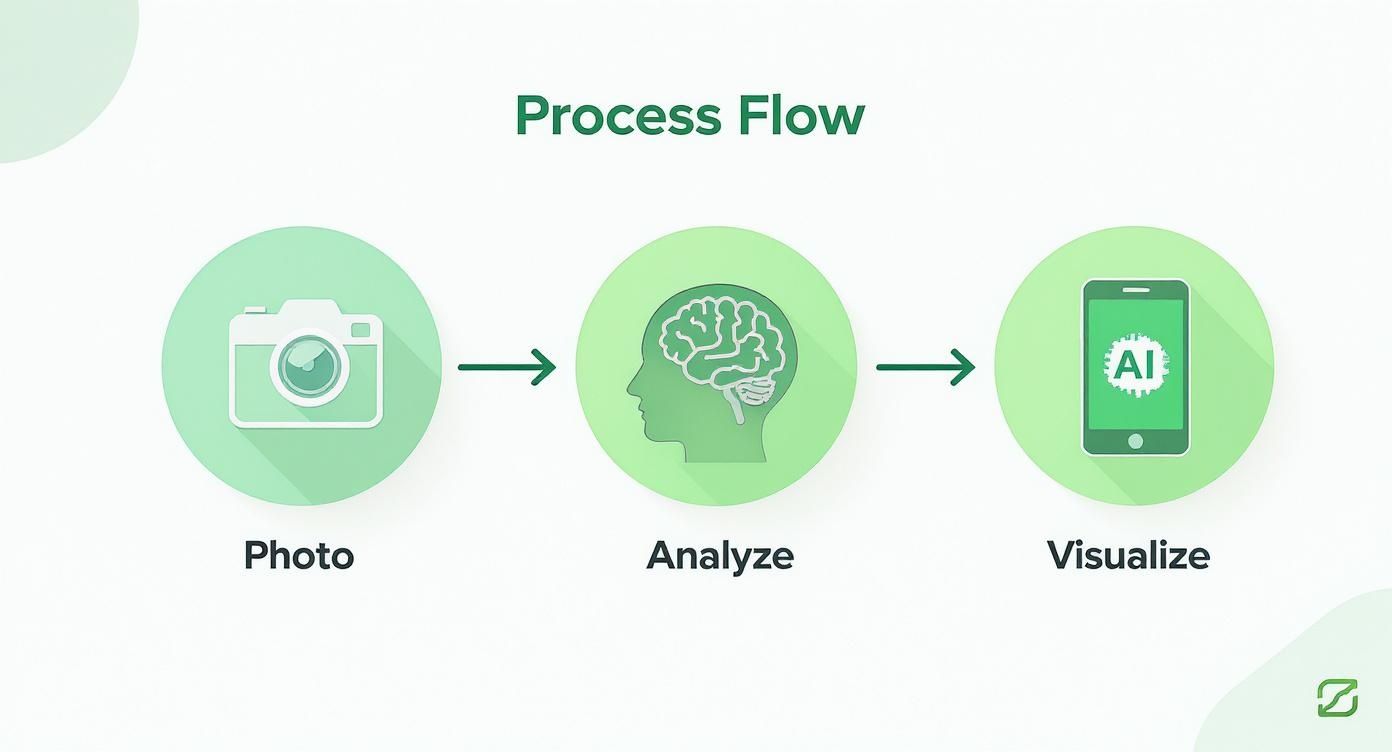
This simple workflow shows how you go from a quick snapshot of your yard to a fully-formed design you can explore right on your device.
An Iterative and Collaborative Process
The first design the AI generates is rarely the final one. It’s better to think of it as the opening line in a conversation. This is where the interactive process makes AI landscape design so effective and genuinely fun to use.
The real power isn't just in generating ideas, but in the ability to endlessly iterate on them without cost or consequence. You can explore a dozen different patio materials or plant combinations on a photo of your own yard in the time it would take to schedule a single consultation.
Don't like a suggested plant? Swap it out. Does the proposed stone path feel too narrow? Adjust its width and change the material. This back-and-forth lets you fine-tune every little detail, from the color of the mulch to the placement of outdoor lighting.
This iterative loop is central to modern design. If a plant isn't quite right, you can swap it for another. If a path feels too wide, you can shrink it. You have total control to tweak, adjust, and experiment until the design feels perfect.
Ultimately, this technology empowers you to be the creative director of your own outdoor space. By starting with a photo of your yard, you ensure every idea is grounded in reality, making the final jump from screen to soil as smooth as possible.
Why AI is Changing the Landscaping Game
So, why are people suddenly buzzing about AI landscape design instead of sticking with the methods we’ve used for decades? It’s not just about a shiny new piece of tech. This is a fundamental shift in how we approach outdoor design, making it faster, more accessible, and way more creative for everyone involved.
For homeowners, AI tools crack open a world of personalization that used to be locked behind a hefty price tag.
Think about the old way. You'd hire a designer, try to put your vision into words, and then wait. And wait. Weeks later, you’d get back a hand-drawn sketch or a complicated blueprint that might not even capture what you were imagining. Every single tweak meant more time and more money.
That classic process often felt slow, expensive, and a little frustrating. There was always a gap between the idea in your head and the plan on paper, with almost no room to just play around and experiment.
The Homeowner Advantage: Speed and Savings
The biggest wins for homeowners using AI are, without a doubt, speed and cost. Instead of shelling out for a designer’s initial concepts, you can crank out dozens of unique ideas yourself in a matter of minutes. That immediate feedback is a complete game-changer.
By visualizing ideas using photos of your own yard, you sidestep expensive mistakes before they ever happen. You can see exactly how that paver style looks against your siding or realize that the perfect shade tree would actually block the sunlight from your kitchen window. All of this, without spending a dime on labor or materials.
This frees you up to be fearless. Go ahead and explore that minimalist Japanese garden or a lush, English cottage look you were too nervous to even ask a professional about. You get to see realistic previews of it all.
The ability to iterate endlessly without financial risk is perhaps the biggest win for homeowners. AI empowers you to refine your vision until it’s perfect, ensuring you invest your money in a final design you already know you’ll love.
A New Tool for Landscaping Professionals
This isn't just a DIY toy; it's a massive asset for professional landscapers, too. AI tools can seriously accelerate the initial client consultation and drafting process.
Imagine showing up to a client's home and, instead of just talking about ideas, generating several realistic visuals right there on the spot using a photo of their yard. It gets everyone on the same page from day one, cutting down on misunderstandings and the need for major revisions later on.
The industry is taking notice. The global Landscape Design AI market was valued at $1.6 billion in 2024 and is on track to hit $8.9 billion by 2033. That explosive growth shows just how much these tools are reshaping the professional landscape. You can dig deeper into this growing market on marketintelo.com.
The Old Way vs. The AI-Powered Way
To really see the difference, it helps to put the two approaches side-by-side. The contrast in time, cost, and creative freedom is pretty stark.
Here’s a quick breakdown of how the traditional process stacks up against a modern AI-powered workflow.
Landscape Design Methods: Traditional vs AI-Powered
Aspect | Traditional Method | AI-Powered Method |
|---|---|---|
Initial Concepts | Weeks of waiting for professional drafts. | Instant generation of multiple ideas. |
Cost | High initial design fees and revision costs. | Low-cost subscription or free to start. |
Visualization | 2D sketches or complex CAD models. | Realistic renderings on a photo of your yard. |
Revisions | Slow, expensive, and limited in number. | Unlimited, instant, and free to explore. |
Collaboration | Relies on interpreting verbal descriptions. | Clear, shared visuals for client and pro. |
When you look at it this way, the benefits are clear.
Ultimately, choosing an AI landscape design tool means embracing a more efficient, visual, and collaborative way of working. For a closer look at how different options compare, check out this detailed comparison of DreamzAR versus other landscape design apps. This modern method puts incredible design power into more people's hands, making a beautiful, personalized yard more achievable than ever.
Practical Design Ideas and Inspiration
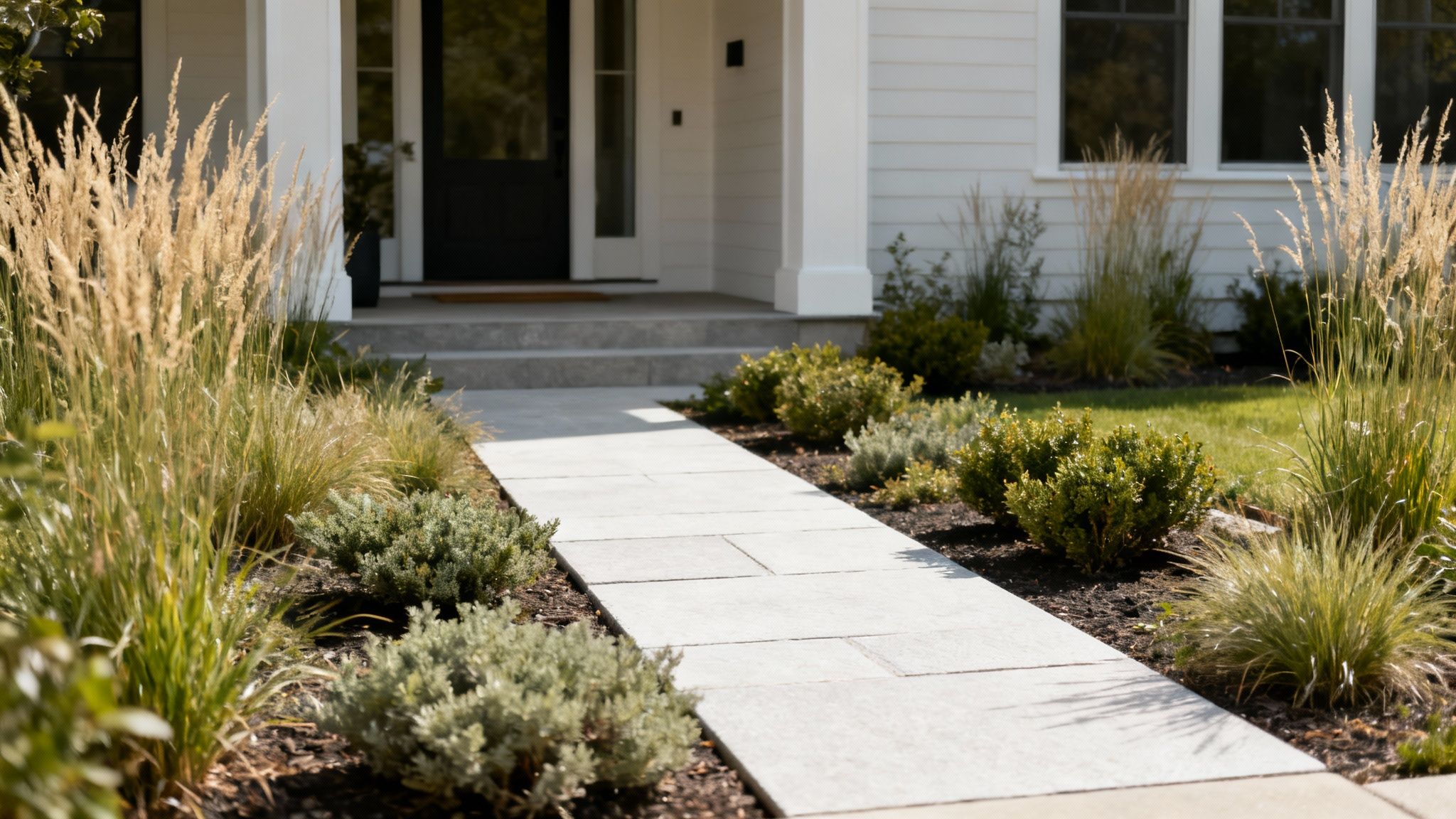
The tech behind AI landscape design is cool, but let's be honest—the real fun starts when you see what it can actually do for your yard. This is where the theory gets its hands dirty, turning abstract ideas into tangible plans you can get excited about.
Let's walk through a few common landscaping headaches and see how AI helps solve them, starting with nothing more than a photo from your phone.
What makes this so powerful is that every single idea is grounded in your reality. You’re not just scrolling through generic Pinterest boards of pretty patios. You’re seeing exactly how that stone fire pit or those flowering shrubs will look against your own home's siding, with your unique lighting and layout by using a photo of your yard.
It completely takes the guesswork out of the equation.
Reimagining Your Front Yard for Curb Appeal
Your front yard is your home's first impression. The constant challenge is making it look great while keeping it practical—finding plants that will actually survive your climate and look good with your house's style.
With an AI tool, you snap a photo of your house and suddenly you're test-driving dozens of looks in minutes. Ask for "drought-tolerant native plants for a modern home," and you might see a stunning xeriscape with ornamental grasses and bold rock features. Not your style? A prompt for a "classic cottage garden with a stone walkway" can instantly render a totally different vision full of blooming flower beds, all on the image of your property.
Because you’re visualizing these changes on your actual home, you see what works—and what doesn't—immediately. You'll notice how a proposed shrub might block a window or how a new path lines up perfectly with the front door, letting you make decisions with total confidence.
Designing a Small Urban Oasis
Small spaces like a balcony or a tiny city backyard are a special kind of puzzle. Every square foot is prime real estate, so the goal is to cram in as much beauty and function as possible without making it feel cluttered. This is where AI visualization using a photo of your own space really shines.
Just take a picture of your small patio and let the tool do the brainstorming. You can explore ideas like:
Vertical Gardens: Instantly see how a living wall could add a ton of lush greenery without eating up any floor space.
Container Gardening: Play with different arrangements of pots and planters to create a vibrant herb or flower garden.
Optimized Seating: Test out layouts for a small bistro set or built-in benching to figure out what feels the most open and inviting.
By seeing these ideas overlaid on your space, you can check the scale and flow in a way your imagination alone just can't match.
Planning a Pool and Entertainment Area
A swimming pool is a massive investment, and the design of the surrounding area is just as important. You have to think about traffic flow, safety, and creating that perfect resort-like vibe. This is another area where AI landscape design is a huge help.
Upload a picture of your backyard and start building out the entire project. You can have the AI mock up a kidney-shaped pool with a natural rock waterfall or a sleek, rectangular one with a modern paver patio. From there, you can start layering in other elements like a fire pit, an outdoor dining area, or perfectly placed lounge chairs, all visualized on your actual yard photo. For even more specific concepts, you can explore how to transform your backyard into a relaxing meditation space and use AI to bring those ideas to life.
This ability to see the complete picture on your own property helps you make smarter decisions about placement and scale, ensuring the final result is both functional and beautiful. You can see how the pool relates to your back door or how much space is left for the kids to play.
Ultimately, these examples show that AI isn't just generating pretty pictures. It's a practical problem-solving tool that lets you see countless solutions custom-fit to the canvas you already have: your own yard.
Choosing the Right AI Landscape Design Tool
With so many new AI tools popping up, trying to pick the right one for your landscape project can feel a little dizzying. My advice? Don't get bogged down in brand names. Instead, focus on what a tool can actually do for you—specifically, how well it helps you visualize ideas using photos of your own yard.
The best platform won't feel like complicated software. It should feel more like a creative partner, something that makes the leap from a simple photo to a stunning new design feel both effortless and exciting.
Key Features to Look For
As you start looking at different options, keep these key things in mind. The sweet spot is finding a tool that marries powerful technology with an experience that’s actually fun to use. You want to spend your time getting creative, not fighting with a steep learning curve.
Realistic Visuals: How real do the designs look? The goal is photorealism. The best tools generate images so believable you can see exactly how new plants or a stone patio will look against your actual home.
Rich Asset Library: A tool is only as good as its library. Look for a huge variety of plants, trees, pavers, and other materials. You need a deep bench of options to find elements that truly fit your climate and personal taste.
Customization and Control: The AI should give you a fantastic starting point, but you need the final say. Can you easily swap out a shrub, change the color of the mulch, or tweak the size of a deck? That control is crucial.
Ease of Use: This one’s a deal-breaker. A clean, simple interface is everything. You should be able to upload a photo of your yard, type in what you're thinking, and see new designs within minutes—no instruction manual required.
This is all part of a much bigger shift. The AI market in the design world is exploding, projected to jump from $20.085 billion in 2025 to a massive $60.654 billion by 2030. That incredible growth is all thanks to platforms that supercharge creativity and slash design time. If you want to dive deeper, you can discover more insights about the AI design market on knowledge-sourcing.com.
Best Practices for Success
Just picking a tool isn't the whole story; how you use it is what really brings your vision to life. The trick is to treat the AI like a collaborator, not just a button you push.
Start with a clear goal in mind and use high-quality, well-lit photos of your yard for the best results. Get specific with your text prompts, but don’t be afraid to see what the AI comes up with on its own. Sometimes, its unexpected suggestions can spark an idea you never would have thought of.
For a little more guidance, take a look at our guide on free online landscape design tools to find an option that fits what you're looking for. When you pair a great tool with a smart approach, you’re well on your way to planning the perfect outdoor space.
Your Top Questions About AI Yard Design
Jumping into any new tech brings up a few questions, and AI landscape design is no different. As you get ready to start dreaming up your new outdoor space, it's totally normal to wonder about the details. Let's walk through some of the most common questions so you can move forward with total confidence.
Can AI Account for My Local Climate?
This is a big one, and it's a smart question to ask. While a lot of AI platforms are mainly visual tools, the more advanced ones are getting much smarter about what grows where. You'll often find huge plant libraries that you can filter by climate zone, sun needs, and even water requirements.
But here’s the thing: the AI's real magic is helping you visualize ideas using photos of your own yard. Think of it as an incredibly powerful creative partner, not a replacement for the wisdom you'd get at a local nursery. The best way to work is to use the AI to create a look you absolutely love, then double-check the plant suggestions against your local USDA Hardiness Zone to make sure they'll actually thrive.
How Realistic Do the Designs Actually Look?
Honestly, the realism can be pretty mind-blowing, especially with the top-tier tools. We've come a long way from the days of clunky, cut-and-paste graphics. Today's AI rendering engines create photorealistic images that really nail the details—think accurate textures, lighting, and a true sense of scale.
The secret to getting that jaw-dropping realism? It all starts with a high-quality photo of your own yard. When the AI has a clear, well-lit picture to work with, it can weave in new elements so seamlessly that the final image looks like a snapshot from the future.
This is exactly what makes the technology so useful. It closes that frustrating gap between what's in your head and what's possible in reality, letting you see exactly how a design will feel in your space before you spend a dime or lift a shovel.
Will I Still Need to Hire a Professional Landscaper?
An AI design tool basically lets you step into the role of creative director for your own project, but it doesn't replace the hands-on skill of a pro. I like to think of the AI as your "Phase One" partner. It's perfect for exploring different styles, nailing down your vision, and creating a detailed visual blueprint based on a photo of your yard.
Once you’ve got a design you're excited about, a professional landscaper becomes your "Phase Two" MVP for bringing it all to life. They’re the experts who handle:
Site Prep: They'll know how to assess your soil, deal with drainage issues, and handle any grading.
Sourcing Materials: They have the connections to find the best local suppliers for healthy plants and quality hardscaping materials.
Installation: They make sure everything—from patios to irrigation systems—is built correctly and made to last.
Your AI-generated design becomes the ultimate communication tool. You can show your contractor precisely what you're picturing, which cuts down on confusion and helps avoid those expensive misunderstandings. It’s all about collaborating smarter, not replacing the experts.
Ready to stop wondering and start seeing what's possible? With DreamzAR AI Landscape Design, you can use a simple photo of your yard to generate incredible, professional-quality designs in seconds. Your dream yard is just a tap away. Download DreamzAR on the App Store to begin your transformation!