10 Inspiring Ideas for Front of House Landscaping to Boost Curb Appeal in 2025
- Akhilesh Joshi
- 3 days ago
- 17 min read

The front of your house is more than just an entrance; it's the first impression your home makes on the world. A thoughtfully designed landscape not only boosts curb appeal and property value but also creates a welcoming atmosphere for you and your guests. Yet, the leap from a vague idea to a tangible, beautiful reality can feel overwhelming. Where do you start? What plants will thrive? How will a new design harmonize with your home's unique architectural style?
This comprehensive guide is designed to eliminate the guesswork. We’ve compiled a list of diverse and actionable ideas for front of house landscaping, covering everything from low-maintenance modern xeriscapes to lush, vibrant native gardens. Each concept is broken down into practical steps, complete with suggestions for plants and materials to help you get started.
More importantly, we will show you how to move beyond static inspiration photos and visualize these transformations in your own space. With the power of AI landscape design tools, such as the DreamzAR app, you can simply upload a photo of your front yard and instantly see how different layouts, pathways, or planting schemes will look. This allows you to experiment with confidence, refine your vision, and ensure the final result is exactly what you envisioned. Forget the uncertainty and start building a front yard that you’ll be proud to come home to every single day. Let's explore the possibilities and unlock your home’s true potential.
1. Embrace Local Ecology with a Native Plant Garden
One of the most rewarding and sustainable ideas for front of house landscaping is to cultivate a garden filled with native plants. This approach involves selecting species that have evolved in your specific region, creating a landscape that is naturally resilient, low-maintenance, and perfectly attuned to the local climate and soil. A native garden not only offers an authentic sense of place but also becomes a vital habitat, attracting and supporting local pollinators like bees, butterflies, and songbirds.

Why Choose a Native Garden?
Choosing native plants is a smart strategy for homeowners seeking both beauty and efficiency. Because these plants are adapted to your area's rainfall patterns and soil conditions, they typically require less water, fertilizer, and pest control than non-native ornamentals. This translates to lower long-term costs and less time spent on upkeep. The ecological benefits are significant; you are essentially restoring a small piece of the local ecosystem right in your front yard.
Actionable Tips for Implementation
Research is Key: Start by identifying your USDA Hardiness Zone and researching plants native to your specific county or state. Local native plant societies are excellent resources for plant lists and advice.
Layer for Visual Interest: Arrange your plants by height. Place taller grasses and shrubs in the back, medium-sized perennials like coneflowers and black-eyed Susans in the middle, and low-growing groundcovers or flowers at the front.
Group by Needs: Even native plants have varying needs. Group those with similar water and sun requirements together to create efficient "hydrozones," simplifying irrigation and care.
Visualize Before You Plant: Unsure how a native meadow would look in front of your house? Using an AI Landscape Design tool, you can upload a photo of your own yard and virtually place native species to see the final design. This helps you perfect the layout and plant combinations. For guidance on finding the right species, you can explore how AI helps with selecting native plants.
2. Hardscape Design with Pavers and Pathways
Integrating well-planned hardscaping is one of the most transformative ideas for front of house landscaping, providing structure, function, and year-round visual appeal. This approach uses non-living materials like stone, pavers, gravel, and brick to create defined walkways, patios, and retaining walls. A thoughtful hardscape design not only guides visitors to your front door but also establishes the architectural foundation of your garden, creating clean lines and designated zones for planting.
Why Choose Hardscape Design?
Hardscaping introduces a sense of permanence and order to your landscape that softscaping (plants) alone cannot achieve. It reduces lawn maintenance, solves drainage issues, and extends your home's living space. From a classic brick walkway with a herringbone pattern to modern, large-format concrete pavers, hardscape materials can dramatically enhance curb appeal and complement your home's architectural style, providing lasting value and usability.
Actionable Tips for Implementation
Plan for Function First: Design pathways that follow natural foot traffic patterns from the driveway or sidewalk to your front door. Ensure they are wide enough for comfortable passage, typically 3-4 feet.
Prioritize a Solid Foundation: For pavers and stone to remain level and stable, a proper base is essential. Install a 4-6 inch layer of compacted gravel and a sand setting bed before laying your materials.
Manage Water Wisely: Ensure all hardscape surfaces slope away from your house's foundation with a 1-2% grade to prevent water damage. Consider permeable pavers, which allow rainwater to soak into the ground, reducing runoff.
Visualize with AI: Before committing to materials, use AI Landscape Design to see how different paver styles, colors, and pathway layouts will look. By uploading a photo of your own front yard, you can experiment with designs and make informed decisions. You can even explore generative AI for patio design to get more ideas.
3. Colorful Foundation Plantings
A classic and highly effective strategy among ideas for front of house landscaping is to install colorful foundation plantings. This involves arranging a curated selection of shrubs, perennials, and small trees directly against your home's foundation. The goal is to soften the hard architectural lines, hide unsightly elements like utility boxes, and frame the entryway with layers of texture and color, creating a warm and welcoming transition from the yard to the front door.
Why Choose Foundation Plantings?
Well-executed foundation plantings serve a crucial design purpose by visually anchoring the house to the surrounding landscape. They provide year-round interest, prevent soil erosion near the foundation, and can even help insulate the base of your home. By choosing a mix of evergreen and deciduous plants, you ensure your home looks appealing through every season, from the vibrant blooms of summer to the structural beauty of evergreens in winter.
Actionable Tips for Implementation
Plan for Mature Size: Before planting, research the mature height and spread of each plant. Place them far enough from the house (typically half their mature width) and from each other to prevent overcrowding and the need for constant, aggressive pruning.
Create Layers: For a professional look, arrange plants in three layers. Place taller shrubs or small trees in the back, medium-sized perennials or hydrangeas in the middle, and low-growing flowers or groundcovers at the front edge of the bed.
Ensure Year-Round Interest: Include at least one-third evergreen plants, like boxwood or dwarf conifers, to provide a green backdrop and structural integrity when other plants are dormant.
Visualize the Arrangement: Foundation planting design can be tricky to get right. You can apply AI Landscape Design to visualize your ideas. Simply upload a photo of your house and experiment with different plant combinations to see how the colors and textures complement your home’s exterior before you start digging.
4. Create a Modern Minimalist Landscape
For those with a contemporary aesthetic, a modern minimalist landscape offers a sophisticated and uncluttered approach to front of house landscaping. This design philosophy emphasizes clean lines, geometric shapes, and a restrained palette of plants and materials. Rather than filling every space, minimalism focuses on the thoughtful placement of a few high-impact elements, creating a serene and powerful statement that complements modern architecture.
Why Choose a Minimalist Landscape?
A minimalist design creates a strong visual connection between a home and its landscape, turning the front yard into an intentional, artful space. This style prioritizes quality over quantity, using high-end materials and architectural plants to achieve a polished look. While it requires precision during installation, a well-designed minimalist garden can be surprisingly low-maintenance, as it features fewer plants and often incorporates hardscaping that requires little upkeep.
Actionable Tips for Implementation
Select a Focal Point: Choose one or two sculptural "specimen" plants to serve as the main attraction. A Japanese maple, a multi-stem birch, or large ornamental grasses like 'Karl Foerster' work perfectly.
Use Geometric Hardscaping: Define spaces with strong, clean lines using materials like large-format concrete pavers, sleek metal edging, or a gravel walkway. Repetition of materials and shapes creates a cohesive, intentional look.
Embrace Open Space: Negative space is a key element. Resist the urge to fill every corner; the open areas are just as important as the planted ones, contributing to the serene and uncluttered feel.
Visualize the Impact: The success of minimalism lies in precise placement and scale. You can use AI Landscape Design to upload a photo of your own front yard and experiment with different layouts. Test the placement of a specimen tree, visualize geometric paver patterns, and see how a limited plant palette will look against your home before committing to the design. This ensures every element contributes to a balanced, modern composition.
5. Welcoming Entryway Features
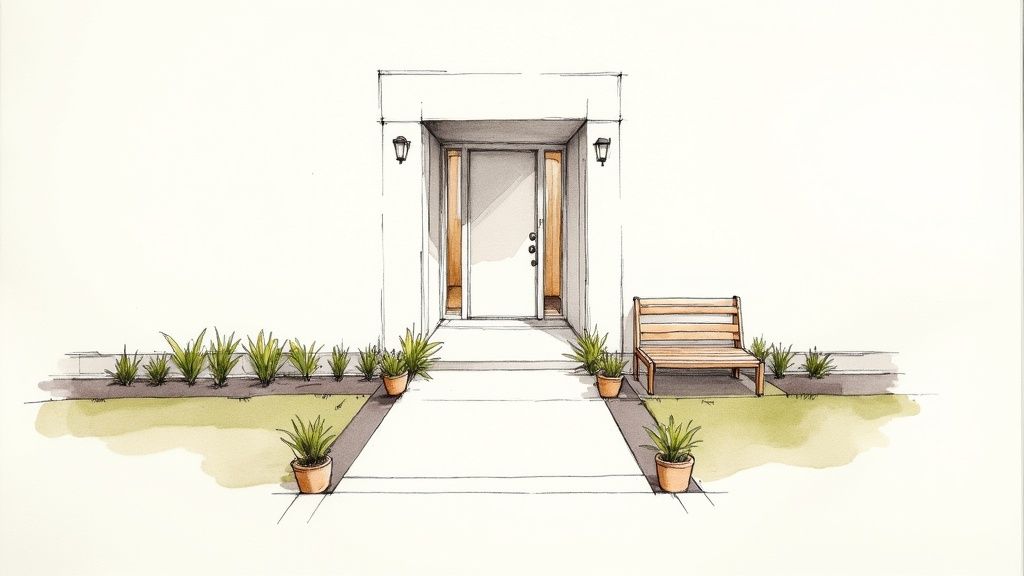
The journey from the street to your front door should be a warm and inviting experience, setting the tone for your entire home. Focusing on welcoming entryway features is one of the most impactful ideas for front of house landscaping. This approach combines functional elements like pathways and lighting with aesthetic touches such as seating and carefully selected plantings to create a space that is both beautiful and guides visitors naturally to your door.
Why Choose to Focus on the Entryway?
Your front entryway is the focal point of your home's facade. A well-designed entry not only boosts curb appeal but also enhances safety and accessibility. By thoughtfully combining hardscaping, lighting, and plantings, you create an intentional transition from the public world to your private sanctuary. This small, high-impact area can transform how you and your guests feel upon arrival.
Actionable Tips for Implementation
Define a Clear Path: Ensure your walkway is at least 3-4 feet wide, allowing for comfortable passage. Use materials like flagstone, pavers, or brick that complement your home's architecture.
Frame the Door: Use symmetrical plantings, such as paired topiaries or large urns filled with seasonal flowers, to draw the eye directly to the front door and create a sense of formal balance.
Layer Your Lighting: Combine different types of lighting for maximum effect. Use path lights at grade level for safety and uplighting on specimen trees or architectural details for dramatic evening ambiance.
Add a Personal Touch: Incorporate a small bench or a pair of chairs to create a welcoming spot to rest. This small addition makes the space feel more like an outdoor room and encourages a moment of pause.
Visualize the Welcome: Not sure how a new stone path or lighting scheme will look? Apply AI Landscape Design using a photo of your own entryway. You can experiment with different pathway materials, plant arrangements, and even visualize how landscape lighting will look at dusk before committing.
6. Low-Maintenance Xeriscaping
Xeriscaping is a water-efficient landscaping approach that creates a stunning and sustainable front yard by minimizing the need for irrigation. This method involves using drought-tolerant plants, strategic mulching, and efficient watering systems to craft a landscape that thrives in arid or drought-prone regions. Far from being barren, a well-designed xeriscape is a vibrant, textured space that conserves water, reduces maintenance, and lowers utility bills.
Why Choose Xeriscaping?
Opting for a xeriscpe design is one of the most practical and eco-friendly ideas for front of house landscaping, especially in areas with water restrictions. Because the plants are adapted to dry conditions, they require significantly less supplemental water once established. This dramatically cuts down on maintenance time and costs associated with watering, fertilizing, and pest control, while creating a resilient landscape that can withstand harsh summer heat.
Actionable Tips for Implementation
Amend Your Soil: Before planting, work 3 to 4 inches of compost or other organic matter into your soil. This improves water retention and provides essential nutrients for new plants.
Group Plants by Water Needs: Practice "hydrozoning" by grouping plants with similar irrigation requirements together. This allows you to water efficiently, giving each plant exactly what it needs without waste.
Mulch Generously: Apply a 3- to 4-inch layer of rock or bark mulch around your plants, keeping it away from the stems. Mulch helps retain soil moisture, suppress weed growth, and regulate soil temperature.
Visualize Your Design: A successful xeriscape relies on thoughtful placement of rocks, plants, and hardscapes. Apply AI Landscape Design to visualize your ideas. Upload a photo of your own front yard and experiment with different layouts of succulents, agaves, and ornamental grasses to perfect the look before you start digging. For a deeper dive, you can explore how AI can assist with xeriscape planning.
Add Unique Textures: For a truly drought-tolerant approach, consider creating a succulent garden to add unique textures and forms.
7. Seasonal Color Displays and Ornamental Grasses
Creating a dynamic front yard that offers visual appeal year-round is one of the most sophisticated ideas for front of house landscaping. This is achieved by combining plants that provide seasonal color with the textural elegance of ornamental grasses. This strategic approach ensures your landscape is never dull, offering a continuous sequence of blooms, foliage color, and structural interest that evolves with the changing seasons. From the fresh burst of spring bulbs to the stark, frosty beauty of winter seed heads, this design keeps your curb appeal high all year.
Why Choose a Four-Season Display?
A landscape designed for year-round interest provides constant curb appeal and a deeper connection to nature's cycles. Ornamental grasses add movement and a soft, modern texture that beautifully contrasts with bold flowers and evergreen shrubs. This combination creates a rich, layered look that feels both intentional and natural. It’s a sustainable choice that maximizes the impact of your garden, offering benefits to pollinators in warmer months and providing shelter and food for birds in the winter.
Actionable Tips for Implementation
Create a Bloom Calendar: Map out your planting choices by season. Plan for spring bulbs like daffodils, summer perennials like coneflowers, fall-blooming asters, and winter structure from red-twig dogwoods or evergreens.
Layer Grasses and Perennials: Use taller grasses like Miscanthus or Switchgrass as a backdrop. In front, plant medium-height perennials, and finish the border with shorter grasses like Little Bluestem or low-growing Sedum.
Incorporate Foliage Color: Don't rely solely on flowers. Integrate plants with colorful leaves, such as purple Heuchera or golden Japanese Forest Grass, to provide consistent color even when plants aren't in bloom.
Visualize the Seasonal Flow: It can be difficult to imagine how your yard will look in different seasons. You can apply AI Landscape Design to visualize your ideas. Upload a photo of your own house and experiment with different plant combinations for spring, summer, fall, and winter to ensure your vision works year-round. You can even explore how AI helps predict seasonal bloom patterns to better plan your garden's evolution.
8. Raised Planting Beds and Borders
Introducing raised planting beds and borders is a fantastic way to add structure, dimension, and control to your front of house landscaping. These elevated garden areas, typically contained by wood, stone, metal, or composite materials, create defined planting zones that instantly bring order and a clean, intentional look to your yard. Beyond their aesthetic appeal, raised beds offer practical advantages like improved drainage, the ability to customize soil for specific plants, and easier access for planting and maintenance.
Why Choose Raised Planting Beds?
Raised beds are a problem-solver for many common landscaping challenges. If your yard has poor, compacted, or rocky soil, you can simply fill the beds with a high-quality soil mix tailored to your plants. This control over the growing medium ensures healthier, more vibrant flowers, shrubs, or even edible plants. The elevation also makes gardening more accessible by reducing the need to bend and kneel, and the defined edges create a crisp border between your garden and lawn or walkways.
Actionable Tips for Implementation
Select Your Material: Choose a material that complements your home’s architecture. Sleek Corten steel or composite beds suit modern designs, while rustic wood or natural stone borders enhance cottage and traditional styles.
Optimal Dimensions: For most front yard applications, a height of 8 to 12 inches is ideal. This provides enough depth for root systems without creating an overly bulky structure.
Ensure Proper Drainage: Before filling, ensure water can escape. You can drill holes in the bottom of solid containers or lay a base layer of coarse gravel to prevent waterlogging, which can lead to root rot.
Visualize with AI: The placement and material of raised beds can significantly alter your curb appeal. Apply AI Landscape Design using a photo of your own front yard. You can then experiment with different layouts, sizes, and materials to see how stone, wood, or metal beds will look before you commit to building them. This is one of the most effective ideas for front of house landscaping to test before you start digging.
9. Statement Trees and Focal Points
A powerful strategy for creating immediate impact and long-term structure in front of house landscaping is to anchor the design with a statement tree. This approach involves selecting a single, distinctive tree or large sculptural plant to serve as a primary focal point. A well-chosen specimen tree provides vertical interest, seasonal color, and an architectural element that draws the eye and defines the entire landscape around it.
Why Choose a Statement Tree?
Using a statement tree is one of the most effective ideas for front of house landscaping because it establishes a sense of permanence and grandeur. It acts as a natural sculpture, with its form, texture, and color changing throughout the year. Trees like Japanese maples offer delicate foliage and elegant branching, while magnolias provide dramatic spring blossoms. This single element can elevate a simple yard into a sophisticated and well-grounded design.
Actionable Tips for Implementation
Select for All Seasons: Choose a tree that offers year-round interest. Consider species like Serviceberry for spring flowers, summer fruit, and fall color, or a Birch for its distinctive white bark that stands out in winter.
Plan for Maturity: Always consider the tree's mature height and spread. Position it where it will have ample room to grow without interfering with your home's foundation, power lines, or walkways. This is a critical first step.
Establish a Strong Foundation: Plant your new tree in the spring or fall to allow for optimal root establishment. Young trees often benefit from staking for the first year or two and require deep, regular watering to thrive.
Visualize the Future: The placement of a statement tree is a major decision. You can use AI Landscape Design to visualize this long-term idea. Simply upload a photo of your own front yard and virtually place different tree species to see how they will look at maturity, ensuring your focal point is perfectly positioned. For more on strategic placement, explore how you can benefit from intelligent tree placement for windbreaks and other functional purposes.
10. Front Yard Curb Appeal Enhancement
Enhancing front yard curb appeal is a comprehensive approach that ties together all elements of your landscape into one cohesive, visually stunning design. It’s about more than just planting flowers; it involves the deliberate coordination of plants, hardscaping, lighting, and home maintenance to create a powerful first impression from the street. This holistic strategy ensures that every component, from your mailbox to your front door, works in harmony to showcase your home’s unique character and style.
Why Focus on Overall Curb Appeal?
A focus on total curb appeal delivers the greatest aesthetic impact and can significantly increase your property's perceived value. Instead of having one or two nice features, a coordinated design creates a polished and intentional look that feels complete. This approach is perfect for homeowners preparing to sell or for those who simply want their property to be a standout on the block. It’s one of the most effective ideas for front of house landscaping because it addresses the big picture, ensuring every investment contributes to a unified and impressive result.
Actionable Tips for Implementation
Define Your Color Palette: Choose two to three complementary colors for your plants, front door, and outdoor decor. A consistent color scheme, like classic whites and greens for a Colonial or bold, contrasting tones for a contemporary home, creates a sophisticated look.
Layer Your Plantings: Create depth by arranging plants according to height. Place tall shrubs or grasses against the house, fill the middle ground with medium-sized perennials, and line the front of the bed with low-growing flowers or groundcover.
Upgrade Your Accents: Small details make a big difference. Update your house numbers to a modern, visible style, install a new mailbox, and add stylish outdoor lighting fixtures that illuminate pathways and highlight architectural features.
Visualize the Complete Look: Tying all these elements together can be challenging. You can apply AI Landscape Design to see the big picture. By uploading a photo of your own front yard, you can experiment with different plant combinations, hardscape materials, and even visualize a newly painted front door to see how every change affects the overall curb appeal before committing.
Front-of-House Landscaping: 10-Option Comparison
Item | Implementation Complexity 🔄 | Resource Requirements ⚡ | Expected Outcomes ⭐ | Ideal Use Cases 💡 | Key Advantages 📊 |
|---|---|---|---|---|---|
Native Plant Gardens | Medium — requires local species knowledge and planning | Low–Medium — low water/fertilizer, sourcing native stock may be needed | High ⭐ Supports biodiversity, drought resilience, lower upkeep | Ecological yards, drought-prone regions, habitat support | Biodiversity & resilience; reduced long‑term maintenance |
Hardscape Design with Pavers and Pathways | High — precise grading and professional installation often needed | High ⚡ Material and labor intensive; durable materials required | High ⭐ Durable, accessible circulation, strong architectural impact | High‑traffic routes, drainage solutions, modern/formal designs | Long‑lasting structure, improves accessibility and curb appeal |
Colorful Foundation Plantings | Medium — thoughtful layering and mature-size planning | Low–Medium — shrubs, perennials, regular pruning | Medium–High ⭐ Softens architecture, year‑round visual interest when planned | Framing entrances, softening foundations, enhancing curb appeal | Enhances entry, privacy, energy buffering, seasonal color |
Modern Minimalist Landscapes | Medium–High — precise execution and high finish quality | Medium–High ⚡ High‑quality materials and select plants; skilled installation | High ⭐ Low maintenance aesthetic, strong architectural emphasis | Modern homes, low‑maintenance priorities, photo‑focused designs | Clean, low‑upkeep look; emphasizes home architecture |
Welcoming Entryway Features | Medium — coordinated lighting, pathways, and plantings | Medium ⚡ Lighting and paving costs; seasonal plant maintenance | High ⭐ Immediate curb appeal; improved safety and wayfinding | Main entrances, hospitality‑focused homes, staged properties | Creates inviting approach; boosts safety and first impressions |
Low‑Maintenance Xeriscaping | Medium — soil prep and hydrozoning planning | Low ⚡ Low ongoing water and fertilizer; initial soil and irrigation setup | High ⭐ Major water savings, low ongoing maintenance | Arid climates, drought‑conscious homeowners, municipal landscaping | Significant water reduction; sustainable and low upkeep |
Seasonal Color Displays & Ornamental Grasses | High — succession planning and multi‑season design | Medium–High — many species and periodic maintenance | High ⭐ Continuous seasonal interest; strong movement and texture | Mixed borders, prairie plantings, year‑round display gardens | Four‑season interest; supports pollinators and sensory variety |
Raised Planting Beds & Borders | Low–Medium — construction then simple planting | Medium ⚡ Materials (wood/steel/stone) and quality soil required | Medium–High ⭐ Improved drainage, soil control, easier maintenance | Poor soils, accessible gardening, defined planting zones | Soil customization, accessibility, clear visual structure |
Statement Trees & Focal Points | Medium — correct siting and long‑term planning; pro for large specimens | Medium–High ⚡ Cost for specimen trees and installation, possible arborist work | Very High ⭐ Anchors landscape, shade, long‑term value and habitat | Centerpieces, shade provision, formal focal points | Adds maturity, property value, habitat and scale |
Front Yard Curb Appeal Enhancement | Medium — coordinates multiple elements for cohesive look | Variable ⚡ Budget ranges from low DIY to comprehensive redesign | High ⭐ Immediate street‑visible impact; increases resale potential | Home staging, resale preparation, neighborhood upgrades | Boosts property value and first impressions; flexible budgets |
From Idea to Reality: Visualize Your Dream Front Yard Today
Embarking on a landscaping project can feel both exhilarating and overwhelming. We have explored a diverse range of ideas for front of house landscaping, from the sustainable beauty of native plant gardens and the water-wise intelligence of xeriscaping to the structured elegance of modern minimalist designs and the classic charm of colorful foundation plantings. Each concept offers a unique path to transforming your home's exterior, boosting its value, and creating an environment that reflects your personal style.
The journey from a simple idea to a fully realized landscape is where many homeowners hesitate. The core challenge lies in bridging the gap between imagination and implementation. How will that statement tree look next to your porch? Will the paver pathway complement your home's siding? Answering these questions with confidence is the key to a successful project.
Synthesizing Your Vision: From Inspiration to Action
The true power of this guide lies not just in the individual ideas, but in how you can combine them to create a cohesive and functional design. Your front yard is a system where every element works together. The welcoming entryway features you choose should be supported by well-planned hardscaping, and the seasonal color you introduce should harmonize with your core foundation plantings.
Consider these key takeaways as you plan your next steps:
Balance is Essential: A successful design balances softscape (plants, grasses, trees) with hardscape (pathways, walls, patios). One should not overpower the other; they should work in harmony to guide the eye and create a sense of order.
Function Dictates Form: Before selecting plants or materials, think about how you use your front yard. Do you need a clear, wide path to the door? Is there a spot where you'd like to sit? Your design should solve practical problems first.
Sustainability is Smart: Opting for native plants or xeriscaping isn't just an aesthetic choice. It leads to lower water bills, reduced maintenance, and a healthier local ecosystem. This long-term thinking pays dividends for years to come.
The Power of Visualization: Seeing Your Landscape Before You Dig
The most significant advancement in modern landscaping is the ability to eliminate guesswork. In the past, creating a new front yard involved sketches, mood boards, and a lot of hope. Today, technology allows you to see a photorealistic preview of your project, making it easier to commit to a design and avoid costly mistakes. This is where AI-powered tools become invaluable.
Instead of trying to mentally picture how these ideas for front of house landscaping will look, you can apply AI Landscape Design to generate instant visualizations. Simply by uploading a photo of your own current yard, you can see it transformed with a modern minimalist aesthetic, a lush cottage garden, or a vibrant bed of ornamental grasses. This technology allows you to:
Experiment Without Risk: Swap out different paver styles, test various plant combinations, and see how a raised garden bed looks next to your driveway, all with a few taps.
Gain Stakeholder Buy-In: Show your partner, family, or even a homeowners' association exactly what you have in mind, ensuring everyone is on the same page before a single shovel hits the ground.
Integrate with Your Home's Architecture: For larger projects where the landscaping must perfectly complement the house itself, you can even use professional architectural rendering software to create a holistic view of the final integrated design.
This ability to visualize is the final, crucial step in your planning process. It turns abstract concepts into a tangible plan, providing the confidence needed to move forward. Your ideal front yard is no longer just a dream; it's a design waiting to be brought to life.
Don't let uncertainty hold you back from creating the beautiful, functional front yard you deserve. With DreamzAR AI Landscape Design, you can instantly visualize any of the ideas from this article using a photo of your own home. See your future landscape in minutes and start your project with clarity and confidence by downloading the app today.