8 Stunning Landscaping Ideas for Front of Small House to Try in 2025
- Akhilesh Joshi
- 8 hours ago
- 19 min read

Having a small front yard doesn't mean you have to compromise on style or impact. In fact, a compact space often presents a unique opportunity for focused, creative design that can dramatically enhance your home’s curb appeal. A well-executed landscape not only creates a welcoming entrance for guests but can also significantly increase your property's value. The challenge lies in choosing the right approach from a sea of possibilities, from modern minimalism to charming cottage gardens.
This comprehensive guide simplifies that process. We present a curated collection of distinct landscaping ideas for the front of a small house, each packed with actionable strategies, specific plant suggestions, and visual inspiration. Our goal is to help you find the perfect design that aligns with your home's architecture, your personal style, and your maintenance preferences. We will break down how to maximize every square foot for beauty, function, and personality, ensuring your small yard makes a big statement.
Before committing to a plan, visualizing the final result is crucial for success. This is where technology offers a significant advantage. Using an AI landscape design tool, you can upload a photo of your front yard and virtually "try on" different layouts and plant combinations. Throughout this article, we'll explain how you can apply AI to see these concepts brought to life in your actual space, testing everything from paver patterns to flower arrangements in augmented reality (AR). This powerful approach removes the guesswork, empowering you to invest confidently in a design you'll love for years.
1. Minimalist Front Yard with Native Plants
A minimalist front yard design offers a clean, contemporary aesthetic that perfectly complements a small house by making the space feel larger and more intentional. This approach focuses on the principle of "less is more," using a limited plant palette, clean lines, and negative space to create a significant visual impact. By incorporating native plants, you layer in sustainability, creating a landscape that is not only beautiful but also resilient and low-maintenance.
This concept is one of the most effective landscaping ideas for the front of a small house because it avoids the cluttered, busy look that can easily overwhelm a compact yard. Instead of filling every inch with plants, you strategically place a few key specimens to draw the eye and create a sense of calm. The result is a sophisticated and uncluttered entryway that enhances your home's curb appeal without demanding constant upkeep.
Why It Works for Small Spaces
Minimalism thrives on simplicity and structure, which are ideal for small front yards. By selecting a few hardy native plant varieties, you create a cohesive look that is naturally adapted to your local climate. This means less watering, less fertilizing, and fewer pest problems. The open space between plant groupings prevents the area from feeling cramped and allows each plant to be appreciated as a sculptural element.
Key Insight: The goal of a minimalist native garden is not emptiness but intentionality. Every plant, pathway, and open area serves a purpose, contributing to a clean, harmonious design that complements the architecture of a small home.
Implementation and Actionable Tips
Getting started with a minimalist native garden is straightforward. The key is careful planning and deliberate selection.
Select a Core Palette: Start by choosing just 3 to 5 key native species that offer varied textures, shapes, and seasonal interest. For a California home, this might be a combination of Manzanita, Ceanothus, and Deer Grass. A Midwest property could feature Little Bluestem grass, Purple Coneflower, and Butterfly Weed.
Group by Needs: Arrange plants with similar water and sun requirements together. This practice, known as hydrozoning, makes irrigation far more efficient and ensures your plants thrive.
Visualize with AI: Before you dig, use an AI Landscape Design tool to visualize your plan using a photo of your own yard. This allows you to test different native plant combinations, check mature heights and spacing, and ensure the final look is as clean and balanced as you envision.
Incorporate Hardscaping: Use simple, clean-lined hardscaping elements like gravel pathways, concrete pavers, or a single large boulder to add structure and contrast. Mulch, such as dark bark or river rock, helps suppress weeds, retain soil moisture, and reinforces the minimalist aesthetic.
2. Modern Front Entry with Hardscaping Focus
A modern front entry that focuses on hardscaping creates a powerful, structured statement ideal for a small home. This contemporary design philosophy prioritizes clean lines, geometric shapes, and a sophisticated mix of materials like concrete pavers, smooth gravel, and ornamental stones. By leaning on these architectural elements, you create a visually striking landscape that is exceptionally low-maintenance.

This style is one of the best landscaping ideas for the front of a small house because it defines the space with precision and clarity. Instead of relying on extensive plantings that can quickly become overgrown, the design uses the texture, color, and form of hardscape materials to build visual interest. This approach makes a compact front yard feel intentional, organized, and much larger than it is.
Why It Works for Small Spaces
Hardscape-focused designs bring order and strong architectural presence to limited areas. Large-format pavers can create an illusion of a wider walkway, while geometric gravel beds can delineate zones without adding bulk. This strategy minimizes the need for lawn and extensive garden beds, drastically reducing time spent on mowing, watering, and weeding. The result is maximum curb appeal with minimal effort, perfect for busy homeowners.
Key Insight: A modern, hardscape-heavy design transforms the ground plane into the primary feature. The interest comes from the interplay of materials, patterns, and clean edges, with plants used as deliberate, high-impact accents.
Implementation and Actionable Tips
Executing a modern hardscape entry is all about thoughtful material selection and precise layout. Planning is crucial to achieving a polished, high-end look.
Mix Complementary Materials: Combine two or three hardscape materials to create contrast and depth. For example, pair large, smooth concrete pavers with a bed of dark Mexican beach pebbles and a poured concrete retaining wall.
Visualize with AI: Use an AI Landscape Design app to experiment with different hardscape combinations on a photo of your own yard. You can test various paver patterns, gravel colors, and layouts to see how they interact with your home’s facade before committing to materials.
Soften with Specimen Plants: Prevent the design from feeling too sterile by adding one or two strategically placed specimen plants. A sculptural Japanese Maple, a cluster of ornamental grasses, or a neatly trimmed boxwood can provide the perfect organic contrast.
Add Strategic Lighting: Install low-voltage uplighting to highlight the textures of your hardscaping and guide the eye toward your front door at night. This simple addition adds drama, sophistication, and safety.
Consider Permeability: Opt for permeable pavers or gravel systems to improve drainage and reduce water runoff. This is a sustainable choice that can also prevent water issues in a small yard.
3. Cottage Garden Front Yard Design
A cottage garden front yard embodies a charming, informal aesthetic that is lush, romantic, and brimming with life. This design style uses a dense mix of colorful perennials, flowering shrubs, ornamental grasses, and even edibles to create an abundant, seemingly effortless look. Far from being chaotic, a well-planned cottage garden is a tapestry of textures and colors that provides a warm, welcoming entryway.
This approach is one of the most beloved landscaping ideas for the front of a small house because it turns a compact space into a vibrant, enchanting feature. Instead of rigid lines and sparse plantings, it embraces a full, layered look that adds immense character and personality. The result is a dynamic, ever-changing garden that offers something new to see with each season, maximizing the visual interest of a small yard.
Why It Works for Small Spaces
The cottage garden's "more is more" philosophy is surprisingly effective in a small front yard when executed with care. The dense, layered plantings create a sense of depth and scale, making the area feel larger and more immersive. By focusing on vertical growth with climbing plants and taller perennials, you can draw the eye upward, adding height and dimension without consuming valuable ground space. This style thrives on an organized profusion that feels personal and lived-in.
Key Insight: The magic of a cottage garden in a small space lies in controlled abundance. It’s not about random planting, but rather a thoughtful composition of plants layered by height, texture, and bloom time to create a cohesive and captivating scene.
Implementation and Actionable Tips
Creating a lush cottage garden in front of a small home is about layering plants and planning for continuous color.
Plan for Succession Blooming: Select plants that bloom at different times throughout the spring, summer, and fall. This ensures your garden remains vibrant and colorful across the seasons, preventing bare spots. Combine early bloomers like tulips and irises with summer stars like roses and coneflowers, and late-season performers like asters and sedum.
Use Repeating Groups: To bring harmony to the abundant plantings, repeat small groupings of the same 3 to 5 plants throughout the garden bed. This creates a visual rhythm that ties the entire design together and prevents it from looking messy.
Visualize the Layers: A cottage garden's success depends on its layers. You can apply AI Landscape Design to visualize your ideas using photos of your own yard. This allows you to see how different heights, textures, and colors will work together before you start planting.
Define with Hardscaping: Even informal gardens need structure. Use a simple stone, brick, or metal edge to clearly define your garden beds from the lawn or pathway. This crisp border contains the abundant plantings and gives the entire design a polished, intentional look.
Include Evergreen Structure: Incorporate a few evergreen shrubs, like boxwood or dwarf conifers, to provide a green framework and visual interest during the winter months when perennials are dormant.
4. Xeriscaping with Desert/Rock Garden Elements
Xeriscaping is a water-wise landscaping approach that utilizes drought-tolerant plants, rocks, gravel, and other natural materials to create a visually stunning and sustainable garden. This design philosophy is especially powerful for small front yards, as it relies on texture, form, and color to create a dramatic effect without the need for a lush, water-intensive lawn. By replacing turf with striking combinations of succulents, ornamental grasses, and strategic stonework, you can craft a landscape that is both beautiful and environmentally responsible.
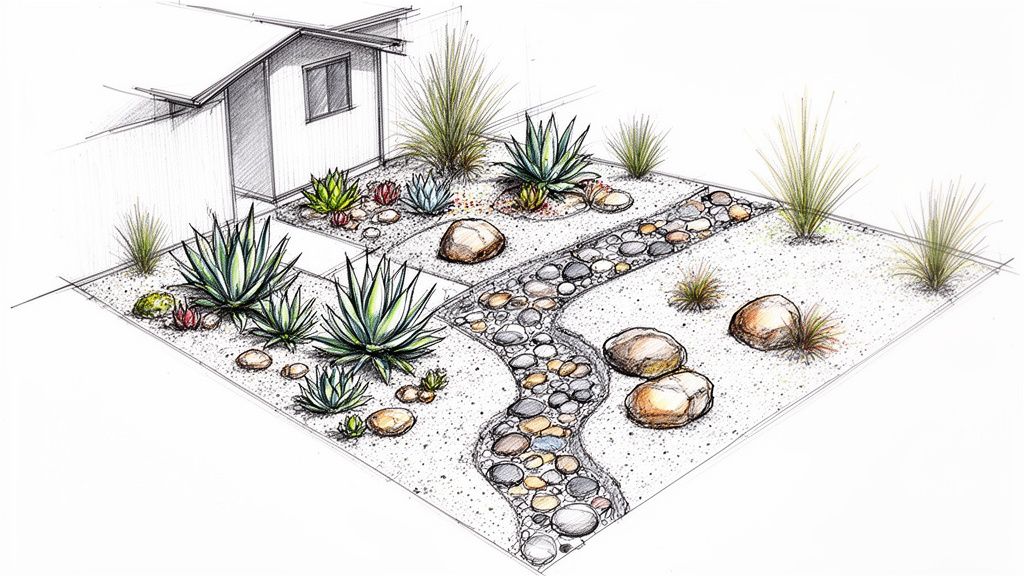
This method is one of the most practical landscaping ideas for the front of a small house, particularly in arid climates or for homeowners focused on conservation. Instead of a uniform sea of green, a rock garden introduces diverse textures and sculptural shapes that provide year-round interest. This approach turns a potential challenge, like a hot, sun-beaten yard, into an opportunity for a unique and resilient design that drastically reduces water bills and maintenance chores.
Why It Works for Small Spaces
A xeriscaped rock garden uses contrast and composition to create the illusion of a larger, more intricate space. The interplay between soft plant textures and hard, angular rocks adds depth and dimension. Because the plants are typically slow-growing and require minimal pruning, the design maintains its intended shape and scale over time, preventing it from overwhelming the front of a small home. This style proves that a low-water landscape can be anything but sparse or barren.
Key Insight: Successful xeriscaping is a masterful blend of horticulture and artistry. It’s about creating a miniature, self-sustaining ecosystem where rocks provide the structure and drought-tolerant plants add life, color, and texture.
Implementation and Actionable Tips
Transitioning to a xeriscape or rock garden is a rewarding project that pays dividends in water savings and curb appeal. Careful selection of materials is crucial for success.
Choose Specimen Plants: Select two or three striking focal-point plants, such as a large Agave, a multi-branched Yucca, or a sculptural ornamental grass. Build the rest of your design around these key elements.
Layer with Stone and Gravel: Create visual interest by using a mix of materials. Use large boulders to add height and drama, mid-sized river rocks to define a dry creek bed, and fine gravel or decomposed granite as a base mulch. This layering technique adds texture and a naturalistic feel. For more ideas, explore these 10 ways to create a drought-resistant landscape design.
Visualize Before You Buy: A rock garden's success depends on the right balance of plants and hardscape. Use an AI Landscape Design tool to experiment with different layouts using a photo of your own yard. This lets you virtually place various succulents, boulders, and gravel types to see how they look against your house before committing to the labor and expense.
Install Efficient Irrigation: While xeriscaping reduces water needs, new plants still require it to get established. A drip irrigation system is the most efficient method, delivering water directly to the plant roots and minimizing evaporation. Group plants with similar water needs on the same irrigation zone.
5. Japanese-Inspired Front Garden with Balance and Symbolism
A Japanese-inspired front garden brings a sense of tranquility, balance, and refined beauty to a home's entrance. This approach is not about replicating a traditional garden from Japan but about adopting its core principles: simplicity, asymmetrical balance, and the symbolic use of natural elements. It uses carefully placed rocks, select plants, and subtle features like lanterns or water to create a serene, contemplative atmosphere.
This concept is one of the most thoughtful landscaping ideas for the front of a small house because every element has a purpose and contributes to a harmonious whole. Rather than filling the space, it uses restraint and careful composition to evoke a feeling of nature on a miniature scale. The result is a deeply personal and visually captivating landscape that feels both timeless and perfectly suited to a compact footprint.
Why It Works for Small Spaces
Japanese garden design principles are masterfully suited for small areas, as they excel at creating a sense of depth and scale. The use of asymmetrical balance, where elements are not mirrored but are visually weighted, makes a small yard feel more dynamic and expansive. Carefully selected plants with unique forms, textures, and seasonal colors become living sculptures, each contributing to the overall scene without overwhelming it.
Key Insight: A Japanese-inspired garden for a small house is a miniature landscape painting. The goal is to create a serene journey for the eye, using stone to represent mountains, gravel to symbolize water, and plants to mark the changing seasons.
Implementation and Actionable Tips
Creating a tranquil Japanese-inspired garden is an exercise in intentional placement and thoughtful selection. Planning is essential to achieving a balanced and peaceful design.
Embrace Asymmetry: Arrange key elements like a Japanese Maple, a large feature rock, and a stone lantern in a triangular formation rather than a straight line. Use odd-numbered groupings (e.g., three or five stones) to create a more natural, dynamic balance.
Select Symbolic Plants: Choose plants for their form, texture, and seasonal interest. A dwarf Japanese Maple can be a stunning focal point. Complement it with cloud-pruned shrubs (like Boxwood or Juniper), delicate Japanese Forest Grass, and patches of lush moss.
Visualize with AI: The precise placement of stones and plants is critical. You can apply AI Landscape Design to visualize your ideas using photos of your own yard. Experiment with arrangements before doing any heavy lifting by virtually placing different rocks, lanterns, and trees to perfect the asymmetrical balance.
Incorporate Natural Elements: Use a simple stone basin (tsukubai) for a subtle water feature or a dry riverbed of raked gravel to suggest the flow of water. A simple bamboo fence or screen can add privacy and reinforce the aesthetic. For a deeper dive into these concepts, you can learn more about creating a Japanese Zen garden on dreamzar.app.
6. Pollinator-Friendly Front Yard Oasis
A pollinator-friendly front yard transforms your small space into a vibrant, living ecosystem that supports essential wildlife like bees, butterflies, and hummingbirds. This approach focuses on creating a beautiful and functional habitat by selecting specific plants and features that provide food and shelter. The result is a dynamic, colorful landscape filled with life and natural beauty.
This concept is one of the most rewarding landscaping ideas for the front of a small house because it creates a constantly evolving display of color and activity. A pollinator garden offers visual interest from spring through fall as different species bloom, attracting various visitors. It shifts the focus from a static lawn to a dynamic garden that is both aesthetically pleasing and environmentally beneficial, adding depth and purpose to a compact area.
Why It Works for Small Spaces
Small yards are perfect for creating concentrated pockets of biodiversity. A pollinator garden can be established in a small flowerbed, a border along a walkway, or even in containers, making it highly adaptable. By choosing compact native plants, you can pack a lot of ecological value into a limited footprint without the garden looking overgrown or messy. This approach creates a lush, layered look that adds character and charm to a small home's facade.
Key Insight: A successful pollinator garden is more than just pretty flowers; it's a complete ecosystem. Providing a water source, shelter, and a continuous succession of blooms ensures your front yard becomes a reliable and vital stop for local wildlife.
Implementation and Actionable Tips
Creating a pollinator oasis is a matter of strategic selection and thoughtful design. Planning for continuous blooms is crucial for supporting pollinators throughout the seasons.
Choose a Variety of Native Plants: Select native flowers, shrubs, and grasses that bloom at different times from early spring to late fall. For example, a Northeast garden might feature Spring Phlox, summer-blooming Bee Balm and Coneflower, and fall-blooming Asters. This provides a consistent food source.
Include Host Plants: Plant species that serve as hosts for butterfly larvae. Native milkweed is essential for monarch butterflies, while plants like dill and fennel attract black swallowtails.
Visualize Blooming Cycles with AI: Planning for year-round color can be complex. You can apply AI Landscape Design to visualize your ideas using photos of your own yard. This helps you see how bloom times, colors, and mature sizes will work together, ensuring a beautiful and effective design.
Provide Water and Shelter: Add a shallow birdbath with pebbles or a "bee bath" to offer a safe water source. Leave some bare ground or a small pile of logs for ground-nesting bees and other beneficial insects. For more ideas, you can learn more about how to attract pollinators to your garden.
Go Pesticide-Free: Commit to avoiding all chemical pesticides and herbicides, which are harmful to pollinators and other wildlife. A healthy, diverse garden will naturally manage most pest issues.
7. Front Yard Edible Landscaping with Herbs and Vegetables
Front yard edible landscaping, or "foodscaping," merges beauty with utility by integrating herbs, vegetables, and fruit-bearing plants directly into your ornamental design. This approach transforms your front yard from a purely decorative space into a productive one, offering fresh ingredients right outside your door. It’s a sustainable and rewarding way to enhance your home's curb appeal while connecting with your food source.
This concept is one of the most practical landscaping ideas for the front of a small house because it maximizes the function of limited square footage. Instead of dedicating a separate, hidden area for a vegetable garden, you artfully weave edibles among flowers and shrubs. The result is a lush, textured, and multi-layered garden that is as beautiful as it is bountiful, proving that a small yard can be both stylish and productive.
Why It Works for Small Spaces
Edible landscaping excels in compact areas by making every plant count. A small front yard can easily accommodate an array of herbs, leafy greens, and even dwarf fruit trees without feeling cluttered. By choosing plants with attractive foliage, flowers, and fruits, like the vibrant red stems of Swiss chard or the delicate purple flowers of a chive plant, you create visual interest that serves a dual purpose. This smart use of space provides a harvest while contributing to a dynamic and engaging landscape design.
Key Insight: The success of a front yard edible garden lies in treating edible plants as ornamental elements. Focus on their color, texture, and form to create a design that is visually appealing first and productive second.
Implementation and Actionable Tips
Starting a front yard foodscape is about thoughtful integration and plant selection. A little planning ensures your garden is both beautiful and manageable.
Check Local Rules: Before planting, verify your local HOA or municipal regulations. Some areas have specific guidelines regarding front yard vegetable gardens.
Combine with Ornamentals: Mix edibles with traditional ornamental plants for a balanced look. For example, plant a border of frilly lettuce in front of flowering perennials, or use rosemary bushes as structural evergreen elements.
Visualize with AI: Planning the layout is crucial for aesthetics. You can apply AI Landscape Design to visualize your ideas using photos of your own yard. This allows you to test different edible plants, raised beds, and containers to see how they will look throughout the seasons, helping you balance colors and textures for maximum curb appeal. You can learn more about how to start incorporating edibles into your landscape design.
Use Stylish Containers: Elevate the design by using attractive raised beds, modern planters, or decorative pots. This defines the growing spaces and adds a polished, intentional look. A vertical herb wall near the front door is both a beautiful and a convenient feature.
8. Low-Maintenance Curved Beds with Specimen Plants and Mulch
This practical, elegant design uses flowing, curved garden beds and strategically placed specimen plants to create high-impact visual interest with minimal ongoing work. The approach softens the hard, straight lines of a small house and driveway, introducing a natural, organic feel. By emphasizing clean edges, a limited plant palette, and a thick layer of quality mulch, you achieve a polished, intentional appearance that requires far less maintenance than a traditional, densely planted garden.
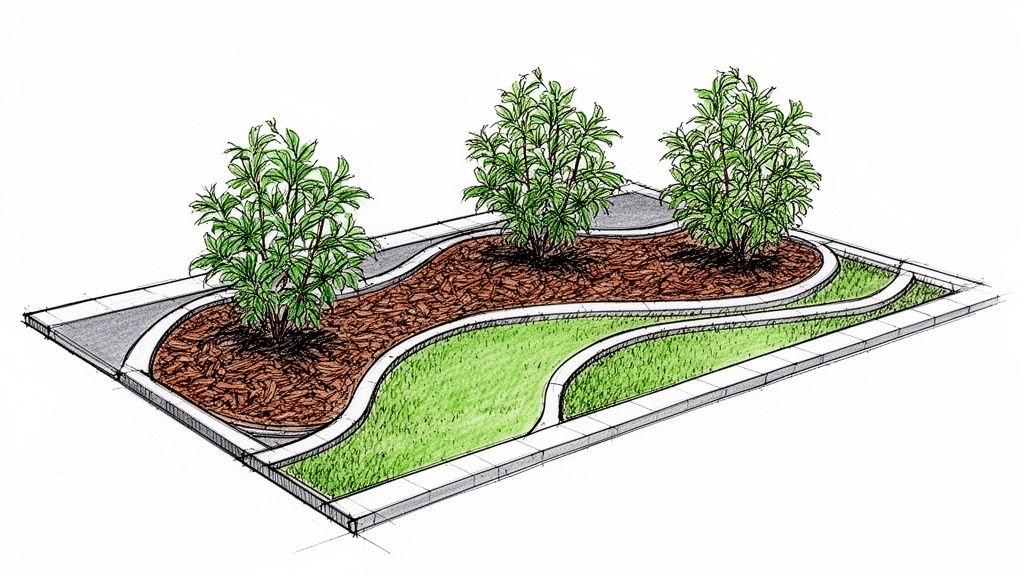
This method is one of the most effective landscaping ideas for the front of a small house because it balances beauty and simplicity. Instead of overwhelming the space with numerous plants, you select a few standout "specimen" trees or shrubs that act as focal points. The curved beds guide the eye smoothly across the landscape, making the yard feel larger and more dynamic. A generous layer of mulch ties it all together, suppressing weeds, conserving moisture, and providing a neat, uniform backdrop that makes the specimen plants pop.
Why It Works for Small Spaces
Curved lines are a powerful design tool in compact areas. They create an illusion of depth and movement, breaking up the boxy geometry common to small lots. By focusing on a few high-impact specimen plants rather than dozens of smaller ones, you avoid a cluttered look and give each plant room to shine. For homeowners seeking an elegant, HOA-compliant yard that doesn't demand constant attention, this low-maintenance strategy is an ideal fit, combining sophisticated design with practical, time-saving benefits. For those new to this concept, understanding the power of mulching can be a great starting point.
Key Insight: The success of this design lies in the interplay between soft curves and strong focal points. The flowing bed lines create a sense of grace, while the carefully chosen specimen plants provide structure and year-round interest.
Implementation and Actionable Tips
Creating this look is all about thoughtful placement and quality materials. Planning is crucial to ensure the final design is both beautiful and functional.
Define Your Curves: Use a garden hose or rope to lay out the curved shape of your beds. Adjust the lines until you achieve a gentle, sweeping flow that complements your home's foundation and walkways.
Select Specimen Plants: Choose one or two key plants with multi-season interest, such as a Japanese Maple for its foliage, a Weeping Cherry for spring blooms, or an ornamental grass for winter texture. Ensure you space them according to their mature size, not their current one.
Visualize with AI: Don't guess on placement. You can apply AI Landscape Design to visualize your ideas using photos of your own yard. This helps you experiment with the shape of your curved beds, test different specimen trees, and perfect the scale and balance before you ever break ground.
Apply Quality Mulch: Once your plants are in, apply a 2-3 inch layer of high-quality wood chip or bark mulch. Be sure to keep the mulch a few inches away from the trunks of trees and shrubs to prevent rot and disease. For more tips on building a garden that saves you time, explore these strategies for creating a low-maintenance garden design.
8 Front Yard Landscaping Styles Compared
Design | 🔄 Implementation complexity | ⚡ Resource requirements | 📊 Expected outcomes | 💡 Ideal use cases | ⭐ Key advantages |
|---|---|---|---|---|---|
Minimalist Front Yard with Native Plants | Low–Moderate — initial research & 1–2 season establishment | Low water & maintenance; moderate plant sourcing | Sustainable, clean curb appeal; settles into low upkeep | Small homes, native-plant-friendly regions | Low upkeep, cost-effective, supports local ecosystems |
Modern Front Entry with Hardscaping Focus | High — construction, precise layout & drainage | High upfront cost for pavers/stone; low plant care | Bold modern curb appeal; durable long-term | Busy homeowners, urban/modern properties | Very low maintenance, high visual impact, durable |
Cottage Garden Front Yard Design | Moderate — planning for layers and succession planting | Moderate ongoing care (weeding, deadheading, staking) | Lush, seasonal color and informal charm | Homeowners seeking character and seasonal interest | Rich blooms, pollinator-friendly, affordable to establish |
Xeriscaping with Desert/Rock Garden Elements | Moderate — drainage planning and rock placement | Very low water; initial rock/material investment | Water-wise, striking low-maintenance landscape | Arid climates or water-restricted areas | Extremely low water use, long-term cost savings |
Japanese-Inspired Front Garden with Balance and Symbolism | High — requires design knowledge and intentional placement | Moderate–High for quality stone, select plants, possible pro install | Serene, timeless composition with year‑round structure | Small contemplative spaces; those seeking refined aesthetics | Sophisticated, peaceful, distinctive curb appeal |
Pollinator-Friendly Front Yard Oasis | Moderate — plant sequencing and habitat planning | Low–Moderate water; ongoing monitoring for bloom succession | Biodiverse habitat; colorful, dynamic seasonal results | Conservation-minded homeowners, certification gardens | Supports pollinators, environmental benefit, visually lively |
Front Yard Edible Landscaping with Herbs and Vegetables | Moderate — companion planting and layout design | Moderate ongoing maintenance, irrigation, pest management | Productive landscape providing fresh produce and visual interest | Home cooks, sustainable living, small-space food production | Fresh food at the doorstep, educational, cost-saving |
Low-Maintenance Curved Beds with Specimen Plants and Mulch | Low — simple bed shaping and strategic plant placement | Low ongoing effort; periodic mulch replenishment | Polished, low-effort curb appeal with clear lines | Small yards, HOA-friendly landscapes, time‑pressed owners | Very low maintenance, affordable, adaptable to many climates |
Bring Your Vision to Life with AI-Powered Design
Choosing the perfect landscaping idea for the front of your small house is the first, most exciting step toward creating an entrance you will love coming home to every day. Throughout this guide, we have explored a diverse collection of styles, from the sustainable simplicity of native plant minimalist gardens to the productive beauty of front-yard edible landscaping. We have covered modern hardscaping, charming cottage aesthetics, and water-wise xeriscaping, demonstrating that a limited footprint is a powerful opportunity for a focused, high-impact design.
The central theme is clear: a small front yard is not a limitation but a canvas for creativity. Your space can become a reflection of your personal style, a benefit to the local ecosystem, or a source of fresh herbs and vegetables. The key is to select a concept that resonates with your home's architecture and your lifestyle, then execute it with precision and care.
From Inspiration to Implementation: Your Actionable Next Steps
Now, it is time to move from inspiration to action. The ideas we have discussed, from the balanced asymmetry of a Japanese-inspired garden to the vibrant activity of a pollinator-friendly oasis, are no longer just abstract concepts. The most significant barrier for many homeowners is visualizing how these designs will actually look in their specific space. This is where modern technology becomes your most valuable landscaping tool.
Don't let uncertainty or the fear of making a costly mistake hold you back. By using an AI Landscape Design app, you can eliminate the guesswork entirely. This innovative approach allows you to bridge the gap between imagination and reality with stunning accuracy.
Key Takeaway: The biggest challenge in landscaping a small space is visualizing the final outcome. AI design tools remove this barrier, empowering you to experiment risk-free and make confident decisions that align perfectly with your home's scale and character.
Visualize Before You Dig with AI Technology
Imagine being able to see exactly how those curved beds with a specimen Japanese Maple will frame your entryway, or how a modern paver walkway will transform your home's curb appeal, all before buying a single plant or stone. This is now a reality.
Here is how you can put these landscaping ideas for the front of your small house into practice using AI:
Upload a Photo: Start by taking a clear picture of your current front yard. This image serves as the digital canvas for your design experiments.
Apply Your Favorite Concepts: Select an idea from this article. Do you want to see the Cottage Garden style? Simply input the prompt, and the AI will generate a realistic rendering of your home surrounded by lush, informal plantings. Curious about xeriscaping? Instantly visualize how gravel, boulders, and drought-tolerant succulents would look.
Mix, Match, and Refine: The power of AI is in its flexibility. You can combine elements from different styles. Perhaps you love the clean lines of modern hardscaping but want to incorporate pollinator-friendly plants. Generate versions until you find the perfect synthesis that feels uniquely you.
See it in Your Space: Advanced tools even use augmented reality (AR) to let you virtually "walk through" your newly designed front yard using your phone's camera. This gives you an unparalleled sense of scale and flow.
This process transforms you from a passive reader into an active designer of your own space. While the creative process is increasingly digital, the debate around what constitutes originality continues to evolve. For those interested in the broader implications of this technology, exploring the nuances of AI Art vs Real Art offers a fascinating perspective on creativity and authorship in our modern world.
Ultimately, this technology empowers you to make confident, informed decisions, ensuring the final result is a perfect match for your vision. Your dream front yard is no longer a distant goal; it is just a photo and a few clicks away.
Ready to stop dreaming and start designing? DreamzAR AI Landscape Design helps you visualize these landscaping ideas for the front of your small house using a simple photo of your yard. See your ideas come to life instantly and create the perfect curb appeal with confidence by visiting DreamzAR AI Landscape Design.