Simple landscaping ideas for backyard: Budget-friendly designs that wow
- Akhilesh Joshi
- 3 days ago
- 14 min read

See Your Backyard Transformed With AI Magic
Ready to upgrade your outdoor space? This roundup of 10 simple landscaping ideas for backyard helps homeowners and pros apply budget-friendly upgrades - from mulch beds and rain gardens to vertical planters and outdoor lighting. Each idea includes step-by-step instructions, material lists, and approximate costs to guide your project efficiently.
You'll discover how to:
Plan and install mulch beds, raised garden beds, and hardscaping
Integrate native plant gardens, container gardens, and xeriscaping for low-maintenance appeal
Enhance ambiance with seating areas, water features, and smart outdoor lighting
Plus, learn to leverage DreamzAR AI Landscape Design to visualize improvements on your own yard in seconds. Upload a photo, experiment with layouts, and refine your vision before buying supplies.
By applying these simple landscaping ideas for backyard, you'll improve your home's curb appeal, boost property value, and cut maintenance time. Whether you manage a compact urban yard or a sprawling garden, these strategies adapt to any space and budget.
These simple landscaping ideas for backyard focus on actionable insights, realistic budgets, and real-world examples so you can start transforming your space today. Let's dive in and see your backyard come alive with creative yet practical design solutions.
1. Mulch Beds and Ground Cover
Mulch beds involve applying a 2–4 inch layer of organic or inorganic material around plants to retain moisture, regulate soil temperature, and suppress weeds. Ground cover plants such as creeping thyme, sedum, or ivy deliver similar benefits while adding year-round visual interest and requiring minimal maintenance. Together, these “simple landscaping ideas for backyard” upgrades create a polished look without complex installation.
What It Is and How It Works
Organic mulch (bark, straw) slowly breaks down, enriching soil.
Inorganic mulch (river rock) resists erosion and stands up to heavy rain.
Ground cover species form a living carpet, sealing out weeds and reducing water loss.
Examples of Successful Implementation
Bark mulch around foundation plantings for a neat transition.
Straw mulch in raised vegetable beds to hold soil and boost yield.
Decorative river rock in drought-tolerant xeriscapes.
Sedum replacing lawn patches in small urban yards.
When and Why to Use
Apply mulch beds to newly planted shrubs or around trees early spring. Opt for ground cover when you want a low-mow alternative or need erosion control on slopes.
Actionable Tips
Keep mulch 6 inches from tree trunks to prevent rot.
Refresh organic mulch annually for peak performance.
Lay landscape fabric under mulch for enhanced weed control.
Choose mulch color to complement your home’s exterior.
Visualize with DreamzAR AI Landscape Design
Upload a photo of your own yard to DreamzAR AI Landscape Design to preview different mulch colors and ground cover patterns before buying materials. This approach ensures confidence in layout and scale.
Key Insight: Mulch beds and living ground covers combine beauty and function, making them a top simple landscaping idea for backyard projects.
Learn more about Mulch Beds and Ground Cover on dreamzar.app
2. Rain Gardens and Water Features
Rain gardens are shallow, planted depressions designed to capture and filter stormwater runoff. Small water features like fountains, birdbaths, or ponds add visual interest, attract wildlife, and create a calming focal point while improving drainage and water management.
What It Is and How It Works
Rain gardens collect roof and hardscape runoff, reducing erosion and improving groundwater recharge.
Native wet-tolerant plants filter pollutants and thrive in fluctuating moisture.
Fountains and birdbaths recirculate water to maintain flow and reduce standing water.
Ponds with simple pumps add habitat value and soothing sound.
Examples of Successful Implementation
Suburban rain garden below downspouts filtering roof runoff.
Cottage garden with a small decorative fountain surrounded by perennial borders.
DIY bird bath made from an old basin and salvaged pedestal.
Shallow pond in an eco-friendly landscape attracting frogs and dragonflies.
When and Why to Use
Use rain gardens and water features in low-lying areas or near downspouts to manage runoff. They work best when you need a functional focal point that enhances biodiversity and complements backyard spaces.
Actionable Tips
Position rain garden at least 10 feet from house foundations.
Select native plants like Joe Pye weed or blue flag iris.
Install a perforated drain if soil is slow to percolate.
Choose a small recirculating pump for continuous water movement.
Visualize with DreamzAR AI Landscape Design
Upload a photo of your own yard to DreamzAR AI Landscape Design and preview rain garden placement, water feature sizes, and plant palettes. This ensures you visualize scale and style before you install.
Key Insight: Rain gardens and water features merge function and beauty to create sustainable, eye-catching backyard retreats.
Learn more about Rain Gardens and Water Features on dreamzar.app
3. Raised Garden Beds
Raised garden beds are elevated planting containers built from wood, composite materials or metal that bring soil up to a manageable height. They improve drainage, allow control over soil quality and turn unused backyard space into an organized growing area.
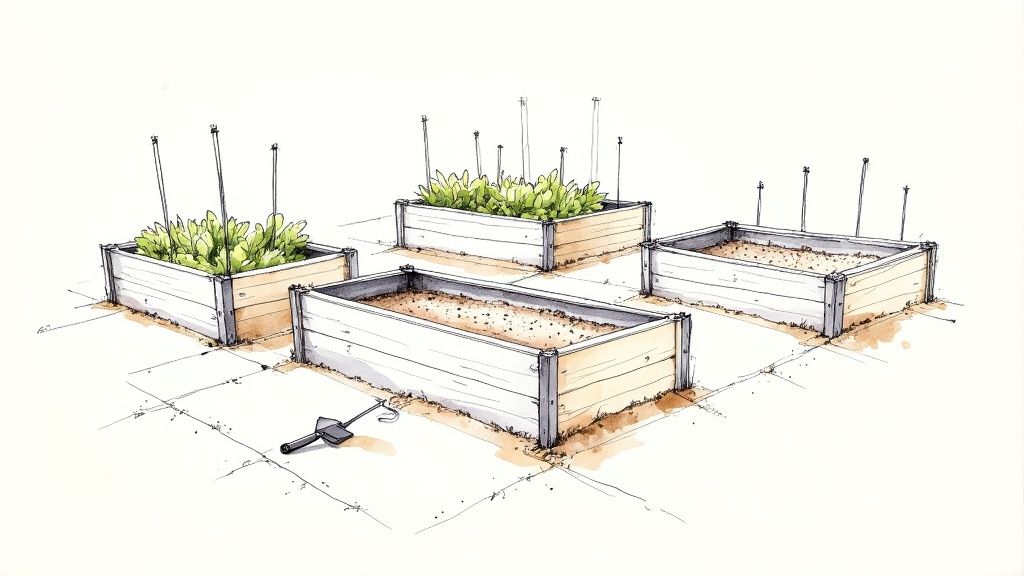
What It Is and How It Works
Elevated frames hold quality soil, reducing compaction and runoff
Wood, composite or metal sides define neat planting zones
Height eases planting and harvesting while minimizing back strain
Examples of Successful Implementation
Cedar beds in home vegetable patches for natural warmth and durability
Corrugated metal frames in modern yards for an industrial-chic look
DIY pallet beds that recycle materials for a budget-friendly solution
When and Why to Use
Ideal where native soil is poor or drainage is limited
Perfect for gardeners seeking ergonomic design and clear layout
Actionable Tips
Use untreated cedar or composite to resist rot
Line with landscape fabric to stop weeds
Position beds in sunlit spots with 6–8 hours of light
Mix compost into soil and add drip irrigation
Visualize with DreamzAR AI Landscape Design
Upload a photo of your own yard to DreamzAR AI Landscape Design to preview raised bed placement and materials before building. Tweak dimensions and styles digitally for confident planning.
Key Insight: Raised garden beds deliver both style and practicality, making them a standout simple landscaping idea for backyard transformations.
Learn more about Raised Garden Beds on dreamzar.app
4. Hardscaping and Pathways
Hardscaping includes non-living landscape elements like patios, walkways, decks, and borders made from pavers, gravel, flagstone, or concrete. Well-designed pathways create structure, improve accessibility, and define different zones while requiring minimal maintenance.
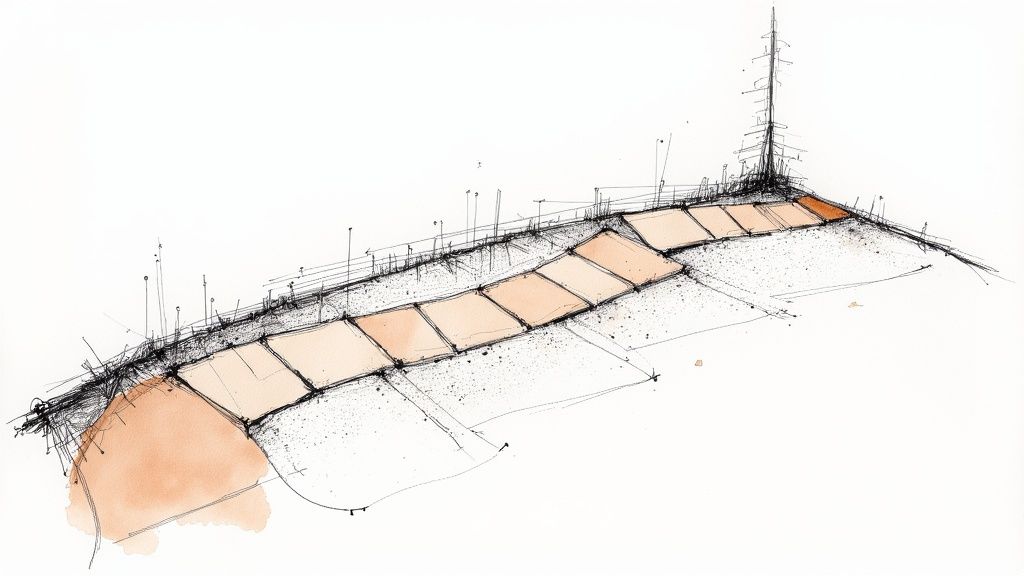
What It Is and How It Works
Pavers and flagstone form stable walking surfaces that resist erosion
Gravel and decomposed granite allow water infiltration and weed suppression
Concrete scoring adds decorative patterns without extra materials
Examples of Successful Implementation
Gravel pathways winding through a cottage garden border
Permeable paver patio in a sustainable backyard
Flagstone stepping stones set among low-growing ground covers
Decorative concrete with scored lines for a modern look
When and Why to Use
Install hardscaping and pathways when you need clear circulation routes between patios, gardens, and seating areas. This approach suits both large and small yards, delivering functional zones that hold up to foot traffic and weather.
Actionable Tips
Choose permeable materials to improve drainage and reduce runoff
Plan pathways at least 3–4 feet wide for two-person comfort
Use contrasting colors or textures to define adjacent spaces
Grade paths away from structures to prevent water pooling
Visualize with DreamzAR AI Landscape Design
Upload a photo of your own yard to DreamzAR AI Landscape Design to preview different paver styles, gravel blends, and pathway layouts in seconds. This ensures confidence in scale, color, and overall flow.
5. Native Plant Gardens
Native plant gardening uses species naturally occurring in your region to reduce water, fertilizer, and maintenance needs while supporting local wildlife and pollinators. These gardens are a prime example of simple landscaping ideas for backyard projects that both beautify your yard and give back to the ecosystem with minimal resources.
What It Is and How It Works
Native species are adapted to local climate and soil conditions
Deep root systems improve soil structure and water infiltration
Local plants provide food and habitat for butterflies, bees, and birds
Examples of Successful Implementation
Midwestern prairie gardens featuring big bluestem and butterfly weed
California xeric beds with California poppies and manzanita shrubs
Southeast woodland gardens under oaks with ferns and trilliums
Desert landscapes showcasing agave, prickly pear, and ocotillo
When and Why to Use
Install native plant gardens when you want a low-maintenance landscape that thrives on natural rainfall. Use this approach to restore habitat, reduce lawn area, and highlight seasonal blooms.
Actionable Tips
Research native species for your USDA hardiness zone
Contact local native plant societies for tailored plant lists
Group plants by water and light requirements for efficiency
Plant in fall or spring for optimal root establishment
Visualize with DreamzAR AI Landscape Design
Upload a photo of your own yard to DreamzAR AI Landscape Design and preview native plant layouts. Test different groupings to ensure balanced bloom times and coverage.
Key Insight: Native plant gardens combine beauty and sustainability, making them an essential simple landscaping idea for backyard transformations.
Learn more about Native Plant Gardens on dreamzar.app
6. Container Gardens and Planters
Container gardening uses pots, urns, and raised vessels to grow plants in defined spaces. This flexible approach works for renters and small yards and adds instant color and structure while allowing seasonal changes and easy plant rearrangements. It ranks high among simple landscaping ideas for backyard projects.
What It Is and How It Works
Portable containers hold soil and plants above ground level
Better drainage through holes prevents root rot
Premium potting mix supplies nutrients and airflow
Different vessel sizes support vegetables, annuals, and shrubs
Examples of Successful Implementation
Vegetable containers on apartment patios maximize space
Thriller-filler-spiller annual pots provide layered interest
Succulent arrangements in decorative bowls for low water use
Dwarf evergreen shrubs in large urns for year-round structure
When and Why to Use
Use container gardens when soil quality is poor or you need quick visual impact. They suit condos and rental backyards because no digging is required. Switch plants seasonally to refresh style and control pests.
Actionable Tips
Choose containers with drainage holes
Use quality potting soil not garden dirt
Group pots in odd numbers for balance
Water daily in hot weather and fertilize weekly
Combine tall, upright plants with trailing species
Visualize with DreamzAR AI Landscape Design
Upload a photo of your own yard to DreamzAR AI Landscape Design to preview container shapes, colors, and placements. Adjust planter size and planting combos before you shop.
Key Insight: Container gardens deliver high style and flexibility without major labor.
Learn more about Container Gardens on dreamzar.app
7. Outdoor Lighting
Outdoor lighting involves strategically placing fixtures around your backyard to enhance safety, security, and ambiance while extending usable hours after sunset. Solar, LED, and low-voltage options offer simple, cost-effective ways to brighten pathways, accent features, and create inviting gathering spots.
What It Is and How It Works
Solar stake lights harvest daylight and turn on automatically at dusk
Low-voltage LED kits connect to a transformer for consistent power and low energy use
Accent spotlights focus beam angles on key elements like trees or sculptures
Examples of Successful Implementation
Solar stake lights lining a curved garden path for safe evening strolls
String lights draped over a pergola to foster a cozy patio atmosphere
Uplighting shining upwards into specimen trees to emphasize foliage
Recessed step lights installed on outdoor stairs to reduce trip hazards
Spotlights highlighting an outdoor entertaining wall or fountain
When and Why to Use
Install outdoor lighting when you want to:
Create a warm, inviting mood for backyard gatherings
Improve nighttime navigation and minimize accidents
Showcase hardscapes, plantings, or architectural details
Deter unwanted visitors by illuminating dark corners
Actionable Tips
Layer task, accent, and ambient lighting for balanced coverage
Space pathway lights 6–8 feet apart to avoid dark gaps
Choose 2700K warm bulbs for entertaining areas, 4000K cool lights for security
Use timers or motion sensors to automate operation and save power
Avoid overlighting by dimming fixtures or installing adjustable heads
Visualize with DreamzAR AI Landscape Design
Upload a photo of your own yard into DreamzAR AI Landscape Design to preview fixture styles, beam angles, and color temperatures. This digital trial ensures confident placement and the perfect glow before you purchase.
Key Insight: Thoughtfully layered outdoor lighting combines function and style, making it a standout simple landscaping idea for backyard projects.
Learn more about Outdoor Lighting on dreamzar.app
8. Vertical Gardens and Trellises
Vertical gardening uses walls, fences, and trellises to grow plants upward, maximizing space efficiency. Wall-mounted planters, living walls, and climbing vines deliver instant greenery, privacy, and visual interest while freeing up ground area.
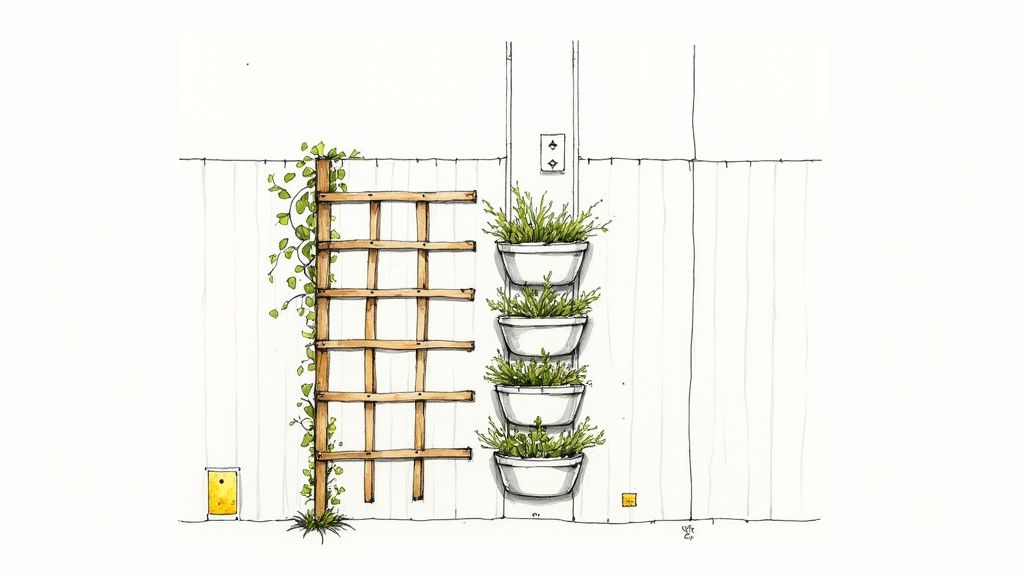
What It Is and How It Works
Vertical supports let vines and pocket planters hold soil and plants above ground level
Climbers use tendrils or twining stems to anchor and ascend sturdy trellis frameworks
Modular living walls integrate panels with built-in irrigation for uniform moisture
Espalier fruit trees are trained flat against walls, yielding produce in minimal footprint
Examples of Successful Implementation
Clematis and climbing roses on wooden trellises
Ivy-covered fence screens enhancing privacy
Green living wall with mixed succulents in grid panels
Pocket planting systems on bare exterior walls
Espalier apple trees along sunlit masonry
When and Why to Use
Install trellises in spring before vines mature. Use this method on small patios or blank walls to boost privacy, color, and texture without encroaching on lawn space.
Actionable Tips
Secure full-height trellises deeply into soil before planting
Select climbing species that match support strength and climate
Prune vines quarterly to maintain shape and prevent overgrowth
Attach drip lines behind living walls for consistent watering
Avoid invasive climbers near foundations to protect structures
Visualize with DreamzAR AI Landscape Design
Upload a photo of your own yard to DreamzAR AI Landscape Design to experiment with trellis placement, vine densities, and living wall palettes. Preview scaling and plant patterns to finalize your plan with confidence.
Key Insight: Vertical gardens turn tight yards into lush, layered landscapes, making them a standout simple landscaping idea for backyard projects.
9. Lawn Alternatives and Xeriscaping
Replacing traditional turf grass with drought-tolerant plants, groundcovers, gravel, and rock elements conserves water and reduces maintenance. Xeriscaping applies principles of hydrozoning, efficient irrigation, and soil improvement to create lush, low-water landscapes ideal for arid or water-conscious backyards.
What It Is and How It Works
Drought-tolerant species (succulents, ornamental grasses, native perennials) need minimal irrigation
Rock gardens and gravel beds suppress weeds and reflect heat, lowering soil evaporation
Hydrozoning groups plants by water needs, optimizing drip irrigation delivery
Examples of Successful Implementation
Southwest native gardens in Phoenix replacing lawn with agave, yucca, and decomposed granite
California front yards using gravel mulch, cacti clusters, and drought-resistant salvias
Midwestern xeriscapes combining prairie grasses with ornamental stone paths
Urban courtyards blending sedum mats and stepping stones for a modern dryscape
When and Why to Use
Ideal for homeowners facing water restrictions or seeking a low-maintenance yard. Choose xeriscaping when you want year-round structure without weekly mowing or heavy watering.
Actionable Tips
Test soil moisture with a sensor before planting
Install drip irrigation tubing beneath gravel for targeted watering
Apply a 2-inch organic mulch layer to retain moisture
Select regionally native plants to ensure resilience
Visualize with DreamzAR AI Landscape Design
Upload a photo of your own yard to DreamzAR AI Landscape Design to preview gravel patterns, plant groupings, and color contrasts. Iterate virtually until you’re confident in scale and flow.
Key Insight: Xeriscaping transforms thirsty lawns into sustainable, eye-catching outdoor spaces that thrive on minimal water.
Learn more about Lawn Alternatives and Xeriscaping on dreamzar.app.
10. Seating Areas and Outdoor Living Spaces
Dedicated outdoor seating and living zones bring form and function to your backyard. Integrating benches, chairs, pergolas, and fire features extends indoor comfort while encouraging social time. This simple landscaping idea for backyard areas transforms underused corners into inviting retreats.
What It Is and How It Works
Defined seating zones with furniture and shade structures
Hardscape elements like patios or stone surrounds anchor the layout
Fire pits or lanterns add warmth and focal interest
Built-in benches or swings maximize space and style
Examples of Successful Implementation
Wooden bench tucked under a mature oak for dappled shade
Pergola-covered patio with weather-resistant wicker set
Fire pit seating circle framed by natural stone
Built-in bench seating around raised garden beds
Rustic swing hung from sturdy tree branches
When and Why to Use
Add seating areas when you want to boost outdoor living and host gatherings. Ideal for families or entertainers, these spaces encourage longer stays in the yard and showcase landscaping details. They also provide focal points that break up large lawns.
Actionable Tips
Position seating to capture scenic views and natural shade
Choose durable, weather-resistant materials like teak or powder-coated metal
Incorporate shade with pergolas, umbrellas, or arbors
Group chairs and benches in intimate circles, not long lines
Add soft outdoor lighting for evening use and safety
Visualize with DreamzAR AI Landscape Design
Upload a photo of your own yard to DreamzAR AI Landscape Design to experiment with different seating layouts, shade structures, and fire features before making purchases.
Key Insight: Well-planned seating areas merge comfort and curb appeal, making them a top simple landscaping idea for backyard transformations.
Learn more about Seating Areas and Outdoor Living Spaces on dreamzar.app: Learn more about Seating Areas and Outdoor Living Spaces on dreamzar.app
10-Point Comparison: Simple Backyard Landscaping Ideas
Item | Implementation Complexity 🔄 | Resource Requirements ⚡ | Expected Outcomes 📊 | Ideal Use Cases 💡 | Key Advantages ⭐ |
|---|---|---|---|---|---|
Mulch Beds and Ground Cover | Low — simple installation or planting | Low — inexpensive materials; occasional refresh | Retains moisture, suppresses weeds, improves soil (⭐⭐⭐⭐) | Around foundations, under trees, small lawn replacements | Cost-effective; reduces watering and erosion |
Rain Gardens and Water Features | Medium–High — site grading and design required | Medium — excavation, plants; pumps for features | Manages runoff, filters pollutants, attracts wildlife (⭐⭐⭐⭐) | Downspouts, low areas, stormwater management projects | Reduces flooding and improves water quality |
Raised Garden Beds | Medium — build and fill; ergonomic setup | Medium — lumber/metal, quality soil, irrigation | Better drainage, higher productivity, easier access (⭐⭐⭐⭐) | Vegetable plots, poor native soil, small yards | Soil control; accessible gardening |
Hardscaping and Pathways | Medium–High — design and skilled installation | High — durable materials, possible equipment/labor | Durable, low-maintenance circulation and zoning (⭐⭐⭐⭐) | Patios, high-traffic routes, formal garden zones | Creates usable outdoor rooms; adds property value |
Native Plant Gardens | Medium — plant selection and planning | Low–Medium — initial sourcing; low ongoing inputs | Drought-tolerant, supports pollinators, low upkeep (⭐⭐⭐⭐) | Water-wise yards, habitat restoration, low-maintenance beds | Resilient plants; supports biodiversity |
Container Gardens and Planters | Low — minimal installation, very flexible | Medium — pots, potting mix; frequent watering | Instant color and mobility; good for small spaces (⭐⭐⭐) | Balconies, patios, renters, seasonal displays | Portable; works where in-ground planting is poor |
Outdoor Lighting | Low–Medium — layout and electrical or solar setup | Low–Medium — fixtures, power/solar, maintenance | Extends hours, improves safety and ambiance (⭐⭐⭐) | Pathways, seating areas, highlighting features | Enhances security and evening usability |
Vertical Gardens and Trellises | Medium — secure supports and mounting | Medium — structures, plants, irrigation | Saves space, adds privacy and vertical interest (⭐⭐⭐) | Small yards, fences, privacy screens, urban walls | Maximizes footprint; strong visual impact |
Lawn Alternatives & Xeriscaping | Medium — planning and plant selection | Medium–High upfront; low ongoing water/maintenance | Major water savings and low upkeep long-term (⭐⭐⭐⭐) | Arid climates, water-restricted areas, sustainable landscapes | Reduces water use; low long-term costs |
Seating Areas & Outdoor Living Spaces | Medium — design, furnishing, possible structures | Medium–High — furniture, shade structures, upkeep | Increased usable space, social and relaxation benefits (⭐⭐⭐⭐) | Entertaining, family areas, view-focused spots | Encourages outdoor living; raises property value |
Take Action and Transform Your Yard
You’ve explored 10 standout simple landscaping ideas for backyard renewal, each with clear steps and real-world examples. Now it’s time to take action with your own space and experiment with AI Landscape Design to visualize the possibilities.
Recap of Key Ideas
Mulch beds and ground cover: define areas, suppress weeds, and add seasonal color
Rain gardens and water features: manage runoff and create a soothing focal point
Raised garden beds and container gardens: boost yields and style for small or large yards
Hardscaping and pathways: guide guests and improve flow with paver or gravel paths
Outdoor lighting and seating areas: extend usability and highlight architectural features
“Visualizing your design before you dig can save time, money, and ensure a cohesive final look.”
Actionable Next Steps
Snap a photo of your backyard with your phone or camera
Use DreamzAR AI Landscape Design to generate multiple layout options on your own yard image
Select your favorite concept and review material lists and cost estimates
Source plants, mulch, pavers, or lighting fixtures from local suppliers or online retailers
Schedule time for installation – start small, then scale up as confidence grows
Why Visualization Matters
Applying DreamzAR’s AI Landscape Design helps you avoid guesswork. By overlaying ideas onto your real yard photo, you can tweak plant placement, test lighting angles, and refine seating areas before purchase.
Connect to Broader Benefits
Integrating these simple landscaping ideas for backyard spaces not only boosts curb appeal and property value but also promotes outdoor living, neighborhood pride, and personal well-being. A thoughtfully designed yard can become your favorite retreat or an inviting gathering spot.
Take the confidence you’ve gained from these tips and transform your lawn, patio, or garden plot into a functional masterpiece. Whether you’re a seasoned landscaper or first-time gardener, combining practical insights with AI visualization ensures a smooth, enjoyable makeover journey.
Start your backyard transformation today and watch how simple ideas turn into stunning reality.
Ready to bring your backyard vision to life? Try DreamzAR AI Landscape Design to preview every idea on your own lawn before you build. Get started at DreamzAR AI Landscape Design and make your dream yard a reality.