Landscaping Ideas for the Front of the House to Boost Curb Appeal
- Akhilesh Joshi
- 5 hours ago
- 13 min read
Excellent landscaping ideas for the front of the house are all about creating a cohesive look. It's a delicate dance between the softscapes (your plants, flowers, and trees) and the hardscapes (the solid stuff like walkways, driveways, and garden walls). The real goal is to choose elements that complement your home's architecture, boosting its curb appeal and making that first impression count.
Creating a Lasting First Impression with Front Yard Landscaping
Your front yard is so much more than a patch of grass. It’s the first thing that welcomes you home every day and the first impression you make on the world. A well-thought-out landscape doesn't just beautify your property; it creates a functional, inviting space that can seriously elevate your home's value. But where do you even begin?
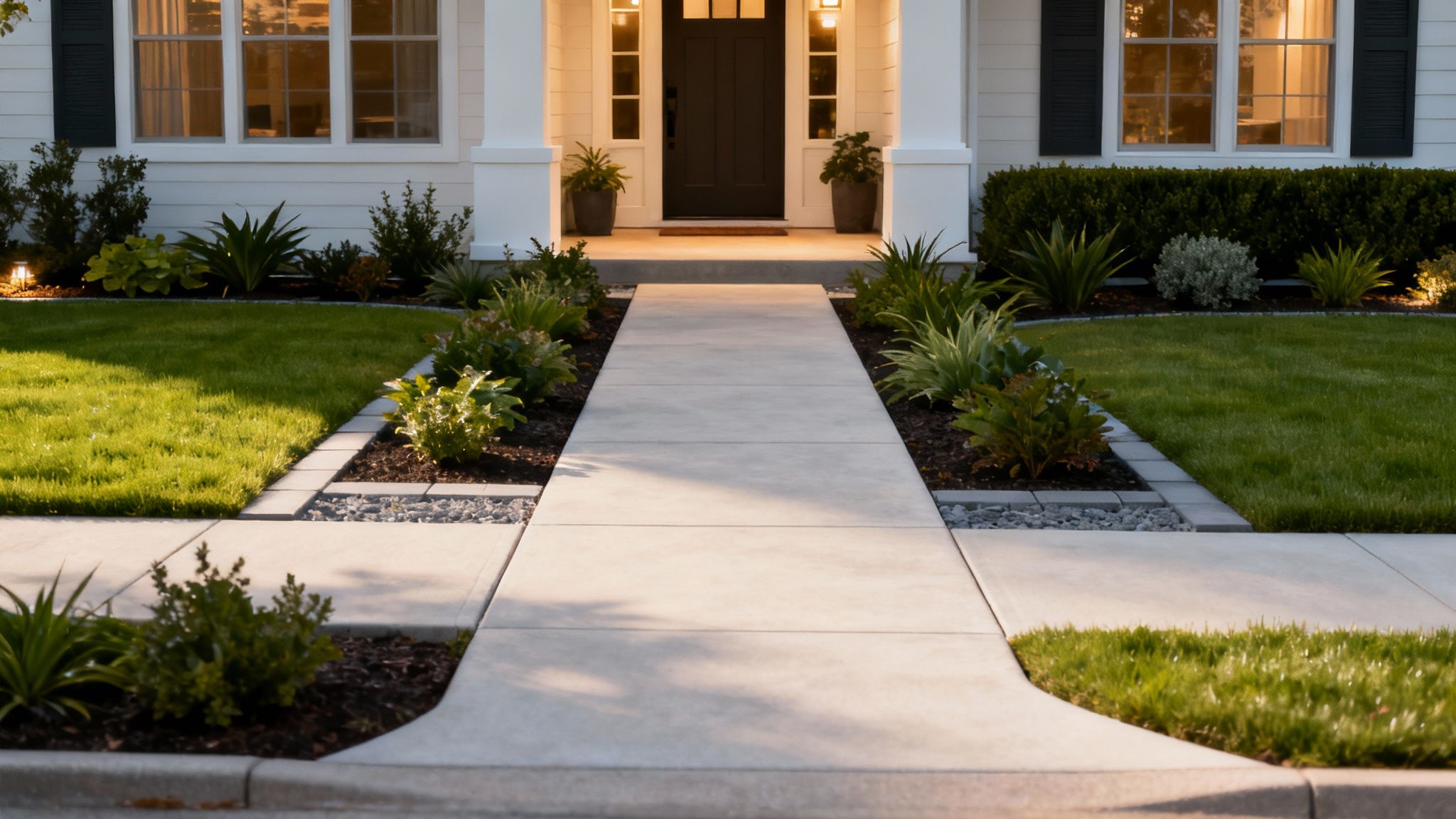
This guide isn't about generic advice. We're digging into the core principles of what makes a landscape design truly great, from balancing structural elements with vibrant plant life to creating a look that feels completely intentional. A big part of that is using modern tools to your advantage.
Imagine snapping a photo of your yard and instantly seeing different layouts come to life. An AI Landscape Design app like DreamzAR completely removes the guesswork. It lets you visualize your ideas using photos of your own yard, allowing you to experiment with confidence before you ever pick up a shovel and ensuring the final result is exactly what you had in your head.
Why Front Yard Landscaping Matters
A thoughtful front yard design offers benefits that go way beyond just looking pretty. Think of it as a strategic investment in your property that pays off in both daily enjoyment and long-term value.
Boosts Curb Appeal: An attractive landscape makes your home the standout on the block, creating a fantastic impression on guests and potential buyers alike. Even small changes can have a huge impact. We actually have a detailed guide on how to give your small front yard a complete makeover right here: https://www.dreamzar.app/post/boost-your-home-s-curb-appeal-and-value-how-to-give-your-small-front-yard-a-complete-makeover.
Increases Home Value: It’s a fact. Professional landscaping can increase a home’s perceived value by as much as 12%. It’s a clear signal to everyone that a property is well-maintained, inside and out.
Creates a Welcoming Environment: The journey from the street to your front door should feel inviting. Well-placed plants and clear, defined pathways don't just guide visitors; they create a genuinely pleasant atmosphere.
A great front yard landscape is a conversation between your home's architecture and the natural world. It should look like it belongs there, enhancing the structure it surrounds rather than competing with it.
You can see this trend reflected in the market itself. The U.S. landscaping industry is on track to hit an estimated $188.8 billion in 2025. That growth is being powered by homeowners just like you who are investing more and more into their outdoor spaces.
Before we dive into the details, let's break down the essential components that work together to create an unforgettable front yard. This table outlines the key elements and why they matter.
Key Elements for Stunning Curb Appeal
Element | What to Consider | Impact on Your Home |
|---|---|---|
Pathways | Material (pavers, gravel, concrete), width, and shape (curved vs. straight). | Guides visitors to your front door and defines the flow of the space. |
Foundation Plantings | Size, texture, and color of plants placed against the house. | Softens the hard lines of the foundation and connects the house to the landscape. |
Lawn or Groundcover | Type of grass, alternative groundcovers, and overall health. | Provides a lush, green canvas that unifies the entire design. |
Accent Pieces | Boulders, sculptures, water features, or unique specimen trees. | Creates a focal point and adds a touch of personality and visual interest. |
Lighting | Path lights, uplighting on trees, and lights on the house itself. | Enhances safety, highlights key features, and adds dramatic curb appeal after dark. |
Each of these pieces plays a vital role. When they work in harmony, the result is a front yard that's not just beautiful, but truly special.
The Holistic Approach to Curb Appeal
Always remember that your landscaping is just one part of a much larger picture. For the best result, it needs to work in harmony with your home's fixed elements. For instance, permanent fixtures like your garage door can have a huge impact on your home's exterior appeal. Thinking about things like choosing the right garage door is a great way to complement your landscaping efforts and tie the whole look together.
Assessing Your Canvas and Defining Your Style
Every great landscaping project starts long before you ever pick up a shovel. It begins with observation. Before you get swept away by plant catalogs and paver samples, you have to get to know the unique canvas you’re working with—your front yard. A thoughtful site assessment is the bedrock of any successful design, ensuring your efforts create a space that doesn't just look good, but actually thrives.
First, become a sun-mapper. Seriously, spend a day (or even a weekend) just watching how the light moves across your property. That strip along the south-facing wall might get absolutely baked in the afternoon sun, making it a perfect spot for succulents and other drought-tolerant plants. Meanwhile, that corner under the big maple tree might be in deep shade all day, an ideal home for hostas and ferns. These are your yard’s microclimates, and working with them is the secret to happy, healthy plants.
Understanding Your Site Conditions
Next up: get your hands dirty and get to know your soil. Is it sandy and drains in a flash, or is it heavy clay that turns into a puddle after it rains? A simple DIY soil test can give you a ton of information about its texture and pH level, which dictates which plants will feel right at home. Don't forget to account for what's already there—slopes, drainage areas, and permanent fixtures like your driveway or that gorgeous old oak tree all need to be part of the plan.
Sunlight Mapping: Take note of full sun (6+ hours), partial sun (4-6 hours), and full shade zones.
Soil Type: Figure out if you're working with clay, sand, or loam. This will guide your plant selection.
Existing Features: Map out slopes, utility lines, and any elements you absolutely want to keep (or get rid of).
This initial homework saves you from making costly and heartbreaking mistakes, like planting a sun-loving rose bush in a shady spot where it will refuse to bloom. It’s all about working with your environment, not fighting against it.
Finding Your Landscaping Style
Once you have a solid feel for your site, it’s time for the fun part: defining your aesthetic. The best place to look for clues is your own home's architecture. A classic Colonial, for instance, just begs for the structured symmetry of boxwoods and formal garden beds. A sprawling modern ranch, on the other hand, might look incredible with a more minimalist design featuring ornamental grasses and clean, simple hardscaping.
The goal is to create a landscape that feels like a natural extension of your home. When your yard and house are in harmony, you create that powerful, head-turning curb appeal.
Feeling stuck on which direction to take? This is the perfect moment to see what AI Landscape Design can do. Instead of just trying to imagine it, you can take a photo of your own yard and instantly visualize exactly how different styles will look against your actual home.
This image shows how a tool like DreamzAR can instantly generate a complete, professional-looking design right onto a photo of your yard. Just upload a picture, and you can virtually "try on" all sorts of ideas, from a wild English cottage garden to a sleek, modern oasis. It’s a powerful way to find a style that truly clicks with you and your home. For a deeper dive, check out our guide on tips for traditional, modern, rustic, and more landscaping styles.
Building the Bones with Hardscaping and Pathways
While we all love the color and life plants bring, it’s the hardscaping—the pathways, walls, and driveways—that really gives a landscape its structure. These are the permanent "bones" of your front yard. They create a natural flow, define different spaces, and guide visitors intuitively from the curb straight to your front door. Think of these elements as the essential foundation for everything else you plan to do.
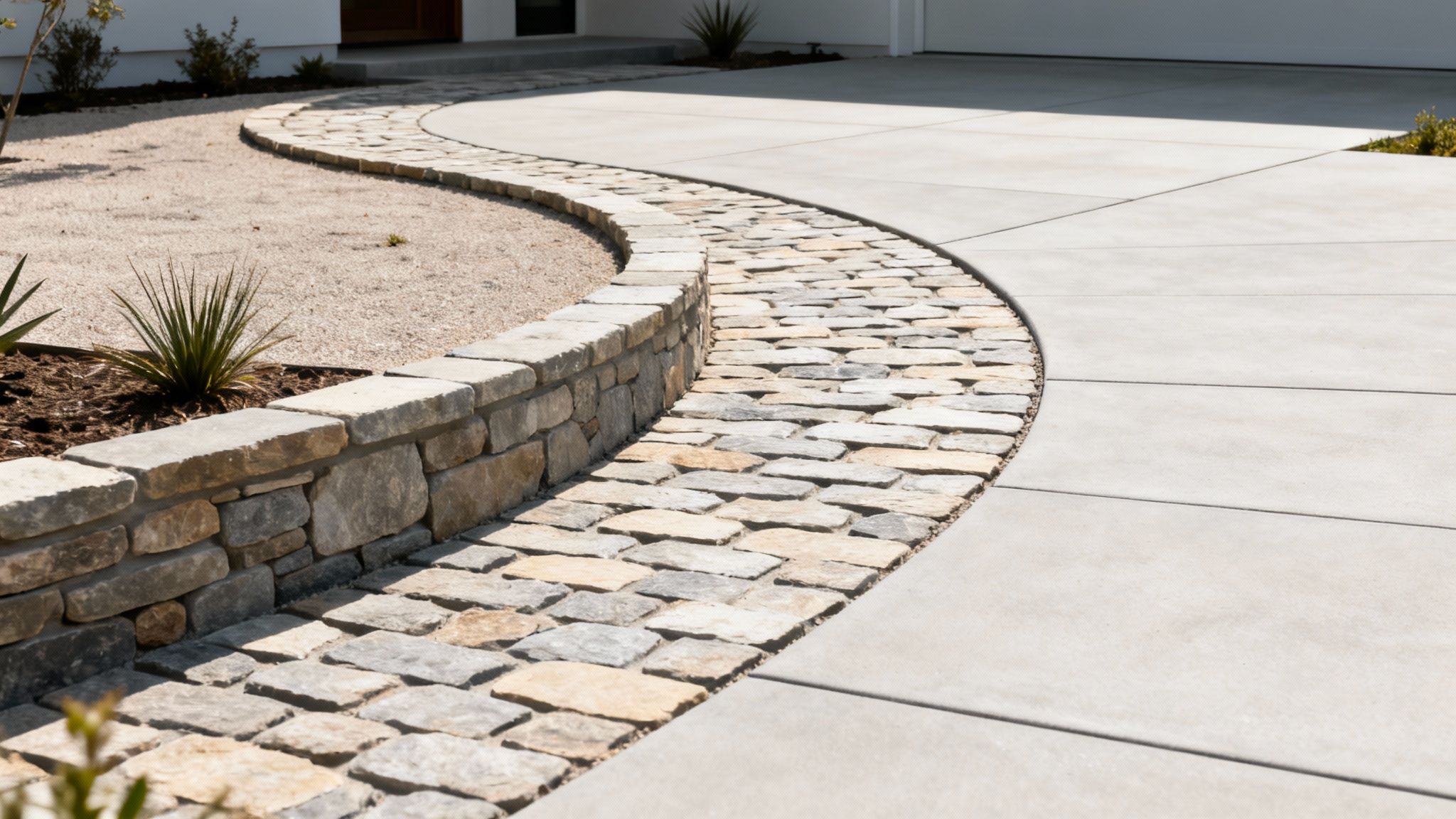
Choosing the right materials always comes down to a balance of your personal style, the durability you need, and your budget. Classic flagstone can give you a natural, rustic charm, while sleek concrete pavers lend a more modern, uniform look. When you're planning these foundational pieces, consider how essential components like beautiful patios and walkways can shape your outdoor areas. The real key is picking materials that echo your home’s architecture, creating a cohesive visual story that ties everything together.
Visualizing Your Hardscape with AI
It's one thing to look at stone samples, but it's another to commit to a permanent structure like a new walkway or retaining wall. That can feel a little daunting, right? This is exactly where AI Landscape Design becomes a complete game-changer. There’s no need to guess how different materials or layouts will actually look on your property.
With an app like DreamzAR, you just upload a photo of your front yard and can start experimenting with ideas almost instantly.
Test Pathway Designs: See how a gentle, curving path feels compared to a straight, formal walkway leading to your door.
Compare Materials: Instantly swap between brick, flagstone, and concrete pavers to find the perfect match for your home's siding and trim.
Visualize Structures: Thinking about a sloped yard? Add a virtual low retaining wall to see how it looks, or experiment with different driveway layouts without any commitment.
This process lets you see the real-world impact of your choices on your own home before a single stone is laid, making sure the final result is exactly what you were hoping for.
Hardscaping is a significant investment in both time and money. Using AI to visualize your plan first is the single best way to prevent costly mistakes and ensure your design perfectly complements your home and greenery.
The investment homeowners make in professional landscaping is substantial. The U.S. landscaping industry is valued at a staggering $184.1 billion, with the average homeowner spending around $300 monthly on upkeep. This just highlights how important it is to get those foundational elements right from the very start.
Getting your hardscape layout just right truly sets the stage for everything else. For instance, a well-designed driveway doesn't just add function; it can dramatically boost your home's curb appeal. You can find some fantastic inspiration in our guide on paved driveway design ideas. By locking in these core structures first, you create a solid, beautiful framework that's ready for the final layer of personality: your plants.
Bringing Your Landscape to Life with Smart Plant Choices
This is the fun part. Choosing the right plants is where you really get to inject your personality into your front yard. It’s about much more than just picking pretty flowers; it's a thoughtful process of layering texture, structure, and year-round beauty. The goal here is to select plants that will absolutely thrive in the specific conditions you’ve already mapped out, transforming a patch of grass into a living, breathing garden.
Good landscape design thinks in layers. You've got your foundation shrubs that provide structure and really anchor the house to the land. Then come the perennial flowers, which are your showstoppers, offering fantastic bursts of color as the seasons change. It's all about creating what we call "four-season interest." This means mixing in evergreens for that splash of winter green, ornamental grasses that bring texture and movement, and even trees with interesting bark or branching that look great after the leaves have dropped.
Selecting Plants for Function and Beauty
Different parts of your yard have different jobs to do and different conditions to offer. That sun-blasted strip along the driveway? It’s the perfect home for drought-tolerant workhorses like sedum or lavender, which won't need constant watering once they're settled in. On the flip side, that shady corner by the porch could become a cool, lush oasis with hostas, ferns, and bleeding hearts.
A brilliant strategy I always recommend is to prioritize native plants. They're already perfectly adapted to your local climate, which means less work for you. Plus, they provide critical food and habitat for local pollinators like bees and butterflies.
We're seeing a real shift in how people approach this. Recent data on U.S. landscaping trends shows a 22% year-over-year increase in requests for privacy screens and hedges. At the same time, traditional turf lawns have seen a 13% decline in popularity as more homeowners opt for sustainable, lower-maintenance alternatives. You can dive deeper into these 2025 design trends over on Yardzen. It’s clear that functional, eco-friendly green spaces are the new standard for curb appeal.
Visualize Before You Plant with AI
One of the biggest hurdles for any homeowner is trying to imagine how those tiny plants from the nursery will actually look once they're fully grown. It’s so easy to get it wrong. Guesswork often leads to overcrowding or a design that just feels off-balance—costly mistakes you want to avoid.
An AI Landscape Design app is like having a virtual nursery right on your phone. It lets you "plant" different combinations directly onto a photo of your yard, so you can see what your garden will look like in the future, today.
This technology has completely changed the game for homeowners. Instead of just crossing your fingers and hoping for the best, you can use a photo of your own yard to experiment with confidence. See exactly how a row of boxwoods will frame your walkway, or how that Japanese maple will create a stunning focal point next to your porch. You can explore the extensive collections of plants, shrubs, and trees in the DreamzAR app to find the perfect species for every spot.
This kind of visualization closes the gap between the landscaping ideas in your head and the stunning reality you’re aiming for. It ensures every single plant you choose has a purpose and contributes to a cohesive, beautiful final look.
From Plan to Reality: Implementation and Upkeep
A brilliant design is a fantastic start, but it’s the thoughtful execution and a simple maintenance plan that truly bring your vision to life. This is where your plans leave the screen and become a tangible reality in your yard. The key? Approach the project in manageable phases. This keeps things from feeling overwhelming and ensures your new front yard becomes a source of pride, not a constant chore.
Your first move is to prep the garden beds. This means getting in there and clearing out all the existing weeds and grass. Once it's clear, you'll want to enrich the soil by working in several inches of quality compost. Don't skip this part—healthy soil is the foundation for healthy plants and the secret to long-term success.
This process sets the stage for layering your plants effectively, from foundational shrubs to colorful perennials and textural accent grasses. This is how you create a complete and visually appealing landscape.
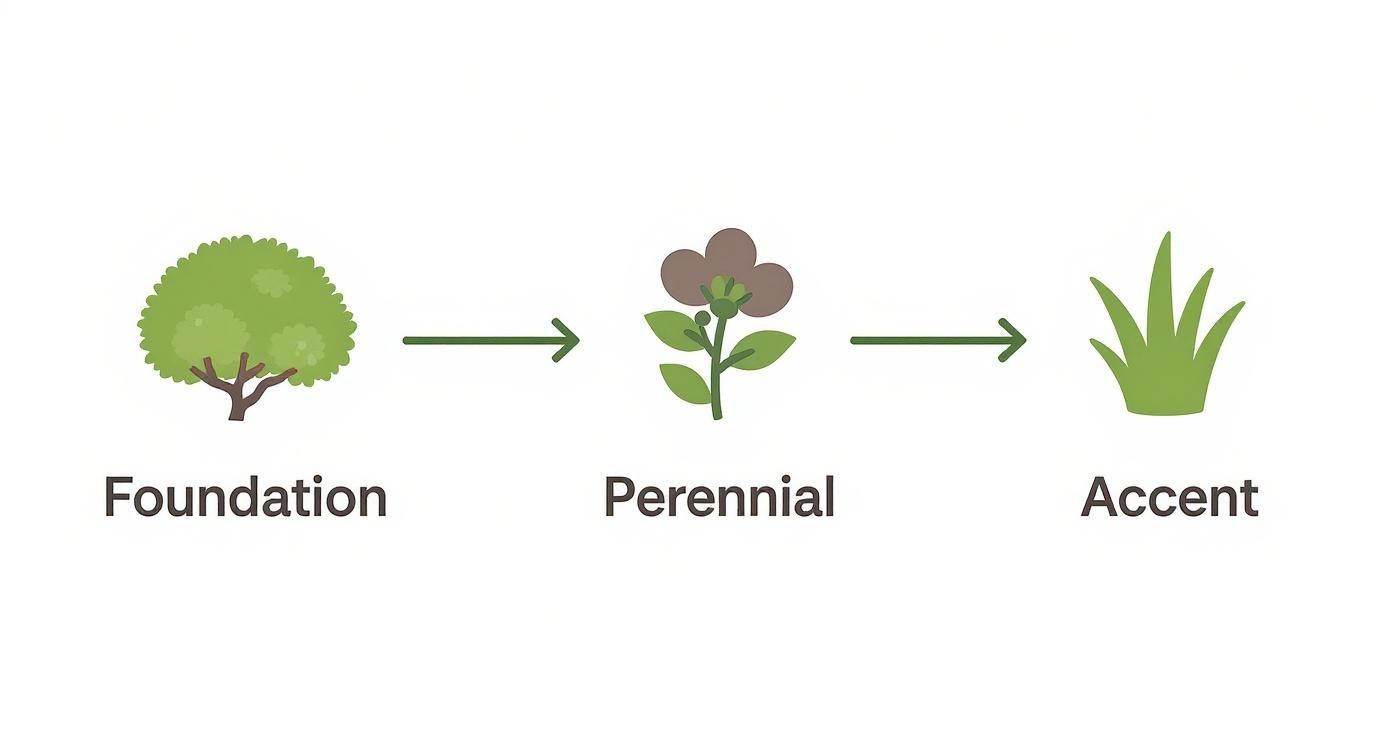
This visual is a great reminder that effective plant selection relies on a tiered approach, which is essential for building depth and year-round interest.
Your AI Design as the Blueprint
Think of your finalized AI Landscape Design as your project blueprint. Because it was generated using a photo of your own yard, it’s a clear visual guide you can hand over to contractors for accurate quotes or use as your own detailed roadmap if you're going the DIY route. It ensures every shrub and flower is placed exactly where you envisioned it, preventing costly mistakes and frustrating guesswork. Of course, for any of this to work, you need to know your space inside and out. If you haven't already, check out our guide on how to measure a yard for accurate planning.
After your plants are in the ground, apply a generous 2-3 inch layer of mulch around their base. It's a simple step with some pretty huge benefits:
It conserves soil moisture, which means less time spent watering.
It suppresses weed growth, saving you hours of tedious work later.
It regulates soil temperature, protecting fragile roots from extreme heat and cold.
Creating a Sustainable Upkeep Routine
With everything beautifully in place, the final piece of the puzzle is creating a simple, sustainable upkeep routine. Remember, the goal here is enjoyment, not endless labor.
A manageable maintenance plan is the secret to a landscape that looks great year after year. Focus on consistent, simple tasks rather than letting things get overgrown and overwhelming.
Your routine really just boils down to a few key tasks. For the first year, consistent watering is non-negotiable; it helps new plants establish strong, deep root systems. After that, your watering schedule will depend on your local climate and plant choices. A little seasonal pruning will help maintain the shape of your shrubs and encourage new growth. Finally, a single application of a balanced fertilizer each spring will give your plants the nutrients they need to thrive. This proactive approach keeps your front yard looking its best with minimal effort.
Your Top Landscaping Questions, Answered
Starting a front yard project always kicks up a bunch of questions. It's totally normal to wonder about everything from making a tiny space feel grand to keeping the weekend workload down. Getting clear answers before you even pick up a shovel is the smart way to go.
Think of this section as a conversation with a seasoned pro. We'll tackle the most common hurdles homeowners face, giving you practical advice to make sure your front yard ideas turn into a reality you'll love coming home to.
How Can I Make My Small Front Yard Look Bigger?
When you're working with a small front yard, the trick is to fool the eye. You want to create depth and draw attention upward, making the space feel more expansive than it actually is.
Instead of planting wide, beefy shrubs that eat up precious real estate, think vertically. Slender, upright plants like Sky Pencil Holly or elegant columnar trees are your best friends. They add height without the bulk, instantly making the area feel larger.
Another pro tip? Ditch the straight, rigid pathways. A gently curving walkway to your front door creates a sense of journey and discovery, making the trip feel longer and the yard seem bigger. Stick to a simple, unified color palette for both your plants and hardscaping to create a clean, uncluttered look that feels open and airy.
What Are the Best Low-Maintenance Landscaping Ideas?
Let's be honest, most of us want a beautiful yard that doesn't chain us to it every weekend. The secret to a low-maintenance landscape is making smart choices right from the beginning.
Going with native and drought-tolerant plants is a total game-changer. These plants are already adapted to your local climate, meaning they'll thrive with way less water and fuss once they're established.
Here are a few other low-effort strategies I always recommend:
Shrink the Lawn: That thirsty patch of grass is your biggest time-suck. Replace parts of it with beautiful groundcovers, stylish gravel beds, or deep layers of mulch.
Go Evergreen: Evergreen shrubs are the backbone of a low-maintenance garden, providing color and structure all year with very little need for pruning.
Fall in Love with Perennials: Workhorses like Coneflower, Sedum, and ornamental grasses are the gift that keeps on giving. They pop back up every year on their own.
Installing a simple drip irrigation system on a timer is another great move. It automates your watering and will probably be the best money you spend on the entire project.
How Can AI Landscape Design Save Me Money?
Seeing your ideas before you commit is everything, and this is where a little bit of tech can save you from some seriously expensive mistakes. Using an AI Landscape Design tool is one of the smartest financial moves you can make in the planning stage.
It's simple, really. When you can test-drive your ideas by applying them to a photo of your actual yard, you cut out all the costly trial-and-error. No more buying a truckload of plants only to realize they're too big for the space. No more installing a paver patio that clashes horribly with your siding.
This digital blueprint is worth its weight in gold. When you show up with a clear, detailed visual plan, contractors can give you much more accurate—and competitive—quotes because you've removed all the guesswork. You can tweak and perfect your design until it fits your budget, all before a single dollar is spent on materials or labor.
Ready to stop guessing and start visualizing? With DreamzAR, you can instantly generate unlimited professional designs for your exact yard in seconds. Turn a single photo into your dream landscape and see the magic for yourself.
Download the #1 AI Landscape Design App today at https://www.dreamzar.app and bring your vision to life.