8 Brilliant Landscaping Ideas for Small Spaces to Maximize Your Yard in 2025
- Akhilesh Joshi
- 3 days ago
- 17 min read

Having a small yard, patio, or balcony doesn't mean you have to settle for a small impact. With the right strategies, you can transform even the most compact outdoor area into a lush, functional, and stunning oasis. This guide moves beyond generic advice to provide a comprehensive roundup of actionable landscaping ideas for small spaces, designed to maximize every square inch of your property. Forget the limitations; it's time to focus on the potential.
This article is your blueprint for creating a high-impact garden in a minimal footprint. We'll explore a diverse range of concepts, from maximizing vertical real estate with living walls and tiered container gardens to designing serene, minimalist retreats like a Japanese-inspired Tsuboniwa. You will discover practical solutions for every challenge, including compact water features that add tranquility without demanding space, multipurpose hardscaping that blends seating with planters, and clever plant palettes for shady or sun-drenched corners. Each idea is broken down with specific implementation tips, plant suggestions tailored to various climate zones, and clear DIY steps to get you started.
Crucially, this guide will show you how to eliminate uncertainty and visualize these transformations before you begin. By using innovative AI landscape design tools, you can upload a photo of your actual yard and instantly see how different designs will look. This powerful approach allows you to experiment with layouts, compare plant combinations, and confidently select the perfect plan. Let's dive into these concepts and unlock the hidden potential of your small outdoor space.
1. Vertical Gardens and Living Walls
When ground space is at a premium, the most effective landscaping strategy is to look up. Vertical gardens, also known as living walls, are one of the most impactful landscaping ideas for small spaces, transforming bare walls, fences, and balconies into vibrant, green canvases. This technique involves growing plants upward on specially designed structures or panels, creating a dense tapestry of foliage that adds texture, color, and life without consuming valuable floor area.
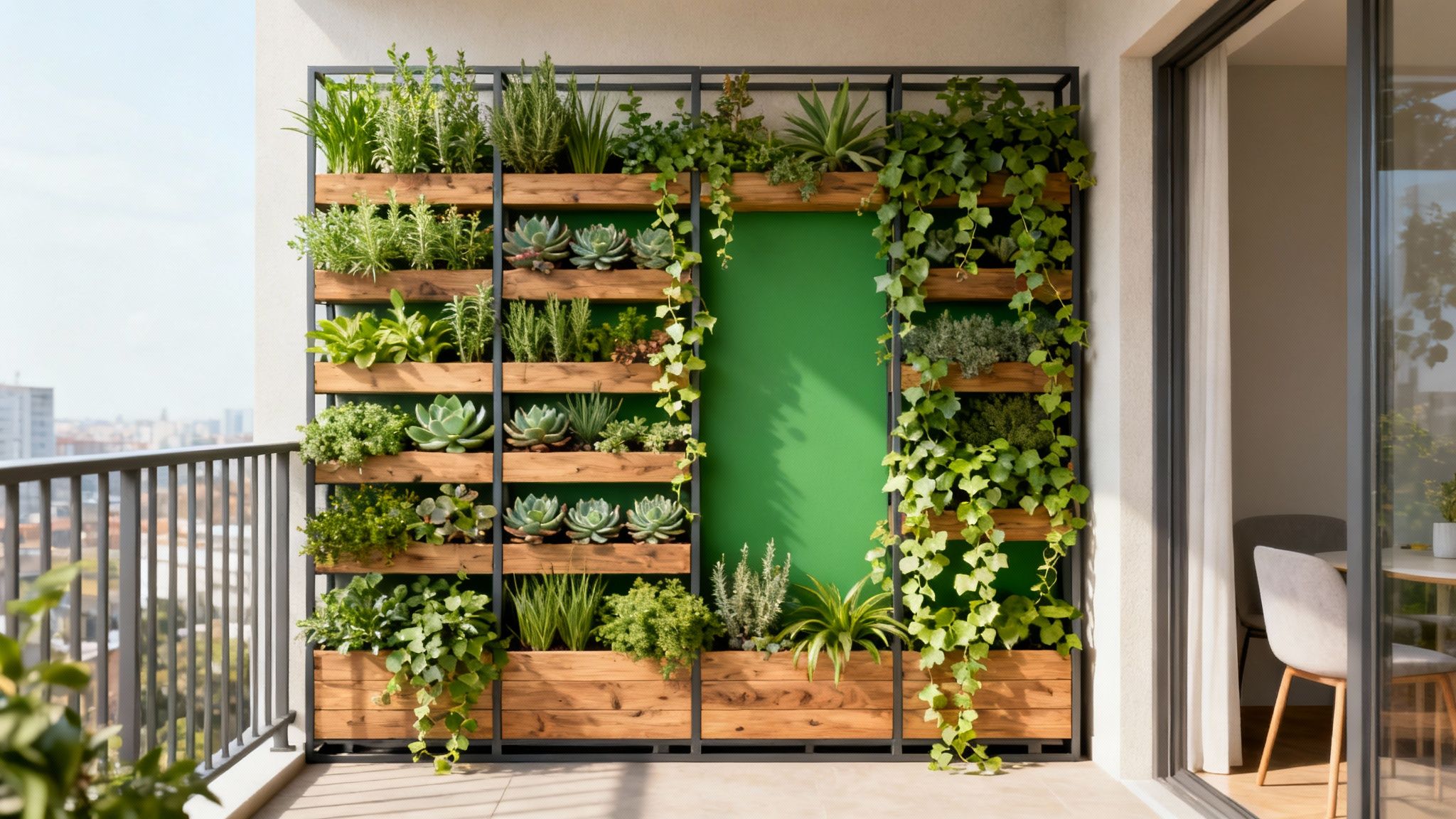
Pioneered by French botanist Patrick Blanc, this concept has been adopted globally, from the lush facades on Parisian apartment buildings to the iconic supertrees at Singapore's Gardens by the Bay. A living wall not only provides aesthetic beauty but also improves air quality, reduces ambient noise, and can even help insulate a building, making it a multi-functional solution for urban environments.
Implementation Tips
To create a successful vertical garden, thoughtful planning is key. The structure must be secure, plants must be chosen carefully, and a reliable watering system is essential for long-term health.
Structure & Soil: Opt for modular pocket planters, wall-mounted trellises, or felt pocket systems. Use a lightweight, well-draining potting mix specifically designed for vertical gardens to reduce the overall weight on your supporting wall.
Plant Selection: Choose plants based on your specific light conditions. For sunny walls, consider succulents like sedum and echeveria, or herbs like rosemary and thyme. In shadier spots, ferns, heuchera, and English ivy thrive.
Watering System: A drip irrigation system with a timer is the most efficient way to keep a living wall hydrated. This ensures each plant receives consistent moisture without over-saturating the soil or wasting water.
Drainage: Proper drainage is non-negotiable. Ensure your system allows excess water to escape without pooling at the base or damaging the wall behind it. Many commercial systems have built-in drainage solutions.
Pro Tip: Before committing to a full-scale installation, you can apply AI Landscape Design to visualize your ideas. Upload a photo of your own yard's balcony or patio wall, and an AI tool can generate realistic visualizations of different vertical garden layouts and plant combinations. This helps you perfect the design and select the right plants for your space's aesthetic and sun exposure.
For a closer look at how these systems work, this video provides an excellent overview:
2. Container Gardening
Container gardening is perhaps the most versatile and accessible of all landscaping ideas for small spaces. This technique involves growing plants, from flowers and vegetables to shrubs and small trees, in various pots and planters rather than directly in the ground. This method offers unparalleled flexibility, allowing you to create a lush, dynamic garden on a balcony, patio, rooftop, or even a small front stoop by simply arranging and rearranging pots to suit your needs and the changing seasons.
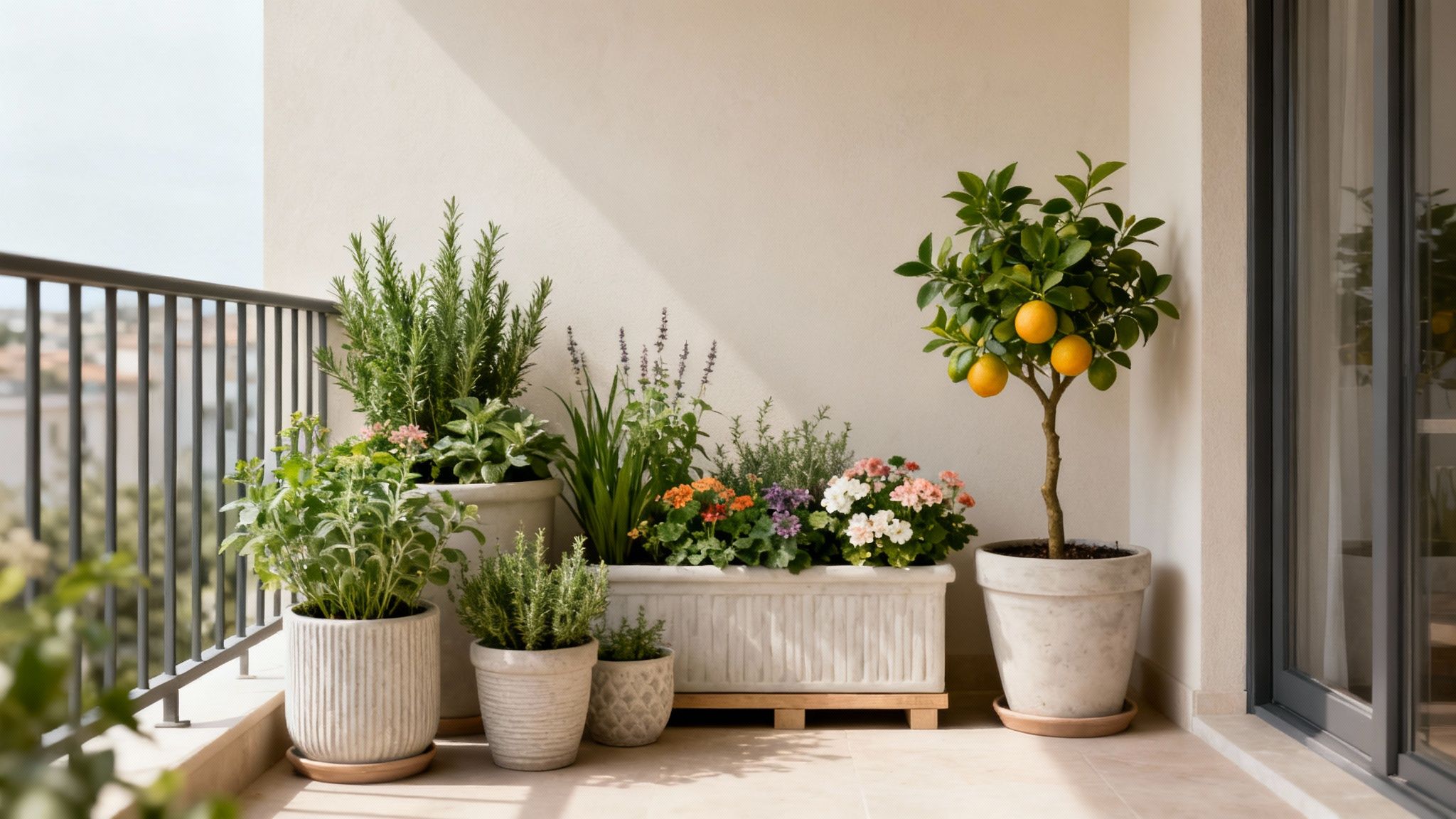
From the famous rooftop farms of Brooklyn Grange in New York to the meticulously curated displays at the Chelsea Flower Show, container gardening proves that you don't need a sprawling yard to cultivate a stunning landscape. It gives you complete control over soil conditions, making it possible to grow acid-loving plants next to alkaline-preferring ones, a feat nearly impossible in a traditional garden bed. This adaptability makes it a cornerstone of modern urban horticulture.
Implementation Tips
Success in container gardening hinges on creating the perfect micro-environment for each plant. Attention to detail regarding soil, water, and container choice will ensure your portable paradise thrives.
Soil & Drainage: Never use heavy garden soil, which compacts easily and suffocates roots. Instead, choose a high-quality, lightweight potting mix that retains moisture while allowing for excellent drainage. Ensure every container has at least one drainage hole at the bottom.
Container Selection: The container's size is critical; it must be large enough to accommodate the plant's mature root system. For plants you plan to move frequently, consider lighter materials like resin or fabric grow bags.
Watering Strategy: Containers dry out much faster than garden beds. Check soil moisture daily, especially during hot weather. For consistency, consider using self-watering planters or installing a simple drip irrigation system with a timer.
Strategic Grouping: Grouping several containers together creates a "thriller, filler, spiller" design effect and also helps create a humid microclimate, which reduces the overall watering needs for the collective plants.
Pro Tip: Visualize your layout before you start buying pots and plants. You can apply AI Landscape Design using photos of your own yard. Simply upload a picture of your patio or balcony to experiment with different container sizes, colors, and plant arrangements to see what composition works best. This is a great way to explore various container garden ideas and ensure your final design is both beautiful and functional.
This approach allows for a completely personalized garden that can evolve with your tastes and the seasons.
3. Japanese Zen Gardens (Tsuboniwa)
To achieve tranquility and elegance in a limited area, consider the ancient art of the Japanese Zen garden. Specifically, the tsuboniwa, or courtyard garden, is one of the most sophisticated landscaping ideas for small spaces, transforming tiny courtyards, side yards, or even balconies into serene, contemplative retreats. This minimalist approach uses a highly curated selection of elements like rocks, raked sand or gravel, moss, and a few carefully chosen plants to create a scene that evokes nature on a miniature scale.
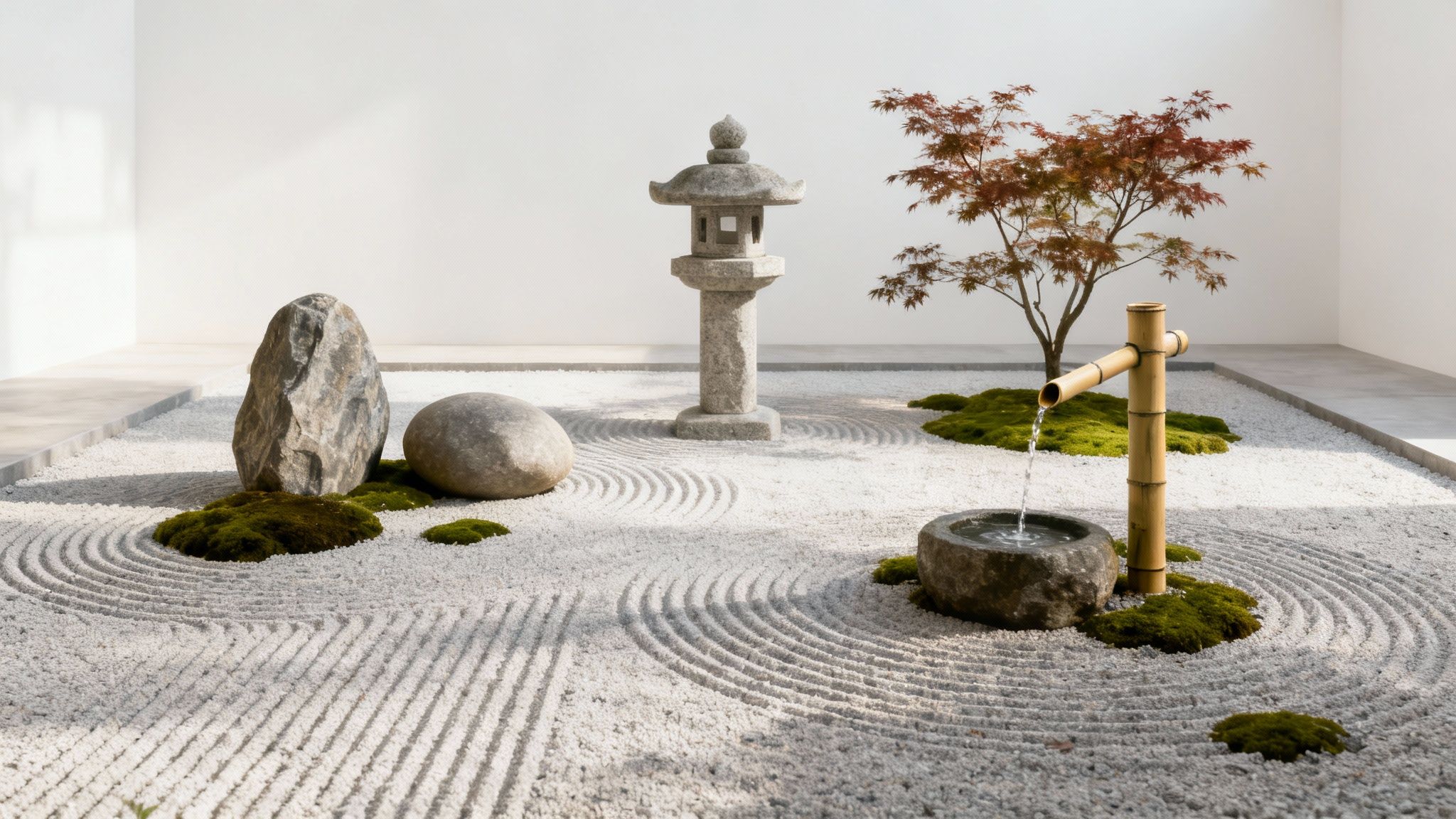
The principles behind these gardens, seen in iconic spaces like the Ryoanji Temple in Kyoto, are rooted in balance, simplicity, and creating a sense of calm. The goal is not to fill the space but to use emptiness, or ma, as a key design element. Every rock and plant has a purpose, contributing to a harmonious composition that encourages mindfulness and provides a powerful visual anchor in a compact landscape.
Implementation Tips
Creating a successful Zen garden is a practice in restraint and thoughtful placement. The key is to suggest a larger natural landscape through symbolism and careful arrangement.
Asymmetrical Balance: Avoid symmetry. Arrange rocks and plants in asymmetrical groupings, often in odd numbers like three, five, or seven, to create a more natural and visually dynamic composition.
Symbolic Elements: Use raked gravel or sand to represent water, with larger rocks symbolizing islands or mountains. A simple stone lantern (tōrō) or a bamboo water feature (shishi-odoshi) can serve as a powerful focal point.
Plant Selection: Choose plants with strong architectural forms and year-round interest. A single Japanese maple, a clump of black mondo grass, a small Hinoki cypress, or carefully trained bamboo are excellent choices. Moss is often used as a groundcover to add texture and a sense of age.
Muted Palette: Stick to a natural, muted color palette for hardscaping materials. Shades of gray, brown, and green create a soothing atmosphere and allow the subtle textures of the plants and stones to stand out.
Pro Tip: The precise placement of elements is critical in a Zen garden. Before you start moving heavy rocks, you can apply AI Landscape Design to visualize your ideas. Upload a photo of your own yard and an AI tool can generate visualizations of various rock formations, plant placements, and gravel patterns. This allows you to perfect the asymmetrical balance and find the most serene composition digitally.
4. Raised Beds and Elevated Planters
When your yard has poor soil or limited usable ground, raised garden beds offer a practical and highly productive solution. These contained garden boxes, elevated above ground level, are a cornerstone of landscaping ideas for small spaces, creating defined growing areas that improve accessibility, drainage, and soil quality. By lifting the garden, you gain complete control over the growing environment, turning a challenging patch of land into a flourishing oasis.
The concept has been popularized by methods like Mel Bartholomew's "Square Foot Gardening," which focuses on maximizing yields in minimal space. From urban community gardens to elegant French potagers, raised beds allow for intensive planting techniques that are simply not possible in traditional row gardening. They also reduce soil compaction, prevent erosion, and make gardening more ergonomic by minimizing the need to bend and kneel.
Implementation Tips
Building a successful raised bed garden involves choosing the right materials, location, and soil composition. A well-planned bed will be productive for years with minimal maintenance.
Structure & Materials: Opt for durable, rot-resistant materials like untreated cedar, redwood, or high-quality composite lumber. Metal and stone are also excellent, long-lasting options. For ergonomic access, build beds between 12 and 24 inches high.
Location & Soil: Place your beds in a location that receives at least 6-8 hours of direct sunlight per day. Fill them with a high-quality soil mix, often a blend of topsoil, compost, and vermiculite, to ensure proper drainage and nutrition.
Watering System: A soaker hose or drip irrigation system laid out before planting is the most efficient way to deliver water directly to the plant roots. This conserves water and helps prevent foliar diseases.
Weed Prevention: Before filling with soil, line the bottom of the bed with cardboard or landscape fabric. This creates a barrier that suppresses weeds from growing up from the ground below.
Pro Tip: Before you start building, apply AI Landscape Design to plan the layout. By uploading a photo of your own yard, an AI tool can generate realistic mockups of different raised bed sizes, materials, and arrangements. This helps you visualize how the beds will fit in your space and optimize their placement for sun exposure and traffic flow.
For more inspiration, you can learn more about creative raised garden bed ideas and see which style best suits your landscape.
5. Succulent and Drought-Tolerant Gardens
For those seeking a low-maintenance yet visually stunning approach, a succulent and drought-tolerant garden is one of the most practical landscaping ideas for small spaces. These gardens feature water-storing plants like echeveria, sedum, and agave, which thrive with minimal water and care. This makes them ideal for sunny balconies, tiny rock gardens, or any compact area where regular watering is a challenge, providing striking textures and colors year-round.
Popularized by garden experts like Debra Lee Baldwin and championed by sustainable gardening movements, xeriscaping with succulents has become a chic solution for arid climates and water-conscious homeowners. The concept is beautifully showcased in world-renowned displays like The Huntington Library Desert Garden and adapted for countless minimalist residential landscapes. A succulent garden offers resilience, sculptural beauty, and a sustainable footprint, all within a compact design.
Implementation Tips
Creating a thriving succulent garden hinges on getting three things right: sunlight, drainage, and soil composition. These plants are built for arid conditions, and replicating that environment is the key to their success.
Structure & Soil: Use shallow containers, raised beds, or designated rockeries. A crucial element is a well-draining soil mix; you can buy pre-made cactus/succulent soil or create your own by mixing potting soil with sand and perlite or pumice.
Plant Selection: Combine plants with varying shapes, colors, and heights for a dynamic look. Pair rosette-forming Echeveria with trailing ‘String of Pearls’ (Senecio rowleyanus) and vertical ‘Snake Plants’ (Dracaena trifasciata). For a pop of color, consider 'Sticks on Fire' (Euphorbia tirucalli).
Watering System: Less is more. Water deeply but infrequently, allowing the soil to dry out completely between waterings, typically once every 2-3 weeks in the growing season. Reduce watering significantly during winter dormancy.
Drainage: Ensure every container has drainage holes. In garden beds, amending the soil with gravel or sand will prevent root rot, which is the most common issue for these plants. For more information, explore these 10 ways to create a drought-resistant landscape design.
Pro Tip: Visualize your succulent arrangement before you start planting. You can apply AI Landscape Design by uploading a picture of your own yard's patio or garden bed. The AI can generate mockups showing different succulent combinations and arrangements with decorative elements like river rocks or colored gravel, helping you craft a perfectly balanced and beautiful composition.
This video from the Desert Gardening Channel offers great insights into selecting and caring for succulents:
6. Micro Water Features and Fountains
The gentle sound of trickling water can transform even the smallest patio or balcony into a serene oasis. Micro water features are among the most powerful landscaping ideas for small spaces because they engage the senses, adding soothing sounds and dynamic movement to a compact area. These self-contained units, from tabletop fountains to sleek wall-mounted water walls, introduce a sense of tranquility and a sophisticated focal point without the need for extensive plumbing or a large footprint.
The use of water in gardens has ancient roots, from the serene Zen gardens of Japan to the grand fountains in European courtyards. Modern manufacturers have scaled down these concepts, making them accessible for any space. A small water feature not only masks unwanted city noise but also can attract birds and other wildlife, adding an element of nature to an urban environment while improving air quality through evaporative cooling.
Implementation Tips
Success with a micro water feature depends on selecting the right size and style for your space and ensuring it is properly maintained.
Size & Placement: Choose a feature that is proportional to your space. A large, ornate fountain will overwhelm a small balcony, while a petite tabletop model is perfect for an intimate seating area. Ensure the surface is level and stable.
Power Source: Most small fountains require an electrical outlet. Position your feature accordingly or opt for a solar-powered model for greater flexibility and energy efficiency.
Water Maintenance: Use distilled water or a water conditioner to prevent algae buildup and mineral deposits that can clog the pump. Regularly top off the water level to protect the pump motor from burning out.
Evening Ambiance: Enhance your fountain's beauty after dark by adding submersible, low-voltage LED lights. This creates a mesmerizing effect and extends the enjoyment of your outdoor space into the evening.
Pro Tip: Visualize the impact before you buy. You can apply AI Landscape Design by uploading a photo of your own patio to virtually place different styles of fountains. The AI can render how a minimalist sphere fountain versus a wall-mounted scupper would look, helping you choose the perfect model that complements your existing decor and scale.
For a deeper dive into incorporating water into your garden design, you can learn more about how to create a harmonious aquatic garden.
7. Compact Shade Gardens with Hostas and Ferns
Many small yards, balconies, and patios are plagued by a lack of direct sunlight, often shadowed by neighboring buildings, fences, or mature trees. Instead of viewing this as a limitation, you can embrace it by creating a lush, cool, and textured compact shade garden. This is one of the most effective landscaping ideas for small spaces, as it turns a challenge into an opportunity, using plants that thrive in low-light conditions to create a serene, woodland-style retreat.
Shade gardening focuses on foliage over flowers, celebrating a rich palette of greens, blues, silvers, and chartreuses. Plants like hostas, with their bold, architectural leaves, and ferns, with their delicate, feathery fronds, are the cornerstones of this style. This approach, seen in tranquil Japanese gardens and classic woodland designs from the northeastern United States, allows you to cultivate a vibrant, multi-layered landscape where other plants would fail to grow.
Implementation Tips
A successful small-space shade garden relies on thoughtful plant selection and strategic layering to create visual interest and a sense of depth.
Plant Selection & Layering: Choose hosta varieties based on their mature size to avoid overcrowding; dwarf varieties are perfect for tight corners. Layer plants by height: use taller ferns like the Ostrich Fern as a backdrop, mid-size hostas in the middle, and low-growing ground covers like Ajuga at the front.
Brighten with Foliage: Incorporate plants with variegated or brightly colored leaves to illuminate dark corners. The chartreuse leaves of a 'Sum and Substance' hosta or the silvery fronds of a Japanese Painted Fern can dramatically brighten a shaded area.
Soil & Water: Shade-loving plants typically prefer rich, moist, well-draining soil. Amend your garden beds or containers with compost or other organic matter to retain moisture and provide essential nutrients. Water regularly, especially during the first growing season, to help plants establish strong root systems.
Add Structure: Integrate hardscaping elements like natural stone stepping paths, small boulders, or a simple gravel border. These features add definition and create a beautiful contrast against the soft textures of the foliage.
Pro Tip: Visualizing how different leaf textures and colors will interact is crucial in a shade garden. Apply AI Landscape Design using photos of your own yard. An AI tool can generate mockups showing various combinations of hostas, ferns, and heucheras in your shady spot, helping you perfect the layout and color palette before you start digging. This ensures your design feels lush and intentional, not just a random collection of plants.
8. Multipurpose Hardscaping and Built-In Seating
In compact outdoor areas, every square foot must serve a purpose. Multipurpose hardscaping is a clever landscaping idea for small spaces that merges functionality with design, turning structural elements into integral parts of the living area. This approach involves creating built-in features like benches that double as retaining walls, raised planters with seating edges, or storage boxes that also function as tables, maximizing usability without cluttering the space with separate furniture.
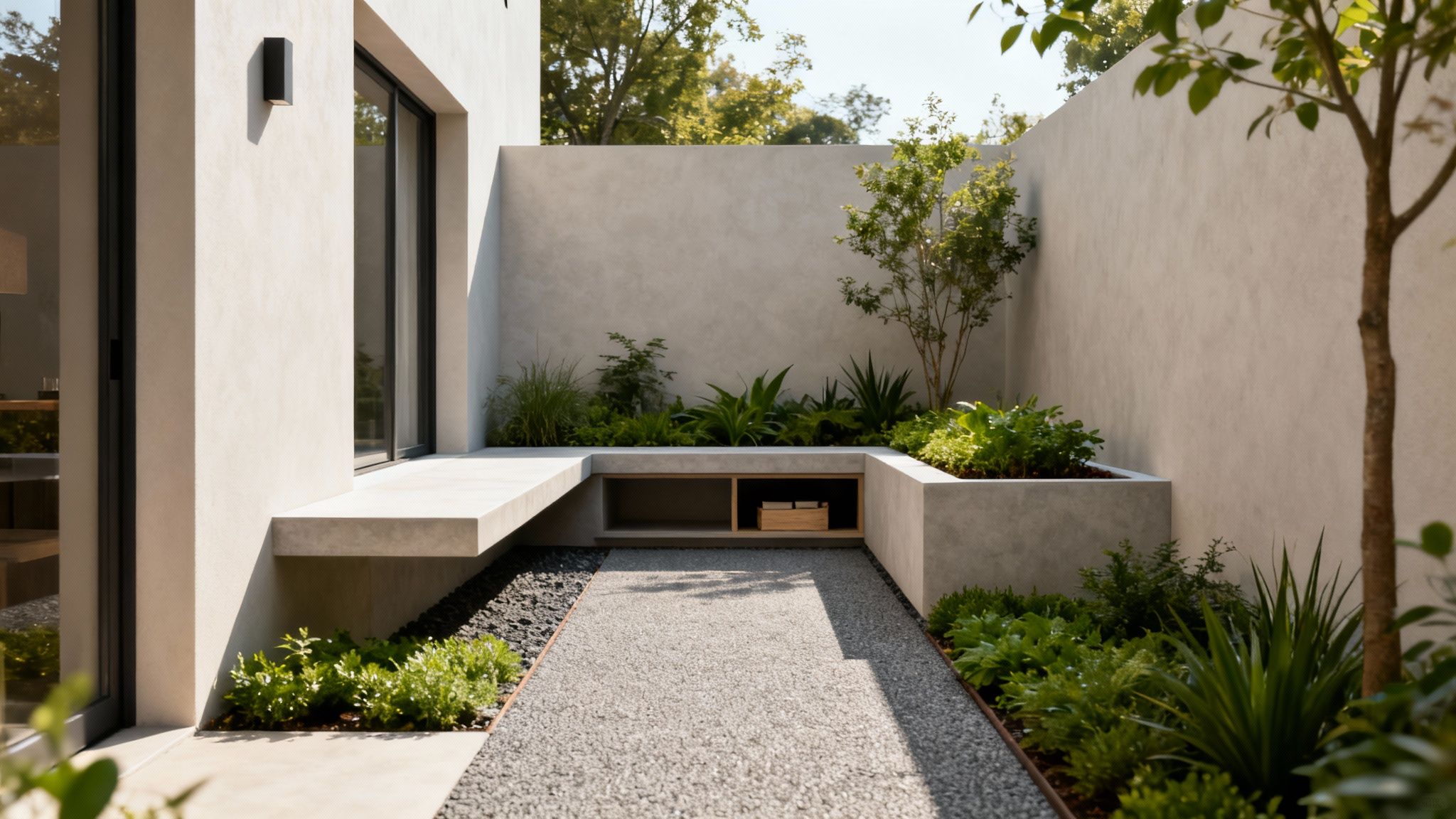
This design philosophy is a hallmark of contemporary landscape architecture, seen in urban rooftop gardens and minimalist Japanese courtyards where space is a luxury. By integrating seating, pathways, and planters into a cohesive structure, you create a seamless and sophisticated outdoor room. It not only saves space but also establishes clean lines and a strong architectural foundation that makes a small garden feel more organized and expansive.
Implementation Tips
Successful multifunctional hardscaping requires a balance between form, function, and the surrounding greenery. The goal is to make the space feel intentionally designed, not just filled with random objects.
Proportion and Scale: Design built-in seating to fit the scale of your space. A large, bulky bench can overwhelm a tiny patio, while a sleek, floating design can create an illusion of spaciousness. Aim for an ergonomic seat height of 16-18 inches and a depth of 15-20 inches.
Material Continuity: Use a consistent palette of materials for your hardscaping elements. Matching the material of a built-in bench to a retaining wall or pathway creates a unified look that enlarges the space visually.
Integrated Storage & Lighting: Design benches with hinged lids to create hidden storage for cushions, gardening tools, or toys. When planning your design, consider incorporating integrated patio lighting solutions like under-seat LED strips to enhance ambiance and improve safety for evening use.
Soften with Plants: Combine hard materials with lush plantings. A concrete bench can be softened by a built-in planter at one end filled with cascading foliage, or by placing large pots with ornamental grasses nearby to add texture and movement.
Pro Tip: Visualizing hardscape features can be challenging. You can apply AI Landscape Design to see how different built-in seating arrangements would look in your actual yard. Upload a photo of your patio, and an AI tool can generate designs showing various materials like wood, concrete, or stone, helping you find the perfect balance between seating, planting areas, and open space.
Comparison of 8 Small-Space Landscaping Ideas
Item | 🔄 Implementation complexity | ⚡ Resource requirements & maintenance | ⭐📊 Expected outcomes | Ideal use cases | 💡 Key advantages |
|---|---|---|---|---|---|
Vertical Gardens and Living Walls | High — structural support, irrigation, plant selection 🔄🔄🔄 | Moderate–High — mounting systems, irrigation, ongoing water/electric ⚡⚡ | High visual impact, insulation and air-quality benefits; productive in tight footprints ⭐📊 | Balconies, façades, urban patios, feature walls | Maximizes vertical space; modular; automated watering reduces labor 💡 |
Container Gardening | Low — straightforward setup, flexible placement 🔄 | Low–Moderate — pots, potting mix, periodic replacement; mobile and reconfigurable ⚡⚡⚡ | Versatile and fast to establish; good for many plant types; controllable soil conditions ⭐📊 | Renters, balconies, patios, pop-up displays | Portable; easy pest control; soil customization; aesthetic flexibility 💡 |
Japanese Zen Gardens (Tsuboniwa) | Medium — design-sensitive layout and material placement 🔄🔄 | Low–Moderate — stone/gravel, select plants, minimal water; low ongoing inputs ⚡ | High serenity and timeless aesthetics; low plant maintenance year-round ⭐📊 | Small courtyards, meditation corners, minimalist designs | Low water use; calming, refined composition; durable materials 💡 |
Raised Beds and Elevated Planters | Medium — construction and soil management required 🔄🔄 | Moderate — framing materials, quality soil volume, irrigation; upfront cost ⚡⚡ | High productivity for edibles; improved drainage and ergonomics; organized beds ⭐📊 | Vegetable plots, small yards, accessible gardening, patios | Better soil control, higher yields, ergonomic access, modular layouts 💡 |
Succulent and Drought-Tolerant Gardens | Low — simple planting and grouping; design for drainage 🔄 | Low — drought-tolerant plants, well-draining mix, minimal watering ⚡⚡⚡ | Resilient, low-maintenance plantings with strong textural interest; water savings ⭐📊 | Arid climates, low-maintenance yards, balcony xeriscapes | Extremely water-efficient; cost-effective once established; tolerant of neglect 💡 |
Micro Water Features and Fountains | Low–Medium — pump/electrical and siting considerations 🔄🔄 | Moderate — pump, power/solar, water treatment; periodic cleaning ⚡ | High sensory impact (sound/visual); attracts wildlife; strong focal point ⭐📊 | Patios, small courtyards, meditation corners, terraces | Adds movement and ambience; portable options; enhances microclimate 💡 |
Compact Shade Gardens with Hostas and Ferns | Low — plant selection and layering; moderate upkeep 🔄 | Low — shade-adapted plants, organic soil, less frequent watering ⚡⚡ | Lush, textured foliage; privacy and year-round greenery in shade ⭐📊 | North-facing spots, under trees, enclosed urban yards | Performs well in low light; low input once established; good screening 💡 |
Multipurpose Hardscaping & Built-In Seating | High — skilled design, construction, possible permits 🔄🔄🔄 | High — durable materials, labor, contractors; long-term maintenance ⚡ | High usability and property value; durable multifunctional outdoor rooms ⭐📊 | Small courtyards, rooftops, entertaining spaces, low-maintenance yards | Maximizes usable area; integrated storage/seating; professional, cohesive finish 💡 |
From Vision to Reality: Start Designing Your Small Space Today
We have journeyed through a diverse collection of landscaping ideas for small spaces, each designed to prove that size is no barrier to style, function, and natural beauty. From the space-saving brilliance of vertical gardens and the structured elegance of raised beds to the tranquil simplicity of a Japanese Zen garden, the core takeaway is clear: constraint is the mother of invention. A small yard, patio, or balcony isn't a limitation; it is an invitation to be more creative, deliberate, and impactful with your design choices.
The ideas explored, including multi-purpose hardscaping and compact water features, highlight a central theme. Success in a small space hinges on smart, multi-functional design. Every element must earn its place, whether it's a bench that doubles as a storage box or a container garden that introduces color, texture, and even edibles into a tight corner. By carefully selecting plants, materials, and features that serve multiple purposes, you create a landscape that feels cohesive, expansive, and deeply personal.
Key Takeaways for Your Small-Space Transformation
As you move forward, keep these foundational concepts at the forefront of your planning process:
Embrace Verticality: When you can't build out, build up. Living walls, tiered planters, and trellises draw the eye upward, creating an illusion of spaciousness while maximizing your growing area.
Prioritize Multi-Functionality: Choose elements that serve more than one purpose. Built-in seating with integrated planters or a retaining wall that also functions as a bench are prime examples of this efficient approach.
Create Zones with Purpose: Even in a tiny footprint, you can define distinct areas for lounging, dining, or quiet reflection. Use changes in paving material, strategic plant groupings, or a small decorative screen to delineate these zones.
Master the Details: In a small space, every detail is magnified. The texture of a stone, the color of a container, and the shape of a leaf all contribute significantly to the overall aesthetic. As you transition from vision to reality, incorporating fundamental garden design principles is key to crafting a cohesive and functional small space.
Bringing Your Vision to Life with AI
The most significant hurdle in any landscaping project is bridging the gap between imagination and reality. It can be challenging to visualize how a succulent garden will look next to your existing patio or whether a micro-fountain will feel proportional. This is where modern technology becomes an indispensable partner in your design journey.
Instead of relying on sketches or guesswork, you can apply AI Landscape Design to visualize your ideas using photos of your own yard. These tools allow you to upload a picture of your actual space and instantly generate hyper-realistic visualizations of different concepts. You can experiment with container arrangements, test various hardscaping materials, and see how a vertical garden will look on a specific wall, all before committing any time or money. This technology removes the uncertainty, empowering you to make confident decisions and ensuring the final result perfectly matches your vision. Your dream garden is no longer just an idea; it's a tangible plan waiting to be implemented.
Ready to stop imagining and start visualizing? Use DreamzAR AI Landscape Design to upload a photo of your yard and instantly see these ideas rendered in your own space, helping you create the perfect small-scale oasis. Download the app and start designing today: DreamzAR AI Landscape Design