Ideas for Landscaping in Front of House: 7 Inspiring Frontyard Makeovers
- Akhilesh Joshi
- 1 day ago
- 18 min read

Your front yard is the first impression your home makes, setting the tone for visitors and reflecting your personal style. Transforming a bland, uninspired space into a stunning landscape, however, can feel overwhelming. Where do you start? What works for your home's architecture, your climate, and your budget? This guide offers a comprehensive roundup of actionable ideas for landscaping in front of house, moving beyond generic advice to provide specific, practical strategies for every goal.
Whether you aim to create a low-maintenance oasis, a vibrant cottage garden, or a sleek modern entryway, this listicle has you covered. We'll explore detailed plant lists, layout tips, and budget considerations for each concept. We cover everything from native plant gardens and xeriscape designs to hardscape-focused layouts and seasonal planting strategies. Each idea is presented as a complete blueprint, designed to give you a clear path from concept to reality.
Crucially, we will also show you how to skip the guesswork entirely. Throughout this article, we'll discuss how you can use powerful AI Landscape Design tools to upload a photo of your own yard and instantly visualize these ideas. This technology allows you to experiment with different layouts, plant combinations, and materials, helping you see the stunning potential of your property before you even break ground. This approach removes uncertainty and empowers you to make design choices with confidence, ensuring the final result perfectly matches your vision. Get ready to find the inspiration and practical steps needed to completely reinvent your home’s curb appeal.
1. Native Plant Gardens
A native plant garden is one of the most sustainable and intelligent ideas for landscaping in front of house, featuring flora that has evolved in your specific region. These plants are perfectly adapted to the local climate, soil, and precipitation levels, creating a self-sufficient ecosystem that thrives with minimal human intervention. By choosing native species, you significantly reduce the need for fertilizers, pesticides, and supplemental watering, saving time, money, and natural resources.
This approach is ideal for homeowners seeking a low-maintenance landscape that also benefits the environment. Native gardens provide vital food and shelter for local pollinators like bees, butterflies, and birds, restoring a piece of the natural habitat that may have been lost to development. They offer a unique, authentic sense of place, reflecting the true beauty of your region's landscape.
Implementation and Regional Examples
Successful native landscaping starts with understanding your local environment.
California Gardens: Homeowners often use drought-tolerant species like California Lilac (Ceanothus), Sage (Salvia), and the vibrant California Poppy (Eschscholzia californica) to create a water-wise and colorful front yard.
Texas Meadows: Mimic the iconic wild scapes with a mix of Texas Bluebonnets (Lupinus texensis) and Indian Blankets (Gaillardia pulchella), which require little more than sun and occasional rain.
Pacific Northwest Forests: Embrace the lush, green aesthetic with shade-loving Western Sword Ferns (Polystichum munitum), native Rhododendrons, and graceful Vine Maples (Acer circinatum).
Pro Tip: Contact your local native plant society or university extension office. They provide free, region-specific plant lists and expert advice tailored to your exact location, removing the guesswork from your project.
Visualize Before You Plant
Unsure how a native plant meadow will look in front of your traditional home? You can use AI Landscape Design to visualize your ideas using photos of your own yard. Simply upload a photo of your front yard and let the AI instantly render how native trees, shrubs, and perennials will look. This allows you to experiment with different layouts and plant combinations, ensuring the design complements your home’s architecture before you purchase a single plant.
2. Xeriscape Design
Xeriscape design is one of the most practical and water-conscious ideas for landscaping in front of house, focusing on creating beautiful, thriving gardens with minimal water use. This method, originally pioneered for arid regions, utilizes drought-tolerant plants, efficient irrigation, and strategic mulching to create a landscape that conserves water. By embracing xeriscaping, you drastically cut down on water bills, reduce maintenance, and build a resilient front yard that can withstand dry spells and heat.
This approach is perfect for homeowners in drought-prone areas or anyone seeking an eco-friendly landscape that is both stunning and sustainable. Xeriscapes are not limited to desert aesthetics; they can be lush, colorful, and adapted to any style, from modern to Mediterranean. The core principle is smart design that works with your local climate, not against it, resulting in a hardy and visually appealing outdoor space.
Implementation and Regional Examples
A successful xeriscape relies on thoughtful planning and plant selection suited to dry conditions.
Arizona Gardens: Classic desert landscapes thrive here, featuring sculptural Agave and Yucca plants paired with the bright yellow blooms of Desert Marigold (Baileya multiradiata) and the purple foliage of Purple Sage (Leucophyllum frutescens).
California Water-Smart Yards: Homeowners often use a mix of succulents like Echeveria, ornamental grasses such as Blue Fescue (Festuca glauca), and flowering perennials like Lavender (Lavandula) for a vibrant, low-water garden.
Colorado Transformations: In the Rocky Mountain region, xeriscaping often includes hardy plants like Ice Plant (Delosperma), Russian Sage (Perovskia atriplicifolia), and various Penstemons that offer bold color while requiring very little water.
Pro Tip: Group plants with similar water needs together, a practice known as hydrozoning. This allows you to water different sections of your yard efficiently, providing moisture only where and when it's needed, preventing waste.
Visualize Before You Plant
Wondering if a low-water garden will match your home’s architectural style? You can apply AI Landscape Design to visualize your ideas using photos of your own yard. Upload a photo and let the tool experiment with different arrangements of drought-tolerant plants, gravel beds, and decorative boulders. This process helps you perfect the layout and plant choices, ensuring your xeriscape design is both beautiful and functional before you begin the physical work.
3. Cottage Garden Style
A cottage garden brings a charming, romantic, and informal aesthetic to your landscape, featuring a dense, joyful mix of ornamental and edible plants. This style prioritizes grace and abundance over rigid structure, with flowers, herbs, and shrubs intermingling in a way that appears effortlessly natural. By embracing this approach, you create a vibrant, sensory-rich entryway that feels both personal and timeless.
This is a perfect choice for homeowners who love a lush, flower-filled yard that changes throughout the seasons. The cottage style is forgiving, allowing plants to self-seed and spill over pathways, which contributes to its whimsical character. It’s an idea for landscaping in front of house that turns your yard into a picturesque and productive space, often incorporating fragrant plants and those that attract pollinators.
Implementation and Regional Examples
A successful cottage garden layers plants and textures to create a full, continuous bloom.
Classic English Cottage: Combine climbing roses on a trellis with spires of Delphiniums and Foxgloves, bordered by fragrant Lavender (Lavandula) and low-growing Catmint (Nepeta).
American Farmhouse Garden: Feature hardy, cheerful flowers like Black-Eyed Susans (Rudbeckia), Peonies (Paeonia), and Coneflowers (Echinacea) alongside heirloom vegetables and herbs.
Modern Cottage: Adapt the style to a contemporary home by using a more controlled color palette. For example, use shades of purple, white, and green with plants like Alliums, white Hydrangeas, and ornamental grasses.
Pro Tip: Don't be afraid to mix in edibles. A row of vibrant Rainbow Chard or a cluster of rosemary not only adds to the aesthetic but also provides fresh ingredients for your kitchen, embodying the practical origins of the cottage garden.
Visualize Before You Plant
The dense and seemingly random planting of a cottage garden can be hard to plan on paper. To perfect this informal look, you can apply AI Landscape Design to visualize your ideas using photos of your own yard. Upload a picture of your front yard to digitally arrange different plants. You can test combinations of textures and heights, ensuring taller plants like hollyhocks don't block your windows and that your chosen color scheme works with your home’s exterior. This visualization step helps you achieve that curated-yet-casual look without costly trial and error.
4. Minimalist Modern Landscaping
Minimalist modern landscaping is a design philosophy that prioritizes clean lines, geometric shapes, and a "less is more" approach. This style transforms the front of your house into a sleek, uncluttered space by emphasizing architectural form and negative space. It relies on a limited palette of materials and plants, where each element is carefully chosen for its texture, shape, and visual impact, creating a sophisticated and highly intentional look.
This approach is perfect for homeowners with modern or contemporary architecture, as it extends the home's aesthetic into the outdoor environment. It’s also an excellent low-maintenance option, as the focus on hardscaping and selective, structural plantings reduces the need for constant upkeep. By using restraint, minimalist design achieves a powerful, calming effect that enhances curb appeal through simplicity and order.
Implementation and Style Examples
Successful minimalist design is about deliberate placement and material choice.
Japanese-Inspired Gardens: Utilize raked gravel or sand to represent water, strategically placed boulders as islands, and a single, sculptural Japanese Maple or Pine as a focal point.
Contemporary Urban Lots: Define clean-edged planting beds with Corten steel or concrete curbing. Fill them with masses of a single type of ornamental grass, like 'Karl Foerster' Feather Reed Grass, for texture and movement.
Architectural Focus: Create a series of staggered, large-scale concrete pavers leading to the front door, flanked by neat rows of boxwoods or horsetail reed for a strong, linear statement.
Pro Tip: Embrace negative space. Leaving areas of your landscape intentionally empty, such as a simple patch of gravel or a smooth concrete patio, is a key principle. This "breathing room" makes the chosen elements stand out more dramatically.
Visualize Before You Plant
The precise geometry of minimalist design can be difficult to envision. AI Landscape Design tools are invaluable for this style. You can visualize your ideas using photos of your own yard to test different hardscape materials and layouts. Digitally place architectural plants like agave, experiment with the scale of concrete pavers, and adjust the lines of steel edging to ensure your final design achieves the perfect balance and complements your home's modern facade before any physical work begins.
5. Rain Garden Installation
A rain garden is one of the most functional and beautiful ideas for landscaping in front of house. It's a shallow, strategically placed depression filled with absorbent soil and deep-rooted native plants designed to capture and filter stormwater runoff from your roof, driveway, or lawn. Instead of allowing rainwater to overwhelm storm drains, this feature lets it slowly soak into the ground, naturally watering your plants and recharging local groundwater.
This approach is perfect for eco-conscious homeowners or those dealing with soggy spots or drainage issues in their yard. By managing stormwater on-site, a rain garden reduces erosion, filters out pollutants like fertilizers and oils, and prevents localized flooding. It also creates a vibrant, lush habitat that attracts beneficial wildlife, including songbirds, butterflies, and dragonflies, turning a problem area into a stunning focal point.
Implementation and Regional Examples
A successful rain garden hinges on proper placement and plant selection to handle cycles of inundation and drought.
Pacific Northwest Gardens: Cities like Portland, Oregon, are leaders in green infrastructure. Homeowners use water-loving plants like Sedges (Carex), Rushes (Juncus), and Red Twig Dogwood (Cornus sericea) to manage heavy rainfall.
Midwest Solutions: Following models from the Milwaukee Metropolitan Sewerage District, residents create effective gardens with moisture-tolerant species like Blue Flag Iris (Iris versicolor) and Joe-Pye Weed (Eutrochium purpureum).
Southeastern Landscapes: In areas with heavy downpours, plants like Swamp Milkweed (Asclepias incarnata) and Buttonbush (Cephalanthus occidentalis) thrive in rain gardens that absorb and filter large volumes of water.
Pro Tip: Position your rain garden at least 10 feet away from your home's foundation to prevent water issues. Ensure it's located in a natural low spot or along the path water takes from a downspout to maximize collection.
Visualize Before You Dig
Understanding how a functional rain garden will integrate with your existing landscape can be challenging. To see how it will look, you can apply AI Landscape Design to visualize your ideas using photos of your own yard. Upload a picture of the intended area to digitally sculpt the depression and populate it with appropriate plants. This allows you to test different shapes, sizes, and plant arrangements to ensure the final installation is both effective and aesthetically pleasing.
6. Pollinator-Friendly Gardens
A pollinator-friendly garden is a vibrant and dynamic idea for landscaping in front of house, specifically designed to attract and support essential creatures like bees, butterflies, and hummingbirds. By selecting nectar-rich flowers and providing habitat, you create a living ecosystem that boosts local biodiversity. This approach transforms your front yard into a beautiful, active space filled with color and movement, contributing directly to the health of the environment.
This design is perfect for nature-loving homeowners who want a garden that is both beautiful and functional. It goes beyond simple curb appeal by creating a purpose-driven landscape that supports fragile pollinator populations. A pollinator garden is a visual delight, offering changing scenes as different species visit throughout the seasons, from the first bees in spring to migrating butterflies in the fall.
Implementation and Regional Examples
Creating a haven for pollinators involves planting in clusters and ensuring continuous blooms.
Midwest Butterfly Gardens: Feature plants like Milkweed (Asclepias) to support monarch caterpillars, alongside Coneflower (Echinacea) and Black-Eyed Susans (Rudbeckia hirta) for a classic prairie look that attracts a wide variety of bees and butterflies.
Southeast Hummingbird Havens: Use trumpet-shaped flowers that hummingbirds love, such as Trumpet Creeper (Campsis radicans), Cardinal Flower (Lobelia cardinalis), and native Honeysuckle (Lonicera sempervirens) to create a feeding hotspot.
Southwest Desert Oases: Attract native bees and other pollinators with drought-tolerant species like Desert Marigold (Baileya multiradiata), Agave, and various types of Penstemon, which provide vital resources in an arid climate.
Pro Tip: Provide a shallow water source, like a birdbath with pebbles or a dish filled with marbles and water. This gives pollinators a safe place to drink without the risk of drowning, a crucial element often overlooked in garden design.
Visualize Before You Plant
Wondering how a bustling wildflower patch will pair with your home’s modern facade? You can apply AI Landscape Design to visualize your ideas using photos of your own yard. Upload a photo and digitally arrange clusters of flowering perennials, shrubs, and even small water features. This allows you to test different plant combinations and layouts, ensuring your design is both ecologically effective and aesthetically pleasing before you begin planting.
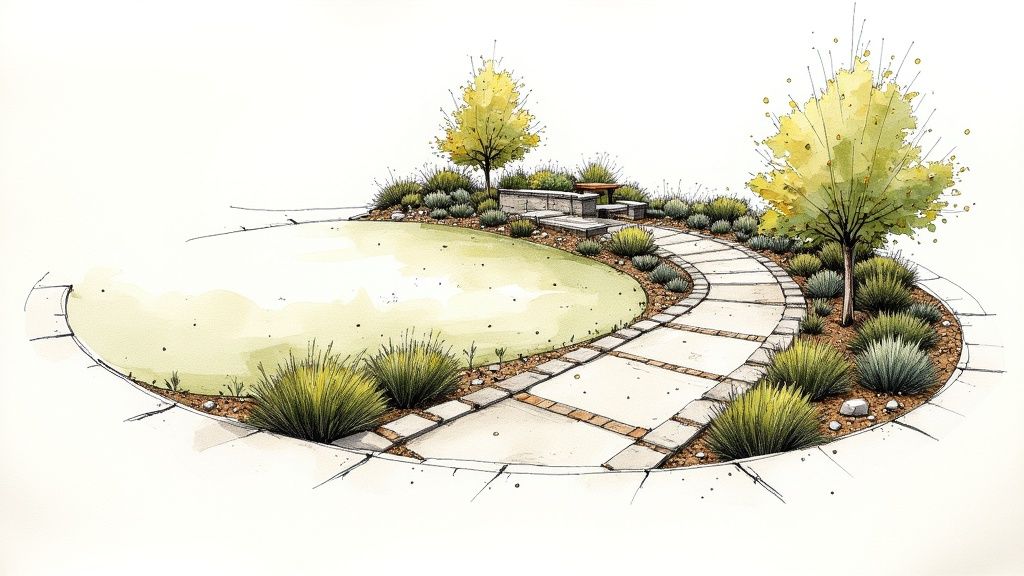
7. Curved Pathway Design
A curved pathway is one of the most effective ideas for landscaping in front of house, guiding the eye and foot through the space with a natural, flowing grace. Unlike rigid, straight paths, meandering walkways add a sense of mystery and depth, making a front yard feel larger and more dynamic. This design element softens hard architectural lines and creates a more welcoming journey from the curb to your front door.
By introducing gentle arcs and turns, you can strategically direct attention toward focal points like a mature tree, a vibrant flower bed, or an elegant water feature. Curved paths are incredibly versatile, complementing various styles from rustic cottage gardens to formal traditional estates. They transform a simple walk into an engaging experience, adding significant curb appeal and architectural interest.
Implementation and Material Examples
Creating an effective curved path involves choosing the right materials and ensuring the design feels intentional, not random.
Stone Paver Paths: Ideal for traditional or formal landscapes, interlocking pavers or flagstone create a durable and elegant surface that beautifully complements brick or stone homes.
Gravel Walkways: Perfect for cottage, country, or Mediterranean styles, gravel paths offer a charming, permeable solution. Edging with brick or steel is essential to contain the stones.
Mulch or Wood Chip Trails: A natural and budget-friendly choice for woodland or shade gardens, these paths blend seamlessly into the environment and are soft underfoot.
Pro Tip: Ensure your pathway is wide enough for comfortable use, typically 3 to 4 feet for a main walkway. Curves should be gentle and broad; avoid tight, awkward turns that make navigating with strollers or wheelbarrows difficult.
Visualize Before You Build
Unsure how a winding path will interact with your existing garden beds or driveway? You can apply AI Landscape Design to visualize your ideas using photos of your own yard. Upload a photo and digitally draw different pathway routes using various materials like pavers or gravel. This technology allows you to test the flow, adjust the radius of curves, and see how the path will look from different angles, ensuring your final design is both beautiful and functional before you commit to construction.
8. Vertical Gardening and Living Walls
Vertical gardening is one of the most innovative ideas for landscaping in front of house, transforming bare walls and fences into lush, living tapestries of greenery. This technique utilizes vertical space to grow plants, making it an excellent solution for homes with limited ground area, such as urban townhouses or properties with small front yards. By using wall-mounted planters, trellises, or modular living wall systems, you can create a dramatic focal point that adds texture, color, and life to your home's exterior.
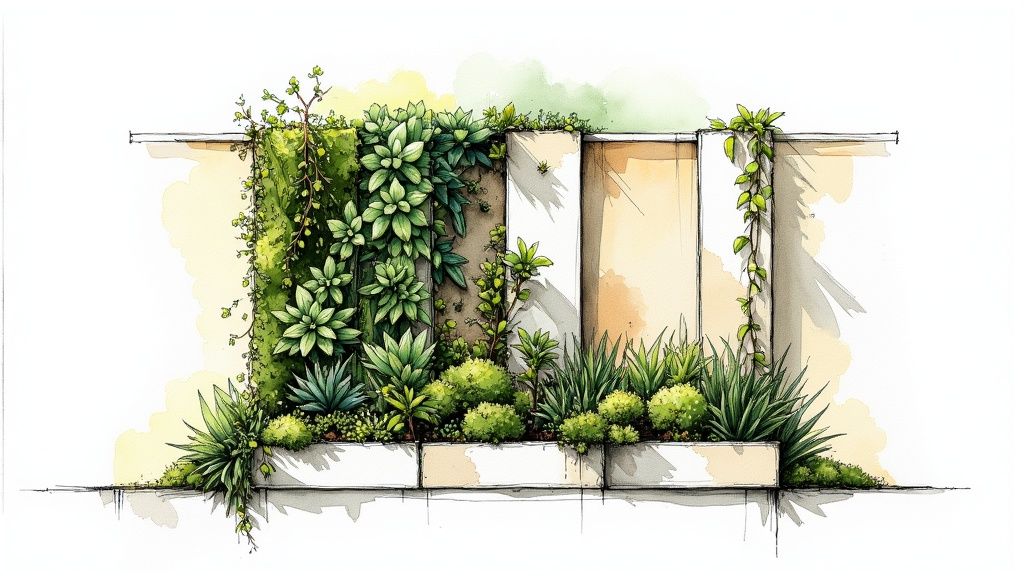
This approach is perfect for homeowners looking to make a bold architectural statement or maximize their planting area. Living walls act as natural insulation, helping to cool your home in the summer, and can even improve local air quality. From traditional ivy-covered facades to sleek, modern installations, vertical gardens offer a versatile way to integrate nature directly into your home's structure.
Implementation and Popular Styles
A successful vertical garden depends on proper structure, plant selection, and maintenance.
Classic Trellis and Vines: Attach a sturdy trellis to a front wall and train climbing plants like Clematis, Wisteria, or climbing roses for a timeless, romantic look that adds charm and color.
Modular Living Walls: Modern systems use interlocking panels or pockets that can be filled with a variety of plants, such as succulents, ferns, and ornamental grasses, creating a sophisticated and contemporary mosaic.
Cable and Wire Systems: For a minimalist aesthetic, a network of stainless steel cables can guide less aggressive vines, creating a delicate green pattern against a modern home’s facade.
Pro Tip: Ensure your wall or fence can support the weight of the structure, soil, plants, and water. A professionally installed living wall often includes a built-in irrigation system, which is crucial for keeping plants healthy and simplifying maintenance.
Visualize Before You Plant
Wondering how a living wall will look on your entryway or garage? You can apply AI Landscape Design to visualize your ideas using photos of your own yard. Upload a photo of your home's exterior to digitally add different vertical garden styles. This lets you experiment with plant arrangements and system types to see what best complements your architecture. For more guidance on making the most of a compact area, discover more landscape design ideas for small yards on dreamzar.app.
9. Hardscape Focus with Feature Elements
A hardscape-focused design is one of the most impactful ideas for landscaping in front of house, emphasizing constructed, non-living elements to create structure and visual interest. This approach uses materials like stone, pavers, wood, and metal to build walkways, patios, retaining walls, and feature elements that provide a strong, year-round architectural foundation. By prioritizing hardscape, you can craft a sophisticated, low-maintenance landscape that defines spaces and directs flow.
This strategy is perfect for homeowners who want to reduce lawn care, create functional outdoor living areas, or add a modern, polished look to their property. Hardscape elements like a striking water feature, an elegant stone patio, or a custom-built pergola serve as permanent focal points that anchor the entire design. These features add value and functionality, offering durable beauty that endures through every season with minimal upkeep.
Implementation and Regional Examples
Successful hardscape design depends on choosing materials that complement your home's architecture.
Southwestern Adobe Homes: A flagstone courtyard with a tiered water fountain and gravel pathways enhances the rustic, earthy aesthetic.
Modern Minimalist Homes: Sleek, large-format concrete pavers for a walkway, combined with a corten steel planter, create clean lines and a contemporary feel.
Traditional Colonial Homes: Classic brick walkways and low, fieldstone retaining walls offer a timeless, elegant look that integrates seamlessly with the historic style.
Pro Tip: Always plan for proper drainage. When installing patios or walkways, ensure there is a slight, imperceptible slope away from your home's foundation to prevent water from pooling and causing potential damage.
Visualize Before You Plant
Wondering how a prominent stone retaining wall or a new paver patio will integrate with your home’s facade? You can apply AI Landscape Design to visualize your ideas using photos of your own yard. Upload a photo and digitally overlay different hardscape materials, from bluestone to brick. You can experiment with layouts, add lighting features, and see how softening plants will look alongside the structures. This helps you finalize your design before committing to the expense and labor of installation.
10. Seasonal Color and Layered Planting
Layered planting is a sophisticated landscaping strategy designed to provide continuous visual interest and color throughout the entire year. It involves strategically combining plants of different heights, textures, and bloom times, from towering trees to ground-level annuals and bulbs. By selecting flora with staggered peak seasons, your front yard will transition seamlessly from the first spring blossoms to the rich hues of fall and even the structural beauty of winter.
This approach is one of the most effective ideas for landscaping in front of house because it creates a dynamic, living display that is never static or dull. It’s perfect for homeowners who want their property to look vibrant and thoughtfully designed in every season. Layering adds depth and complexity, preventing the flat, one-dimensional look that can occur when all plants are the same height or bloom simultaneously.
Implementation and Seasonal Examples
Successful layered planting requires planning your garden like a four-act play, with different stars for each season.
Spring Spectacle: Begin with early-blooming bulbs like daffodils and tulips, which emerge before perennials. These are followed by flowering shrubs such as azaleas and rhododendrons.
Summer Vibrancy: As spring flowers fade, summer perennials like coneflowers and black-eyed Susans take center stage, supported by the lush foliage of hostas and ferns.
Autumn Richness: Transition to fall with the fiery colors of ornamental grasses, chrysanthemums, and sedum. The changing leaves of deciduous trees like maples provide a stunning backdrop.
Winter Structure: Rely on evergreens for a strong foundation, accented by the red berries of holly bushes and the interesting bark of dogwood or birch trees.
Pro Tip: Create a simple bloom-time calendar before you buy plants. List the months across the top and your plant choices down the side, then mark when each one flowers, has colorful foliage, or produces berries. This ensures you have no "empty" months.
Visualize Before You Plant
The complexity of layering heights and scheduling bloom times can be challenging to imagine. This is a perfect scenario where you can apply AI Landscape Design to visualize your ideas using photos of your own yard. Upload a photo and digitally place different plants to see how their heights and textures work together. You can simulate how the landscape will look in spring versus fall, helping you perfect your plant combinations and layering strategy to ensure a cohesive, year-round design.
Front Yard Landscaping: 10-Option Comparison
Style | 🔄 Implementation (complexity) | ⚡ Resource requirements (speed/efficiency) | 📊 Expected outcomes (results/impact) | 💡 Ideal use cases | ⭐ Key advantages |
|---|---|---|---|---|---|
Native Plant Gardens | Low–Moderate: regional plant selection and planning | Low water & maintenance; moderate initial plant sourcing | High biodiversity, lower ongoing costs | Ecological yards, pollinator support, low‑water sites | Supports native wildlife; low long‑term inputs |
Xeriscape Design | Moderate: design hydrozones and irrigation layout | Very low water use; moderate initial install cost (irrigation, hardscape) | Dramatic water savings and reduced bills | Arid/drought‑prone regions, water‑reduction goals | Significant long‑term water and cost savings |
Cottage Garden Style | Low–Moderate: dense mixed planting and layout | Moderate water and regular maintenance/labor | High floral display and pollinator habitat | Informal/country homes, cutting gardens, charm‑focused yards | High visual charm; adaptable and wildlife‑friendly |
Minimalist Modern Landscaping | Moderate–High: precise design and material selection | Low maintenance plants but higher material/installation cost | Clean contemporary aesthetic; low plant upkeep | Modern architecture, small urban yards, low‑clutter spaces | Sophisticated look; easy to maintain once installed |
Rain Garden Installation | Moderate–High: sizing, soil/underdrain design required | Moderate: excavation, native plants, possible underdrain | Reduces runoff, filters pollutants, recharges groundwater | Properties with runoff issues, urban stormwater solutions | Functional environmental benefits; habitat creation |
Pollinator‑Friendly Gardens | Moderate: diverse plant selection and pesticide avoidance | Moderate: varied plantings, water and nesting features | Increased pollinator populations; vibrant blooms | Conservation gardens, edible landscapes, education | Supports pollinators and food production |
Curved Pathway Design | Moderate: layout planning and material installation | Moderate: material choice affects cost and maintenance | Improved flow, visual interest, perceived larger space | Front yards, garden circulation, focal routing | Adds dimension and guides movement; flexible materials |
Vertical Gardening / Living Walls | High: structural support, irrigation, mounting systems | High initial cost and ongoing irrigation/maintenance | Maximizes greenery on small sites; cooling and privacy | Small lots, urban facades, privacy screening | Space‑efficient; strong visual impact and air quality benefits |
Hardscape Focus with Feature Elements | High: construction, drainage, and skilled labor | High initial cost; lower plant upkeep afterward | Year‑round structure, usable outdoor rooms, value uplift | Entertaining areas, low‑maintenance designs, formal layouts | Durable, functional spaces; increases property value |
Seasonal Color & Layered Planting | High: detailed planning for succession and layers | Moderate–High: many plants and ongoing maintenance | Continuous seasonal interest, depth, and wildlife support | Designer gardens, homeowners wanting all‑season color | Continuous blooms and polished, multi‑season appearance |
From Idea to Reality: Visualizing Your Perfect Front Yard
We've journeyed through a comprehensive collection of ideas for landscaping in front of house, exploring everything from the water-wise principles of xeriscaping to the charming, dense plantings of a cottage garden. You now have a toolkit filled with concepts for creating curved pathways, establishing pollinator habitats, and designing with minimalist modern aesthetics. The core takeaway is that your front yard is a blank canvas, and the right design can dramatically enhance your home's curb appeal, reflect your personal style, and even contribute positively to the local ecosystem.
The challenge, however, often lies in bridging the gap between inspiration and implementation. It’s one thing to admire a native plant garden in a photo; it’s another to confidently visualize how those specific textures and colors will complement your home's unique facade and existing features. This is where uncertainty can stall even the most exciting projects.
Bridging the Vision Gap with Technology
Fortunately, modern tools have revolutionized this process, removing the guesswork and empowering homeowners like never before. Instead of relying solely on imagination or rough sketches, you can now leverage technology to create a tangible, visual plan. This is where you can apply AI Landscape Design to visualize your ideas using photos of your own yard.
Imagine being able to see a fully realized minimalist design with sleek hardscaping against your specific entryway before a single paver is laid. Picture yourself comparing the look of a vibrant, multi-seasonal layered planting with a more subdued, evergreen-focused structure, all using a current photo of your own yard. This is precisely what AI design tools offer.
Key Insight: The most significant barrier to starting a landscaping project is often the inability to visualize the final result. AI design tools eliminate this uncertainty by generating realistic previews tailored to your actual space, ensuring the outcome matches your vision.
By simply uploading a photo of your front yard to an app like DreamzAR, the AI can instantly generate photorealistic renderings of various landscaping styles. This allows you to:
Compare Concepts: Instantly see how a pollinator-friendly garden compares to a hardscape-focused design on your property.
Preview Plantings: Experiment with different plant combinations and see how they look next to your porch, windows, and walkways.
Finalize Layouts: Test different pathway shapes, garden bed configurations, and feature placements without any physical commitment.
This ability to visualize is not just about aesthetics; it's a critical planning step. It helps you refine your ideas for landscaping in front of house into a cohesive and executable strategy. This level of detailed pre-visualization is a cornerstone of professional planning, whether you're designing a suburban front yard or conceptualizing effective rural homestead designs where functionality and landscape integration are paramount. Having a clear visual blueprint ensures that your investment of time and money yields the beautiful, functional, and value-adding result you desire. Your perfect front yard is no longer just an abstract concept; it's a concrete plan waiting to be brought to life.
Ready to stop guessing and start seeing? Bring your vision to life with DreamzAR AI Landscape Design. Upload a photo of your yard and let our AI generate stunning, realistic designs in seconds, turning your favorite ideas for landscaping in front of house into a personalized, visual plan. Visit DreamzAR AI Landscape Design to start your transformation today.