8 Stunning Corner Lot Landscaping Ideas to Maximize Your Curb Appeal in 2025
- Akhilesh Joshi
- 54 minutes ago
- 20 min read

Owning a corner lot presents a unique challenge and an incredible opportunity. With two street-facing sides, the pressure to create stunning curb appeal is doubled, but so is the potential for a truly breathtaking landscape. Forget the awkward, exposed feeling of being on display; a well-designed corner lot can become the standout property in the entire neighborhood, showcasing your style from multiple vantage points. This guide moves beyond generic advice to provide a curated collection of eight distinct and actionable corner lot landscaping ideas.
We've designed each concept to address common corner lot challenges, including privacy concerns, traffic noise, and the need for visual continuity. For every idea, you will find a detailed blueprint covering everything from purpose-driven layout sketches and specific plant palettes to material suggestions and realistic maintenance considerations. We will break down the pros, cons, and budget-friendly tips for each approach, ensuring you have all the information needed to make an informed decision.
More importantly, this article will show you how to eliminate the guesswork and bring your vision to life. We will explain how you can apply AI Landscape Design to visualize your ideas using photos of your own yard. Using an app like DreamzAR, you can upload a photo of your actual property to instantly see how these concepts will look in your space. This allows you to experiment with different styles and perfect your design before ever breaking ground. To further enhance your outdoor space, explore additional expert landscape design tips that can be adapted to various yard types. Your dream corner lot landscape is closer than you think; let’s get started.
1. Wraparound Border Planting
A Wraparound Border Planting is a foundational strategy for corner lots, creating a continuous, flowing garden bed along both street-facing sides of your property. This approach softens the harsh, exposed right angles of the lot, establishes a defined boundary, and offers a cohesive, unified aesthetic from every viewpoint. It’s one of the most effective corner lot landscaping ideas for instantly boosting curb appeal while tackling the unique challenges of exposure and high visibility.
This design connects the front and side yards, transforming two separate spaces into a single, elegant landscape. The continuous planting bed guides the eye smoothly around the property, creating a sense of graceful movement and making the entire yard feel more intentional and professionally designed.
Why It Works for Corner Lots
Corner lots often feel exposed and lack a sense of enclosure. A wraparound border directly addresses this by creating a natural, living fence. It provides a visual buffer from street traffic and pedestrians, enhances privacy without the starkness of a solid fence, and frames your home beautifully. This approach is versatile, accommodating everything from lush, layered flower gardens in Charleston to resilient xeriscape designs in Denver.
Implementation and Key Considerations
Define the Bed Shape: Start by outlining the border with a garden hose or landscape paint. Create gentle, sweeping curves rather than straight lines to add visual interest and soften the corner's sharp angle. The bed depth should be at least 4 to 6 feet to allow for layered plantings.
Layer Your Plants: Create depth by layering plants according to height. Place taller shrubs or ornamental trees (like Japanese Maples or Crape Myrtles) at the back, followed by mid-sized perennials and grasses, and finally, low-growing groundcovers or annuals at the front edge.
Anchor the Corner: The corner itself is a focal point. Use a taller, more substantial plant here, such as a columnar evergreen (like an Italian Cypress) or a larger flowering shrub (like a Viburnum), to anchor the design and draw attention.
Ensure Year-Round Interest: Select a mix of evergreen and deciduous plants to maintain structure and color through all seasons. Evergreens provide a consistent green backdrop, while flowering perennials and ornamental grasses add seasonal texture and vibrancy.
Pro Tip: Use drip irrigation throughout the entire wraparound bed. This ensures consistent, efficient watering for both sides of the property, which often have different sun exposure, and conserves water compared to traditional sprinklers.
Visualize This Idea with AI
Unsure how a continuous garden bed will look on your property? This is where you can apply AI Landscape Design to visualize your ideas using photos of your own yard. Using an app like DreamzAR, you can upload pictures of your corner lot and instantly generate visuals of a complete wraparound border. Experiment with different plant palettes and bed shapes to see what best complements your home's architecture before you start digging.
2. Corner Specimen Tree with Accent Lighting
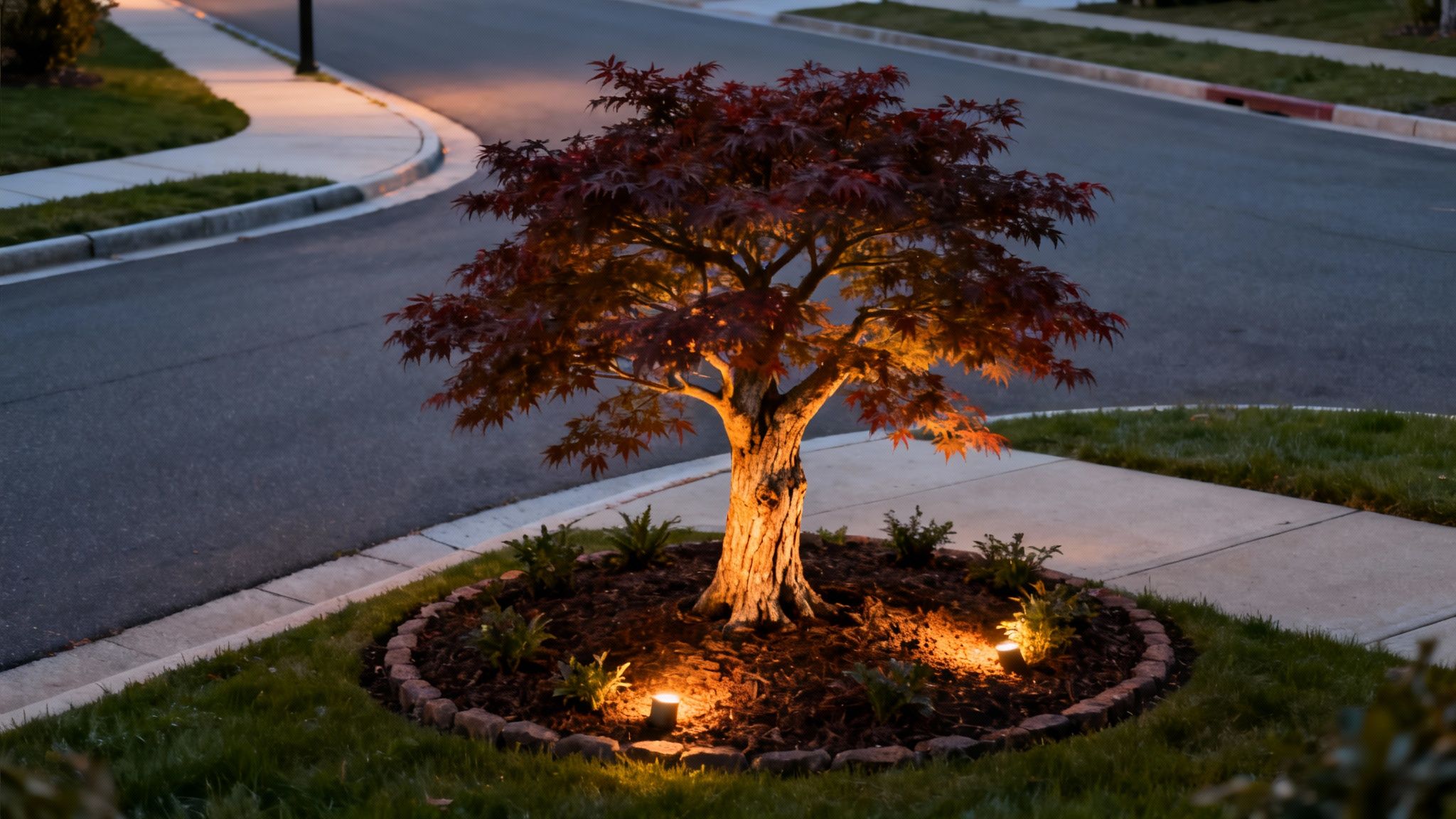
Instead of extensive planting beds, a Corner Specimen Tree with Accent Lighting focuses on a single, high-impact design element. This minimalist yet powerful approach involves strategically placing one exceptional ornamental tree at the property's corner, turning it into a living sculpture that serves as a 24/7 focal point. This is one of the most elegant corner lot landscaping ideas for homeowners who want maximum visual impact with minimal maintenance.
This strategy uses verticality to draw the eye upward, adding architectural interest and a sense of scale to the property. By day, the tree offers beauty through its form, foliage, flowers, or bark; by night, landscape lighting transforms it into a dramatic and sophisticated feature that enhances security and curb appeal.
Why It Works for Corner Lots
Corner lots are visible from two streets, making a single, strong focal point incredibly effective. A specimen tree perfectly anchors this highly visible junction, providing a clear and beautiful landmark. It solves the "empty corner" problem without requiring complex garden designs or extensive upkeep. This idea is highly adaptable, from a stunning Japanese Maple in a Seattle yard to a showy Crape Myrtle in a Southern neighborhood.
Implementation and Key Considerations
Select the Right Tree: Choose a tree with multi-season interest. Consider a Japanese Maple for its graceful structure and vibrant fall color, a River Birch for its peeling bark, or a Magnolia for its spectacular spring blooms.
Plan for Mature Size: Ensure the tree’s mature height and spread will not interfere with overhead utility lines or obstruct traffic sightlines at the intersection. Always plant it a safe distance from the sidewalk and street.
Install Strategic Lighting: Use one or two adjustable LED uplights aimed at the trunk and canopy to create dramatic shadows and highlight the tree’s texture. This creates a captivating nighttime view from both streets.
Prepare the Planting Site: Dig a hole two to three times wider than the root ball and ensure the soil is well-draining. Amend the soil with compost to give your tree a healthy start.
Pro Tip: To truly make your chosen specimen tree or other hardscape features stand out at night, consider integrating professional garden lighting into your design. Timers and smart controls can automate the process, ensuring your home looks its best every evening.
Visualize This Idea with AI
Wondering which tree would look best on your corner? You can apply AI Landscape Design to visualize your ideas using photos of your own yard. With a tool like DreamzAR, upload a picture of your empty corner and digitally "plant" different types of trees. You can see how a Redbud, a Dogwood, or a Tri-Color Beech would look in your space and even visualize the effect of nighttime lighting, helping you choose the perfect specimen for your property.
3. Living Privacy Screen with Fence Integration
A Living Privacy Screen with Fence Integration is a hybrid solution that pairs the solid structure of a fence with the natural softness of plants. This design uses layers of living elements like tall hedges, climbing vines, or bamboo alongside decorative fencing to create complete visual privacy on both street-facing sides. It’s one of the most practical corner lot landscaping ideas for homeowners who need immediate security and noise reduction but desire a lush, green aesthetic.
This approach effectively blends hardscape and softscape elements. The fence provides a foundational barrier, while the plants soften its appearance, add texture and color, and create a multi-dimensional screen that evolves with the seasons.
Why It Works for Corner Lots
Maximum exposure is a primary challenge for corner lots. This integrated method provides a robust, two-layer defense against prying eyes and street noise. The fence offers an instant screen, while the plants grow in to create a dense, living wall. This is ideal for properties in bustling neighborhoods or for creating secluded backyard sanctuaries. For example, a home in the Pacific Northwest could pair a cedar fence with climbing clematis, while a Florida property might use a vinyl fence backed by a dense screen of Leyland cypress.
Implementation and Key Considerations
Check Local Regulations: Before you begin, verify local zoning laws regarding fence height and placement (setbacks) on corner properties. These regulations can be stricter for corner lots to maintain visibility for traffic.
Choose Complementary Materials: Select a fence material that complements your home’s style. Then, choose plants that work with it. For example, a modern horizontal slat fence looks stunning with feathery bamboo, while a traditional wrought-iron fence is a perfect trellis for climbing roses or jasmine.
Stagger Plantings: For hedges like Arborvitae or Privet, stagger the plants in a zigzag pattern about 4 to 6 feet apart. This encourages the branches to interlock as they grow, creating a much denser and more effective screen faster than a single straight row.
Plan for Utilities: Remember to plan access points or gates for utility meters and boxes. Don’t plant large shrubs directly in front of essential access areas.
Pro Tip: Install a drip irrigation system along the base of the entire fence line before planting. New hedges and vines require consistent moisture to establish strong roots, and this system ensures they get it efficiently on both exposed sides of your lot.
Visualize This Idea with AI
It can be difficult to picture how a fence and plants will look together. This is a perfect scenario to apply AI Landscape Design to visualize your ideas using photos of your own yard. With an app like DreamzAR, take a photo of your corner yard and digitally add different fence styles. Then, you can layer in various hedges or vines to see exactly how the combination will look against your home. This allows you to test different privacy levels and aesthetics, ensuring your investment achieves the perfect balance of security and beauty.
4. Pollinator-Friendly Native Plant Garden
A Pollinator-Friendly Native Plant Garden is an environmentally conscious and beautiful approach to landscaping that transforms your visible corner lot into a vibrant, living ecosystem. This design utilizes plants native to your specific region to attract and support essential pollinators like bees, butterflies, birds, and hummingbirds. It’s an excellent choice among corner lot landscaping ideas for homeowners who want to create a visually dynamic garden that also benefits local wildlife and requires less maintenance over time.
This strategy moves beyond purely aesthetic goals, creating a purposeful landscape that provides food and habitat for struggling pollinator populations. By choosing native species, you ensure your garden is perfectly adapted to the local climate, soil, and rainfall patterns, resulting in a resilient and self-sustaining design that looks both natural and intentional.
Why It Works for Corner Lots
The high visibility of a corner lot makes it an ideal stage for showcasing the beauty and activity of a pollinator garden. Passersby can enjoy the fluttering of butterflies and the buzzing of bees, turning your yard into a community asset and an educational opportunity. Native plants are naturally hardy and well-suited to the often-exposed, sunny conditions of a corner, thriving with minimal intervention once established. A corner lot planted with native species like Black-Eyed Susans in the Northeast or California Poppies on the West Coast becomes a beacon for local wildlife.
Implementation and Key Considerations
Select Region-Specific Plants: Research is key. Contact your local native plant society or extension office to get a list of plants that thrive in your area. Aim for a mix that provides continuous blooms from spring through fall to support pollinators all season long.
Plant in Clusters: For maximum visual impact and pollinator attraction, plant native species in large drifts or clusters rather than single, scattered specimens. This mimics natural growth patterns and creates a bold splash of color.
Plan for All Seasons: Incorporate native grasses and plants with interesting seed heads (like Coneflower) that provide food for birds and visual structure during the fall and winter months.
Provide a Water Source: A simple birdbath or a shallow dish with pebbles and water can make a huge difference for thirsty pollinators visiting your corner lot garden.
Pro Tip: Mulch with natural materials like shredded leaves or wood chips. This helps retain soil moisture, suppresses weeds, and breaks down over time to enrich the soil, reducing the need for fertilizers and excessive watering.
Visualize This Idea with AI
Imagining a wild, native garden can be challenging. To see how this concept will look in your space, you can apply AI Landscape Design to visualize your ideas using photos of your own yard. Upload a picture of your corner lot to an app like DreamzAR and request a "native pollinator garden." The tool will generate designs filled with appropriate plants, allowing you to visualize different layouts and plant combinations before committing. To dive deeper into creating a functional and beautiful habitat, you can learn more about creating a pollinator-friendly garden.
5. Modern Minimalist Xeriscaping
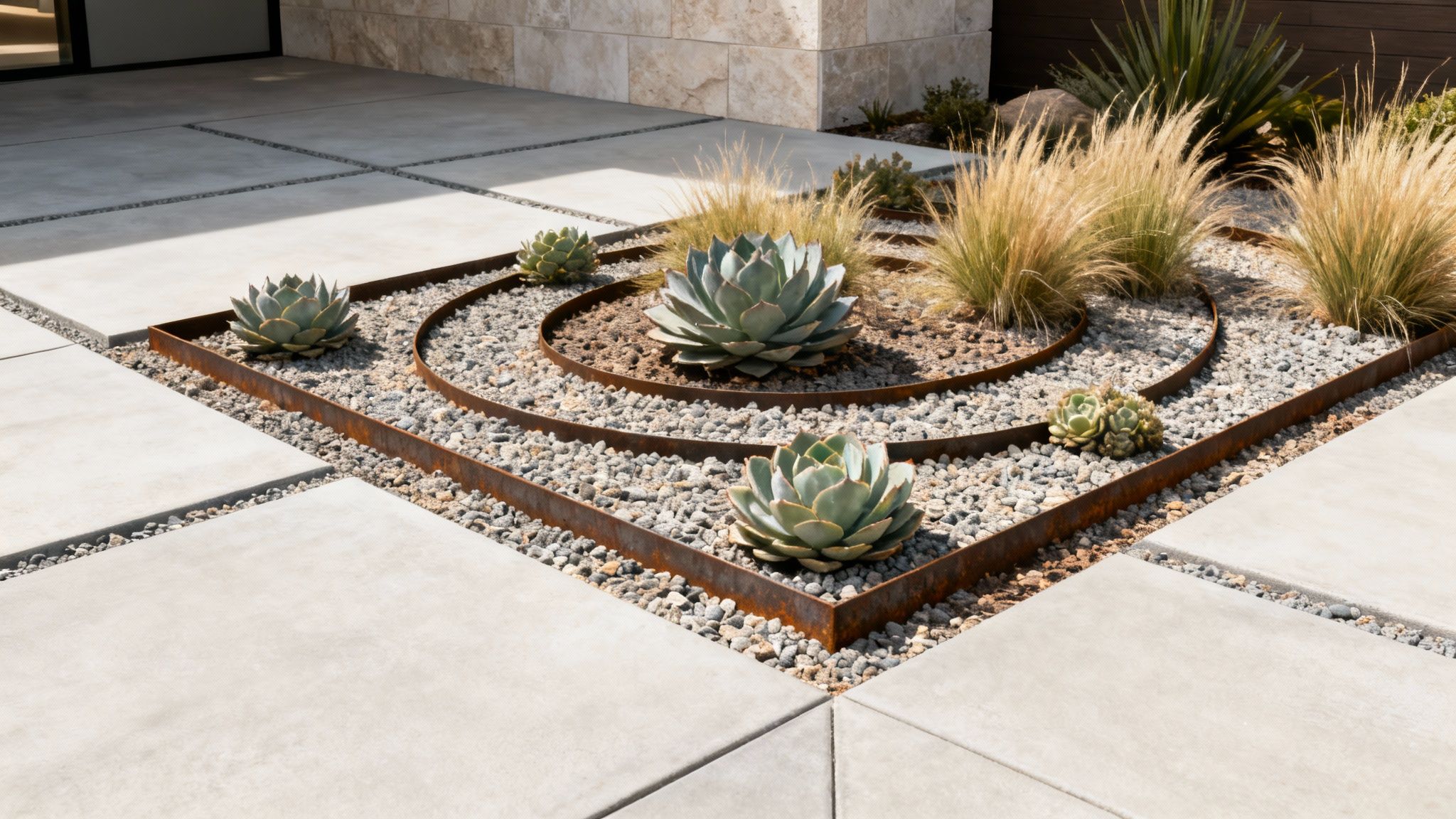
Modern Minimalist Xeriscaping is a sophisticated approach that combines water-wise planting with contemporary design principles. This style uses drought-tolerant plants, clean lines, and a deliberate use of hardscape materials like gravel, concrete, and metal to create a landscape that is both beautiful and sustainable. It is one of the most impactful corner lot landscaping ideas for homeowners seeking a low-maintenance, high-style solution that respects the environment.
This design philosophy emphasizes structure, texture, and form over dense floral displays. By prioritizing negative space and architectural elements, it transforms an exposed corner lot into a curated, artful statement that stands out for its simplicity and elegance, particularly well-suited for arid or water-restricted regions like those in Arizona or California.
Why It Works for Corner Lots
Corner lots are highly visible and often subject to intense sun exposure, making them ideal candidates for xeriscaping. This design turns those challenges into strengths by showcasing unique, sun-loving plants that thrive in tough conditions. The minimalist approach prevents the corner from looking cluttered, creating an open, airy feel that enhances the home's modern architecture. It provides a clean, year-round visual appeal that requires significantly less water and upkeep than a traditional lawn. You can explore more techniques in our guide to creating a drought-resistant landscape design.
Implementation and Key Considerations
Layer Hardscape Materials: Create visual depth by using a mix of materials. For example, combine large concrete pavers for a walkway, dark river rocks for an accent bed, and lighter-colored pea gravel for the main ground cover.
Choose Architectural Plants: Select plants with strong, sculptural forms. Agave, Yucca, and ornamental grasses like Blue Fescue or Pink Muhly provide structure and movement that complements the minimalist aesthetic.
Create Negative Space: Don't overcrowd the design. Intentionally leave open areas of gravel or decomposed granite to let the architectural plants and hardscape elements stand out. This "less is more" approach is central to the style.
Incorporate Clean Edging: Use crisp, defined lines to separate different materials. Steel or aluminum edging creates a sharp, modern boundary between gravel beds, planting areas, and any remaining turf.
Pro Tip: Group plants with similar water needs together in "hydrozones." This practice simplifies irrigation and ensures each plant receives the precise amount of water it needs to thrive, further boosting the efficiency of your xeriscape.
Visualize This Idea with AI
The precise placement of plants and hardscape is critical in a minimalist design. You can apply AI Landscape Design to visualize your ideas using photos of your own yard. Take a photo of your corner lot and upload it to a tool like DreamzAR to experiment with different xeriscape layouts. Visualize the interplay of gravel, pavers, and sculptural plants, and refine the palette until you achieve the perfect modern aesthetic. This allows you to perfect the balance and scale before committing to the physical work.
6. Tiered Raised Bed Vegetable and Herb Garden
A Tiered Raised Bed Vegetable and Herb Garden is a highly productive and visually striking solution that transforms a highly visible corner lot into an edible oasis. Instead of traditional ornamental plants, this design uses stacked or tiered raised beds to cultivate vegetables, herbs, and other edibles. This approach turns your yard into a functional, farm-to-table asset that is both beautiful and sustainable, making it one of the most rewarding corner lot landscaping ideas for homeowners who value fresh produce.
This concept layers garden beds vertically, maximizing growing space on a compact footprint. The tiered structure creates architectural interest, turning a simple vegetable patch into a dynamic landscape feature that adds depth, texture, and a unique, utilitarian charm to your property.
Why It Works for Corner Lots
Corner lots are typically blessed with abundant sunlight, often receiving 6-8 hours of direct sun required for most vegetables and herbs to thrive. This design leverages that exposure, turning a previously unused or purely decorative space into a productive garden. It also presents a beautiful, community-friendly feature; think of the lush, tiered urban vegetable gardens seen in Portland or Seattle. The raised structure provides ergonomic benefits, making planting and harvesting easier on the back.
Implementation and Key Considerations
Plan for Sunlight: Before building, observe your corner lot throughout the day to confirm it receives at least 6-8 hours of direct sun. Position the tallest tier on the north side to prevent it from shading the lower levels.
Choose the Right Materials: Construct beds from untreated, rot-resistant wood like cedar, or use durable composite materials. Avoid pressure-treated lumber for edible gardens, as chemicals can leach into the soil. Beds should be 2-3 feet high for comfortable access.
Layer Smartly: Plant vining plants like tomatoes or cucumbers in the lower, larger beds with trellises. Use mid-tiers for bushier plants like peppers and lettuces, and reserve the highest, most visible tier for aromatic herbs like rosemary, basil, and thyme.
Ensure Proper Irrigation: Group plants with similar water needs together. A drip irrigation system with separate zones for each tier is the most efficient way to ensure every plant gets the right amount of water without waste.
Pro Tip: Install a decorative fence or low stone edging around the garden's perimeter. This defines the space, keeps pets out, and adds a polished, intentional look that elevates the garden from a simple patch to a true landscape feature.
Visualize This Idea with AI
Imagining how a multi-level vegetable garden will fit into your corner lot can be challenging. A great way to plan is to apply AI Landscape Design to visualize your ideas using photos of your own yard. Upload a picture to an app like DreamzAR to generate visuals of a complete tiered garden layout. You can experiment with different materials, heights, and configurations to see how it complements your home's style. For more inspiration on structures, you can explore creative raised garden bed ideas.
7. Hardscape Focal Point with Water Feature
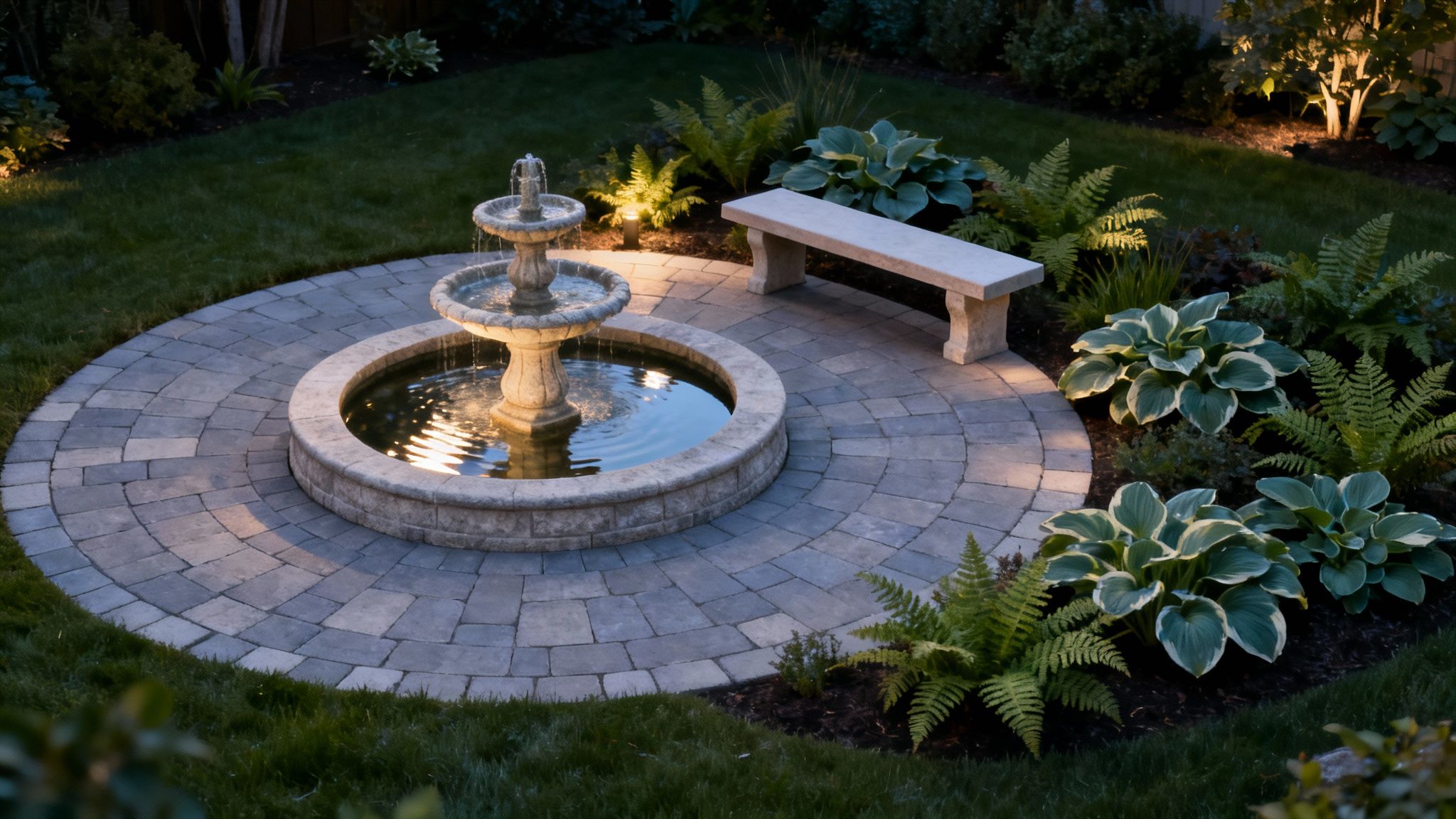
A Hardscape Focal Point with a Water Feature transforms a visible corner lot into a destination of sensory delight. This design centers around a captivating element like a fountain, bubbling rock, or small pond, surrounded by complementary hardscaping such as stone patios, pavers, and seating. It’s one of the most sophisticated corner lot landscaping ideas for creating an intentional, high-impact statement that draws attention away from the home’s exposed angle and into a beautifully curated scene.
This approach creates a permanent, structured attraction that offers both visual and auditory appeal. The sound of moving water masks street noise, while the solid materials of the hardscape provide a grounding contrast to the softness of surrounding plants, establishing a luxurious and tranquil atmosphere.
Why It Works for Corner Lots
High visibility on a corner lot can be a challenge, but this design turns it into an asset. Instead of trying to hide the corner, you celebrate it with a stunning feature that serves as the centerpiece of your entire landscape. It provides a strong, deliberate focal point that anchors the yard, guides the viewer’s eye, and elevates the property's perceived value. This strategy is perfect for creating an outdoor living space that feels like an elegant courtyard or a private retreat.
Implementation and Key Considerations
Choose the Right Feature: Select a water feature that complements your home’s architecture. A tiered fountain works well for Mediterranean or classic homes, while a minimalist basin or a sleek water wall suits modern designs. A naturalistic pondless waterfall is ideal for rustic or cottage-style gardens.
Integrate Hardscaping: Surround the water feature with a patio or walkway made from pavers, flagstone, or brick. Add a low stone seating wall or a well-placed bench to create an inviting spot for relaxation.
Plan for Utilities: Professional installation is often recommended. Ensure a GFCI-protected electrical outlet is available for the pump and any lighting. A recirculating system is essential to conserve water.
Soften with Plants: Use water-loving plants like ferns, hostas, and water irises around the feature to soften the stone edges. Layer in ornamental grasses for texture and movement to complete the composition. Learn more about creating a harmonious aquatic garden.
Pro Tip: Position landscape lighting to illuminate the water feature at night. Uplighting a fountain or adding submersible lights within a pond creates a dramatic, multi-sensory experience that extends the enjoyment of your landscape into the evening hours.
Visualize This Idea with AI
The scale and placement of a water feature are critical. By applying AI Landscape Design, you can visualize your ideas using photos of your own yard. Take a picture of your corner and upload it to an app like DreamzAR to generate realistic visuals of different fountain or pond styles. This allows you to experiment with various hardscape materials and layouts, helping you see how the feature will command attention and harmonize with your existing landscape before committing to the investment.
8. Curved Layered Island Bed Design
A Curved Layered Island Bed Design moves away from traditional foundation planting and introduces free-form, organic shapes into the landscape. This sophisticated approach uses standalone, curved garden beds, often placed strategically in the open lawn area, to create a sense of flow and visual movement. It is one of the more artistic corner lot landscaping ideas, breaking up the monotony of a large, flat lawn and directing the eye through the space with graceful lines.
This design transforms your corner lot into a dynamic garden gallery. Instead of hugging the house, these island beds act as living sculptures within the yard, adding depth, dimension, and multiple points of interest. They are particularly effective for guiding visitors toward an entryway or highlighting a specific feature of your property.
Why It Works for Corner Lots
Corner lots can feel vast and undefined. Curved island beds solve this by creating distinct zones and adding vertical layers without erecting solid barriers. They soften the property's sharp angles and can be positioned to strategically screen undesirable views or enhance privacy in specific areas. The gentle curves are visible and appealing from both intersecting streets, providing a multidimensional curb appeal that changes as you move around the property.
Implementation and Key Considerations
Outline the Shapes: Use a garden hose or landscape paint to lay out the organic, flowing shapes of your island beds. Aim for broad, sweeping "S" curves rather than tight, small circles to create a more natural and elegant look.
Layer for Impact: Apply the "thriller, filler, spiller" concept. Place the tallest plants (the "thriller," like an ornamental grass or a dwarf tree) in the center or back of the curve. Surround them with mid-sized perennials and shrubs (the "filler"), and finish the edges with low-growing or trailing plants (the "spiller").
Strategic Placement: Don't just place an island in the middle of the lawn. Consider sightlines from windows, the street, and walkways. Use an island bed to anchor the corner, frame the walkway, or soften the transition between the front and side yards.
Maintain Cohesion: Use a consistent mulch or groundcover in all island beds to unify the design. Repeat key plants or colors across different beds to create a cohesive and intentional landscape design.
Pro Tip: Ensure you leave ample space between island beds and around them for easy lawn maintenance. A mowing strip of at least 4-6 feet is ideal to comfortably maneuver a lawnmower without damaging plants.
Visualize This Idea with AI
The abstract nature of island beds can make them difficult to imagine in your space. To see how they'll truly look, you can apply AI Landscape Design to visualize your ideas using photos of your own yard. By uploading a picture of your corner lot to an app like DreamzAR, you can generate multiple layouts with different curved island bed shapes and plant combinations. This allows you to see exactly how the beds will break up the space and impact views from both streets, ensuring your final design is both beautiful and functional.
Corner Lot Landscaping: 8-Option Comparison
Design Option | Implementation 🔄 | Resource & Maintenance ⚡ | Expected Outcomes ⭐📊 | Ideal Use Cases 💡 | Key Advantages 📊 |
|---|---|---|---|---|---|
Wraparound Border Planting | 🔄 Moderate–High: detailed layout, continuous beds and edging | ⚡ Medium–High: higher installation cost, regular pruning, irrigation both sides | ⭐⭐⭐⭐ Multi-angle curb appeal, year-round screening, framed home | Corner homes needing privacy and cohesive curb presentation | Continuous screening, professional appearance, strong multi-view impact |
Corner Specimen Tree with Accent Lighting | 🔄 Low–Moderate: single-tree siting + lighting design (pro electrician advised) | ⚡ Low–Medium: one-time tree cost, lighting upkeep; lower routine care than beds | ⭐⭐⭐⭐ Dramatic focal point day & night, vertical interest, modest screening | Properties wanting a simple, high-impact focal with lower upkeep | High visual drama, extended nighttime appeal, minimal planting area |
Living Privacy Screen with Fence Integration | 🔄 High: structural fence + layered planting; permits likely | ⚡ Very High: costly materials/installation and ongoing pruning; 2–3 years to mature | ⭐⭐⭐⭐⭐ Maximum privacy, noise reduction, enclosed outdoor living | Busy streets or owners prioritizing full visual separation | Complete visual barrier, noise buffering, protected outdoor space |
Pollinator-Friendly Native Plant Garden | 🔄 Low–Moderate: species selection by region, simpler layout | ⚡ Low: reduced water and chemical needs; moderate initial plant cost | ⭐⭐⭐⭐ Supports biodiversity, seasonal color, low long-term upkeep; limited privacy | Eco-conscious homeowners, wildlife support, low-water priorities | Water-efficient, wildlife-friendly, educational/community value |
Modern Minimalist Xeriscaping | 🔄 Moderate: hardscape installation, drainage and material choices | ⚡ Low: very water-efficient, low routine maintenance; occasional rock upkeep | ⭐⭐⭐⭐ Stylish contemporary aesthetic, major water savings, low upkeep | Arid climates, water-conscious homeowners, modern design seekers | Significant water/cost savings, minimal maintenance, clean aesthetic |
Tiered Raised Bed Vegetable & Herb Garden | 🔄 Moderate: build beds, soil prep, irrigation and sun planning | ⚡ Medium–High: ongoing watering, pest control, seasonal planting; material costs | ⭐⭐⭐⭐ Productive yields, visual interest, educational value; seasonal look | Food gardeners, families, community or edible-landscape goals | Fresh produce, customizable layouts, neighborhood engagement |
Hardscape Focal Point with Water Feature | 🔄 High: complex hardscape, plumbing/electrical; pro design/install recommended | ⚡ Very High: high upfront cost and ongoing pump/cleaning, winterization | ⭐⭐⭐⭐⭐ Elegant focal point, masks street noise, strong property value boost | Upscale properties seeking a dramatic, relaxing centerpiece | Sophisticated focal element, ambient sound, strong curb appeal |
Curved Layered Island Bed Design | 🔄 Moderate: careful curve layout and layered planting plan | ⚡ Medium: labor-intensive installation, varied plant maintenance, edging upkeep | ⭐⭐⭐⭐ Dynamic visual movement, softens lot angles, seasonal flexibility | Properties wanting organic flow and high visual interest without extreme cost | Softens angular corners, flexible plant palettes, strong movement and depth |
From Idea to Reality: Your Next Steps
You've explored a comprehensive portfolio of corner lot landscaping ideas, from the welcoming embrace of a wraparound border to the sophisticated statement of a minimalist xeriscape. We've deconstructed each concept, providing the tools you need to move beyond simple inspiration and toward a tangible, well-executed design. The journey from a blank or underutilized corner to a stunning landscape feature is one of the most rewarding home improvement projects you can undertake.
The key takeaway is that your corner lot is not a challenge to be overcome but a unique opportunity to be seized. Its dual-street exposure offers a prominent canvas to express your personal style, boost your home's curb appeal, and create a functional outdoor space that serves your family's needs. The ideas presented, whether a food-producing tiered garden or a wildlife-attracting pollinator haven, demonstrate the vast potential held within that highly visible piece of land.
Bridging the Vision Gap with Technology
The most significant hurdle in any landscaping project is uncertainty. Will the plants look right together? Is the scale of the water feature appropriate for the space? Will the curved island bed feel natural from the street view? Traditionally, answering these questions required costly professional mockups or risky guesswork. Today, this uncertainty is a thing of the past.
Key Insight: The most successful landscaping projects are those that are thoroughly visualized before the first shovel hits the ground. This critical step eliminates costly mistakes, ensures design cohesion, and builds confidence in your final plan.
This is precisely where modern technology becomes your most valuable landscaping tool. You can apply AI Landscape Design to visualize your ideas using photos of your own yard. This isn't just about seeing a generic example; it's about seeing how the Modern Minimalist Xeriscaping will look against your brick facade or how the Corner Specimen Tree with Accent Lighting will cast shadows on your driveway at dusk.
Your Actionable Path Forward
Making your vision a reality is a step-by-step process. Here’s how you can confidently proceed:
Revisit and Shortlist: Review the eight ideas we covered. Select the top two or three that resonate most with your home's architecture, your local climate, and the level of maintenance you're prepared to handle.
Photograph Your Canvas: Take clear, well-lit photos of your corner lot from multiple angles. Capture the view from each street, from your front door, and from key windows inside your home. These photos are the foundation for your digital design.
Visualize with AI: Upload your best photos into a tool like DreamzAR. Apply your shortlisted ideas to your yard by generating photorealistic designs. Experiment with different plant palettes, adjust the layout of hardscape elements, and use AI to generate variations you might not have considered.
Walk Through in AR: Once you have a design you love, use the Augmented Reality (AR) feature. This allows you to stand on your property and see a full-scale, 3D model of your new landscape through your phone's camera. This immersive experience is invaluable for judging scale, sightlines, and overall feel.
Finalize and Implement: With a refined, visualized plan in hand, you can create a precise materials list, develop a phased implementation strategy, and approach the project with the assurance that the final result will match your vision.
By following this process, you effectively remove the guesswork and bridge the gap between imagination and execution. You are no longer just hoping your corner lot landscaping ideas will work out; you are moving forward with a proven, validated design that you've already seen and approved on your own property.
Ready to stop imagining and start seeing? Bring your corner lot landscaping ideas to life with DreamzAR AI Landscape Design. Upload a photo of your yard and let our AI generate stunning, realistic designs in seconds, allowing you to visualize your project with confidence before you begin. Visit DreamzAR AI Landscape Design to transform your corner lot today.