Do It Yourself Landscaping Design A Guide to Your Dream Yard
- Akhilesh Joshi
- 3 days ago
- 16 min read

Gone are the days of guesswork and rough sketches on graph paper. Today, do it yourself landscaping design is all about empowering you, the homeowner, with tools that bring stunning, practical outdoor spaces to life. Modern tech, especially AI-powered apps, lets you snap a photo of your yard and instantly play with professional-level designs. The whole process is now more accessible, affordable, and honestly, a lot more fun.
The New Era of DIY Landscaping
Welcome to the DIY landscaping revolution. More and more homeowners are rolling up their sleeves, finding real satisfaction in creating a personal outdoor oasis without the hefty price tag that comes with hiring a traditional design firm. This shift has turned what used to be simple lawn care into full-scale design projects, transforming neglected backyards into essential living spaces.
This trend really took off after the pandemic, as we all started looking for ways to make the most of our home environments. The numbers back this up. Market research projects the global landscaping tools market will jump from USD 35.20 billion in 2025 to a whopping USD 46.70 billion by 2030. And who's driving this growth? Homeowners like you, making up a dominant 61% of the market.
Getting from a vague idea to a finished project is simpler than you might think, thanks to powerful, user-friendly tools. This isn't just about digging in the dirt; it's a clear, manageable journey.
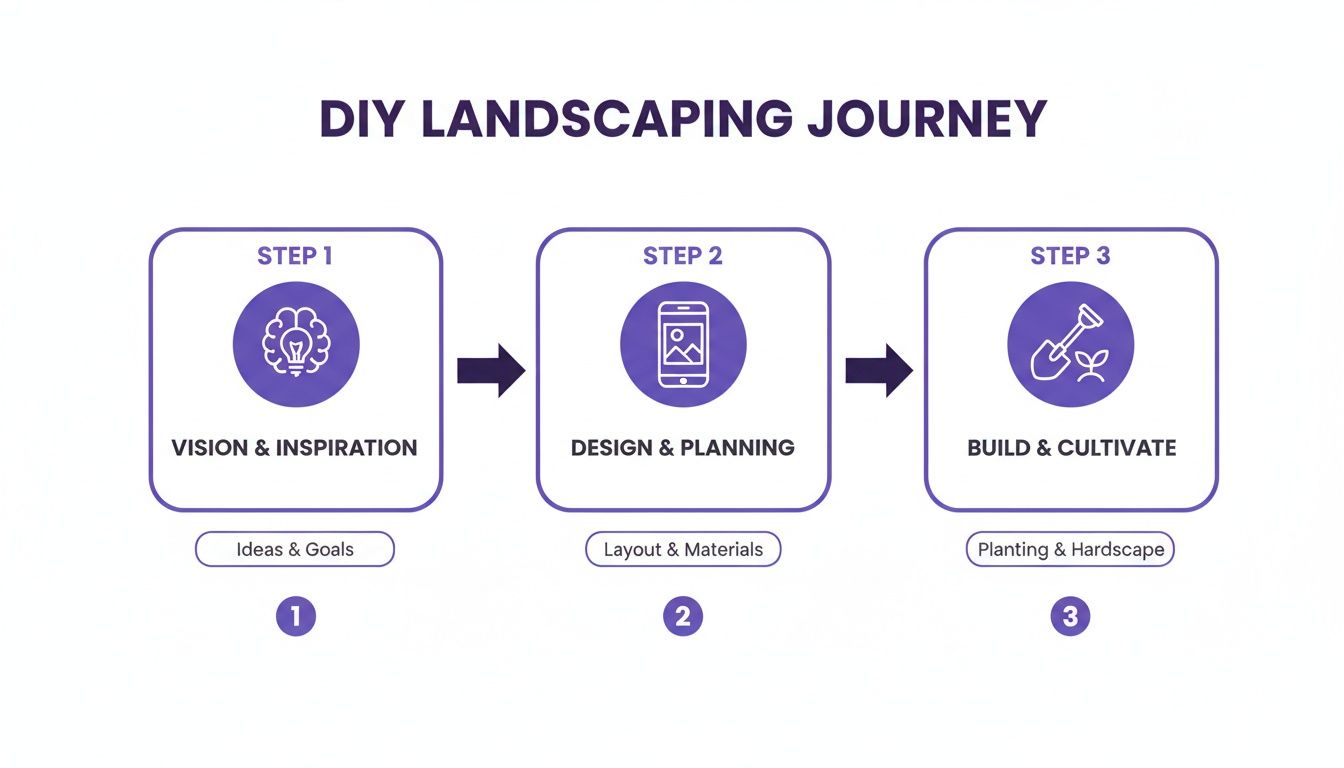
This simple flow shows that modern DIY design is about making smarter, more confident decisions before you ever pick up a shovel. It's about blending your vision with practical technology.
Visualize Before You Build with AI
The biggest game-changer in DIY landscaping is seeing your ideas come to life right in your own yard. Forget trying to imagine how a new flower bed or patio might look. With AI Landscape Design, you can upload a photo of your own yard and actually see it.
Upload a photo of your yard to use as a digital canvas. It’s that simple.
Generate dozens of unique concepts in seconds. Think modern minimalist curb appeal, a cozy backyard retreat with a fire pit, or a lush pollinator garden, all visualized directly on your property.
Experiment risk-free with different plant combinations, paver styles, and hardscape materials without spending a dime or lifting a finger.
This tech completely removes the fear of a blank slate. It bridges the gap between what's in your head and a realistic, achievable plan. In fact, the emerging role of AI in modern landscape design is making it possible for anyone to create a beautiful, functional outdoor space they love.
By using an AI Landscape Design tool, you can preview exactly how a new garden, pathway, or patio will look using a photo of your own yard. This ensures the final result matches your vision perfectly, saving you time, money, and potential regret.
Think of this guide as your practical companion for this exciting journey. I’ll walk you through every stage, from mapping out your yard to selecting the perfect plants and materials. Let’s turn that dream landscape into a reality you can build yourself.
Mapping Out Your Yard for Success
Every great landscape project starts long before you pick up a shovel. It begins with a pencil, a measuring tape, and a good look at what you’re working with. Before you can dream up a new design, you have to get to know your yard—the good, the bad, and the quirky. Think of your property as a blank canvas. Mapping it out is the first, most critical brushstroke.
This initial sketch doesn't need to be a professional blueprint. Just grab a clipboard and start with a simple, to-scale drawing of your property. Your goal is to create a "base map" that includes the non-negotiables of your space.
Property Lines: Know where your yard begins and ends.
Existing Structures: Sketch in your house, garage, shed, and any patios or decks that are staying put.
Major Features: Pinpoint the location of big trees, established shrubs, and anything you can't move, like a utility box or septic system cover.
Topography: Make a note of any obvious slopes, low spots where water seems to collect, or high points that might get extra sun.
Getting these measurements right from the start is a huge time-saver. It dictates how much mulch you'll need, how far apart to space your plants, and whether that dream patio will actually fit. For a detailed walkthrough, our guide on how to measure yard square footage breaks it down into simple, easy-to-follow steps.
Understanding Your Site's Personality
With your base map complete, it's time to play detective. The next step is to layer on all the environmental details that will ultimately decide which plants thrive and which ones... well, don't. A stunning design on paper means nothing if it’s at war with your yard's natural conditions.
Sunlight is, without a doubt, the most important factor. Spend a day tracking how the sun moves across your property. You're looking to identify your "microclimates." Mark which areas get full sun (6+ hours of direct light), part shade (3-6 hours), and full shade (less than 3 hours). This simple "sun map" will become your best friend when you hit the nursery.
Beyond the sun, you'll want to investigate a few other key elements:
Soil Type: Is your soil sandy and drains in a flash? Or is it heavy clay that holds onto water? A simple DIY soil test kit can tell you a lot.
Drainage: After a good rain, where do the puddles form? Noting these spots can save you from the headache of root rot and soggy lawns down the line.
Wind Patterns: Is there a corner of your house that acts like a wind tunnel? That’s probably not the best spot for delicate, tall flowers.
Bringing Your Map to Life with AI
Let's be honest, the mapping and analysis part can feel a bit like homework. This is where modern tools completely change the game for DIYers. The real magic of AI Landscape Design is its ability to let you visualize ideas directly on a photo of your actual yard. It’s more than just making pretty pictures; it’s a powerful site analysis tool.
When you upload a photo of your own yard to an app like DreamzAR, you can instantly see how a new garden bed or patio looks with your home’s unique architecture and existing landscape. Wondering if that sunny spot you mapped out is truly the perfect place for a new deck? Generate a design on your photo and see for yourself. Curious how a shade tree would look on the west side of your house to help with the afternoon heat? AI can show you in seconds, using your real yard as the backdrop.
This is the bridge between your hand-drawn map and a real-world preview. It lets you test-drive your concepts against your yard’s actual conditions—sun, slopes, and all—before you ever break ground. It’s the ultimate sanity check for your DIY design plans.
As you map things out, don't forget the structures that link your indoor and outdoor spaces, like decking. Checking out some inspiring balustrade decking ideas can spark ideas for how to integrate these functional elements beautifully. This foundational work ensures every choice you make is smart, intentional, and perfectly suited to the yard you have.
Time to Visualize: Bringing Your Ideas to Life with AI
Okay, you've mapped out your yard. Now for the really fun part. This is where those rough sketches and abstract ideas get to become real, tangible visuals. Honestly, one of the biggest leaps forward in do it yourself landscaping design is the power to see the finished project before you ever pick up a shovel. And AI is what puts that power right in your hands.
Gone are the days of just crossing your fingers and hoping for the best. You no longer have to squint and try to imagine if a new paver patio will clash with your deck, or if that row of arborvitaes will actually give you the privacy you're craving. New tools can turn a simple photo of your own yard into a dynamic digital canvas.
From Inspiration to Instant Concepts
Every great design starts with a spark of inspiration, right? Maybe you fell in love with a modern, minimalist front yard you saw on a walk, or you pinned a picture of a cozy backyard retreat with a killer fire pit. The classic challenge has always been figuring out how to make that inspiration work for your specific space. A design that looks incredible in a magazine might just not fit with your home's architecture or the unique layout of your yard.
This is exactly where an AI-powered app like DreamzAR completely changes the game. The concept behind it is brilliantly simple but incredibly effective.
Snap a Photo: Just take a clear picture of the area you want to tackle—your front yard, a sad-looking side garden, whatever it is.
Let the AI Do Its Thing: Upload that photo into the app. In just a few seconds, the AI analyzes your space—your house, existing trees, current layout—and spits out dozens of unique design concepts.
Explore a World of Possibilities: All of a sudden, that blank slate is filled with ideas. You can see your yard transformed with a lush English cottage garden, a sleek modern hardscape, or a water-wise xeriscape design, all rendered perfectly onto your own photo.
This kind of instant visualization is a total game-changer. It takes the fear out of making a bad choice and gives you the freedom to experiment with confidence.
Applying AI to Real-World Landscaping Scenarios
Let's get practical. AI isn't just about creating dreamy, far-off concepts; it's a hands-on tool for solving real design problems and making concrete decisions for your do it yourself landscaping design project. By applying AI Landscape Design to a photo of your yard, you can test solutions before you build.
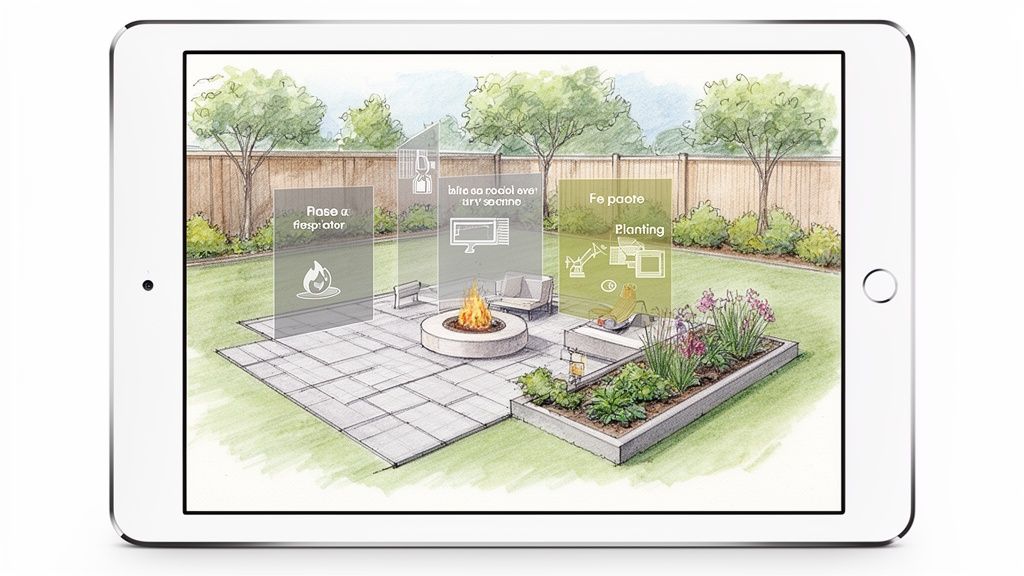
Take a look at this sketch of a site analysis, which is the kind of old-school planning that AI now helps bring to life.
This process shows the core power of AI—transforming a standard yard photo into multiple, professionally designed concepts in an instant. You can immediately see which styles vibe with your home and which ones just don't, saving you countless hours of second-guessing and potential rework down the line.
This hands-on approach is tapping into a larger trend. For many, home gardening has become a therapeutic escape, fueling a lawn and garden consumables market that's projected to hit USD 41.13 billion by 2034. There's a deep satisfaction in creating something beautiful with your own hands, and AI tools are making that more achievable than ever.
The biggest win with using AI to visualize your landscape on a photo of your own yard is risk-free experimentation. You can test out bold color palettes, compare pricey materials like natural stone versus concrete pavers, and see how mature plants will look—all without spending a dime or digging a single hole.
Refining Your Vision with AI Customization
Getting those initial concepts is just the starting line. The real magic happens when you start refining those ideas to perfectly match what you want and need. A good AI tool will give you that granular control, letting you move from a broad idea to a detailed, buildable plan, all using your own yard as the base.
Let's say the AI generated a backyard design you mostly love, but the fire pit is in the wrong spot, or you'd rather see hydrangeas instead of roses. No problem. You can dive in and start tweaking.
Plant Swapping: Imagine browsing a library of thousands of real plants—trees, shrubs, perennials, you name it—and dropping them right into your design. Using a photo of your yard, you can see exactly how a Japanese Maple will anchor a corner or test different flower combos for your front garden bed.
Material Selection: Want to play with hardscape materials? See how a bluestone patio stacks up against classic brick pavers. Test out different types of mulch or decorative rock for your garden beds to see what feels right on your own property.
Augmented Reality (AR) Previews: This is where it feels like sci-fi. With AR, you can use your phone’s camera to project your new design onto your actual yard in full scale. You can literally walk around a virtual fire pit, get a true sense of the height of a new pergola, and feel the space before committing.
For anyone diving into landscaping, learning to use these tools is a huge advantage. Our ultimate guide to visualizing your yard with AI for landscape design is packed with more tips and tricks. By closing the gap between your imagination and reality, AI gives you the confidence to create a beautiful, functional, and deeply personal outdoor space.
Selecting Plants and Materials Like a Pro
Alright, you've got a stunning AI-generated visual in hand. This is where the digital dream starts to become a real-world project. It's a fantastic moment in any do it yourself landscaping design project—turning that visualized concept into an actual shopping list of plants and materials. Your AI design, based on a photo of your yard, is more than just a pretty picture; it's the practical blueprint that takes all the guesswork out of your trip to the garden center.
The choices you make right now will shape not just the final look of your yard, but also how much time you'll spend maintaining it down the road. By making smart, informed selections based on your design and your specific local conditions, you're setting your new landscape up to thrive for years.
Decoding Your Plant Palette
I've always found it helpful to think about a great landscape design in layers, with each plant type serving a distinct purpose. It's a lot like decorating a room: you have the structural walls, the foundational furniture, and then the fun decorative accents. Your plant palette works the exact same way.
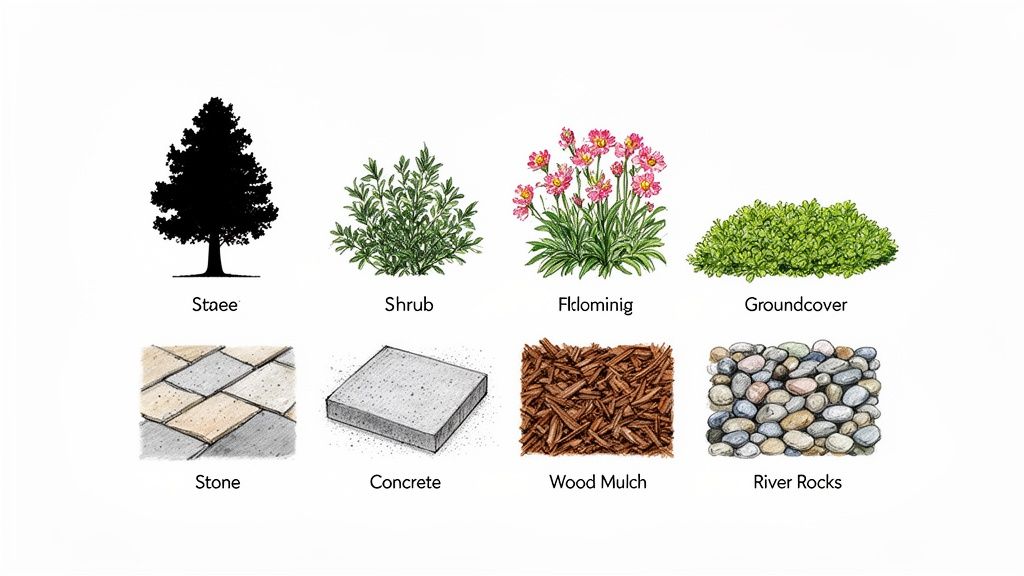
Trees for Structure and Shade: These are the real anchors of your landscape. They provide height, much-needed shade, and a sense of permanence. A big oak or maple might be the perfect anchor for a large backyard, while a more slender Japanese Maple could be a gorgeous focal point in a smaller front yard.
Shrubs for Foundation and Form: Think of shrubs as the workhorses of the garden. They're perfect for defining different spaces and hiding things like unsightly foundations. Evergreens like boxwood provide that critical year-round structure, while flowering shrubs like hydrangeas deliver seasonal drama.
Perennials for Seasonal Color: These are the recurring stars of your garden show, coming back each year with bursts of color and texture. Things like coneflowers, hostas, and ornamental grasses are popular for a reason—they add so much dynamic life to garden beds.
Groundcovers for Texture and Weed Control: Don't forget the floor! Low-growing plants like creeping thyme or sedum can fill in gaps, help suppress weeds, and add a soft, textured carpet to your design.
The real key to success is picking plants that are actually suited for your yard's specific conditions. Remember that sun map you made earlier? Now's the time to pull it out. Following the "right plant, right place" rule is probably the single most important thing you can do for a low-maintenance, thriving garden. Always, always check a plant's tag for its light needs, mature size, and USDA hardiness zone.
Visualizing Real Plants with AI
This is where an app really proves its worth. Visualizing ideas on a photo of your own yard becomes incredibly practical at this stage. An AI design app like DreamzAR lets you move beyond generic plant icons and see how specific, real-world species will actually look in your space.
You can browse through huge digital libraries and virtually "plant" a certain variety of tree or shrub right into your design. This gives you a true sense of the scale, color, and texture against your home's exterior before you spend a dime. For a deeper dive, you can even explore curated plant and tree collections from around the world to find unique options that perfectly match your style.
By using AI to test different plant combinations on a photo of your yard, you can create a cohesive and visually stunning palette. You'll see how the deep burgundy of a Japanese Maple complements the bright green of your hostas, ensuring a professional-looking result.
Choosing Your Hardscape Materials
Hardscaping provides the solid bones of your landscape—the patios, walkways, and walls that truly define the space. The materials you pick here will have a massive impact on your budget, overall aesthetic, and long-term maintenance.
Your AI design has probably shown you a general look, like a stone patio or a wood mulch pathway. Now, it's time to get specific. You need to find the right balance between cost, durability, and style.
Take patios, for example. I'll break down a few common choices to show you what I mean.
Hardscape Material Comparison: Pavers vs. Gravel vs. Decks
A comparative look at popular hardscaping materials to help you choose the best option for your budget, style, and maintenance preferences.
Material | Average Cost (per sq ft) | Maintenance Level | Best For |
|---|---|---|---|
Concrete Pavers | $8 - $25 | Low to Medium | Patios, walkways, driveways; very versatile with many styles and colors. |
Decomposed Gravel | $2 - $5 | Medium | Casual seating areas, rustic pathways, drought-tolerant designs. |
Wood/Composite Deck | $25 - $60 | Medium to High | Raised entertaining areas, connecting indoor/outdoor spaces. |
Natural stone like flagstone offers a timeless, organic look but comes with a higher price tag. Concrete pavers, as you can see, are more budget-friendly and give you a huge range of colors and styles. For garden beds, wood mulch is inexpensive and actually improves soil health as it decomposes, but you'll need to refresh it annually. River rock, on the other hand, is more of a one-time investment that offers a clean, modern look but can be a pain to keep clean of leaves and debris.
This is another area where your AI visualization tool is your best friend. You can instantly swap between a brick paver patio and a gravel seating area on the photo of your yard. See which one feels right. This simple process turns your AI concept into a confident, actionable shopping list, empowering you to execute your do it yourself landscaping design like a seasoned pro.
Budgeting and Building Your Dream Yard
This is where the rubber meets the road—or in this case, where your beautiful, AI-generated vision meets the real world of dirt, dollars, and honest work. Nailing down a realistic budget and a smart building plan is maybe the single most important part of any do it yourself landscaping design. It's what turns your on-screen dream into an actual, in-the-ground reality without all the stress.
First things first, you need to translate that design into a detailed shopping list. Go through your visual plan and write down every single thing you’ll need. I'm talking everything, from the exact number of perennials and bags of soil to the square footage of pavers and the cost to rent a sod cutter. Don't gloss over the small stuff; things like mulch, landscape fabric, and edging can really add up.
Creating a Realistic Cost Estimate
With your list in hand, it's time to play detective. Start pricing out your materials at local nurseries, garden centers, and big-box hardware stores. You'll quickly find that costs can swing wildly from place to place, so getting a few quotes on big-ticket items like stone or lumber is always worth the effort.
To keep your head straight, group your expenses into logical buckets:
Plants: Every tree, shrub, perennial, and annual.
Hardscape Materials: Pavers, gravel, edging, retaining wall blocks, etc.
Soil and Amendments: Topsoil, compost, and any specialty mixes.
Mulch: Figure out the cubic feet you’ll need of mulch or decorative rock.
Tool Rentals: Will you need a tiller, sod cutter, or plate compactor?
This is where your AI-generated design becomes your best friend for budgeting. By seeing it all laid out on a photo of your actual yard, you get a much clearer, more accurate picture of the materials you’ll need. It stops you from over-buying and helps you build a precise, actionable budget right from the get-go.
As you map out your outdoor living space, think about the big picture, too. You might even have larger projects on the horizon, like converting a porch into a sunroom to better connect your home and garden. It’s always good to factor those long-term goals into your overall plan.
Smart Strategies for Saving Money
A killer landscape doesn't have to cost a fortune. With some savvy planning, you can trim your costs without sacrificing the quality of your design. For a much deeper look, check out our complete guide to smart landscaping on a budget.
Here are a few of my favorite ways to make your money go further:
Shop end-of-season sales. Nurseries practically give plants away in the fall to clear out their stock.
Find free materials. Call up some local arborists. They're often desperate to offload free wood chips, which make for fantastic mulch.
Start small. That one-gallon shrub is way cheaper than the five-gallon version, and honestly, it will probably catch up in just a couple of years.
Phasing Your Project for Success
One of the smartest moves for any big do it yourself landscaping design is to break it down into phases. Trying to do it all at once is a recipe for burnout and a busted budget. Instead, look at your master plan and carve it into smaller, bite-sized stages.
For instance, maybe you focus on the hardscaping this year and build that gorgeous new paver patio. Next spring, you can tackle the surrounding garden beds. The year after that? Maybe add a water feature or pergola.
Phasing the work makes the whole thing feel way less intimidating and lets you spread the costs out over time. It’s a marathon, not a sprint, and this approach ensures you can actually finish your vision without the financial pressure.
Got Questions About DIY Landscaping?
Even with the best plan in hand, you’re bound to have questions pop up during your do it yourself landscaping design project. Let's tackle some of the most common ones I hear from homeowners. Getting these answers sorted out now will keep you moving forward with confidence.
Probably the biggest question on everyone's mind is budget. The truth is, costs can be all over the map. You might spend a few hundred dollars refreshing a simple garden bed, or that could balloon into several thousand for a full-blown patio and planting installation.
My best advice? Finalize your design first. Then, you can treat that design like a detailed shopping list and price out every single plant, paver, and bag of mulch.
How Can I Make My Small Yard Feel Bigger?
This is a classic challenge, but one with some fun solutions. When you're working with a compact space, it's all about creating an illusion of depth and openness. A few tried-and-true design tricks can make a small backyard feel much more expansive than it really is.
Go Vertical: You want to draw the eye upward. Think tall, slender plants like Italian Cypress or a simple trellis covered in beautiful climbing vines. This adds a sense of height without eating up your precious ground space.
Keep Your Color Palette Simple: When you stick to a cohesive color scheme for both your plants and hardscaping, you create a feeling of unity. This helps prevent the space from looking cluttered or overly busy.
Create Curved Pathways: Instead of straight, rigid lines, try adding gentle curves to your walkways. It's more visually interesting and creates a subtle sense of journey and mystery, making the yard feel like there's more to explore.
This is where AI Landscape Design becomes your secret weapon. You can upload a photo of your small yard and instantly see how different layouts change the vibe. Test out curved paths versus straight ones, or see which vertical plants really open up the space before you commit a dime.
What Are the Best Low-Maintenance Plants?
If you're just starting out, your goal should be to choose plants that are forgiving. You don't want a garden that demands your constant attention. Your new best friends are drought-tolerant species and plants that are native to your region—they’re already built to thrive in your local climate and soil.
Some fantastic low-fuss options include hardy perennials like Coneflowers and Hostas, which pop back up year after year with almost no effort. Ornamental grasses and resilient shrubs like Boxwood or certain types of Hydrangea are also great choices. They provide structure and beauty without being too demanding.
Just remember to always double-check that any plant you choose is suited for your specific USDA hardiness zone.
Finally, a lot of people ask if they can really design their whole yard with an app. The answer is a resounding yes. Modern AI tools are more than powerful enough for a complete makeover. You can generate dozens of concepts by uploading a photo of your yard, customize them by adding thousands of real plants and materials from a digital catalog, and then—the best part—use augmented reality (AR) to "walk through" your design in your actual yard. It’s the ultimate way to bring your do it yourself landscaping design from a dream to reality.
Ready to stop guessing and start visualizing? With DreamzAR AI Landscape Design, you can turn a single photo of your yard into dozens of professional-quality designs in seconds. See exactly how new patios, plants, and pathways will look before you lift a shovel. Download DreamzAR on the App Store today and create your dream yard risk-free!