10 Low Maintenance Garden Ideas for Stunning Curb Appeal in 2026
- Akhilesh Joshi
- 1 day ago
- 21 min read

Imagine a beautiful, thriving garden that doesn't demand all your free time. A yard that looks stunning year-round with minimal watering, weeding, and work. This isn't just wishful thinking; it's the result of intelligent landscape design focused on sustainability and efficiency. The dream of a gorgeous outdoor space that requires less effort is entirely achievable, freeing up your weekends for relaxation rather than relentless chores.
This guide is your blueprint for creating that reality. We will explore 10 practical, low maintenance garden ideas that will transform your yard into a self-sustaining, beautiful oasis. Forget generic advice. We are diving deep into specific strategies, including native plant gardens that support local ecosystems, xeriscaping for drought-prone regions, and hardscape-dominant designs that drastically cut down on plant care. You will get a clear, actionable roadmap for each concept.
We will break down the essential details you need to make an informed decision:
Maintenance Level: A realistic look at the time commitment involved.
Plant & Material Suggestions: Specific recommendations to get you started.
Estimated Budgets: An overview of potential costs from DIY to professional installation.
Most importantly, we will show you how to eliminate guesswork. For each idea, we'll explain how you can use AI landscape design tools, like the DreamzAR app, to instantly visualize these concepts in your own yard. Simply by using a photo of your property, you can see exactly how a rock garden, a field of ornamental grasses, or a modern hardscape will look before you lift a single shovel. This allows you to experiment with different low maintenance garden ideas and find the perfect fit for your home's aesthetic and your lifestyle, ensuring you invest your time and money with complete confidence.
1. Native Plant & Pollinator Gardens
Creating a low-maintenance garden that is also vibrant and ecologically beneficial is easier than you think. Native plant and pollinator gardens are one of the most effective low maintenance garden ideas, leveraging plants that have evolved to thrive in your specific local climate. This approach drastically reduces the need for supplemental watering, fertilizers, and pesticides once the garden is established.
By choosing species native to your region, you are essentially creating a self-sustaining ecosystem. These plants are naturally resistant to local pests and diseases and are perfectly suited to the soil and rainfall patterns. The result is a beautiful, resilient garden that supports essential local wildlife, including bees, butterflies, and birds, by providing critical food and habitat.
Why It Works for Low Maintenance
This strategy is a cornerstone of sustainable landscaping because it works with nature, not against it. Native plants have deep root systems that improve soil structure and water absorption, minimizing runoff and erosion. A well-planned native garden creates a dynamic, beautiful space that changes with the seasons, offering visual interest year-round with minimal human intervention.
Key Insight: The initial effort of selecting the right native plants for your specific location pays off with years of reduced maintenance. You'll spend less time watering, weeding, and fertilizing, and more time enjoying a thriving, natural habitat.
Implementation and Actionable Tips
Getting started is a straightforward process focused on smart plant selection and placement.
Research Your Ecoregion: Use resources like the Xerces Society or local native plant societies to identify plants endemic to your specific area.
Plan for Year-Round Blooms: Select a variety of plants with staggered bloom times (spring, summer, and fall) to provide a continuous food source for pollinators.
Include Host Plants: To support butterfly life cycles, include specific host plants like milkweed for Monarchs or fennel for Swallowtails.
Eliminate Chemicals: Avoid all pesticides and herbicides, which harm the very pollinators you aim to attract.
Visualize Before Planting: The most challenging part is often imagining how different plant combinations will look. You can apply AI Landscape Design to visualize your ideas by uploading a photo of your yard. Experiment with different native plant palettes to see how a patch of Purple Coneflower will look next to Black-Eyed Susans, ensuring your design is both beautiful and functional before you even buy a plant.
2. Xeriscaping (Drought-Resistant Landscaping)
Xeriscaping is a smart landscaping philosophy centered on water conservation, making it one of the most impactful low maintenance garden ideas for arid or water-restricted regions. This approach utilizes drought-tolerant plants, efficient irrigation methods, mulch, and hardscaping elements to create a beautiful, resilient landscape that requires significantly less water and attention than a traditional garden.
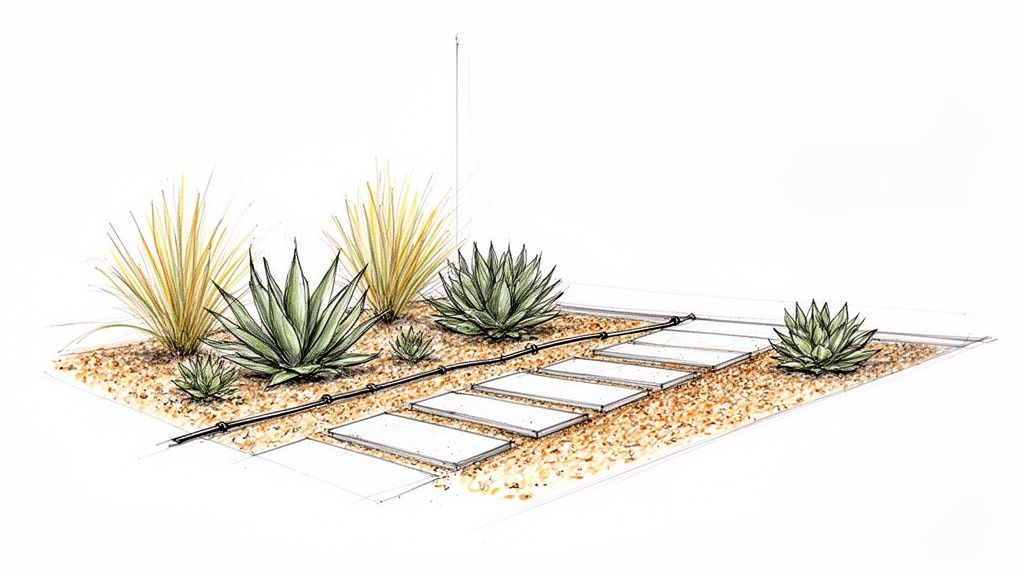
Far from being just rocks and cacti, a well-designed xeriscape can be lush and full of color and texture. Think of Mediterranean-inspired gardens with lavender and rosemary, or California front yards featuring vibrant succulents and ornamental grasses. The goal is to create a stunning, functional garden that works in harmony with its natural environment, reducing your water bill and your weekend workload.
Why It Works for Low Maintenance
This method drastically reduces maintenance by selecting plants that are naturally adapted to survive with minimal rainfall. Once established, these plants are hardy and self-sufficient, requiring less pruning, fertilizing, and disease management. The strategic use of mulch and hardscaping also suppresses weed growth, cutting down on one of gardening's most tedious chores. Future-proofing your garden involves considering the latest trends shaping water-smart yards, especially in regions facing water restrictions.
Key Insight: Xeriscaping isn't about eliminating plants; it's about choosing the right plants and design elements to create a beautiful garden that thrives on less. The initial planning leads to a dramatic decrease in long-term watering and upkeep.
Implementation and Actionable Tips
Transitioning to a xeriscape design is a systematic process focused on water-wise planning and plant selection. Learn more about how to create a drought-resistant landscape design.
Group Plants by Water Needs: Arrange plants with similar water requirements together in "hydrozones." This allows you to water efficiently without over-or-underwatering certain areas.
Install Drip Irrigation: Use a drip irrigation system or soaker hoses to deliver water directly to the plant roots, minimizing evaporation and waste.
Apply a Thick Layer of Mulch: Spread a 2-4 inch layer of organic or inorganic mulch (like wood chips or gravel) to retain soil moisture, regulate soil temperature, and prevent weeds.
Incorporate Hardscaping: Reduce the amount of planted area by integrating elements like gravel paths, decorative rocks, or a dry creek bed. This adds visual interest while cutting down on maintenance.
Visualize Your Design: It can be difficult to picture how different textures like agave, ornamental grasses, and gravel will look together. You can apply AI Landscape Design to visualize your ideas using photos of your own yard. Experiment with xeriscape layouts and virtually place plants and hardscape features to perfect your design before you start digging.
3. Hardscape-Dominant Design
A hardscape-dominant design is a powerful strategy for creating a chic, modern, and incredibly low-maintenance garden. This approach prioritizes non-living elements like pavers, stone, gravel, and decking to define the space, significantly reducing the area dedicated to high-maintenance plants and lawns. The result is a clean, structured outdoor living area that is both functional and aesthetically pleasing.
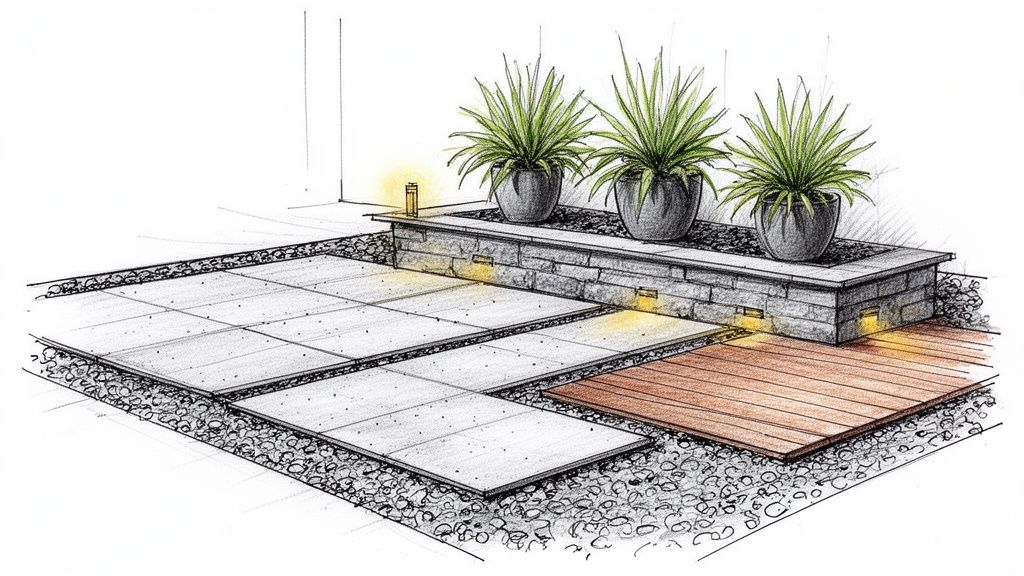
Instead of vast garden beds, this style uses carefully selected "statement" plants, often in containers or raised beds, as living art. Think of a contemporary courtyard with permeable pavers and a few dramatic architectural plants, or a Japanese rock garden where stone placement and texture take center stage. This is one of the most effective low maintenance garden ideas for homeowners who want a beautiful yard without the constant work.
Why It Works for Low Maintenance
This design philosophy minimizes upkeep by fundamentally reducing the amount of living material that needs to be watered, pruned, weeded, and fertilized. Hardscape materials are durable and long-lasting, providing a permanent structure that requires only occasional cleaning. By shifting the balance from softscape (plants) to hardscape, you trade hours of gardening labor for more time enjoying your outdoor space. For more details on these foundational elements, you can learn more about what is hardscape in landscaping in our quick guide.
Key Insight: A hardscape-dominant garden isn't about eliminating plants; it's about using them more intentionally. By treating plants as focal points rather than filler, you maximize visual impact while drastically cutting down on maintenance tasks.
Implementation and Actionable Tips
Successfully implementing a hardscape-focused design is about balancing materials, textures, and a few key plantings.
Combine Textures: Create visual depth by mixing materials. Pair the smooth surface of large concrete pavers with the rough texture of river rock or dark gravel borders.
Choose Permeable Pavers: Select permeable options for patios and walkways to allow rainwater to soak into the ground, which reduces runoff and supports local groundwater systems.
Use Statement Planters: Incorporate a few large, high-impact containers or raised beds to add greenery and color. This makes planting and maintenance easier on your back.
Integrate Lighting: Use subtle, integrated lighting to highlight textures, pathways, and specimen plants, making the space functional and beautiful after dark.
Visualize Material Combinations: The biggest challenge is choosing the right materials and patterns. You can apply AI Landscape Design to visualize your ideas with a photo of your own yard. Experiment with different paver styles, gravel colors, and decking options to instantly see how a slate patio will look next to a composite deck, ensuring a cohesive and sophisticated design before committing to expensive materials.
4. Mulched Beds with Perennials
Combining the resilience of long-lived perennial plants with a thick layer of mulch is a classic and highly effective strategy for creating beautiful, low-maintenance garden beds. Perennials are plants that return year after year, saving you the effort of annual replanting. When paired with strategic mulching, you create a garden that largely takes care of itself by suppressing weeds, retaining soil moisture, and regulating soil temperature.
This approach creates a robust and dynamic garden bed that offers seasonal interest with minimal upkeep. As perennials mature, they fill in the space, further reducing room for weeds to grow. Popular examples range from traditional English cottage borders filled with lavender and salvia to modern prairie-style gardens featuring ornamental grasses and coneflowers.
Why It Works for Low Maintenance
This two-pronged approach tackles the biggest garden maintenance tasks: weeding and watering. A proper layer of mulch acts as a physical barrier, preventing weed seeds from germinating. It also insulates the soil, keeping it cooler in summer and warmer in winter, which reduces stress on plant roots and minimizes water evaporation. The perennials, once established, develop deep root systems that make them more drought-tolerant than annuals.
Key Insight: The symbiotic relationship between perennials and mulch is the key to this low-maintenance garden idea. Mulch protects and nourishes the soil, while the perennials create a living, self-sustaining plant community that requires less intervention each year.
Implementation and Actionable Tips
Creating a thriving mulched perennial bed involves thoughtful plant selection and proper mulching technique.
Choose Hardy Perennials: Select plants that are well-suited to your USDA hardiness zone, soil type, and the specific light conditions of the garden bed (full sun, part shade, or full shade).
Space for Maturity: Read plant tags carefully and space perennials according to their mature size. This prevents overcrowding and reduces the need for frequent division.
Apply Mulch Correctly: Apply a 2-3 inch layer of organic mulch, such as wood chips or shredded bark, each spring. Keep the mulch from directly touching the stems of the plants to prevent rot. To enhance your mulched beds and further suppress weeds, exploring different types of mulch for Australian gardens can provide options suited for various climates.
Water Smartly: Water new plants deeply and regularly to help them establish strong roots. Once mature, most perennials will require less frequent watering.
Visualize the Seasons: Planning a perennial garden is a long-term project. You can apply AI Landscape Design to visualize your ideas using a photo of your own yard. Simulate how different perennial combinations like Hostas, Coneflowers, and Russian Sage will look throughout the seasons. This helps you create a design with continuous color and texture before committing.
5. Ornamental Grass Landscapes
Ornamental grasses are a powerful tool for creating low maintenance garden ideas that are dynamic, textural, and visually interesting throughout the year. These landscapes use a variety of grasses as the structural backbone of the garden, offering movement, sound, and four-season appeal. From the upright plumes of Feather Reed Grass to the soft mounds of Fountain Grass, they provide a sophisticated and naturalistic feel.
This design approach, popularized by landscape visionaries like Piet Oudolf, focuses on plant architecture and seasonal change. Grasses are incredibly versatile, serving as focal points, privacy screens, or a soft backdrop for perennials and hardscape elements. Once established, most ornamental grasses are drought-tolerant, pest-resistant, and require very little care beyond an annual trim, making them a cornerstone of modern, sustainable design.
Why It Works for Low Maintenance
This strategy excels because ornamental grasses are inherently resilient and self-sufficient. Their deep root systems make them exceptionally drought-tolerant and help control erosion. Unlike many perennials that require deadheading or frequent division, grasses look good from spring emergence to their dormant winter forms, providing striking silhouettes against snow or frost. Their maintenance is typically consolidated into a single, simple task each year.
Key Insight: The primary maintenance for most ornamental grasses is cutting them back once a year in late winter or early spring. This one-and-done approach saves countless hours compared to more demanding garden styles.
Implementation and Actionable Tips
Getting started with an ornamental grass landscape involves choosing the right species for your climate and design goals.
Select for Your Zone: Choose grasses suited to your climate, soil, and light conditions. 'Karl Foerster' Feather Reed Grass is a cool-season classic, while Switchgrass (Panicum virgatum) thrives in summer heat.
Plan for Mature Size: Grasses can grow large quickly. Space them according to their mature width and height to avoid overcrowding and ensure good air circulation.
Annual Cutback: Cut back dormant grasses in late winter or early spring to about 4-6 inches from the ground, just before new growth appears. This cleans up the garden and makes way for a fresh start.
Combine with Perennials: Pair grasses with late-blooming, sturdy perennials like Russian Sage (Perovskia), Coneflower (Echinacea), and Sedum 'Autumn Joy' for a long-lasting display of color and texture.
Visualize the Flow: Ornamental grasses are all about movement and form. Before planting, you can apply AI Landscape Design to visualize your ideas by uploading a photo of your yard. Experiment with placing different grass varieties to see how their shapes and sizes will create a cohesive, prairie-style flow and complement your home's architecture.
6. Container Gardens and Potted Plants
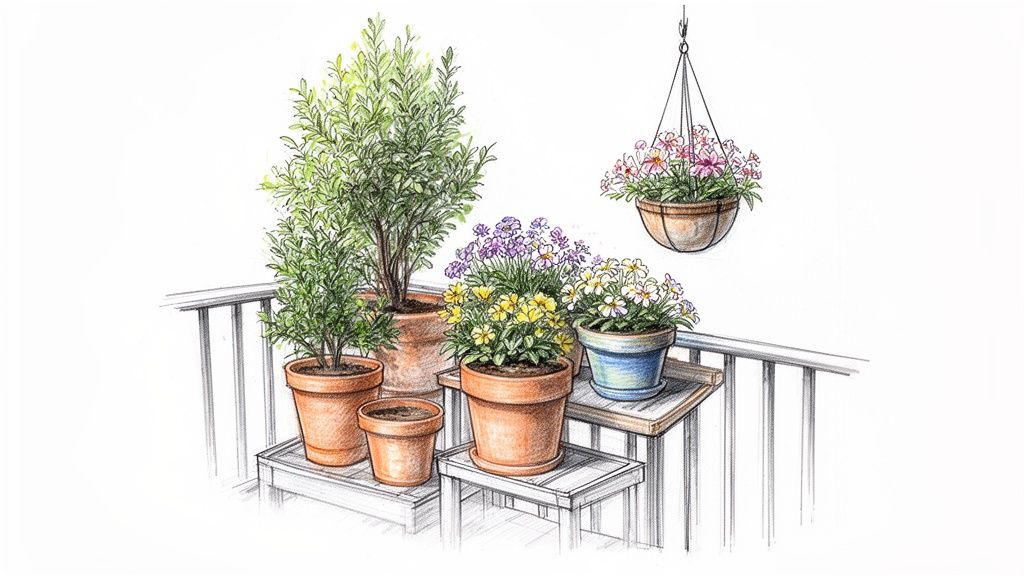
Container gardens offer one of the most flexible and controlled low maintenance garden ideas, perfect for urban dwellers, renters, or anyone with limited space. By confining plants to pots and containers, you gain complete authority over soil conditions, watering schedules, and plant placement, effectively eliminating common garden chores like extensive weeding and soil amendment.
This method allows you to create vibrant garden spaces on patios, balconies, rooftops, or even front steps. From a Mediterranean-style patio with potted olive trees to a seasonal porch display of rotating annuals, container gardening transforms any small space into a lush, green oasis with minimal ground commitment.
Why It Works for Low Maintenance
This approach minimizes upkeep by creating isolated, manageable ecosystems. There are no sprawling garden beds to weed, and pests or diseases are often contained to a single pot. You can group plants with similar water and light needs together, streamlining care and preventing the over- or under-watering that can happen in a mixed garden bed.
Key Insight: Container gardening puts you in control. You dictate the soil, moisture, and location, making it an ideal solution for overcoming poor native soil or creating a garden that can be easily rearranged or moved.
Implementation and Actionable Tips
Success with container gardening comes from setting up your pots correctly from the start.
Choose Proper Containers: Ensure every pot has adequate drainage holes. Select materials based on your climate; porous terracotta dries out faster than glazed ceramic or plastic.
Use Quality Potting Mix: Never use garden soil, which compacts easily and drains poorly in containers. A high-quality potting mix is essential for aeration and moisture retention.
Group for Efficiency: Place plants with similar water requirements together. This allows you to water one section thoroughly without over-saturating others.
Incorporate Slow-Release Fertilizer: Mix a slow-release granular fertilizer into your potting soil at planting time to provide consistent nutrients throughout the season with no extra effort. Explore a variety of designs with our roundup of the 20 best container garden ideas.
Visualize Your Arrangement: Deciding on the right size, color, and placement of containers can be challenging. You can apply AI Landscape Design to visualize your ideas with a photo of your balcony or patio. This allows you to virtually test different pot styles and plant combinations to perfect the layout and aesthetic before you start planting.
7. Artificial Turf and Synthetic Grass
For homeowners seeking the ultimate hands-off lawn experience, modern artificial turf and synthetic grass present a compelling solution. This option completely eliminates the recurring tasks of mowing, watering, fertilizing, and weeding. Today’s synthetic products are far more realistic than their predecessors, offering a consistently green, manicured appearance that withstands heavy foot traffic, challenging climates, and even pets.
This approach is particularly effective in regions with water restrictions, small urban spaces where a traditional lawn is impractical, or for homeowners who prioritize recreation over yard work. By installing high-quality synthetic grass, you reclaim your weekends from lawn maintenance, creating a durable and attractive surface for play, relaxation, and entertaining without the constant upkeep.
Why It Works for Low Maintenance
Artificial turf is the epitome of a "set it and forget it" landscape solution. Once installed, its maintenance needs are minimal, typically involving occasional rinsing to remove dust and brushing to keep the fibers upright. It is an ideal choice for high-traffic areas, pet runs, or shaded spots where natural grass struggles to grow, ensuring a pristine look year-round regardless of weather conditions.
Key Insight: Artificial turf is a long-term investment that trades initial installation cost for years of nearly zero maintenance. It solves common lawn problems like patchiness, pests, and mud, providing a consistently perfect look with minimal effort.
Implementation and Actionable Tips
A successful artificial turf installation hinges on proper site preparation and selecting the right product for your needs.
Choose a High-Quality Product: Research reputable manufacturers like FieldTurf or TenCate. Look for features like UV resistance, good drainage backing, and a realistic thatch layer for a natural appearance.
Ensure Proper Drainage: The most critical step is installing a proper sub-base of crushed rock or other aggregate to ensure water drains away efficiently, preventing pooling and odors.
Check Local Regulations: Before purchasing, verify any rules from your local HOA or municipality regarding the installation of synthetic lawns.
Integrate with Other Elements: Avoid a monotonous look by integrating the turf with hardscape elements like stone patios, garden beds with native plants, or modern concrete pavers.
Visualize the Transformation: It can be difficult to picture how vibrant green turf will look next to your existing patio or fencing. You can apply AI Landscape Design to visualize your ideas by uploading a photo of your own yard. This helps you instantly see how different artificial turf styles will integrate with your home’s aesthetic, helping you choose the perfect texture and color.
8. Rock and Gravel Gardens
For an exceptionally durable and modern aesthetic, rock and gravel gardens offer one of the most effective low maintenance garden ideas available. This approach utilizes natural stone, gravel, and other aggregates as the primary ground cover, punctuated by carefully selected, often drought-tolerant plants. This creates a visually striking landscape that excels in water conservation and weed suppression.
Inspired by everything from traditional Japanese dry gardens to contemporary minimalist designs, this style replaces high-maintenance turf with a stable, textured surface. These gardens are perfect for challenging areas with poor soil, intense sun exposure, or steep slopes where traditional planting is difficult. The result is a clean, architectural, and resilient outdoor space that requires minimal upkeep once established.
Why It Works for Low Maintenance
This strategy is a game-changer for reducing yard work because it eliminates the most time-consuming tasks: mowing, frequent watering, and extensive weeding. The rock mulch conserves soil moisture for plants while forming a physical barrier that prevents most weeds from germinating. It is a permanent solution that does not decompose like organic mulch, saving you time and money on annual reapplication.
Key Insight: A rock and gravel garden fundamentally shifts your maintenance focus from ongoing chores to occasional touch-ups. You'll trade the mower and hose for a leaf blower and occasional hand-weeding, freeing up your weekends.
Implementation and Actionable Tips
Creating a successful rock and gravel garden is about proper preparation and thoughtful composition.
Install Landscape Fabric: Before adding any rock, lay down a high-quality, permeable landscape fabric. This is the single most important step for long-term weed control.
Vary Textures and Sizes: Combine larger boulders, medium-sized river rocks, and fine gravel or decomposed granite to create depth and visual interest. Stick to a complementary color palette that matches your home's exterior.
Choose Plants Wisely: Select hardy, drought-tolerant plants like succulents (Sedum, Sempervivum), ornamental grasses (Blue Fescue), and tough perennials that thrive in well-draining conditions.
Plan Your Layout: Use rock to create natural-looking pathways, define bed edges, and establish dramatic focal points. For a detailed guide on arrangement, check out our post on how to create a beautiful and unique rock garden.
Visualize with AI: The interplay of rock color, size, and plant placement can be hard to picture. You can apply AI Landscape Design to visualize your ideas with a photo of your own yard. Instantly see how different materials like white marble chips versus dark lava rock will look, helping you perfect the design before committing to tons of material.
9. Shade Garden Solutions with Shade-Tolerant Plants
Those challenging, low-light areas of your yard, such as beneath mature trees or on the north side of your home, can be transformed into lush, tranquil retreats. Shade gardens are one of the most clever low maintenance garden ideas because they utilize plants specifically adapted to thrive with less sun. This approach minimizes issues like leggy growth and disease that sun-loving plants would face, creating a garden that requires less intervention.
By selecting species that naturally grow in woodland understories, you can create a beautiful, layered design with rich textures and subtle colors. These plants often require less water once established, as the shade reduces evaporation from the soil. The result is a serene, elegant garden that solves a common landscaping problem while demanding very little from the gardener.
Why It Works for Low Maintenance
This strategy embraces the existing conditions of your yard rather than fighting them. Shade-tolerant plants are evolutionarily designed to compete for fewer resources, making them resilient and self-sufficient in low-light environments. A well-designed shade garden also naturally suppresses weeds with its dense foliage, and the layer of mulch it requires helps retain soil moisture, further reducing watering chores.
Key Insight: The success of a low-maintenance shade garden lies in choosing the right plant for the right type of shade. Once you match plants to your specific light conditions, the garden largely takes care of itself, rewarding you with deep greens, interesting foliage, and quiet beauty.
Implementation and Actionable Tips
Creating a successful shade garden starts with understanding your light and soil, then choosing plants that will flourish.
Assess Your Shade: Determine if you have dappled shade (light filtering through trees), deep shade (under dense evergreens), or partial shade (a few hours of morning sun). Plant tags often specify the type of shade a plant prefers.
Improve the Soil: Shady areas, especially under trees, often have poor, dry soil. Amend it with plenty of compost or other organic matter to improve nutrient content and water retention.
Focus on Foliage and Form: In the absence of abundant flowers, create visual interest with varied leaf textures, shapes, and colors. Combine the bold leaves of Hostas with the delicate fronds of Ferns and the colorful foliage of Heuchera (Coral Bells).
Embrace Layers: Mimic a natural woodland by planting taller shrubs like Japanese Maples or Azaleas in the back, mid-sized perennials in the middle, and low-growing groundcovers like Foamflower (Tiarella) in the front.
Visualize the Textures: Combining shade plants can be tricky. You can apply AI Landscape Design to visualize your ideas by uploading a photo of your own yard. Experiment with different combinations of Hostas, Ferns, and Heucheras to see how their textures and colors will interact before you start digging. For a more in-depth look, you can learn more about the art of gardening in the shade to master the fundamentals.
10. Raised Beds and Defined Garden Spaces
Creating a structured, easy-to-manage garden is simplified with raised beds and clearly defined planting zones. This approach contains your garden within accessible, elevated structures, which is one of the most practical low maintenance garden ideas for controlling soil quality, reducing weed pressure, and improving overall efficiency. It's especially effective for vegetable gardens, urban spaces, and designs prioritizing accessibility.
By elevating the growing area, you eliminate soil compaction from foot traffic and can fill the beds with a premium, well-draining soil mix tailored to your plants. This controlled environment means less time spent amending poor native soil and battling persistent weeds. The result is a highly productive, tidy, and easy-to-tend garden that minimizes physical strain and maximizes yields.
Why It Works for Low Maintenance
This method works because it establishes clear boundaries between your garden and the surrounding landscape. The contained system drastically cuts down on weeding, as grass and invasive roots are blocked from creeping in. It also makes tasks like watering, fertilizing, and harvesting more ergonomic and efficient, as everything is concentrated in an easily reachable space.
Key Insight: The initial investment in building and filling raised beds pays dividends by creating a nearly perfect growing environment that requires significantly less ongoing labor for soil improvement and weed management.
Implementation and Actionable Tips
Setting up raised beds is a straightforward project that organizes your garden for years to come.
Choose Durable Materials: Select materials suited to your climate, such as rot-resistant cedar, long-lasting composite, or modern metal, to build your beds.
Optimize Placement: Position beds where they will receive at least six hours of direct sunlight per day, which is crucial for most vegetables and flowering plants.
Start with Quality Soil: Fill beds with a high-quality mix of topsoil, compost, and other amendments to give your plants the best possible start.
Install Drip Irrigation: Laying a drip irrigation or soaker hose system at the base of plants ensures deep, efficient watering and conserves water.
Block Weeds from Below: Line the bottom of the beds with cardboard or landscape fabric before adding soil to prevent weeds from growing up from the ground below.
Visualize the Layout: Planning the placement and size of raised beds can be tricky. You can apply AI Landscape Design to visualize your ideas with a photo of your own yard. Experiment with different configurations and see how one large bed versus three smaller ones will look, helping you perfect the layout before construction.
10 Low-Maintenance Garden Ideas Compared
Design | 🔄 Complexity | ⚡ Resources | ⭐ Expected outcomes | 📊 Ideal use cases | 💡 Key advantages |
|---|---|---|---|---|---|
Native Plant & Pollinator Gardens | 🔄 Moderate — research + 1–2 yr establishment | ⚡ Low–Moderate upfront; minimal water/inputs long-term | ⭐ High biodiversity and pollinator support; major water savings | 📊 Conservation yards, wildlife habitat, low-water sites | 💡 Supports pollinators; low maintenance once established |
Xeriscaping (Drought-Resistant Landscaping) | 🔄 Moderate — design + irrigation setup; learning curve | ⚡ Moderate–High upfront (drip, hardscape); low water ongoing | ⭐ Significant water reduction; drought-resilient landscape | 📊 Arid/water-restricted regions, modern front yards | 💡 Big ROI on water bills; durable and low-maintenance |
Hardscape-Dominant Design | 🔄 High — construction, possible permits, contractor work | ⚡ High upfront materials/labor; minimal plant upkeep | ⭐ Long-lasting outdoor living space; very low plant care | 📊 Entertaining areas, urban yards, low-maintenance priorities | 💡 Durable, usable year-round, minimal plant maintenance |
Mulched Beds with Perennials | 🔄 Low–Moderate — planting and mulching; 1–2 yr to fill in | ⚡ Moderate upfront (plants, mulch); low annual costs | ⭐ Reliable seasonal blooms; strong weed suppression; soil gains | 📊 Borders, cottage or prairie-style beds, pollinator plantings | 💡 Low annual cost; improves soil; reduced weeding |
Ornamental Grass Landscapes | 🔄 Low — straightforward planting; one annual cutback | ⚡ Low–Moderate (plant purchase); minimal ongoing inputs | ⭐ Strong structure & winter interest; low maintenance | 📊 Prairie-style, contemporary, screens and massings | 💡 Drought-tolerant, year-round form, minimal care |
Container Gardens and Potted Plants | 🔄 Low — simple setup; ongoing seasonal care | ⚡ Moderate ongoing (potting mix, watering, rotations) | ⭐ Immediate visual impact; flexible and accessible | 📊 Rentals, balconies, patios, seasonal displays | 💡 Portable, customizable, fast results; near-zero weeding |
Artificial Turf and Synthetic Grass | 🔄 Moderate — professional install; drainage critical | ⚡ High upfront cost; minimal ongoing maintenance | ⭐ Uniform, year-round lawn alternative; immediate use | 📊 High-traffic areas, water-restricted lawns, pet zones | 💡 No mowing/watering; durable and consistent appearance |
Rock and Gravel Gardens | 🔄 Moderate — material placement; weed-barrier prep | ⚡ Moderate upfront (rock, fabric); low ongoing costs | ⭐ Very low maintenance; excellent drainage; durable | 📊 Minimalist courtyards, xeriscapes, desert landscapes | 💡 Long-lasting, low-water, architectural aesthetic |
Shade Garden Solutions with Shade-Tolerant Plants | 🔄 Moderate — careful species selection by shade type | ⚡ Low–Moderate (soil amendments, shade plants) | ⭐ Good performance in low light; cooling and layered texture | 📊 Under trees, north-facing sites, shaded patios | 💡 Optimizes challenging shade areas; rich foliage interest |
Raised Beds and Defined Garden Spaces | 🔄 Moderate — build beds and fill with quality soil | ⚡ Moderate–High upfront (materials, soil); periodic refresh | ⭐ Higher productivity, better soil control, accessible planting | 📊 Vegetables, urban gardens, accessible/ergonomic designs | 💡 Reduces weeds, improves drainage, easier harvesting |
Mulched Beds with Perennials (Duplicate Entry) | 🔄 Low–Moderate — planting and mulching; 1–2 yr to fill in | ⚡ Moderate upfront (plants, mulch); low annual costs | ⭐ Reliable seasonal blooms; strong weed suppression; soil gains | 📊 Borders, cottage or prairie-style beds, pollinator plantings | 💡 Low annual cost; improves soil; reduced weeding |
Ornamental Grass Landscapes (Duplicate Entry) | 🔄 Low — straightforward planting; one annual cutback | ⚡ Low–Moderate (plant purchase); minimal ongoing inputs | ⭐ Strong structure & winter interest; low maintenance | 📊 Prairie-style, contemporary, screens and massings | 💡 Drought-tolerant, year-round form, minimal care |
Your Dream Low-Maintenance Garden is Just a Photo Away
We've explored a comprehensive collection of ten powerful strategies to reclaim your weekends and transform your yard into a beautiful, sustainable, and enjoyable space. The journey from a high-maintenance headache to a low-maintenance haven is not about finding a single magic bullet. Instead, it's about making a series of smart, strategic decisions that work in harmony with your environment and lifestyle. The core takeaway is simple: thoughtful planning is the ultimate time-saver.
By embracing these low maintenance garden ideas, you're not just planting shrubs or laying down gravel; you are fundamentally redesigning your relationship with your outdoor space. You are moving from a model of constant labor to one of passive enjoyment and ecological partnership.
Recapping Your Path to an Effortless Yard
Let's distill the key principles we've covered. The most successful and enduring low-maintenance landscapes are built on a foundation of:
Working With Nature, Not Against It: This is the common thread weaving through xeriscaping, native plant gardens, and shade-tolerant solutions. Selecting plants that are naturally adapted to your specific climate, soil, and sunlight conditions drastically reduces the need for supplemental watering, fertilizing, and pest control.
Replacing Labor with Structure: Hardscape-dominant designs, rock gardens, and even high-quality artificial turf are prime examples of this principle. By strategically reducing the amount of living, growing space, you directly reduce the associated chores of mowing, weeding, and pruning.
Designing for Simplicity: Concepts like defined raised beds, container gardens, and mulched perennial beds create order and minimize chaos. They contain the garden, making tasks like weeding and watering more targeted and efficient, while preventing the untamed spread that demands constant attention.
Mastering these approaches is incredibly valuable because it shifts your perspective. You begin to see your yard not as a list of tasks, but as a system. A well-designed system, like a thriving native pollinator garden, largely takes care of itself. This shift saves you countless hours and significant money over the long term, while often increasing your property's curb appeal and ecological value.
From Abstract Idea to Tangible Reality
The biggest hurdle for many homeowners is bridging the gap between inspiration and implementation. It’s one thing to read about the stark beauty of a rock garden or the vibrant life of a pollinator bed, but it's another to truly envision how it will look in your specific yard, with your home as the backdrop. This is where modern technology eliminates the guesswork and empowers you to make confident decisions.
Instead of trying to imagine how a patch of ornamental grasses will look next to your patio, you can see it. You can apply AI Landscape Design to visualize your ideas using photos of your own yard. This ability to preview your low maintenance garden ideas is the key to avoiding costly mistakes and ensuring the final result matches your vision. By using a tool that can render these designs onto a photo of your actual property, you gain an unparalleled advantage in the planning phase. You can compare a hardscape-focused design against a xeriscape concept side-by-side, making an informed choice before a single shovel hits the dirt. This visual confirmation is the most powerful final step in planning your perfect, effortless outdoor oasis.
Ready to stop guessing and start seeing? Visualize any of these low maintenance garden ideas in your own yard instantly with DreamzAR AI Landscape Design. Simply upload a photo of your space and let our AI transform it, giving you the clarity and confidence to create the beautiful, sustainable garden you've always wanted. Download DreamzAR AI Landscape Design today and bring your vision to life.