8 Simple Ideas for Backyard Landscaping to Transform Your Yard in 2025
- Akhilesh Joshi
- Dec 14, 2025
- 15 min read

Dreaming of a beautiful backyard but feel overwhelmed by where to start? Many homeowners believe a stunning landscape requires a massive budget and endless weekends of hard labor. The good news is, that's a common misconception. With a few strategic choices and a clear vision, you can create a beautiful, functional, and personal outdoor space without breaking the bank or your back. This guide is designed to cut through the complexity, offering a curated collection of simple ideas for backyard landscaping that deliver maximum impact with minimal fuss.
We will explore practical, actionable projects ranging from budget-friendly mulch pathways and low-maintenance native plant gardens to foundational hardscape elements like patios and walkways. For a broader perspective on turning your yard into a dream oasis, you can also explore inspiring outdoor living space design ideas. The key to success is confident planning, and modern tools make this easier than ever.
Throughout this article, we'll discuss how you can apply AI Landscape Design to visualize each concept by using photos of your own yard. Using an app like DreamzAR, you can simply upload a photo of your space and instantly see how raised garden beds, a new fountain, or a vibrant container garden would look. This process removes the guesswork, helping you commit to a design before you even pick up a shovel. Let’s dive into the ideas that will help you build the backyard you've always wanted.
1. Raised Garden Beds
Raised garden beds are elevated planting boxes, typically made from wood, metal, or composite materials, that sit directly on the ground. This simple idea for backyard landscaping is perfect for those dealing with poor native soil or who prefer a more organized, accessible gardening experience. By containing the growing medium, you gain complete control over soil composition, drainage, and nutrient levels, creating the ideal environment for vegetables, herbs, and flowers.
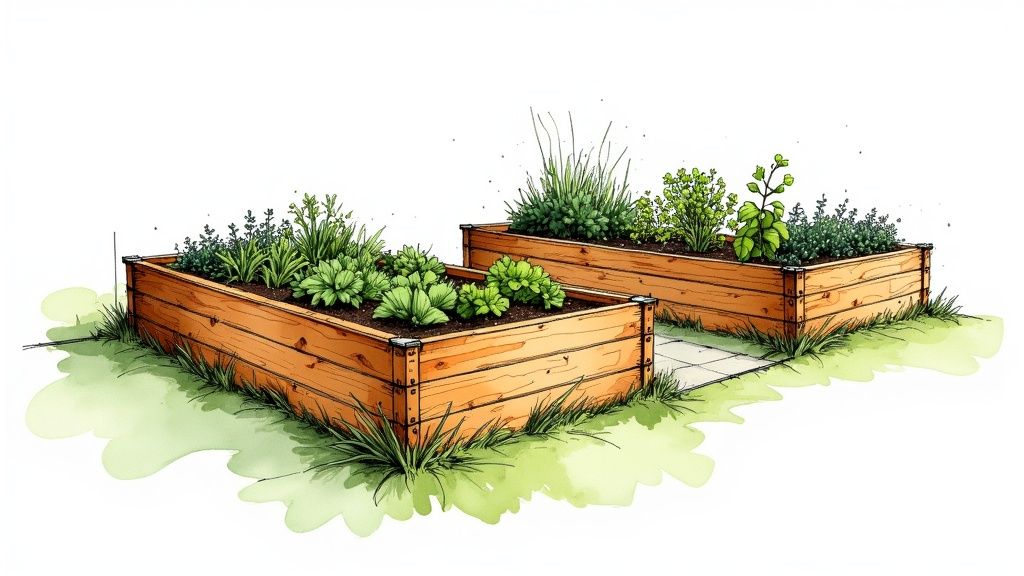
This method is highly effective in various scenarios, from creating a productive kitchen garden near a patio to establishing a community vegetable patch. The elevated design also reduces the need for bending and kneeling, making gardening more comfortable and accessible for everyone.
How to Implement Raised Garden Beds
To successfully add raised beds to your yard, follow these practical steps:
Material Selection: Choose materials wisely. Untreated cedar is naturally rot-resistant, while composite lumber offers durability without the risk of chemical leaching associated with treated wood.
Optimal Placement: Position your beds in a location that receives at least 6-8 hours of direct sunlight per day, which is crucial for most vegetables and flowering plants.
Soil Mixture: Fill the beds with a high-quality blend of topsoil, compost, and peat moss or coconut coir. This mix, often called "garden soil" or "triple mix," provides a nutrient-rich, well-draining foundation.
Weed Prevention: Lay down a layer of cardboard or landscape fabric at the bottom before adding soil to suppress weeds from growing up from the ground below.
To visualize how different raised bed sizes and placements will look, you can apply AI Landscape Design using a photo of your own yard. This helps you experiment with various layouts to find the perfect configuration before you start building.
By incorporating raised beds, you can transform an underutilized patch of lawn into a structured, productive, and beautiful feature. For more inspiration, explore these 10 creative raised garden bed designs to find a style that fits your aesthetic.
2. Mulch Pathways and Borders
Mulch pathways and borders are a practical and aesthetically pleasing solution for creating definition in your backyard. This simple idea for backyard landscaping involves using organic materials like wood chips or bark to create natural-looking walkways and to delineate garden beds from lawns. This approach not only enhances the visual structure of your space but also suppresses weeds, retains soil moisture, and reduces maintenance.
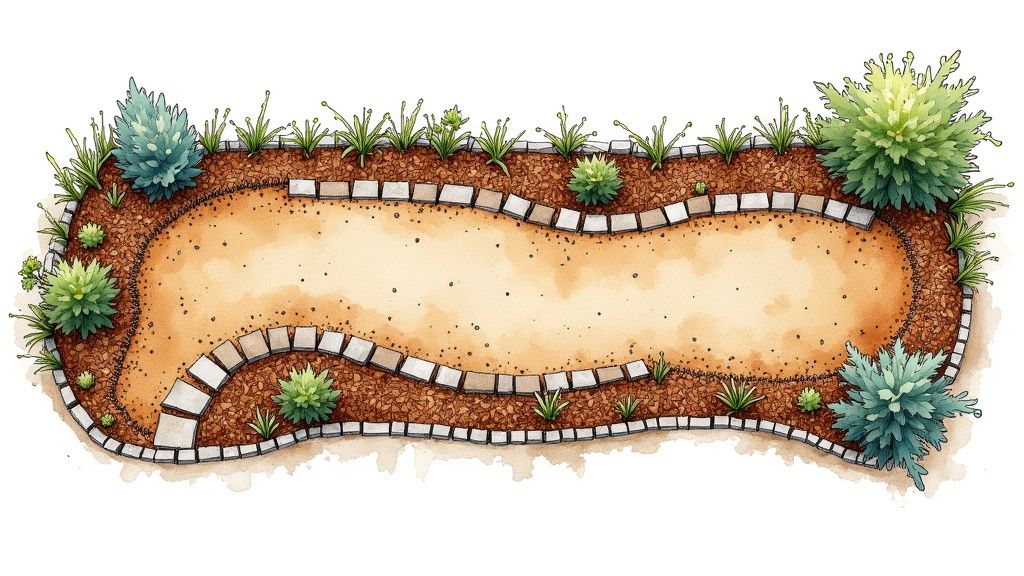
This method is incredibly versatile, fitting seamlessly into various garden styles. It's perfect for crafting a winding path through a cottage-style garden, defining clean edges around a modern planting area, or simply creating functional walkways between vegetable garden rows. The soft, organic texture provides a gentle contrast to both lawn and hardscaping elements.
How to Implement Mulch Pathways and Borders
To effectively create functional and attractive mulch features, follow these practical steps:
Define the Space: Use a garden hose or rope to lay out the desired shape of your path or border. Once you are satisfied with the design, you can use a spade to create a clean edge.
Prepare the Ground: Clear the designated area of all grass, weeds, and debris. For long-term weed suppression, lay down a layer of cardboard or landscape fabric before applying the mulch.
Apply Mulch Correctly: Spread a consistent layer of mulch that is 2-4 inches deep. This depth is ideal for preventing weed growth and retaining moisture without suffocating plant roots. Be sure to keep mulch pulled back a few inches from the stems of plants to prevent rot.
Contain the Edges: Install landscape edging made of metal, plastic, or stone to keep the mulch contained and maintain a crisp, defined line between your pathway and adjacent areas.
Wondering how a dark bark path would look next to your light-colored patio? You can apply AI Landscape Design using photos of your own yard to virtually test different mulch colors, pathway shapes, and edging materials before committing.
By using mulch, you can introduce a low-cost, high-impact feature that brings order and beauty to your landscape. For added texture, consider incorporating stepping stones within your path, a concept you can explore further with these 10 inspiring garden rock ideas.
3. Simple Water Features (Fountains and Birdbaths)
Simple water features, such as self-contained fountains, bubbling urns, or classic birdbaths, introduce the soothing element of water into your backyard without the complexity of a large pond. This simple idea for backyard landscaping adds multisensory appeal through gentle sounds and dynamic visuals, creating a tranquil focal point. These elements are perfect for homeowners looking to elevate their garden's atmosphere and attract wildlife with minimal installation effort.
This method is highly effective for enhancing a quiet corner of a garden, creating a centerpiece for a patio, or establishing a wildlife-friendly oasis. The gentle trickling or bubbling sounds can also help mask unwanted background noise, contributing to a more serene and private outdoor experience.
How to Implement Simple Water Features
To successfully add a water feature to your landscape, follow these practical steps:
Location Selection: Choose a stable, level spot for your feature. If it's electric, ensure it's near a GFCI (ground-fault circuit interrupter) outlet. Solar-powered options offer more placement flexibility.
Sound Control: Most modern fountain pumps have an adjustable flow rate. Experiment with the settings to achieve your desired sound level, from a silent ripple to a gentle cascade.
Water Maintenance: Use distilled or dechlorinated water to prevent mineral buildup. Plan to change the water every one to two weeks to keep it fresh and clear, especially for birdbaths.
Winter Care: In colder climates, properly winterize your feature. Drain the water completely and store the pump indoors to prevent freezing and cracking.
To decide between a tiered fountain or a sleek modern birdbath, apply AI Landscape Design using a photo of your own yard. This allows you to virtually place different water feature styles and sizes to see instantly how each option complements your existing patio or garden bed.
By adding a simple water element, you can introduce a sense of harmony and life into your backyard. For a deeper dive, explore how to create a harmonious aquatic garden to find the perfect style for your space.
4. Native Plant Gardens
A native plant garden is a landscaping approach that prioritizes vegetation indigenous to your specific geographical region. This simple idea for backyard landscaping creates a self-sustaining ecosystem by using plants that have adapted over thousands of years to the local climate, soil, and wildlife. The result is a beautiful, low-maintenance garden that requires less water, fertilizer, and pest control while providing critical habitat for local pollinators like bees and butterflies.
This method is incredibly versatile, allowing you to create anything from a vibrant wildflower meadow to a serene woodland shade garden. By choosing native species, you not only reduce your yard's environmental impact but also cultivate a landscape that reflects the unique natural beauty of your area.
How to Implement a Native Plant Garden
To successfully establish a thriving native garden, follow these practical steps:
Research Local Species: Identify plants native to your specific ecoregion and USDA hardiness zone. Resources like local extension offices, native plant societies, and the Audubon Society's native plants database are excellent starting points.
Start Small: Begin with a designated small area, like a corner of your yard or a border along a fence. This makes the initial soil preparation and planting more manageable, and you can gradually expand as you gain confidence.
Proper Site Preparation: Remove all existing grass and weeds from your chosen plot. You can do this by solarizing (covering with plastic), sheet mulching with cardboard and compost, or manually digging it out.
Group by Needs: Arrange plants according to their specific light and water requirements. Placing sun-loving, drought-tolerant plants together and shade-loving, moisture-needing plants in another area ensures all your plants will thrive.
Deciding on the right mix and placement of native plants can be challenging. You can apply AI Landscape Design using a photo of your own yard to experiment with different native plant combinations, helping you visualize how the garden will mature through the seasons.
By incorporating native plants, you create a resilient and ecologically beneficial landscape. To see how these principles apply in a specific region, explore these ideas for incorporating native plants in your garden.
5. Container Gardens
Container gardens involve growing plants in pots, planters, and various containers placed strategically throughout a backyard. This incredibly flexible and simple idea for backyard landscaping offers a solution for spaces with poor soil, limited ground area, or for those who enjoy changing their garden's look with the seasons. By using containers, you can cultivate almost anything, anywhere, from a vibrant herb garden on the patio to a collection of dwarf fruit trees on a balcony.
This method is perfect for renters, apartment dwellers, or anyone looking to add pops of color and life to hardscaped areas like decks, entryways, and poolside patios. The mobility of containers allows you to move plants to follow sunlight, protect them from harsh weather, or simply rearrange your outdoor decor whenever you wish.
How to Implement Container Gardens
To create a thriving and beautiful container garden, follow these key steps:
Choose the Right Container: Select pots that are appropriately sized for the mature plant. Ensure every container has drainage holes at the bottom to prevent waterlogging and root rot.
Use Potting Mix, Not Garden Soil: Fill your containers with a high-quality potting mix. This specialized soil is lighter, drains better, and is formulated to provide the right balance of aeration and moisture retention for potted plants.
Group for Impact: Arrange containers in clusters of varying heights, colors, and textures. Grouping them not only creates a stronger visual statement but also helps increase humidity around the plants, which can improve their health.
Mindful Watering and Feeding: Plants in containers dry out faster than those in the ground and require more frequent watering. Nutrients also leach out with each watering, so regular fertilization during the growing season is essential.
To visualize how a cluster of terracotta pots will look by your front door, you can apply AI Landscape Design. Using a photo of your own yard, you can digitally place different container styles and arrangements to see what works best before you buy.
Container gardening empowers you to be creative and adaptable, turning any corner of your yard into a green oasis. To get more ideas for your space, discover these 20 best container garden ideas to imagine with AI and find the perfect inspiration.
6. Hardscape Elements (Patios, Decks, and Walkways)
Hardscape elements are the non-living, structural components of your landscape, such as patios, decks, and walkways. This simple idea for backyard landscaping is fundamental for creating definition, improving functionality, and establishing usable outdoor living areas. By incorporating these features, you can design clear pathways, create stable gathering spots, and add architectural interest that requires minimal ongoing maintenance.
These structural elements are effective for transforming a plain lawn into a multi-functional space. A simple gravel path can guide visitors through a garden, while a paver patio provides a perfect foundation for outdoor dining. The addition of hardscaping grounds the landscape and provides a clean, organized contrast to the softer textures of plants and grass.
How to Implement Hardscape Elements
To successfully integrate hardscaping into your yard, follow these practical steps:
Material Selection: Choose materials that complement your home's architecture. Options range from natural stone and brick for a classic look to concrete pavers and composite decking for modern durability. When considering materials for your deck, it's valuable to understand the differences, such as exploring the options for a Composite Deck vs Wood in Florida's Climate to see what best suits your environment.
Proper Foundation: A stable, level base is critical for longevity. Whether you're laying pavers or stones, ensure the ground is properly excavated, compacted, and layered with gravel and sand to prevent shifting and sinking.
Plan for Drainage: Design patios and walkways with a slight slope (about a quarter-inch per foot) away from your home's foundation. This prevents water from pooling and causing potential damage.
Soften the Edges: Integrate plantings along the borders of your hardscape features. This helps soften the hard lines and creates a more natural transition between the built and living elements of your yard.
Hardscaping is a significant investment, so visualizing the outcome is key. You can apply AI Landscape Design by uploading a photo of your own yard to experiment with different patio shapes, walkway layouts, and deck materials before committing to construction.
By thoughtfully adding hardscape elements, you create the essential "bones" of your backyard, establishing functional, beautiful spaces for relaxation and entertainment.
7. Vertical Gardening and Trellises
Vertical gardening is a space-efficient technique that involves growing plants upward using structures like trellises, arbors, and wall-mounted planters. This simple idea for backyard landscaping is ideal for those with limited ground space or anyone looking to add architectural interest and green screening to their property. By directing growth vertically, you can cultivate a lush garden on a balcony, patio wall, or a narrow side yard.
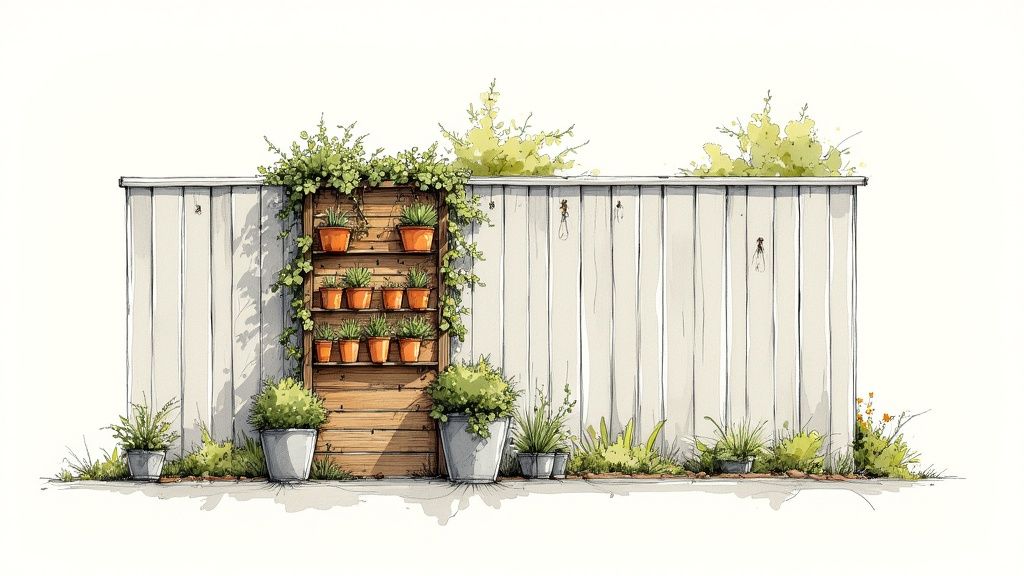
This method is incredibly versatile, allowing you to create everything from a functional herb wall right outside your kitchen to a stunning living wall of flowering vines that acts as a privacy screen. The upward growth also improves air circulation around plants, which can help reduce the risk of fungal diseases, making it a healthy choice for your garden.
How to Implement Vertical Gardening
To successfully grow a vertical garden, follow these practical steps:
Choose a Sturdy Structure: Select materials that can support the mature weight of your plants, especially during windy or wet conditions. Options range from simple wooden lattices to robust metal arbors and pergolas.
Select Appropriate Plants: Choose climbing plants suited to your climate and sunlight exposure. Good choices include climbing beans and peas for vegetable gardens, clematis or climbing roses for ornamental beauty, and ivy for dense, green coverage.
Ensure Secure Installation: Firmly anchor your support system into the ground or wall studs to prevent it from collapsing. For living walls, ensure the mounting hardware can handle the combined weight of the structure, soil, plants, and water.
Provide Adequate Water: Vertical gardens, especially those in containers, can dry out more quickly than in-ground plants. Plan for regular watering or consider installing a drip irrigation system for consistent moisture.
To visualize how a trellis covered in roses would look against your fence, apply AI Landscape Design. Using a photo of your own yard, you can add virtual trellises, arbors, and living walls, helping you visualize the scale and impact before committing to an installation.
By taking your garden skyward, you can dramatically increase your growing area, create living art, and solve common backyard challenges like a lack of privacy or limited space.
8. Low-Maintenance Shrub and Tree Plantings
Low-maintenance shrub and tree plantings form the backbone of a successful landscape, providing structure, privacy, and year-round visual interest with minimal upkeep. This simple idea for backyard landscaping involves strategically selecting hardy, well-adapted woody plants that thrive in your specific climate and soil conditions. By choosing the right species, you can establish a mature, beautiful garden framework that minimizes the need for constant pruning, watering, and pest management.
This approach is highly effective for creating natural privacy screens with panicle hydrangeas, adding seasonal color with serviceberry trees, or defining garden edges with dwarf conifers. The goal is to create a resilient and self-sufficient landscape that looks great throughout the year without demanding constant attention.
How to Implement Low-Maintenance Plantings
To successfully add robust shrubs and trees to your yard, follow these practical steps:
Select Adapted Species: Choose plants that are native or well-adapted to your region. Species like boxwood, barberry, and redbud trees are often excellent choices for their resilience and minimal care requirements.
Match Plants to Conditions: Assess your yard's sunlight and soil conditions. Place sun-loving plants like butterfly bush in bright spots and shade-tolerant species in darker corners to ensure they thrive naturally.
Proper Spacing: When planting, space your shrubs and trees according to their mature size, not their size in the container. This prevents future overcrowding and reduces the need for aggressive pruning.
Establishment Care: Water new plantings regularly during their first growing season to help establish a strong root system. Apply a 2-3 inch layer of mulch around the base to retain moisture and suppress weeds, making sure to keep it away from the main stem.
Deciding on the right placement and size for trees and shrubs can be challenging. You can apply AI Landscape Design by virtually placing different species in a photo of your own yard. This allows you to visualize how they will look at maturity and ensure they fit the scale of your space before you start digging.
8 Backyard Landscaping Ideas Comparison
Item | 🔄 Implementation Complexity | ⚡ Resource Requirements | 📊 Expected Outcomes | 💡 Ideal Use Cases | ⭐ Key Advantages |
|---|---|---|---|---|---|
Raised Garden Beds | 🔄 Moderate — build/assemble, soil prep, possible irrigation | ⚡ Materials (wood/metal/composite), soil/compost, tools; mid upfront cost ($100–$500+) | 📊 Improved drainage, higher yields, extended season; organized plots | 💡 Vegetable/herb beds, accessible gardens, small yards | ⭐⭐⭐⭐ Better soil control; accessibility; weed & pest reduction |
Mulch Pathways and Borders | 🔄 Low — simple installation, occasional refresh | ⚡ Mulch (wood chips, bark), edging, light labor; low cost ($50–$200) | 📊 Weed suppression, moisture retention, defined zones | 💡 Paths, garden borders, cottage or vegetable gardens | ⭐⭐⭐ Affordable; easy upkeep; improves soil over time |
Simple Water Features (Fountains/Birdbaths) | 🔄 Low–Moderate — pump setup, leveling, winterization | ⚡ Pump/solar, basin/materials, electricity or solar; variable cost ($100–$1000+) | 📊 Visual focal point, wildlife attractor, ambient sound | 💡 Courtyards, wildlife-friendly spaces, meditation areas | ⭐⭐⭐ High aesthetic/sonic impact; attracts birds & beneficial insects |
Native Plant Gardens | 🔄 Moderate — research, site prep, phased planting | ⚡ Native stock, initial labor; low inputs long-term; cost-effective over time | 📊 Reduced water use, increased biodiversity, lower maintenance | 💡 Sustainable yards, pollinator gardens, erosion control | ⭐⭐⭐⭐ High sustainability; low long-term inputs; wildlife support |
Container Gardens | 🔄 Low — potting, placement, routine watering | ⚡ Pots, potting mix, regular water/fertilizer; variable cost | 📊 Flexible planting, easy management, limited root space | 💡 Renters, patios, kitchens, small-space vegetable/herb growing | ⭐⭐⭐ Portable; full soil control; space-efficient |
Hardscape Elements (Patios/Decks/Walkways) | 🔄 High — design, base prep, possible permits, professional labor | ⚡ Heavy materials (pavers/stone/wood), equipment, significant cost ($1,000–$10,000+) | 📊 Defined living spaces, increased property value, low upkeep once installed | 💡 Entertaining areas, primary pathways, long-term landscape investments | ⭐⭐⭐⭐ Durable; clarifies space; boosts curb appeal |
Vertical Gardening and Trellises | 🔄 Moderate — sturdy installation, plant training, irrigation planning | ⚡ Trellises/walls, mounting hardware, plants; moderate cost | 📊 Maximizes growing area, adds privacy and vertical interest | 💡 Small yards, privacy screens, edible walls, balconies | ⭐⭐⭐ Space-efficient; good yield per area; adds screening |
Low-Maintenance Shrub & Tree Plantings | 🔄 Moderate — species selection, planting labor, long-term planning | ⚡ Trees/shrubs, mulch, initial irrigation; moderate cost | 📊 Year-round structure, privacy, reduced maintenance after establishment | 💡 Property framework, privacy hedges, low-care landscapes | ⭐⭐⭐⭐ Longevity; low upkeep once established; habitat value |
Bringing Your Vision to Life with AI
Throughout this guide, we've explored a variety of simple ideas for backyard landscaping that prove you don’t need an unlimited budget or years of experience to create a stunning outdoor retreat. From the structured beauty of raised garden beds and the rustic charm of mulch pathways to the tranquil sounds of a simple water feature, each concept offers a tangible way to elevate your space. We've seen how native plants can create a sustainable, low-maintenance ecosystem and how container gardens provide flexible color and texture, even in the smallest areas.
The core takeaway is that transformative landscaping is built on a foundation of smart, incremental changes. You don't have to tackle everything at once. The most successful projects begin not with a shovel, but with a clear vision. This is where modern technology becomes your most powerful landscaping tool.
From Imagination to Implementation
The biggest hurdle for many homeowners is bridging the gap between an idea and the reality of their own yard. It’s one thing to admire a vertical garden in a magazine; it's another to know how it will look against your own siding or where a new paver walkway should curve to best complement your existing deck. This uncertainty can lead to hesitation and, ultimately, inaction.
That's why visualization is the most critical first step. Before you invest time, money, and effort, seeing a realistic preview of your plan can prevent costly mistakes and provide the confidence needed to move forward. This is precisely where you can apply AI Landscape Design. By using a photo of your actual backyard, you can experiment with these simple ideas for backyard landscaping digitally. You can:
Test different materials: See whether a dark mulch border or a light gravel path works better with your home's exterior.
Arrange elements virtually: Place a birdbath in three different spots to see which location offers the best view from your kitchen window.
Visualize plant growth: Understand how a row of low-maintenance shrubs will look once they mature, ensuring you don’t overcrowd your space.
Combine ideas risk-free: See how a native plant garden pairs with a new hardscape patio before committing to either project.
This ability to iterate and refine your design removes the guesswork, transforming a vague concept into an actionable, visual blueprint. It ensures the final result aligns perfectly with your expectations, making the entire process more enjoyable and successful. Your perfect backyard is no longer a distant dream; it's a tangible reality waiting to be designed.
Ready to stop guessing and start visualizing? Use DreamzAR AI Landscape Design to upload a photo of your yard and instantly apply these simple landscaping ideas. See your vision come to life in seconds by visiting DreamzAR AI Landscape Design today.