The 8 Best Plants Around Pool Areas for a Flawless Oasis in 2025
- Akhilesh Joshi
- Dec 21, 2025
- 17 min read

The right plants can transform a basic pool area into a stunning, resort-like retreat. But choosing the wrong ones can lead to clogged filters, damaged liners, and constant cleanup. This guide cuts through the confusion, highlighting the 8 best plants around a pool that offer the perfect blend of beauty, resilience, and low maintenance. We will cover everything from tropical showstoppers like Hibiscus and Bird of Paradise to architectural succulents like Agave, ensuring you find the ideal match for your specific climate and design style.
Understanding which plants will thrive in your specific location is the first critical step. Before making any selections, it’s essential to identify your hardiness zone; consult a reliable guide like the USDA Planting Zone Chart to ensure your chosen plants can handle your local weather conditions.
Beyond just listing options, we will provide actionable insights on root behavior, mess factor, and tolerance to pool chemicals. Critically, we'll also show you how to eliminate guesswork by visualizing these plants in your own yard before you even touch a shovel. You can apply AI Landscape Design to visualize your ideas using photos of your own yard. Using an app like DreamzAR, you can upload a photo of your pool and instantly see how different combinations will look, ensuring your final design is exactly what you envisioned. Let’s dive into creating your perfect poolside oasis.
1. Hibiscus
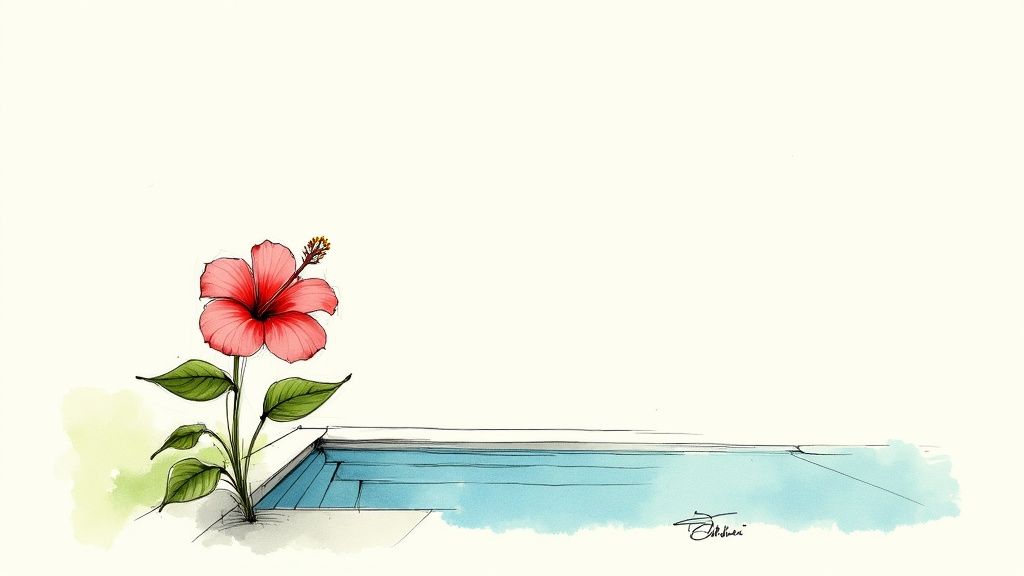
When you envision a luxurious tropical paradise, the image of vibrant, dinner-plate-sized Hibiscus flowers often comes to mind. These stunning shrubs bring an immediate sense of vacation and exotic beauty to any poolside setting, making them one of the best plants around a pool for creating a resort-style atmosphere. Their large, showy blooms in brilliant reds, pinks, oranges, and yellows add a powerful pop of color against the cool blue of the water.
Beyond their undeniable aesthetic appeal, Hibiscus are a practical choice. They are relatively low-maintenance, thrive in the full sun that most pool areas provide, and have a non-invasive root system, which means you don't have to worry about them damaging your pool's structure or plumbing. Think of the lush landscapes at Hawaiian resorts or upscale Miami estates; Hibiscus is a foundational element that defines that tropical chic look.
Why It's a Top Poolside Plant
Hibiscus excels in poolside environments for several key reasons. Their leaves are large and glossy, making any that happen to fall easy to skim from the water. Unlike plants with tiny leaves or needles, they don't create a messy, hard-to-clean sludge. Their sturdy, woody structure also means they are less likely to shed debris during high winds. Furthermore, many hardy varieties show good tolerance to the occasional splash of chlorinated or salt water.
Actionable Tips for Placement and Care
To get the most out of your Hibiscus while keeping your pool clean, follow these guidelines:
Smart Spacing: Plant Hibiscus at least 6-8 feet away from the pool's edge. This provides ample room for the plant to grow to its mature size without overhanging the water, minimizing flower and leaf drop into the pool.
Encourage Fullness: Prune your Hibiscus right after its main blooming cycle. This encourages the plant to grow back bushier and produce even more flowers next season.
Feeding Schedule: During the growing season (spring and summer), fertilize monthly with a balanced, potassium-rich fertilizer to support vibrant, continuous blooming.
Visualize First: Not sure how a bold red Hibiscus will look next to your pool coping? You can apply AI Landscape Design to visualize your ideas. Using photos of your own yard, an app like DreamzAR can instantly place virtual Hibiscus plants to help you perfect placement and color combinations before you ever start digging.
By selecting the right variety and placing it thoughtfully, Hibiscus can transform your pool area into the tropical escape you’ve always wanted. For more inspiration on creating this look, explore these tropical garden design ideas to complete your backyard oasis.
2. Agave
For a poolside design that leans into modern, architectural, or desert aesthetics, Agave is an unrivaled choice. These striking succulents bring a bold, sculptural element to the landscape, with dramatic rosettes of spiky, fleshy leaves in shades of blue-gray, silver, and deep green. Their dramatic form provides year-round visual interest and creates a sophisticated, resort-like feel reminiscent of modern Palm Springs homes or chic Arizona desert escapes.
Beyond their stunning appearance, Agave plants are incredibly practical for sunny, dry pool areas. They are exceptionally drought-tolerant, require minimal maintenance, and are one of the best plants around a pool for a clean, debris-free environment. Their structural integrity means they don't shed leaves, flowers, or messy debris, keeping your pool and patio pristine with almost no effort.
Why It's a Top Poolside Plant
Agave is a champion of low-mess, high-impact poolside planting. The plant has no small leaves to clog filters and its sturdy structure withstands wind and occasional splashes. Because they thrive in full sun and heat, they are perfectly suited for the exposed conditions common to most pool decks. Their water-wise nature also makes them a sustainable choice, reducing your garden's water consumption significantly.
Actionable Tips for Placement and Care
To safely incorporate Agave's architectural beauty while protecting your family and pool, consider these tips:
Prioritize Safety with Spacing: Plant Agave at least 10 feet away from the pool's edge and high-traffic pathways. This distance prevents accidental contact with their sharp leaf tips, ensuring a safe environment for swimming and relaxing.
Select Spineless Varieties: For areas closer to patios or walkways, consider spineless varieties like Agave attenuata (Foxtail Agave), which offer the same striking look without the hazard.
Ensure Proper Drainage: Agave demands excellent drainage. Amend your soil with sand or gravel, or plant them in raised beds or large containers filled with a cactus/succulent mix to prevent root rot.
Visualize Before Planting: The bold shape of an Agave can dramatically alter your landscape. Apply AI Landscape Design to visualize your ideas using photos of your own yard. A tool like DreamzAR can place a virtual Agave in your pool area, allowing you to test locations and sizes for maximum visual impact without compromising safety.
By choosing the right variety and placing it strategically, Agave can provide a powerful, modern, and low-maintenance focal point for your pool. Their drought-tolerant nature makes them a cornerstone of sustainable design, and you can explore more ideas for a drought-resistant landscape to complement their clean aesthetic.
3. Bamboo Screening Varieties
For homeowners seeking fast-growing, elegant privacy, Bamboo creates a living screen that brings a modern, Zen-like tranquility to a poolside setting. The tall, slender canes and delicate leaves form a dense natural barrier, effectively blocking unwanted views and dampening neighborhood noise. This makes it one of the best plants around a pool for establishing a private, resort-style sanctuary.
The gentle rustling of bamboo leaves in the wind adds a soothing auditory element that enhances the relaxing atmosphere of a pool area. Its vertical growth habit adds height and drama without taking up a large footprint, making it ideal for both spacious yards and tighter urban spaces. Think of the serene landscapes of Asian-inspired retreats or the sleek, contemporary pool designs seen in California and Florida; Bamboo is a key element in achieving that sophisticated, secluded feel.
Why It's a Top Poolside Plant
Bamboo is a superior choice for poolside screening due to its rapid growth and dense foliage. The most important distinction to make is between running and clumping varieties. Clumping bamboo (like Fargesia) grows in a tight, contained cluster and is highly recommended for poolside applications as its root system is non-invasive. While it does shed small leaves, they are generally manageable and can be minimized with proper placement and maintenance.
Actionable Tips for Placement and Care
To enjoy the benefits of bamboo without the maintenance headaches, strategic planning is essential:
Choose Clumping Varieties: Always opt for clumping bamboo (e.g., Fargesia, Bambusa) to prevent aggressive spreading that could damage pool plumbing or decking. If you must use a running variety, install a rigid rhizome barrier at least 24-30 inches deep.
Strategic Setback: Plant bamboo at least 8-10 feet from the pool's edge. This distance helps keep the majority of shed leaves out of the water and prevents the canes from hanging over the pool.
Annual Maintenance: Thin out old or dead canes annually to promote healthy new growth and improve air circulation. This also helps maintain a clean, tidy appearance and reduces potential debris.
Visualize the Screen: Unsure how a dense bamboo wall will impact the light and feel of your pool area? You can apply AI Landscape Design to visualize your ideas using photos of your own yard. This allows you to test different heights and densities to find the perfect balance of privacy and style before you plant.
By carefully selecting a clumping variety and giving it the right space, bamboo can provide a beautiful and functional privacy screen. For more ideas on incorporating this versatile plant, discover how to create a stunning bamboo garden landscape design for your backyard.
4. Desert Rose (Adenium)
For a touch of exotic, sculptural elegance, the Desert Rose (Adenium) is a standout choice. This unique succulent features a thick, swollen trunk known as a caudex and produces stunning, trumpet-shaped flowers in shades of pink, red, and white. It brings a dramatic and contemporary flair to poolside settings, reminiscent of luxury Miami estates or architectural gardens in Phoenix.
As one of the best plants around a pool, the Desert Rose is exceptionally well-suited for hot, sunny environments. Its low-water needs make it a sustainable option, and its growth habit is perfect for container gardening, allowing for flexible placement and design. The plant’s clean nature means minimal leaf drop, keeping your pool area tidy and maintenance low. Its striking form provides year-round visual interest even when not in bloom.
Why It's a Top Poolside Plant
The Desert Rose thrives in the exact conditions most pool decks offer: full sun and reflected heat. Being a succulent, it sheds very few leaves, and any that do fall are large enough to be easily removed. Its preference for containers means its root system is completely contained, posing zero risk to pool structures, plumbing, or decking. This also allows homeowners in cooler climates to enjoy this tropical beauty by bringing it indoors during winter.
Actionable Tips for Placement and Care
To showcase your Desert Rose and ensure it thrives without compromising safety, follow these tips:
Container is Key: Plant in a well-draining pot with a specialized cactus or succulent soil mix. This prevents root rot and gives you control over its location.
Sun Seeker: Place it in the sunniest spot available, as it needs at least 6-8 hours of direct sunlight daily to produce its magnificent flowers.
Water Wisely: Overwatering is its biggest enemy. Allow the soil to dry out completely between waterings. During its winter dormancy, reduce watering even further.
Safety First: The sap of the Desert Rose is toxic if ingested. Place containers away from the immediate edge of the pool where children and pets play. You can apply AI Landscape Design to visualize your ideas using photos of your own yard. This helps you experiment with safe and stylish placements, such as arranging potted Desert Roses on a raised planter, before committing.
5. Bird of Paradise (Strelitzia)
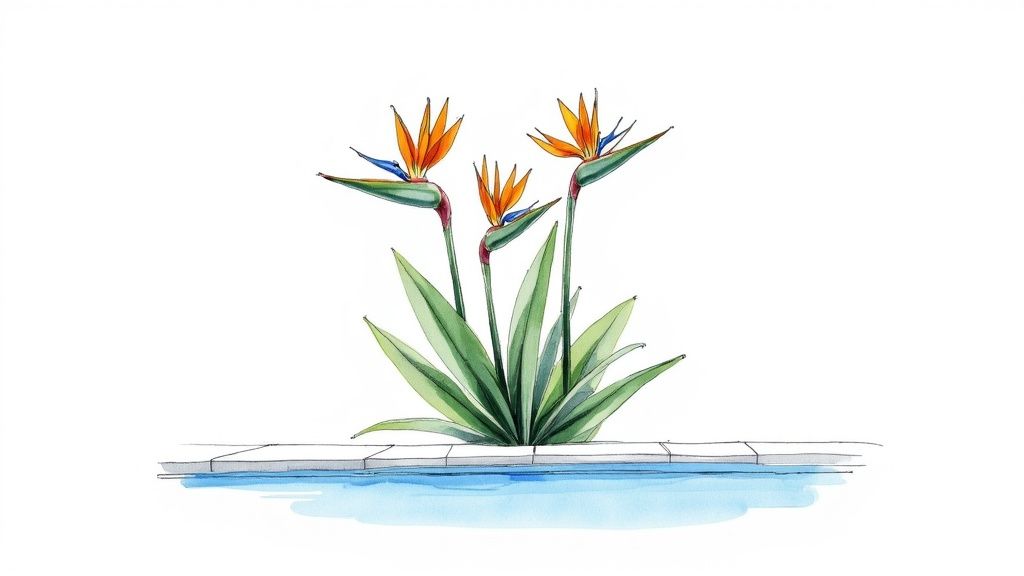
For a truly dramatic and architectural statement, few plants can rival the Bird of Paradise. Its large, banana-like leaves and unmistakable bird-shaped flowers in vibrant orange and blue instantly evoke the feeling of an exclusive tropical resort. This plant is a cornerstone of high-end landscape design in warm climates, bringing a bold, structural element that pairs beautifully with the sleek lines of a modern swimming pool.
Beyond its striking looks, the Bird of Paradise is one of the best plants around a pool for its surprisingly low-maintenance and clean nature. Its large, leathery leaves don't shed frequently, and when they do, they are simple to remove from the water or patio. The plant's upright growth habit and non-invasive root system make it a safe and practical choice for planting near pool foundations and decking, a common feature in luxury estates from Santa Barbara to the Caribbean.
Why It's a Top Poolside Plant
The Bird of Paradise is an ideal poolside companion due to its minimal mess and robust structure. The large leaves are easy to manage, preventing the kind of fine debris that can clog filters. It thrives in the full sun and heat common to pool areas, which also encourages more prolific blooming. Its impressive vertical form can be used to create privacy screens or act as a stunning focal point against a bare wall, adding height and dimension to the landscape.
Actionable Tips for Placement and Care
To successfully incorporate Bird of Paradise into your pool design while maintaining a clean environment, consider these tips:
Create a Cluster: For the most dramatic visual impact, plant them in groups of 3 to 5. This creates a lush, dense look that feels more natural and intentional than a single specimen.
Allow Ample Space: Position these plants at least 8-10 feet from the pool's edge. Their leaves can grow quite large and will eventually arch over, so this spacing prevents them from hanging into the water.
Patience for Blooms: Be patient, as new plants can take 3-5 years to produce their first iconic flowers. Ensure they receive plenty of sun and regular water until established to speed up the process.
Test the Look with AI: The bold structure of a Bird of Paradise can significantly alter your yard's aesthetic. Before planting, apply AI Landscape Design to visualize your ideas. Using photos of your own yard, you can place virtual versions of the plant to experiment with clustering and positioning for maximum impact.
6. Lantana
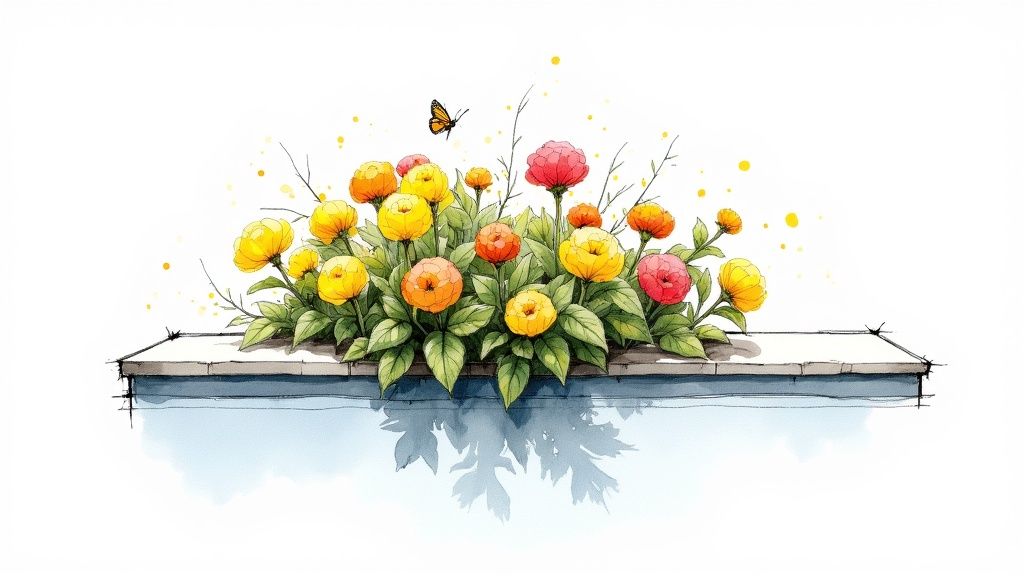
For a poolside plant that delivers an explosion of color with minimal fuss, Lantana is an unbeatable choice. This hardy, sun-loving shrub produces dense clusters of small, vibrant flowers in stunning combinations of yellow, orange, red, pink, and white. It creates a cheerful, dynamic border that thrives in the heat and sun typical of a pool area, making it one of the best plants around a pool for a vibrant, low-maintenance landscape.
Lantana’s resilience is legendary; it’s drought-tolerant once established and blooms profusely from spring through fall, adding season-long interest. Imagine the lively atmosphere of a Southwestern xeriscape pool or a lush Florida backyard; Lantana is often the star player, attracting beautiful butterflies and hummingbirds that add movement and life to the setting. Its tough nature and vibrant blooms provide a carefree yet spectacular display.
Why It's a Top Poolside Plant
Lantana is exceptionally well-suited for poolside life. Its flowers, while small, tend to drop in clusters, making them relatively easy to scoop out with a skimmer. The plant produces very little messy leaf litter, a significant advantage for keeping pool filters clean. Furthermore, it has a high tolerance for reflected heat from pool decking and can handle occasional splashes of chlorinated or salt water without issue.
Actionable Tips for Placement and Care
To ensure your Lantana thrives without creating extra pool maintenance, consider these tips:
Proper Setback: Plant Lantana at least 4-6 feet from the pool’s edge. This gives it space to spread without hanging over the water, which helps keep spent flower clusters out of the pool.
Encourage Bushiness: Prune Lantana back hard in the early spring, before new growth begins. This promotes a denser, bushier shape and stimulates vigorous new blooms for the upcoming season.
Boost Blooms: Deadhead spent flower clusters regularly throughout the summer. This simple task prevents the plant from setting seed and encourages it to produce more flowers continuously.
Visualize with AI: Unsure how a multi-colored Lantana border will look against your pool coping? Apply AI Landscape Design to visualize your ideas using photos of your own yard. This lets you experiment with trailing vs. mounding varieties and color schemes before planting.
By choosing Lantana, you get a durable, colorful, and wildlife-friendly plant. If you want to dive deeper into creating a pollinator-friendly garden, you can learn more about attracting pollinators to your garden for a truly dynamic backyard oasis.
7. Oleander
For a touch of Mediterranean elegance and incredibly robust performance, Oleander is a classic choice for poolside landscaping. This evergreen shrub is celebrated for its dense foliage and prolific clusters of showy flowers in shades of pink, red, white, and apricot. It effortlessly evokes the feeling of a sun-drenched villa in Southern California or a sophisticated Arizona resort, making it one of the best plants around a pool for creating a lush, private screen.
Beyond its beauty, Oleander's toughness is its main selling point. It thrives in intense heat and full sun, is highly drought-tolerant once established, and requires minimal maintenance. Its dense growth habit makes it a perfect natural privacy fence, shielding your pool area from neighbors. Think of the beautiful, hardy screens lining historic Southern estates or framing desert oasis pools; Oleander provides that structure and color with very little fuss.
Why It's a Top Poolside Plant
Oleander is a poolside powerhouse due to its resilience and clean nature. The leathery leaves are not prone to shedding, and when they do fall, they are large enough to be easily removed from a skimmer. The plant is also known for its tolerance to a variety of conditions, including reflected heat from paving and occasional splashes from salt or chlorinated water. Crucially, all parts of the Oleander plant are highly toxic if ingested, which makes it an excellent deer-resistant option but requires careful consideration for placement.
Actionable Tips for Placement and Care
To enjoy Oleander's benefits safely while maintaining a pristine pool, follow these guidelines:
Safety First Placement: Due to its toxicity, plant Oleander at least 8-10 feet from the pool's edge and away from areas where children and pets play. This creates a safe buffer zone.
Protective Pruning: Always wear gloves and long sleeves when pruning to avoid contact with the toxic sap. Prune after the main blooming season to shape the plant and encourage denser growth for better privacy.
Water Wisely: Water newly planted Oleanders regularly to establish a strong root system. Once mature, they are extremely drought-tolerant and require only minimal watering.
Visualize for Privacy: Unsure how a row of Oleanders will look as a privacy screen? You can apply AI Landscape Design to visualize your ideas. Using photos of your own yard, you can place virtual shrubs along your fence line to test different heights and densities to achieve the perfect level of seclusion.
With strategic placement, Oleander offers an unbeatable combination of beauty, privacy, and low maintenance. For those with smaller spaces, dwarf varieties can be a great fit for large pots; you can explore container garden ideas to see how this could work in your setting.
8. Plumbago (Ceratostigma)
For those seeking a softer, more romantic aesthetic, Plumbago offers delicate clusters of brilliant sky-blue flowers that seem to float against its lush green foliage. This sprawling shrub brings a sense of airy, cottage-garden charm or a Mediterranean vibe to the poolside, contrasting beautifully with hardscapes like stone or concrete. Its continuous blooming from summer through fall ensures a long-lasting display of color.
Unlike the bold, singular statements of plants like Hibiscus, Plumbago creates a gentle, cascading effect. It is an excellent choice for softening the hard edges of a pool deck or for creating flowing, colorful borders. Its root system is non-aggressive, posing no threat to pool foundations or plumbing, and its moderate size makes it one of the best plants around a pool for manageable, yet impactful, landscaping.
Why It's a Top Poolside Plant
Plumbago is prized in poolside settings for its minimal litter. The small, delicate flowers tend to dry up and blow away rather than creating a soggy mess in the water or skimmer basket. The plant is also quite resilient, tolerating the full sun and reflected heat common to pool areas. Its drought tolerance, once established, means it can handle occasional missed waterings during hot summer months, making it a low-fuss, high-reward option.
Actionable Tips for Placement and Care
To enjoy Plumbago's ethereal blue blooms without extra pool maintenance, consider these tips:
Proper Setback: Plant Plumbago at least 6-8 feet from the pool's edge. This allows its cascading branches to fill the space beautifully without directly overhanging the water, which keeps the pool cleaner.
Pruning for Shape: Prune hard in late winter or early spring before new growth appears. This encourages a fuller, bushier shape and a more prolific bloom cycle.
Encourage Blooms: While not strictly necessary, deadheading spent flower clusters will promote faster re-blooming throughout the season.
Plan Your Design: Plumbago's soft, mounding form can be difficult to envision. Apply AI Landscape Design to visualize your ideas using photos of your own yard. This allows you to experiment with creating layered borders or softening corners before committing to a final layout.
With its easy-going nature and stunning sky-blue flowers, Plumbago can infuse your pool area with a serene and graceful beauty, proving that poolside plants can be both practical and enchanting.
Top 8 Poolside Plants Comparison
Plant | Implementation Complexity 🔄 | Resource Requirements ⚡ | Expected Outcomes 📊 | Ideal Use Cases 💡 | Key Advantages ⭐ |
|---|---|---|---|---|---|
Hibiscus | Low — easy to establish; regular pruning to shape 🔄 | Low–moderate water; warm zones (9–11); monthly feeding in season ⚡ | High visual impact with large seasonal blooms; fast growth in heat 📊 | Poolside color focal points; privacy hedges in warm climates 💡 | Dramatic, year-round blooms; attracts pollinators; heat-tolerant ⭐ |
Agave | Low — simple planting; minimal upkeep; slow growth 🔄 | Very low water; excellent drainage; room for rosette; warm zones ⚡ | Long-lived architectural focal; slow to mature but low maintenance 📊 | Modern/xeriscape pool designs; sculptural focal points 💡 | Bold architectural form; extremely drought-tolerant; pest-resistant ⭐ |
Bamboo Screening Varieties | Moderate–high — fast growth; running types need containment 🔄 | Moderate water during establishment; rhizome barriers for running types; space ⚡ | Rapid tall screening and noise reduction; can become invasive if unmanaged 📊 | Privacy screens, tropical/Asian aesthetics, wind barriers 💡 | Fast privacy cover; evergreen vertical interest; elegant appearance ⭐ |
Desert Rose (Adenium) | Low–moderate — ideal in containers; careful watering and winter protection 🔄 | Very low water; excellent drainage; warm zones or bring indoors ⚡ | Sculptural specimen with long bloom season; slow overall growth 📊 | Container accents, contemporary sculptural poolside spots 💡 | Distinctive caudex and vibrant blooms; drought-tolerant; compact ⭐ |
Bird of Paradise (Strelitzia) | Moderate — needs space, time to bloom (3–5 yrs); divide rhizomes as needed 🔄 | Moderate water to establish; full sun; warm zones; room for large leaves ⚡ | High architectural impact and exotic blooms; long-lived once mature 📊 | Resort-style/tropical poolscapes; specimen plantings in large yards 💡 | Iconic bird-like flowers; large architectural foliage; pollinator-attracting ⭐ |
Lantana | Low — very easy to grow; prune to prevent legginess 🔄 | Low–moderate water once established; tolerates poor soils; warm zones ⚡ | Prolific, continuous blooming; attracts butterflies; may self-seed 📊 | Colorful borders, containers, drought-friendly beds near pools 💡 | Abundant flowers with minimal care; heat/drought-tolerant; versatile ⭐ |
Oleander | Low–moderate — fast-growing; regular pruning and safety precautions (toxic sap) 🔄 | Low water; tolerates poor soils and salt spray; warm zones ⚡ | Dense evergreen screening with abundant blooms; fast coverage 📊 | Privacy hedges, Mediterranean/coastal poolscapes 💡 | Rapid growth and strong screening; drought- and salt-tolerant ⭐ |
Plumbago (Ceratostigma) | Low–moderate — pruning to control legginess; supports for tall types 🔄 | Moderate water during growing season; prefers warm zones; consistent moisture ⚡ | Continuous sky-blue blooms through season; moderate spread 📊 | Soft color borders, containers, cottage or Mediterranean pool edges 💡 | Unique cooling blue flowers; continuous bloom; attracts pollinators ⭐ |
Bring Your Perfect Poolside Vision to Life
Creating a stunning and functional poolside landscape is about more than just picking pretty plants; it's a strategic blend of aesthetics, practicality, and foresight. As we've explored, the best plants around pool areas are those that solve problems, not create them. They thrive in challenging conditions, from reflective heat and chemical splashes to high-traffic zones, all while contributing to a serene and private oasis.
The journey from a bare pool deck to a lush paradise involves a series of deliberate choices. Selecting plants like the sturdy Agave for its minimal shedding, the vibrant Hibiscus for its tropical flair without aggressive roots, or screening bamboo for elegant privacy are foundational decisions. Each choice is a piece of a larger puzzle, impacting maintenance routines, long-term safety, and the overall enjoyment of your outdoor space.
Key Takeaways for a Flawless Poolscape
Your success hinges on remembering a few core principles that elevate your design from good to exceptional:
Function First, Form Second: Always prioritize plants with low-mess habits. Minimal leaf, flower, or fruit drop means less work for you and cleaner water for your pool filtration system.
Root Intelligence: Be mindful of what’s happening beneath the surface. Opt for plants with non-invasive root systems to protect your pool's structural integrity, plumbing, and surrounding hardscaping from costly damage.
Embrace Resilience: Your poolside plants must be tough. Look for varieties with proven tolerance to salt spray and chlorinated water, ensuring they won't just survive but will actively flourish in the unique microclimate of your pool area.
From Imagination to Reality: Your Actionable Next Steps
The most critical step in this process is bridging the gap between your ideas and the final, tangible result. Choosing from a list of the best plants around pool areas is the start, but visualizing how a Bird of Paradise will frame your water feature or how a row of Lantana will soften the edge of the patio is what truly brings the design to life. This is where modern technology eliminates the guesswork.
Instead of hoping your selections work together, you can see them in your actual space before breaking ground. You can apply AI Landscape Design to visualize your ideas using photos of your own yard. Experiment with different combinations, adjust sizes, and craft layouts until you find the perfect composition. This powerful approach de-risks the entire project, ensuring the investment of time and money results in the exact backyard escape you envision.
Your perfect poolside sanctuary is no longer a matter of chance; it’s a design waiting to be discovered.
Ready to stop guessing and start designing? Use DreamzAR AI Landscape Design to upload a photo of your pool and instantly visualize how these plants will look in your yard. See your perfect poolside oasis come to life before you plant a single thing by visiting DreamzAR AI Landscape Design.